Smart homes in 2026 are no longer a luxury — they are a practical investment that improves comfort, reduces energy costs, and increases property value for homeowners and landlords across the USA. From AI-driven automation to intelligent plumbing and security systems, connected home technology has become more accessible, more reliable, and more relevant to everyday property management than ever before.
Understanding these trends matters now because rising utility costs, tighter property budgets, and growing tenant expectations are pushing homeowners and property managers to act sooner rather than later.
This guide covers the top smart home trends of 2026, explains what each upgrade includes, and helps you decide which improvements make the most sense for your property.
What Is Driving Smart Home Adoption in 2026?
The connected home market is expanding rapidly, and the reasons go beyond convenience. Homeowners are facing higher energy bills, increased insurance scrutiny, and growing demand from tenants and buyers who expect modern, technology-enabled properties.
According to Statista’s 2025 Smart Home Market Report, the US smart home market is projected to generate $47.9 billion in revenue by 2026, with household penetration reaching over 40% of American homes. These numbers reflect a fundamental shift in how people think about property ownership and maintenance.
Three forces are accelerating this shift. First, smart devices have dropped significantly in price, making entry-level automation accessible to average homeowners. Second, energy efficiency incentives at the federal and state level are making upgrades financially attractive. Third, property managers and landlords are finding that smart features reduce maintenance calls, lower vacancy rates, and justify higher rental pricing.
Whether you are building new or upgrading an existing property, understanding the financial implications of your choices is essential — our custom home investment analysis breaks down how smart home features affect long-term property value and resale potential.
Key Forces Reshaping the Connected Home Market
The convergence of faster internet infrastructure, more affordable sensors, and AI-powered software platforms has created an environment where smart home systems are genuinely practical for the average property owner. Interoperability standards like Matter — now widely adopted across major device manufacturers — mean that different brands and systems can communicate with each other without complex workarounds, removing one of the biggest barriers to adoption.
AI-Powered Home Automation: The New Standard
Artificial intelligence has moved from novelty to necessity in the smart home space. In 2026, AI-powered automation systems do not just respond to commands — they learn household patterns, anticipate needs, and make real-time adjustments without any manual input.
Modern AI home hubs analyze data from dozens of connected devices simultaneously. They adjust lighting based on time of day and occupancy, regulate temperature based on weather forecasts and personal schedules, and flag maintenance issues before they become expensive repairs. For property managers overseeing multiple units, AI-driven dashboards provide centralized visibility into every property’s status from a single interface.
McKinsey’s 2025 Technology and Real Estate Report found that properties with AI-integrated management systems experienced up to 23% lower maintenance costs compared to traditionally managed properties. For landlords and property managers, that figure translates directly to improved net operating income.
How Predictive AI Is Changing Daily Home Management
Predictive maintenance is one of the most valuable applications of AI in residential properties. Instead of waiting for a system to fail, AI-connected sensors monitor performance data continuously and alert homeowners or managers when a component is showing signs of wear. This approach reduces emergency repair costs, extends the lifespan of major systems, and keeps tenants satisfied with fewer disruptions.
Smart HVAC and Energy Management Systems
Heating, ventilation, and air conditioning represent the single largest energy expense in most American homes, accounting for nearly half of total household energy use according to the U.S. Energy Information Administration. Smart HVAC systems address this directly by combining programmable thermostats, zoned climate control, and real-time energy monitoring into one integrated platform.
In 2026, the most advanced smart HVAC systems use occupancy sensors and machine learning to create heating and cooling schedules that adapt automatically to how a home is actually used — not just how it was programmed. Zoned systems allow different areas of a property to be controlled independently, eliminating the waste of conditioning unoccupied rooms.
For landlords managing multi-unit properties, smart HVAC controls also reduce disputes over utility costs and give property managers remote override capability when systems malfunction.
Smart thermostats and zoned climate systems deliver the greatest savings when paired with professional installation and maintenance — explore the full range of HVAC service options available for residential and commercial properties.
Programmable Climate Control and Utility Savings
The Department of Energy estimates that homeowners can save up to 10% per year on heating and cooling costs by properly using a programmable thermostat. Smart systems that learn and adapt automatically push those savings even further, with some households reporting reductions of 15–20% on annual utility bills after upgrading to a fully integrated smart HVAC platform.
Integrated Security and Smart Locksmith Technology
Home security has undergone a complete transformation in 2026. Traditional lock-and-key systems are being replaced by keyless entry, biometric access, remote monitoring, and AI-powered video surveillance that can distinguish between a delivery driver and an intruder.
Smart locks now integrate directly with home automation hubs, allowing homeowners to grant temporary access codes to contractors, cleaners, or guests — and revoke them instantly when no longer needed. For property managers, this eliminates the cost and inconvenience of rekeying units between tenants. Remote monitoring through connected cameras and doorbell systems provides real-time visibility into property activity from any location.
Keyless entry and remote access systems require precise installation and programming to function reliably — learn how professional smart locksmith services can integrate modern access control into any home or property.
Keyless Entry, Remote Monitoring, and Access Control
The shift to smart access control is particularly significant for landlords managing multiple properties. Centralized access management platforms allow a single property manager to control entry permissions across dozens of units simultaneously, track access logs for security purposes, and respond to lockout situations remotely — without dispatching a technician.
Smart Plumbing and Water Management Innovations
Water damage is one of the most costly and disruptive problems a homeowner or property manager can face. In 2026, smart plumbing technology is making it significantly easier to detect problems early, monitor usage patterns, and prevent catastrophic failures before they occur.
Smart leak detectors placed near water heaters, under sinks, and behind appliances can identify moisture in seconds and trigger automatic shutoff valves to stop water flow before damage spreads. Whole-home water monitoring systems track usage in real time, flagging unusual consumption patterns that may indicate a hidden leak or a running toilet wasting hundreds of gallons per day.
According to the Insurance Information Institute, water damage and freezing account for nearly 24% of all homeowner insurance claims, making smart water management one of the highest-return upgrades available to property owners.
Smart leak detectors and automated shutoff valves are only as effective as the plumbing infrastructure supporting them — our plumbing upgrade services cover everything from sensor installation to full pipe assessments for connected home systems.
Leak Detection, Usage Monitoring, and Automated Shutoffs
Automated shutoff systems are now available at both the fixture level and the whole-home level. Fixture-level shutoffs respond to individual sensor alerts, while whole-home systems can cut water supply to the entire property when a major leak is detected — a critical feature for vacation homes, rental units, or any property that may be unoccupied for extended periods.
Intelligent Lighting, Electrical, and Power Systems
Smart lighting has evolved well beyond simple voice-controlled bulbs. In 2026, intelligent lighting systems integrate with occupancy sensors, daylight harvesting technology, and whole-home energy management platforms to create environments that are both comfortable and energy-efficient.
Whole-home energy monitoring systems give homeowners and property managers granular visibility into exactly where electricity is being consumed — by circuit, by device, and by time of day. Smart circuit breakers and load management systems can automatically shift energy demand away from peak pricing periods, reducing utility costs without any manual intervention.
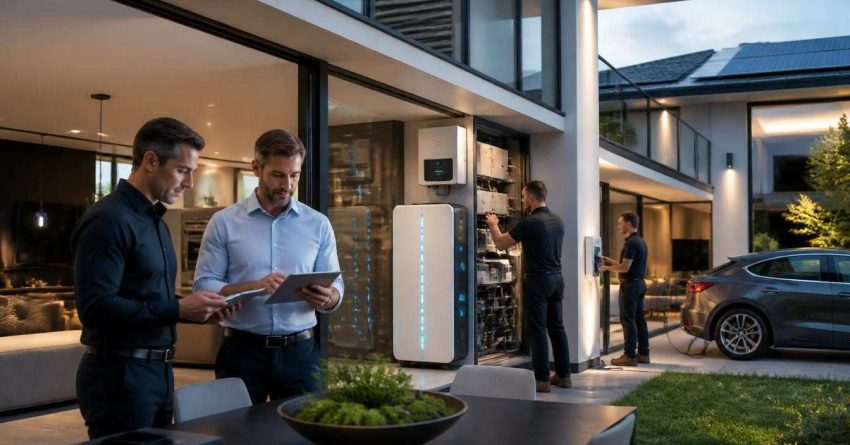
For properties with solar installations or battery storage systems, smart electrical management is essential for maximizing the return on those investments by optimizing when stored energy is used versus drawn from the grid.
Whole-home energy monitoring and smart circuit management require a properly wired and up-to-code electrical system as their foundation — our electrical upgrade services ensure your home is ready to support every connected device and smart panel integration.
Whole-Home Energy Monitoring and Smart Circuit Management
The Lawrence Berkeley National Laboratory estimates that smart energy management systems can reduce residential electricity consumption by 10–15% annually when fully integrated with lighting, HVAC, and appliance controls. For property managers overseeing large portfolios, that reduction compounds across every unit and every billing cycle.
Smart Appliances and Connected Home Services
The appliance industry has fully embraced connectivity in 2026. Refrigerators, dishwashers, washing machines, dryers, and ovens now communicate directly with home automation hubs, providing usage data, maintenance alerts, and remote control capabilities that were unimaginable a decade ago.
Smart appliances can notify homeowners when a filter needs replacing, when a cycle is complete, or when a component is showing signs of failure — often before the appliance stops working. For landlords, this means fewer emergency repair calls and more predictable maintenance schedules. For homeowners, it means longer appliance lifespans and lower repair costs over time.
Dryer vent monitoring is one of the most practical smart appliance upgrades available in 2026. Connected sensors detect lint buildup and airflow restrictions in real time, alerting homeowners before a clogged vent becomes a fire hazard — a risk the U.S. Fire Administration attributes to nearly 2,900 residential fires annually.
Even the most advanced smart appliances require professional diagnostics and maintenance to perform reliably over time — our appliance repair services cover connected devices across all major brands and home configurations.
Appliance Diagnostics, Remote Control, and Maintenance Alerts
Remote diagnostics are becoming a standard feature across premium appliance lines. Technicians can now access error codes and performance data remotely before arriving at a property, reducing diagnostic time and ensuring they arrive with the correct parts — a significant improvement in service efficiency for both homeowners and property managers.
Outdoor Smart Home Trends: Landscaping, Decks, and Safety
Smart home technology is no longer confined to the interior. In 2026, outdoor systems for irrigation, lighting, security, and safety are among the fastest-growing segments of the connected home market.
Smart irrigation controllers use real-time weather data and soil moisture sensors to water lawns and gardens only when needed, reducing outdoor water consumption by up to 50% compared to traditional timer-based systems, according to the EPA’s WaterSense Program. For properties in drought-prone regions or areas with water use restrictions, this technology is both practical and increasingly necessary.
Automated outdoor lighting systems improve security, reduce energy waste, and enhance curb appeal simultaneously. Motion-activated fixtures, pathway lighting controlled by sunset and sunrise schedules, and color-adjustable accent lighting can all be managed remotely through a single app.
Automated irrigation and smart outdoor lighting systems work best when designed alongside a comprehensive landscaping plan — explore the full range of landscape service options to bring intelligent outdoor management to your property.
Automated Irrigation, Smart Lighting, and Mobility Upgrades
Safety and mobility upgrades are an important and often overlooked dimension of the smart outdoor home. Motion-sensing pathway lights, smart ramp systems, and connected intercom stations improve accessibility and safety for aging homeowners and tenants — a growing priority as the US population continues to age and more homeowners seek to remain in their properties long-term.
How to Prepare Your Home for Smart Upgrades in 2026
Implementing smart home technology successfully requires more than purchasing devices. It requires a clear assessment of your property’s existing infrastructure, a prioritized upgrade plan, and the right professionals to handle installation and integration.
Start with a home assessment that evaluates your electrical system’s capacity, your internet infrastructure’s reliability, and the condition of major systems like HVAC, plumbing, and security. Smart devices depend on stable power and connectivity — upgrading these foundations first ensures that every smart system you add performs as intended.
Homeowners deciding between building new and upgrading an existing structure will find detailed guidance in our spec home comparison, which outlines how smart technology integration affects construction decisions and long-term investment returns.
Prioritize upgrades by return on investment. Energy management systems, smart security, and leak detection consistently deliver the highest combination of cost savings, risk reduction, and property value improvement. Aesthetic upgrades like smart lighting and appliance connectivity add value but are best implemented after foundational systems are in place.
Working With Trusted Professionals to Implement Smart Systems
Smart home integration is not a DIY project for most homeowners. Electrical work, plumbing modifications, HVAC upgrades, and security system installation all require licensed professionals who understand both the technical requirements of smart devices and the safety standards that govern residential and commercial properties. Working with a trusted, all-in-one home services provider ensures that every upgrade is installed correctly, integrated properly, and backed by reliable ongoing support.
At Mr. Local Services, our team of skilled professionals handles every aspect of smart home preparation and upgrade — from electrical assessments and HVAC installations to plumbing upgrades and security system integration — so you can move forward with confidence and without the complexity of coordinating multiple contractors.
Conclusion
Smart home technology in 2026 spans every major system in a property — from HVAC and plumbing to security, appliances, and outdoor management. Each upgrade category offers measurable benefits in energy savings, risk reduction, and long-term property value.
Homeowners and property managers who act now will be better positioned to meet rising tenant expectations, reduce operating costs, and protect their investments against preventable damage and inefficiency.
Contact Mr. Local Services today to schedule a property assessment and get expert guidance on which smart home upgrades make the most sense for your home or portfolio.
Frequently Asked Questions
What are the most popular smart home trends in 2026?
The most popular smart home trends in 2026 include AI-powered home automation, smart HVAC and energy management, connected security and keyless entry, smart plumbing with leak detection, and intelligent appliance monitoring. These upgrades are widely adopted because they deliver measurable savings and reduce maintenance costs.
How much does it cost to upgrade to a smart home in 2026?
Smart home upgrade costs vary widely depending on the systems involved. Basic upgrades like smart thermostats and leak detectors can cost a few hundred dollars, while comprehensive whole-home automation systems including HVAC, security, and energy management typically range from $5,000 to $20,000 or more, depending on property size and complexity.
Are smart home systems compatible with older homes?
Most smart home systems are designed to work with existing infrastructure, though older homes may require electrical upgrades, improved internet connectivity, or plumbing modifications before certain devices can be installed. A professional property assessment is the best way to identify what preparation your home needs before adding smart technology.
What smart home upgrades add the most property value?
Smart security systems, energy management platforms, and smart HVAC controls consistently rank among the highest-value upgrades for resale and rental purposes. These systems appeal directly to buyers and tenants who prioritize safety, lower utility costs, and modern property management capabilities.
Do smart home systems require professional installation?
Many smart home devices are marketed as DIY-friendly, but systems involving electrical panels, plumbing modifications, HVAC integration, or whole-home networking should always be installed by licensed professionals. Improper installation can void warranties, create safety hazards, and result in systems that do not perform as intended.