People put a rubber band on a doorknob when home alone to keep the door latch from catching, allowing them to enter or exit quickly without fumbling with the handle. The trick is also used as a low-effort safety habit, helping homeowners move freely between rooms while carrying items, watching young children, or staying alert to sounds inside the house.
The Real Reason Behind the Rubber Band Trick
A rubber band looped around both sides of a doorknob holds the spring latch in the retracted position. This keeps the door from locking shut or fully latching, so it pushes open with a gentle nudge. Home-alone residents use it for hands-free convenience, faster movement between rooms, and quicker exits during emergencies.
How the Rubber Band Stops the Latch
Stretch a sturdy rubber band over one side of the knob, twist it into an “X” across the latch, then loop it over the opposite knob. The crossed section presses the latch bolt inward, preventing it from extending into the strike plate. The door stays closed but unlatched, so a light push opens it from either side without turning the handle.
Why People Use It When Home Alone
Parents use the trick when carrying laundry, groceries, or a sleeping child. Older adults rely on it to avoid struggling with stiff handles. Renters use it in older units where latches stick. It also helps people move quickly during fire drills, medical situations, or when expecting deliveries. The appeal is simple: hands-free access without disabling the lock permanently.
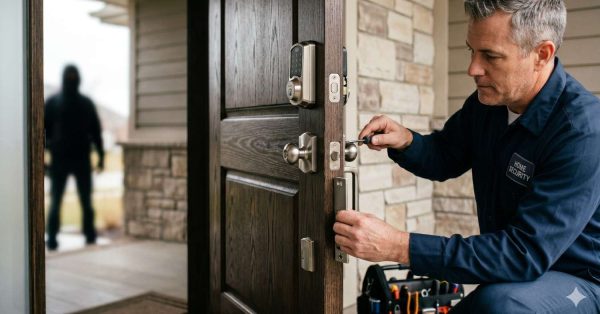
The trick solves a small daily friction, but it is not a security measure. For homes with worn hardware or weak latches, a professional locksmith can reinforce the door properly instead.
When This Trick Helps and When It Falls Short
The rubber band method works well for short-term convenience inside a home you control. It fails the moment security becomes the priority. A door held by a rubber band cannot resist forced entry, will not stop a child from wandering outside, and offers no protection against intruders. It is a comfort tool, not a safety system.
Situations Where a Proper Lock Upgrade Matters More
If your latch sticks, the deadbolt feels loose, or the strike plate is worn, the issue is hardware fatigue. Rubber bands mask the problem. Common signs include doors that fail to close on the first try, knobs that wobble, and locks that turn unevenly. These are repair signals, not workarounds. Replacing aging hardware restores both function and security in one step.
Smarter, Long-Term Ways to Secure Your Door
For lasting peace of mind, address the door itself. Upgrading to a solid-core door, installing a Grade 1 deadbolt, adding a reinforced strike plate, or fitting a smart lock with auto-unlock features removes the need for tricks entirely.
Smart locks offer hands-free entry through phone proximity, keypad codes, or voice assistants, giving the same convenience the rubber band provides without compromising safety. Pairing a quality lock with a video doorbell adds visibility and control, which matters most when you are home alone.
Conclusion
The rubber band on a doorknob is a clever shortcut for hands-free access, not a security solution. It helps in quick, low-risk moments but cannot replace working hardware.
Homeowners, landlords, and property managers benefit more from durable locks, solid doors, and broader home safety upgrades that protect every room year-round.
For dependable locksmith, door, and safety service, we recommend booking with Mr. Local Services today for trusted, professional support.
Frequently Asked Questions
Does a rubber band on a doorknob actually work?
Yes. A rubber band crossed over both knobs holds the latch retracted, allowing the door to open with a push instead of a full handle turn.
Is using a rubber band on a doorknob safe?
It is safe for hands-free convenience inside the home but provides no security. It will not stop intruders, secure children, or replace a working lock.
Can a rubber band damage a doorknob?
No, the rubber band rests against the knob and latch without applying enough pressure to damage hardware, finishes, or internal mechanisms over normal use.
What is a better alternative to the rubber band trick?
A smart lock, lever-style handle, or push-button knob offers hands-free access safely. These options retain security while removing the daily friction of stiff latches.
When should I call a professional for door issues?
Call a professional if the latch sticks, the knob wobbles, the deadbolt misaligns, or the door fails to close cleanly, signaling hardware repair or replacement.