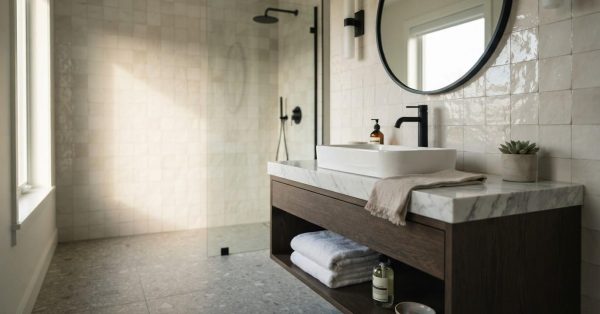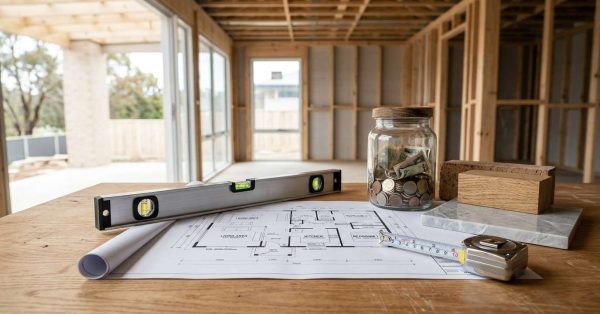
Remodeling materials and finishes are the physical building blocks of every renovation project, spanning flooring, cabinetry, countertops, tile, paint, trim, siding, roofing, and insulation. Getting these choices right determines how a remodel looks, performs, and holds its value for decades.
Every material decision carries tradeoffs between cost, durability, maintenance requirements, and visual appeal. A poorly matched palette or underperforming product can quickly undermine even the most carefully planned remodel budget.
This complete guide covers every major material and finish category used in remodeling, including flooring, cabinetry, countertops, tile, paint, trim, siding, roofing, insulation, and hardware, with deeper resources linked throughout.
What Are Remodeling Materials & Finishes?
Remodeling materials are the physical products used to build, repair, protect, or upgrade a property during a renovation. They span two distinct categories: structural materials, such as lumber, concrete block, insulation, and window framing, and finish materials, such as flooring, paint, tile, and hardware, that define the visible and functional quality of the completed space.
The term “finishes” refers to the final layer applied during construction. Finishes are what occupants see, touch, and interact with every day, which explains why they carry so much visual weight in any remodel and why poorly specified finishes are so immediately noticeable.
Hard vs. Soft Materials
Hard materials, including tile, stone, hardwood, metal, and glass, offer the greatest durability and longevity but require professional installation and provide little margin for error. Soft materials, including carpet, cork, fabric wall coverings, and acoustic panels, provide comfort and sound absorption but generally have shorter lifespans and can be updated more easily over time.
Structural vs. Finish Materials
Structural materials support loads, manage moisture, provide weather resistance, and control energy flow. Finish materials, applied over the structural layer, define aesthetics and everyday function. In most full remodels, the material budget divides roughly 40 to 50 percent for structural work and 50 to 60 percent for visible finishes.
How Material Selection Shapes Every Project Outcome
Every material choice creates downstream effects that ripple through the project. Tile selection determines which waterproofing system is required. Flooring choice affects subfloor preparation scope. Window selection influences HVAC sizing and placement. Siding choice drives the moisture management strategy for the entire wall assembly. Treating materials as an interconnected system, rather than a list of independent purchases, separates well-executed remodels from projects that look good at completion but underperform over time.
If you are new to remodeling terminology, our construction materials and finishes glossary defines every technical term used across this guide, from PEI ratings and R-values to LRV, rectified tile, sintered stone, thermofoil, and vapor retarders, in plain language for homeowners and property managers.
Understanding how materials interact with the broader remodel, including structural work, systems upgrades, and project phasing, is covered in full context in our whole home remodeling guide, which maps how finish and material decisions connect to every phase of a complete home renovation from pre-construction through final punch list.
Flooring Materials for Remodels
Flooring is among the highest-visibility and highest-traffic material categories in any remodel. It covers more surface area than any other single finish, directly affects acoustics, thermal comfort, and indoor air quality, and typically accounts for 15 to 25 percent of a project’s total finish budget. Selecting the right flooring for each room requires matching material properties to function, moisture exposure, traffic intensity, and existing subfloor conditions.
Hardwood: Solid vs. Engineered
Solid hardwood flooring offers the best refinishing potential and longest lifespan of any wood floor product. It cannot be installed below grade or in high-humidity areas without significant risk of warping or buckling. Engineered hardwood uses a genuine wood veneer over a stable plywood or HDF core, expanding installation flexibility to basements, over concrete slabs, and in kitchens. Species selection (oak, maple, hickory, walnut), plank width, and finish type (site-finished versus prefinished) all affect both appearance and long-term durability.
LVP, LVT, Laminate & Underlayment
Luxury vinyl plank (LVP) and luxury vinyl tile (LVT) have become the dominant choice for kitchens, basements, bathrooms, and rental properties due to their waterproof wear layer, realistic wood and stone visuals, and click-lock installation capability over most existing subfloors. Wear layer thickness, ranging from 6 mil to 20 mil, directly correlates with durability and scratch resistance. Laminate flooring offers similar aesthetics at a lower price point but is not waterproof and requires careful moisture management during and after installation.
Tile, Stone, Concrete & Specialty Floors
Porcelain and ceramic tile deliver the best moisture resistance and widest design range of any flooring product, making them the standard choice for bathrooms, mudrooms, laundry rooms, and kitchens. Natural stone, including marble, travertine, slate, and limestone, provides exceptional character but requires sealing and careful maintenance to prevent staining and etching. Polished concrete is increasingly popular in modern and industrial remodels for its durability and minimal upkeep. Cork and bamboo offer sustainable alternatives with natural thermal and acoustic properties for living spaces and bedrooms.
Carpet, Heated Flooring & Floor Transitions
Carpet remains the preferred choice for bedrooms and family rooms where acoustic softness and underfoot warmth are priorities. According to the National Floor Covering Association, carpet still accounts for roughly 40 percent of all residential flooring installed annually in the United States. Heated floor systems, both electric mat and hydronic, can be installed under tile, stone, and LVP and add meaningful comfort in cold-climate projects at a manageable cost premium. Floor transitions between materials are a frequently underestimated detail that significantly affects the visual cohesion of the finished project.
Every flooring material category introduced in this section, from hardwood and LVP to porcelain tile, natural stone, polished concrete, cork, carpet, heated floor systems, and floor transitions, is examined in full performance depth in our remodeling flooring options guide, which covers selection criteria, installation requirements, subfloor compatibility, refinishing potential, and long-term care for every flooring type available.
Cabinetry Materials: Construction, Doors & Hardware
Cabinetry is typically the single largest material line item in any kitchen project, often accounting for 30 to 40 percent of the total kitchen budget, and is expected to deliver reliable performance for 20 to 30 years under daily use. Understanding cabinet construction, door material options, and hardware selection helps property owners avoid making purchasing decisions based on price alone, which frequently results in premature failure or costly replacement within the first decade.
Cabinet Box Construction: Plywood vs. MDF vs. Particleboard
The cabinet box, also called the carcass, is the structural shell that doors, drawers, and shelves attach to. Plywood boxes, typically using 3/4-inch construction-grade plywood, offer the best strength, screw-holding ability, and moisture resistance of any box material. MDF boxes are common in stock cabinetry and deliver a smooth surface for painted finishes, but they are heavier and more susceptible to moisture damage than plywood. Particleboard boxes carry the lowest installed cost and the highest long-term risk, particularly in kitchens and bathrooms where moisture and heavy daily use are constant factors.
Door Materials, Styles & Overlay Options
Cabinet doors define the visual character of the installation. Solid wood doors, whether shaker, raised panel, inset, or slab profile, offer the greatest longevity and finishing flexibility but are subject to wood movement in humid environments. MDF doors accept paint finishes without grain telegraphing, making them the preferred choice for painted cabinetry. Thermofoil wraps MDF with a vinyl film for a smooth, low-maintenance surface but can lift at seams in high-heat environments over time. The overlay style, full overlay versus standard overlay versus inset, affects the proportion of the door relative to the frame and significantly influences the visual character of the completed installation.
Hardware: Pulls, Knobs & Soft-Close Systems
Cabinet hardware is the jewelry of a kitchen or bathroom, with 2025 finish options including brushed brass, matte black, satin nickel, polished chrome, oil-rubbed bronze, and unlacquered aged brass. European soft-close hinges and soft-close drawer slides are now considered standard in any mid-range to high-end kitchen remodel, extending the life of cabinet doors and drawers by preventing slamming and reducing wear on box construction over years of use. Pull style (bar pull, cup pull, knob, bin pull) and projection length significantly affect both visual weight and day-to-day usability.
Our cabinet box and door materials guide breaks down every cabinetry construction variable from plywood versus MDF versus particleboard box decisions and plywood grades, to solid wood versus MDF for painted finishes, door material and style comparisons, thermofoil versus laminate, and hardware selection guidance with finish coordination recommendations across the full range of available options.
Countertop Materials: Every Surface Compared
Countertop selection is among the most consequential material decisions in any kitchen or bathroom remodel, balancing beauty, durability, maintenance requirements, and budget across a surface that must perform reliably under daily use for decades. According to Houzz’s 2024 Kitchen Trends Study, quartz and granite remain the two most specified countertop materials in kitchen remodels, each offering different strengths that reflect different homeowner priorities and lifestyles.
Quartz, Granite & Marble: The Primary Stone Options
Engineered quartz is manufactured from ground quartz crystals bound with polymer resin, creating a non-porous surface that requires no sealing and resists stains, scratches, and moderate heat better than most natural stone in everyday kitchen environments. Granite is a natural stone that delivers unique veining patterns, excellent heat resistance, and strong long-term performance when sealed annually; no two slabs are identical. Marble is prized for its elegance and soft veining, but it will etch from acidic contact and requires acceptance of a living patina over time, making it better suited to low-traffic applications or homeowners who embrace natural wear as part of its character.
Quartzite, Sintered Stone & Alternative Surfaces
Quartzite, a natural metamorphic rock, should not be confused with engineered quartz; it offers dramatic veining similar to marble but with significantly greater hardness and durability for high-use kitchen surfaces. Sintered stone products such as Dekton and Neolith are manufactured at extreme pressure and temperature, creating a surface with near-zero porosity, excellent UV resistance, and exceptional heat tolerance, making them well suited to outdoor kitchens, high-heat cooking zones, and demanding commercial-residential hybrid applications. Recycled glass countertops offer strong sustainability credentials and a wide color range, though they require sealing and careful impact management.
Wood, Concrete & Specialty Surfaces
Butcher block countertops, whether solid end-grain or edge-grain construction, work exceptionally well in kitchen islands and baking areas, offering a warm natural aesthetic and a surface that can be sanded and re-oiled to address wear over many years. Concrete countertops can be custom-colored and cast in any shape, but they require sealing, are sensitive to acids, and may develop hairline cracks over time. Solid surface materials such as Corian and its competitors offer seamless integration with integrated sinks, non-porous performance, and easy scratch repair at a moderate price point that suits rental properties and value-focused remodels.
Our countertop materials selection guide covers every surface option from engineered quartz brands and granite grades to marble performance realities, quartzite versus quartz comparisons, sintered stone products, recycled glass countertops, and wood countertop sealant and care guidance, so you have the complete picture before committing to any surface.
Tile: Selection, Patterns & Waterproofing Systems
Tile is the most versatile material category in residential remodeling, appearing on bathroom floors, shower walls, kitchen backsplashes, entryway floors, fireplace surrounds, outdoor patios, and pool decks. The range of available tile options, from small mosaic glass chips to 48-by-96-inch porcelain slabs, combined with the number of installation variables including substrate preparation, pattern selection, and waterproofing method, makes tile specification one of the more technically demanding material decisions in a comprehensive remodel.
Tile Materials, PEI Ratings & Application Zones
Porcelain tile, fired at higher temperatures than ceramic, offers greater density, lower water absorption, and better freeze-thaw resistance, making it appropriate for both interior and exterior applications in any climate. Ceramic tile is less dense, easier to cut, and well suited to wall applications and light-traffic interior floors where the reduced density is not a limitation. Natural stone tile, including marble, travertine, slate, limestone, and quartzite, offers unmatched visual character at higher cost and with greater maintenance needs. PEI (Porcelain Enamel Institute) ratings from 0 to 5 measure abrasion resistance; any floor application requires PEI 3 or higher.
Format, Patterns & Rectified vs. Non-Rectified
Large-format tiles, 24×24 inches and above, create a seamless visual field that makes spaces feel larger, but they demand a flatter substrate and more precise installation to prevent lippage at tile edges. Rectified tiles are cut to exact, consistent dimensions after firing, allowing grout joints as narrow as 1/16 inch for a modern, minimal appearance. Non-rectified tiles have natural slight dimensional variation that requires wider grout joints and suits traditional or rustic design applications. Pattern selection, including running bond, herringbone, basketweave, and large-format linear layouts, is one of the most visible design decisions in any tile installation and significantly affects the perceived size, formality, and energy of the space.
Setting Materials, Grout & Waterproofing Systems
Mortar and thinset selection must match both the tile type and the substrate conditions; large-format tile requires a medium-bed mortar with anti-slump properties, while natural stone often requires a white polymer-modified thinset to prevent color bleed-through. Grout type selection, from sanded to unsanded to epoxy formulations, affects appearance, joint width compatibility, and long-term stain resistance; epoxy grout is the most durable and least porous but also the most demanding to install correctly. Waterproofing system selection for wet areas such as showers, steam rooms, and exterior installations is one of the highest-stakes decisions in any tile project, with systems including Schluter Kerdi membranes, RedGard liquid membrane, and custom foam and fabric assemblies each offering different performance profiles and installation skill requirements.
Our complete tile buying guide covers every aspect of tile specification and installation, including material types, PEI ratings by application zone, rectified versus non-rectified tile differences, pattern options that hold up over time, mortar and thinset product selection, sanded versus unsanded versus epoxy grout comparisons, and a full side-by-side comparison of waterproofing systems to help you specify correctly for every wet and exterior application.
Paint & Coatings: Sheen, Primers & Low-VOC Options
Paint and coatings are among the most cost-effective finish categories in any remodel. A single gallon of quality interior paint covers 350 to 400 square feet and costs between $35 and $90 depending on brand, sheen, and formulation. Yet the wrong sheen choice, a missed primer application, or a low-quality product can require expensive remediation within the first year after project completion. Paint decisions extend beyond wall color to include sheen selection for each room type, exterior formulation, cabinet-specific product and method selection, and the indoor air quality implications of VOC levels throughout the home.
Interior Paint Sheen Guide: Flat to High-Gloss
Interior paint sheen levels, from least to most reflective, include flat/matte (best for ceilings and low-traffic accent walls), eggshell (the most widely used all-purpose residential sheen for main living walls), satin (better washability for kitchens, bathrooms, and hallways), semi-gloss (the standard for trim, doors, and window casings), and high-gloss (reserved for accent applications and high-moisture surfaces). Higher sheens offer better washability but amplify surface imperfections in the substrate, which means wall preparation quality directly determines the appropriate sheen level for each application.
Primers, Exterior Paints & Cabinet Coatings
Primer selection is one of the most underestimated decisions in any paint project. Bonding primers are required over glossy or non-porous surfaces; stain-blocking primers are necessary over water stains, wood knots, and smoke damage; high-hide primers reduce the number of finish coats required when changing from a dark color to a light one or vice versa. Exterior paint must be formulated for weather exposure, substrate flexibility (wood moves substantially more than fiber cement), and regional climate conditions including UV intensity, humidity cycling, and freeze-thaw stress. Cabinet painting requires a specialized waterborne alkyd or targeted cabinet enamel to achieve the hard, durable, self-leveling film that cabinet doors and drawer fronts demand.
Low-VOC, Zero-VOC & Specialty Coating Products
Volatile organic compounds (VOCs) are chemicals released by paint during and after application that affect the indoor air quality of any enclosed space. Most major paint manufacturers now offer low-VOC formulations (under 50 g/L) and zero-VOC products that meet or exceed the performance of conventional paints in coverage, durability, and washability.
For homeowners, landlords, and property managers prioritizing indoor air quality, our VOC-free finishes guide will cover every interior application category from wall paints and trim coatings to cabinet finishes, adhesives, and caulks, with zero-VOC product guidance from verified manufacturers across all major application types.
One important caveat for buyers: tinting colorants added to a zero-VOC base paint can introduce VOCs into the final product, particularly with deep-toned colors. Confirming low-emission colorant availability with your paint supplier before finalizing a color selection is worth the extra step, particularly in nurseries, bedrooms, and spaces occupied by young children or individuals with respiratory sensitivities.
Our interior and exterior paint guide covers every sheen level with room-by-room application guidance, critical primer selection decisions, exterior paint formulations for different climates and substrates, cabinet-specific products and application methods, and the complete range of low-VOC and zero-VOC options from leading manufacturers now available for every interior and exterior application.
Trim, Doors & Windows: The Architecture of Finish Work
Interior trim, doors, and windows form the architectural framework of a finished space. Trim profiles define whether a room reads as contemporary, traditional, craftsman, or transitional. Door quality determines sound transmission, energy performance at the building envelope, and the tactile experience of moving through the home daily. Window selection affects natural light quality, ventilation potential, energy performance, and the long-term health of the building envelope. Together, these three categories establish visual hierarchy and architectural character before a single piece of furniture enters any room.
Interior Trim: Materials, Profiles & Styles
Interior trim includes base molding, door and window casings, crown molding, chair rail, picture rail, and wainscoting panels. MDF trim is the most widely specified material today due to its dimensional stability, smooth paintability, and lower cost relative to solid wood. Pine trim is the traditional choice for budget and mid-range applications, accepting both paint and stain finishes adequately. Hardwood trim, including poplar, oak, and cherry, is preferred for natural stain finishes and high-end millwork applications. Profile complexity, from simple flat casing to elaborate built-up millwork assemblies, is one of the primary cost drivers in the finish carpentry phase of any remodel.
Interior Doors: Solid Core vs. Hollow Core
Hollow core doors consist of a wood frame with a cardboard honeycomb core covered by thin veneer skins. They are lightweight, economical, and adequate for closets and low-priority rooms where acoustic performance is not a concern. Solid core doors use a composite wood block or mineral core, delivering substantially better sound attenuation (typically 28 to 32 STC), a more durable surface, and a higher-quality tactile experience on opening and closing. Solid core doors are appropriate for all bedrooms, home offices, and any room where privacy matters. Solid wood doors, constructed entirely from solid timber, offer the best visual quality and natural feel but cost significantly more and are most susceptible to seasonal wood movement.
Replacement Windows: Types, Frames & Energy Performance
Window replacement is among the highest-impact material decisions for both energy performance and curb appeal in a full remodel. Window types include double-hung, casement, awning, slider, fixed (picture), and specialty architectural shapes, each with distinct ventilation, operability, and maintenance characteristics. Frame materials include vinyl (lowest cost, good thermal performance, essentially maintenance-free), fiberglass (best thermal performance and dimensional stability, highest cost), composite, and wood (finest aesthetic quality, highest maintenance burden). Energy performance is specified using three key metrics: U-factor (overall heat loss rate; lower values are better), SHGC (solar heat gain coefficient; lower values are preferred in hot climates, higher values preferred in cold climates), and VT (visible light transmittance; higher values admit more daylight).
Our trim, doors, and windows guide covers interior trim materials and profiles in detail, solid core versus hollow core door decisions with room-by-room recommendations, every window type and frame material, the full range of energy performance specifications including U-factor and SHGC, and exterior door material comparisons with thermal and security performance data for every major material category.
Siding & Exterior Cladding: Protecting the Building Envelope
Exterior siding performs three essential functions: it protects structural sheathing and framing from weather and moisture intrusion, it manages drainage and drying potential within the wall assembly, and it establishes the visual identity of the home’s facade. Siding material selection carries long-term consequences for maintenance burden, insurance classification, durability, and resale appeal. According to Remodeling Magazine’s 2024 Cost vs. Value Report, fiber cement siding replacement recouped an average of 88.5 percent of its installed cost at resale in 2024, ranking it among the highest-ROI exterior material projects available.
Vinyl, Fiber Cement, Engineered Wood & Steel Siding
Vinyl siding offers the lowest installed cost, the widest range of color and profile options, and essentially zero maintenance requirements beyond occasional washing. It cannot be painted in deep dark colors without thermal expansion issues and becomes brittle under extreme cold impact. Fiber cement siding, with James Hardie being the dominant manufacturer, provides excellent fire resistance, resistance to rot and pest damage, and superior paint retention for long-lasting color stability. Engineered wood siding, represented primarily by LP SmartSide, offers a more natural wood appearance than fiber cement at comparable durability and a meaningfully lower installed cost than real cedar. Steel siding is the most impact-resistant and fire-resistant cladding material available and is common in high-wind and fire-risk zone applications.
Stucco, Brick & Stone Veneer Options
Traditional three-coat stucco is durable and seamless but labor-intensive to apply and repair correctly, requiring skilled plasterers who are increasingly difficult to find. Exterior insulation and finish systems (EIFS, sometimes called synthetic stucco) offer better thermal performance but require meticulous installation and regular maintenance to prevent moisture intrusion at penetrations and transitions. Full brick and natural stone provide the longest lifespan of any cladding material, exceeding 100 years in well-built applications, but at the highest installed cost of any cladding option. Manufactured stone veneer provides the visual character of natural stone at significantly lower cost and weight, making it accessible on projects where full stone is not budget-feasible.
Modern Cladding: Metal, Composite & Rainscreen Systems
Metal panel cladding, composite wood-plastic panels, and ventilated rainscreen assemblies are increasingly specified in contemporary, high-performance, and mixed-use renovation projects. Rainscreen systems create a drainage plane and drying cavity between the cladding material and the weather-resistant barrier, providing superior moisture management performance and extending the service life of the wall assembly in any climate. These modern cladding approaches require additional planning and detailing but represent a meaningful upgrade in building performance and visual differentiation.
Our siding and exterior cladding options guide covers every cladding material including vinyl, fiber cement, engineered wood, steel, stucco, EIFS, brick, stone veneer, and modern metal and rainscreen systems, with performance comparisons, regional cost data, maintenance profiles, and detailed guidance on matching new siding to an existing home’s architectural character without visual mismatch.
Roofing Materials: Durability, Style & Performance
The roof is the home’s primary weather defense system, and roofing material selection affects more downstream variables than most homeowners expect: structural load requirements, fire rating and insurance classification, energy performance, attic ventilation design, visual character, and long-term maintenance costs all depend on the roofing material chosen. According to Remodeling Magazine’s 2024 Cost vs. Value Report, asphalt shingle roof replacement recouped an average of 103 percent of its installed cost at resale in 2024, making it one of the rare remodeling categories that can generate a positive return.
Asphalt Shingles: Architectural vs. 3-Tab
Three-tab asphalt shingles, once the default residential roofing product, are now largely replaced in new and replacement work by dimensional (architectural) shingles, which deliver greater visual depth, improved wind resistance ratings (commonly up to 110 mph or higher), and longer warranty periods, typically 30 years versus 15 to 20 years for standard 3-tab products. Premium architectural shingles with Class 4 impact resistance ratings qualify for meaningful insurance premium discounts in hail-prone markets across the central and southern United States. Lighter shingle colors deliver measurably better thermal performance in hot climates by reflecting solar radiation rather than absorbing it.
Metal Roofing, Tile, Slate & Cool Roof Systems
Standing seam metal roofing offers the longest service life of any widely used residential roofing material, typically 40 to 70 years with minimal maintenance, combined with excellent fire resistance and strong thermal reflectance when specified in lighter finish colors. It costs two to three times more than architectural asphalt at installation but may be the last roof a homeowner installs. Concrete and clay tile roofing is standard in Spanish, Mediterranean, and Mission architectural styles, offering exceptional longevity of 50 to 100-plus years but requiring reinforced structural support due to substantial dead load. Slate roofing is the premium choice for historic and high-end residential applications, with genuine quarried slate lasting well over a century when properly installed. Cool roof materials, whether light-colored shingles, reflective coatings, or standing seam metal panels, are increasingly specified in warm climates and required under some state and local energy codes.
Roof Tie-In Considerations for Additions & Remodels
When an addition, second storey, or dormer is attached to an existing structure, roof tie-in becomes one of the most critical details in the entire project. A poorly executed tie-in between old and new roofing assemblies is the leading cause of post-remodel water intrusion and the single most expensive callback a contractor faces. Matching shingle style, color, weathering characteristics, and underlayment system at the connection point requires careful planning and skilled execution.
Our roofing materials comparison guide covers architectural versus 3-tab asphalt shingles in full detail, standing seam metal roofing options, concrete and clay tile specifications, slate repair and restoration considerations, cool roof materials and applicable code requirements, and the technical details of roof tie-in during additions and major remodels where existing and new roofing assemblies must be seamlessly integrated.
Insulation & Air Sealing: The Hidden Performance Layer
Insulation and air sealing are the least visible and most impactful material decisions in any remodel that opens walls, attic spaces, or crawl spaces. These materials determine how comfortable the home is year-round, how hard the mechanical systems must work, how well moisture is managed within the building assembly, how quiet the interior environment is, and whether the overall building assembly performs as designed for the next 30 to 50 years. The U.S. Department of Energy estimates that proper insulation and air sealing can reduce heating and cooling costs by 10 to 50 percent depending on existing conditions and the depth of the improvement.
Insulation Types: Batt, Blown, Spray Foam & Rigid
Batt insulation, available in fiberglass and mineral wool, is the most widely installed product in residential construction, fitting between standard stud and joist spacing at a predictable and competitive cost. Blown insulation, produced from cellulose (80 percent recycled content) or fiberglass, is ideal for attic floors and enclosed wall cavities, conforming to irregular shapes and covering gaps more completely than batt products. Open-cell spray polyurethane foam expands aggressively to fill every void in a framing cavity, providing both insulation and air sealing in a single application; it is the most effective approach for complex framing geometries. Closed-cell spray foam delivers the highest R-value per inch of any residential insulation product, combined with a Class II vapor retarder and a structural stiffening effect on the framing assembly, making it the preferred specification for rim joists, crawl spaces, and unvented roof assemblies. Rigid foam boards including XPS, EPS, and polyisocyanurate provide continuous insulation on walls and roofs, eliminating thermal bridging through framing members that batt products cannot address.
R-Value Requirements by Climate Zone
The Department of Energy’s IECC climate zone map divides the United States into eight climate zones, each carrying specific minimum R-value requirements for attic floors, walls, floors over unconditioned spaces, and basement walls. Zone 1 (Florida, Hawaii, South Texas) requires R-30 minimum in attics; Zone 7 (Northern Minnesota, Montana, northern Idaho) requires R-60 minimum. Choosing the correct insulation level and type for your specific climate zone ensures both code compliance at inspection and long-term energy performance that delivers the lowest possible operating costs over the life of the building.
Air Sealing Strategies & Vapor Retarder Selection
Air sealing is at least as important as insulation value, because air movement through gaps in the building envelope carries far more heat and moisture than conduction through the insulated assembly itself. Common air sealing targets include top plates, electrical boxes in exterior walls, rim joists at the foundation, recessed light fixtures in ceilings below conditioned attic space, duct penetrations through framing, and attic access hatches. Vapor retarders, which are physically and functionally distinct from air barriers, are required on the warm-in-winter side of insulation in cold climates to control moisture condensation within the wall assembly. Getting the vapor control strategy correct for the specific climate zone and building assembly type prevents mold growth, wood rot, and premature material failure in walls and roof assemblies that are expected to last the life of the building.
Our insulation types and air sealing guide covers all four major insulation types with R-value performance data, open-cell versus closed-cell spray foam performance and cost differences, mineral wool versus fiberglass comparisons by application, rigid foam product options (XPS, EPS, and Polyiso), R-value recommendations for all eight IECC climate zones, air sealing strategies and sequencing, and the technical distinctions between vapor barriers and vapor retarders in different climate and building assembly contexts.
Hardware & Specialty Finishes: The Details That Define Quality
Hardware and specialty finishes are the final layer of any remodel, and they deliver an outsized effect on perceived quality relative to their cost in the overall project budget. A well-tiled bathroom with mismatched or undergraded hardware reads as unfinished. A whole-home remodel with inconsistent metal finishes across adjacent rooms loses visual coherence. This category spans door and window hardware, closet systems, stair railings, ceiling treatments, wallcoverings, and acoustic and built-in elements that complete the character of every finished space.
Door & Window Hardware: Grades, Styles & Finishes
Door hardware grades are defined by ANSI/BHMA cycle testing standards. Residential grade hardware is rated for 250,000 open-close cycles; commercial grade handles 500,000 or more. For high-use entry doors and frequently operated interior doors in rental properties and family homes, commercial-grade hardware justifies the modest premium through substantially longer service life. Finish options for door and window hardware in 2025 include brushed brass, matte black, satin nickel, polished chrome, oil-rubbed bronze, and unlacquered aged brass. Coordinating hardware finishes across door hardware, plumbing fixtures, and light fixtures throughout a home is one of the most visible signs of deliberate, professional-quality design.
Closet Systems, Stair Railings & Ceiling Treatments
Closet systems range from freestanding wire configurations to fully custom built-in wood cabinetry, with modular melamine systems providing the best balance of cost, flexibility, and finished appearance for most residential applications. Stair railings are governed by building code (minimum 36-inch height in most residential jurisdictions; 42 inches for stairs serving areas of higher occupancy) and can be constructed from steel, wrought iron, solid wood, glass, or combinations of materials. Ceiling treatments including coffered ceilings, tray ceilings, exposed wood beams, and decorative plaster applications add architectural dimension and visual interest that clearly distinguishes higher-end remodels from basic finish work in both appearance and appraiser perception.
Acoustic Panels, Wallcoverings & Built-In Cabinetry
Acoustic wall panels have moved steadily from commercial office environments into high-quality residential remodeling, particularly in home offices, media rooms, and open-plan living areas where echo and reverberation degrade daily quality of life. Panel performance is measured by NRC (noise reduction coefficient) ratings; products approaching 1.0 provide near-complete sound absorption within the treated space. Wallpaper and decorative wall coverings have returned strongly since 2020, with durable non-woven, grasscloth, and printed vinyl options now available that are more washable and more reversible than historic paper products. Built-in cabinetry, whether custom-crafted or assembled from modular components, adds measurable storage capacity, visual structure, and documented property value to any room in which it is correctly specified and installed.
Our hardware and specialty finishes guide covers door and window hardware grades with ANSI cycle rating data, finish options and compatibility guidance for coordinating across a full home, closet system comparisons from wire to custom, stair railing materials and code requirements, wallpaper and wall covering types and durability ratings, ceiling treatment options including coffered, tray, and beam designs, built-in cabinetry custom versus modular decision frameworks, acoustic panel performance ratings, and glass block application guidance.
Building a Cohesive Material Palette Across Your Remodel
One of the most common material selection errors in whole-home remodeling is choosing each material in isolation, resulting in a finished project where the flooring in the hallway clashes with the adjacent bathroom tile, the trim paint undertone conflicts with the cabinet color, or the brass fixtures visible from the kitchen contradict the nickel fixtures two rooms away. Building a cohesive material palette requires applying a few foundational principles that work regardless of whether you are working with a professional designer or making selections independently.
Color Undertones, LRV & Visual Coordination
Every paint color, natural stone, wood floor, and tile surface carries an undertone: a secondary color that becomes most apparent when two similar-toned products are placed adjacent to each other or when lighting conditions shift throughout the day. Warm undertones (yellow, orange, red) coordinate best with other warm undertones; cool undertones (blue, green, gray) work best together. Mixing warm and cool undertones in the same continuous visual field creates unintentional color tension that reads as off without most observers being able to articulate why. LRV (light reflectance value) measures the proportion of light a surface reflects, on a scale from 0 (pure black) to 100 (pure white). Matching LRV values across adjacent walls, trim, and ceiling surfaces creates tonal harmony and depth even when the specific colors chosen differ meaningfully.
Matching Wood Tones, Metals & Stone Across Rooms
In a well-executed remodel, the same wood tone family, whether warm amber, cool gray-brown, or rich walnut, appears consistently across flooring, cabinetry, and furniture selections in any space where multiple wood materials are visible. Metal finishes are most successfully coordinated by limiting the palette to two metals used intentionally across the project: one dominant finish and one accent finish that appears throughout the home. Stone materials, including countertops, tile, and fireplace surrounds, are most cohesive when they share a color family and veining character that reinforces the overall palette rather than competing with it for visual attention.
Our remodeling planning and design guide includes dedicated coverage of whole-house color palette strategy, LRV explained with practical room-by-room examples, wood tone matching techniques across a full home remodel, metal finish coordination frameworks, and a step-by-step method for building a fully cohesive material palette from first selection through final installation.
Material Costs, Budgeting & Lead Times
Material costs in residential remodeling vary by category, region, project size, and supply chain conditions at the time of purchase. As a general orientation: flooring materials average $3 to $25 per square foot installed depending on material type and complexity; countertops range from $40 to $250 per square foot installed; roofing runs $5 to $25 per square foot installed; and insulation typically represents $1.50 to $5 per square foot of building envelope treated. These ranges are broad because material quality tier, brand specification, regional labor rates, and project-specific conditions all drive the final number in either direction.
Material lead times are among the leading causes of remodel schedule disruption. Custom cabinetry commonly requires 8 to 16 weeks; imported tile and specialty stone can require 4 to 10 weeks; custom windows often require 6 to 12 weeks; and certain appliance categories have experienced lead times exceeding 16 to 24 weeks in recent supply chain cycles. Standard practice on well-managed projects is to order long-lead materials before construction begins, in some cases even before permits are approved, to protect the overall schedule from compressing as trades complete faster than materials arrive.
Material lead times represent one of the most underestimated risk factors in any remodel timeline, and our upcoming remodeling material lead times planning guide will give you category-by-category lead time ranges, seasonal variation patterns, and practical procurement strategies for materials most commonly affected by extended waits.
Knowing where a material investment delivers lasting value versus where a mid-tier product performs equally well in daily use is among the most consequential budget allocation decisions available, and we are developing a dedicated splurge vs. save guide for remodeling materials that maps every major material category against maintenance burden, replacement cycle expectations, and documented resale return.
Our complete guide to remodeling budgets and material costs covers how to build a remodel budget from scratch, the real split between hard and soft costs, how allowances work in remodeling contracts, the budget and schedule impacts of material lead time delays, and proven strategies for managing supply chain disruptions without derailing your project.
Sustainability & Low-Carbon Material Choices
Material sustainability has evolved from a niche design consideration to a mainstream procurement factor across residential remodeling. Three primary dimensions define a material’s environmental profile: embodied carbon (the greenhouse gas emissions associated with raw material extraction, manufacturing, and transportation to site), indoor air quality impact (VOC and chemical emissions during and after installation in the occupied space), and end-of-life recyclability or reclaimability.
Low-carbon material options have expanded significantly across every major category. Cellulose insulation is manufactured from 80 percent post-consumer recycled paper and carries a substantially lower embodied carbon footprint than fiberglass or spray foam alternatives. FSC-certified hardwood flooring ensures responsible forest management. Fiber cement siding formulations are being modified by leading manufacturers to reduce clinker content and associated carbon emissions. Recycled-content glass tile, recycled aluminum trim profiles, and reclaimed wood flooring and cabinetry lumber are all readily available at price points now competitive with their conventional alternatives in most markets.
Indoor air quality certification is a particularly important sustainability dimension in tightly built, well-insulated modern homes, where lower ventilation rates can concentrate emissions from building materials. Products carrying FloorScore, Greenguard Gold, or CARB Phase 2 certifications have been independently tested and verified for low chemical emissions, providing documentation-backed confidence for homeowners with young children, occupants with respiratory conditions, or health-focused project goals.
Our green and sustainable remodeling guide covers LEED-aligned material selection frameworks, the full range of low-carbon and recycled-content materials available for residential remodels in 2025, embodied carbon considerations in the most common remodeling material decisions, passive house material principles applied to deep retrofits, and a complete VOC-free finishes guide with product-level recommendations for every interior application category.
How Material Selections Affect Resale Value & ROI
Not every material investment commands a return at resale, and understanding which choices pay back versus which serve personal preference without translating to buyer value is essential for any homeowner who may eventually sell. According to Remodeling Magazine’s 2024 Cost vs. Value Report, exterior material investments consistently outperform interior finish investments in terms of percentage cost recouped at resale, with fiber cement siding, manufactured stone veneer, and roof replacement all averaging 85 percent or more of installed cost nationally.
Interior materials that most reliably support appraisal value and buyer premiums include hardwood flooring (both new installation and refinishing of existing wood floors), quartz or granite countertops in kitchens and primary bathrooms, porcelain tile in all bathroom applications, and energy-rated replacement windows. Materials that homeowners frequently over-invest in relative to their neighborhood’s value ceiling include highly customized cabinetry, exotic stone countertops in non-primary spaces, and strongly personalized tile choices in statement applications that reduce buyer appeal to a narrower audience.
Neutral palettes, broadly appealing material combinations, and quality within the appropriate tier for the neighborhood and home value consistently outperform bold or unusual material choices at resale. The strategic goal is choosing materials that a broad range of qualified buyers will appreciate, not materials that express personal aesthetic at the expense of market appeal.
Our complete remodeling ROI and resale guide covers which material investments pay back most reliably at resale, how appraisers assign value to material quality relative to quantity, the specific finishes and features that buyers are willing to pay a premium for in 2025, and practical strategies for neutralizing a remodel without compromising the overall quality and character of the finished project. When you are ready to connect with skilled professionals who can help you navigate these decisions with confidence, the team at Mr. Local Services is here to help.
Conclusion
Remodeling materials and finishes form the complete language of a renovation, connecting every system, surface, and room into a coherent, high-performing home.
From flooring to roofing, choosing the right materials at every layer delivers durability, visual cohesion, and lasting property value throughout your home.
Ready to plan your next remodel? Contact Mr. Local Services today for expert guidance, skilled contractors, and material selection support you can trust.
Frequently Asked Questions
What is the difference between remodeling materials and finishes?
Remodeling materials are functional products used for structure and performance, such as lumber or tile substrate. Finishes are visible surface elements, including paint and trim, that define a space’s final look.
How do I choose the right flooring material for my remodel?
Start by evaluating room function, moisture exposure, traffic levels, and subfloor condition. Hardwood suits dry living areas; porcelain tile handles wet zones; LVP works in high-moisture or uneven subfloor situations.
Which countertop material is the most durable for high-use kitchen areas?
Engineered quartz and sintered stone are among the most durable countertop choices, resisting scratches, heat, and staining. Granite is also highly durable but requires annual sealing to prevent stain absorption in kitchen environments.
What does R-value mean and why does it matter for insulation selection?
R-value measures insulation’s resistance to heat flow; higher values mean better thermal performance. Matching the correct R-value to your climate zone ensures both energy efficiency and building code compliance.
Can I mix different metal finishes in the same home remodel?
Yes, mixing metal finishes is widely accepted when done intentionally. Pair two complementary metals, such as matte black with brushed brass, and repeat both consistently throughout the space for cohesion.
How do material choices affect the resale value of my home?
Neutral, quality materials consistently support stronger appraisals and faster home sales. Trendy or unusual finishes may appeal to some buyers but can limit your pool of potential purchasers at resale.
What is the most cost-effective exterior siding material for a home remodel?
Vinyl siding offers the lowest upfront cost and minimal maintenance requirements. Fiber cement siding costs more upfront but delivers superior durability, fire resistance, and better long-term resale performance.