Yes, you can use Quikrete for deck footings, and it is one of the most common choices for residential decks across the USA. Quikrete products meet the structural requirements set by most building codes when mixed, poured, and cured according to the manufacturer’s instructions. The right product, the right footing depth, and proper preparation determine whether your deck stands solid for decades or shifts within a few seasons.
Yes, You Can Use Quikrete for Deck Footings
Quikrete is approved for deck footings when you use a structural-grade mix rated for at least 4,000 PSI and follow local building code for footing depth and diameter. Standard Quikrete Concrete Mix, Fast-Setting, and 5000 High-Early Strength all qualify. Footings must extend below the frost line and bear on undisturbed soil.
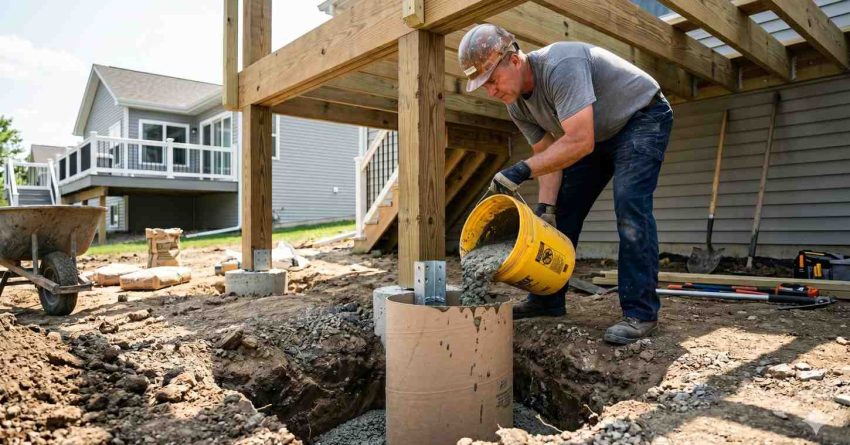
Most residential decks use 10-inch or 12-inch diameter footings poured into cardboard tube forms. The concrete supports post bases or anchor brackets that connect to the deck frame. Once cured, Quikrete delivers the compressive strength needed to carry deck loads, including live loads from people, furniture, and snow.
Which Quikrete Mix Works Best for Deck Footings
For most deck footings, Quikrete 5000 is the strongest option, reaching 5,000 PSI within 28 days. Standard Quikrete Concrete Mix works well for smaller decks and reaches 4,000 PSI. Fast-Setting Concrete is ideal when you want to set posts directly without mixing water separately, since it hardens in 20 to 40 minutes. Always confirm your local building code’s minimum PSI rating before buying.
How Much Quikrete You Need Per Footing
A 10-inch diameter footing poured 48 inches deep requires roughly five to six 80-pound bags of Quikrete. A 12-inch diameter footing of the same depth needs seven to eight bags. Plan for slightly more than calculated to account for soil irregularities and waste. A standard 80-pound bag yields about 0.6 cubic feet of cured concrete, which makes math simple before your trip to the supplier.
The product works. The execution determines whether your footings outlast the deck or fail under it. That distinction is why many homeowners weigh DIY footing work against hiring professional deck builders who handle layout, depth, and curing as one continuous process.
How to Pour Quikrete Deck Footings Correctly
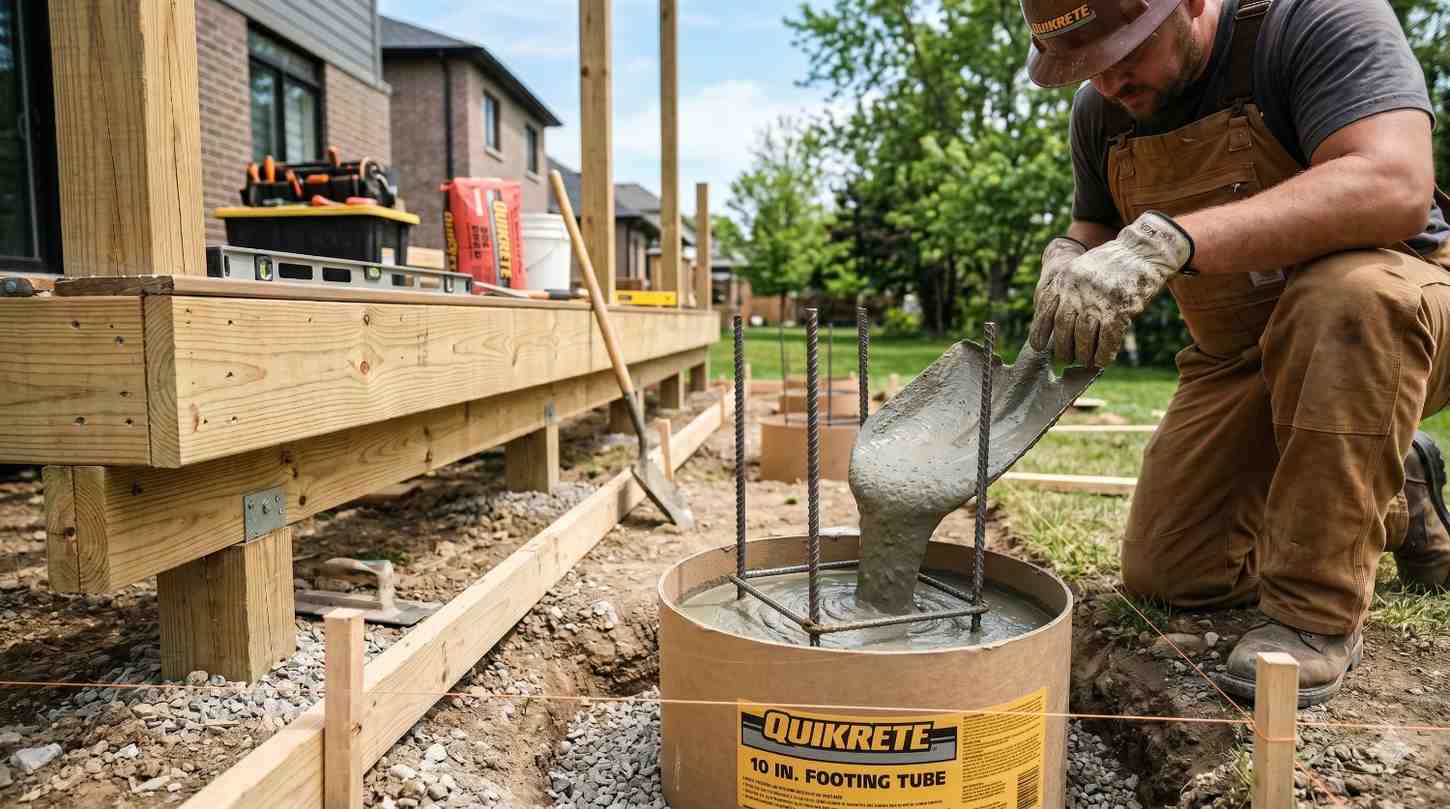
Start by digging each hole below the frost line for your region, which ranges from 12 inches in southern states to 48 inches or more in northern climates. Place a cardboard tube form in each hole and check it for level. Mix Quikrete in a wheelbarrow or mixer using clean water at the ratio printed on the bag, typically about 3 quarts per 80-pound bag.
Pour in lifts, working a stick or rebar through the wet mix to release air pockets. Set your post anchor or J-bolt into the top while the concrete is still wet. Screed the surface flat, then let the footing cure undisturbed for at least 24 hours before framing.
Common Mistakes That Weaken Deck Footings
Pouring on loose or disturbed soil causes settling. Skipping the frost line depth invites heaving during winter. Adding too much water reduces compressive strength sharply. Setting post anchors after the concrete has hardened forces awkward retrofits and weak connections. Each mistake compounds, and most failures trace back to a shortcut taken on the day of the pour rather than a flaw in the Quikrete itself.
When Quikrete Isn’t the Right Choice
Quikrete bagged mixes are excellent for standard residential decks, but they may not fit every project. Large commercial decks, decks with helical pier requirements, or projects spanning more than 20 footings are usually faster and more cost-effective with ready-mix delivered concrete. Decks built on expansive clay, high water tables, or steep grades often need engineered footings that go beyond what bagged concrete can offer. For small concrete repairs around an existing deck, bagged Quikrete remains the practical choice.
Conclusion
Quikrete is a reliable, code-compliant choice for deck footings when you select the right mix, dig to frost line depth, and cure the concrete properly before framing. The product delivers the strength residential decks need.
For homeowners and property managers across the USA, knowing when to DIY and when to hire skilled help protects both your investment and your safety long term.
Need confident results without the guesswork? Mr. Local Services connects you with vetted deck specialists who handle footings, framing, and finish work end to end.
Frequently Asked Questions
Is Quikrete strong enough for deck footings?
Yes. Quikrete mixes rated 4,000 PSI or higher meet residential deck footing requirements in most building codes when poured to the correct depth and diameter.
How long does Quikrete take to cure for deck footings?
Quikrete reaches handling strength in 24 to 48 hours and full design strength in 28 days. Wait at least 24 hours before framing on top of fresh footings.
Can you pour Quikrete dry into a deck footing hole?
No. Dry-pouring is not approved for structural footings. Always mix Quikrete with the correct amount of water to ensure full hydration and rated compressive strength.
Do deck footings need rebar with Quikrete?
Most residential deck footings under compression do not require rebar. Local codes may require it for taller decks, cantilevered designs, or high seismic zones.
How deep should Quikrete deck footings be?
Footings must extend below your local frost line, typically between 12 and 48 inches. Check your municipal building department for the exact depth required in your area.