The design decisions you make today determine what a buyer is willing to pay tomorrow. Homeowners who plan with resale in mind from the start consistently recover more of their investment and spend less time on the market than those who renovate for personal preference alone.
Every property has a ceiling, and smart design choices help you reach it. This guide explains which upgrades deliver the strongest return, where personalization works against you, and how to protect your investment from the inside out.
You will learn which rooms, systems, and exterior features buyers scrutinize most, how to balance style with market appeal, and when to call in professionals to get the work done right.
Why Design Decisions Directly Affect Resale Value
Resale value is not determined at the moment you list your home. It is shaped by every material, finish, and structural choice made during the design and renovation process. Buyers form impressions quickly, and those impressions are built on what they see, what they inspect, and what they expect to maintain after closing.
Design choices that feel personal and distinctive to you may read as costly problems to a buyer. A layout that works for your lifestyle may limit appeal to families, couples, or remote workers who make up the majority of buyers in your market. Understanding this gap between owner preference and buyer expectation is the foundation of resale-focused design.
The Buyer’s Perspective on Interior Choices
Buyers walk through a property looking for reasons to negotiate down, not reasons to pay full price. Dated finishes, unconventional layouts, and high-maintenance materials all become leverage points in price discussions. Neutral, durable, and move-in-ready spaces remove those leverage points and give buyers confidence that they are getting value without hidden costs.
The most consistently valued interior features are those that feel fresh, functional, and low-maintenance. Clean lines, quality materials in neutral tones, and well-proportioned spaces signal care and craftsmanship without demanding that buyers share your personal taste.
How Early Design Mistakes Cost You at Closing
The most expensive design mistakes are not the ones that look bad. They are the ones that require buyers to spend money immediately after purchase. Choosing materials that wear quickly, skipping structural upgrades in favor of cosmetic ones, or over-improving for the neighborhood all reduce what a buyer is willing to offer.
Understanding how individual design choices connect to overall property value is part of a larger picture — our home improvement ROI guide covers the full framework for planning upgrades that protect and grow what your property is worth.
High-ROI Design Upgrades That Buyers Pay More For
Not all upgrades are equal. Some improvements recover nearly their full cost at resale. Others return a fraction of what was spent. The difference usually comes down to whether the upgrade addresses something buyers universally value or something that only appeals to a narrow segment of the market.
Kitchens and bathrooms consistently rank as the highest-return renovation categories in residential real estate. Buyers expect these spaces to be functional, clean, and updated. When they are not, buyers discount their offer to account for the work they expect to do. When they are, buyers compete.
Kitchen and Bathroom Finishes That Move the Needle
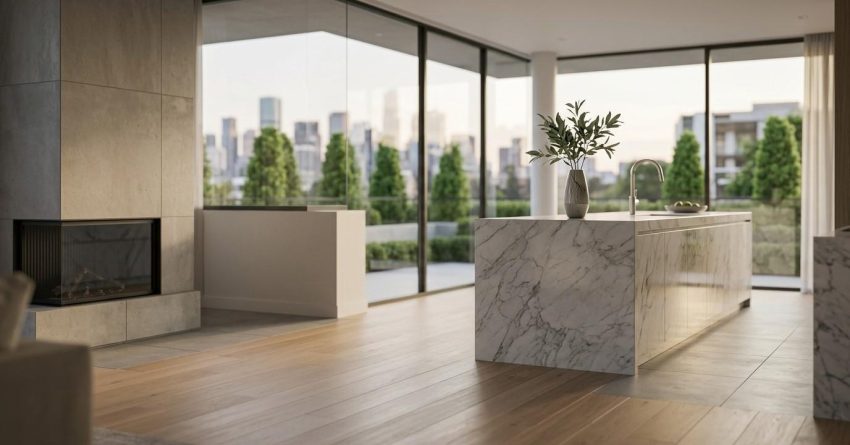
In the kitchen, the upgrades that deliver the strongest return are not always the most expensive. Replacing cabinet fronts, updating hardware, installing new countertops in a durable material like quartz, and adding a cohesive backsplash can transform buyer perception without a full gut renovation. Stainless appliances in good condition, adequate lighting, and clean grout lines matter more than custom cabinetry in a color that only you love.
In bathrooms, buyers focus on the condition of tile, fixtures, and ventilation. Cracked grout, stained caulk, and outdated vanities are negotiation points. Replacing them is relatively inexpensive and consistently improves buyer response. When kitchen and bathroom upgrades are part of a larger renovation plan, working with experienced professionals makes all the difference — our remodeling services explains what full-scope renovation projects include and how to plan them for maximum return.
Flooring, Paint, and Curb Appeal Choices That Sell
Flooring is one of the first things buyers notice and one of the most emotionally influential elements of a walkthrough. Hardwood, luxury vinyl plank, and quality tile in neutral tones consistently outperform carpet in buyer preference surveys. Choosing the right material for high-traffic areas is one of the most impactful decisions you can make during design — our flooring options breaks down the materials, finishes, and installation approaches that hold up best and appeal most to buyers.
Paint is the lowest-cost, highest-impact cosmetic upgrade available. Warm whites, soft grays, and greige tones read as clean, modern, and move-in ready to the widest possible buyer pool. A fresh coat of paint in the right palette can transform how buyers perceive a space without a major investment — our interior painting outlines what professional painting services include and how color selection affects buyer response.
Neutral vs. Personalized Design — What Resale Data Shows
The tension between designing a home you love and designing a home that sells is real. Personalization adds meaning to a space for the owner. It often subtracts value for the buyer. The data on this is consistent: homes with broad market appeal sell faster and closer to asking price than homes with distinctive, owner-specific design choices.
This does not mean your home needs to look like a hotel. It means that the choices most likely to divide buyer opinion — bold wall colors, unconventional tile patterns, highly specific built-ins, or niche material choices — are best avoided in spaces buyers weigh most heavily.
When to Customize and When to Stay Market-Ready
There is a practical rule for where personalization is acceptable and where it is not. In spaces buyers inspect closely — kitchens, bathrooms, primary bedrooms, and entryways — stay market-ready. In spaces buyers treat as blank canvases — secondary bedrooms, home offices, and bonus rooms — modest personalization carries less risk.
The goal is to make the majority of your home feel like it belongs to the buyer before they even make an offer. When buyers can picture themselves in a space without mentally repainting, recarpeting, or reconfiguring it, they are more likely to offer full price.
Structural and Systems Upgrades That Protect Resale Value
Cosmetic upgrades attract buyers. Structural and systems upgrades keep them. A home that looks beautiful but fails inspection loses buyers at the worst possible moment — after they are emotionally invested but before the deal closes. Addressing structural and mechanical systems during the design phase is far less disruptive and far less expensive than doing so under listing pressure.
Buyers and their agents know what to look for. Inspectors are thorough. Any deferred maintenance on major systems will surface, and it will cost you either in price reductions, repair credits, or lost deals.
Roofing, Windows, and Doors Buyers Inspect First
The roof is the first thing a buyer’s inspector evaluates in detail, and a failing or aging roof is one of the most common reasons deals fall apart. Buyers and their inspectors scrutinize the roof before almost anything else, making it one of the highest-stakes items in any pre-sale checklist — our roofing inspection explains what a professional assessment covers and when replacement or repair is the smarter investment.
Windows and doors follow closely. Outdated or inefficient windows are a common negotiation point during home sales, and addressing them before listing removes a significant buyer objection — our window replacement covers the options, energy ratings, and installation process buyers look for. Entry doors are one of the first things buyers see and one of the easiest upgrades to justify with strong resale data — our door installation details the styles, materials, and security features that add the most value at the point of sale.
HVAC, Plumbing, and Electrical — Hidden Value Drivers
Buyers cannot see the systems behind the walls, but they ask about them. A functioning, well-maintained HVAC system signals to buyers that the home has been cared for and reduces the risk of post-sale disputes — our HVAC system explains what service, maintenance, and replacement involve and how to document system condition for listing.
Visible plumbing issues are among the most common reasons buyers request price reductions, making pre-design plumbing assessment a smart first step — our plumbing upgrades outlines what inspections and improvements typically involve and what buyers expect to see. Outdated wiring or insufficient panel capacity can derail a sale entirely, and addressing these issues during the design phase is far less disruptive than doing so under listing pressure — our electrical inspection covers what a professional assessment includes and what upgrades most commonly affect buyer confidence.
Outdoor Spaces and Curb Appeal as Resale Multipliers
A buyer’s first impression of your property is formed before they walk through the door. The exterior, the yard, and the approach to the entry set the emotional tone for everything that follows. Strong curb appeal does not just attract buyers — it primes them to view the interior more favorably.
Outdoor improvements also offer some of the strongest returns in residential real estate when they are planned thoughtfully and executed well. The key is focusing on improvements that appeal broadly rather than those that reflect personal lifestyle preferences.
Landscaping and Deck Design for Maximum Return
First impressions begin at the curb, and a well-planned landscape communicates property care before a buyer ever steps inside — our landscape design covers the services, plant selections, and layout approaches that deliver the strongest visual and financial return. Clean beds, defined edges, healthy grass, and mature plantings signal maintenance and add perceived value without requiring a dramatic overhaul.
An outdoor living space is one of the most consistently valued additions in residential real estate, particularly in markets where outdoor use is year-round — our deck installation explains design options, materials, and what buyers look for in a well-built deck. A deck that is structurally sound, properly permitted, and finished in a durable material adds usable square footage that buyers factor into their offer.
Power Washing and Exterior Maintenance Before Listing
Grime, mildew, and weathering accumulate on every exterior surface over time. Buyers notice. One of the most cost-effective ways to improve a property’s visual appeal before listing is a thorough exterior cleaning — our pressure washing explains what surfaces benefit most and what a professional service includes. Driveways, siding, fences, and walkways that look clean and well-maintained tell buyers the property has been looked after, which builds confidence before a single interior door is opened.
Working With Professionals to Protect Your Investment
The difference between a renovation that adds value and one that costs you at resale often comes down to execution quality. Buyers and inspectors can identify work that was done incorrectly, and substandard workmanship creates liability that shows up in inspection reports and price negotiations.
Not every pre-sale improvement requires a full contractor — many of the small fixes that buyers notice most can be handled efficiently by a skilled handyman — our handyman repairs outlines the types of tasks that fall within this scope and how to prioritize them before listing. Cracks, water stains, and uneven surfaces on walls and ceilings are among the most noticed cosmetic issues during buyer walkthroughs — our drywall repair covers what professional repair involves and how it contributes to a clean, move-in-ready presentation.
Working with experienced, licensed professionals across every trade ensures that the improvements you make are done to a standard that holds up under inspection and supports the price you are asking. Mr. Local Services connects homeowners and property managers with skilled professionals across every service category covered in this guide — from structural systems to cosmetic finishes — so every upgrade is completed with the quality and documentation buyers expect.
Conclusion
Design decisions made early in a renovation or build determine how much value a property holds at resale. Buyers respond to quality materials, neutral finishes, functional systems, and well-maintained exteriors — and they discount for anything that falls short.
Addressing structural systems, high-return rooms, and curb appeal before listing removes the negotiation points buyers rely on to reduce their offer. Every dollar spent on the right upgrade at the right time protects more than it costs.
Mr. Local Services is ready to help you identify the improvements that matter most and connect you with the professionals who can execute them to the standard buyers expect. Contact us today to get started.
Frequently Asked Questions
Which home improvements add the most resale value?
Kitchen and bathroom updates, new flooring, fresh neutral paint, and structural repairs to roofing, windows, and HVAC systems consistently deliver the strongest return. Buyers prioritize move-in-ready condition and functional systems over cosmetic upgrades alone.
Should I renovate before selling or sell as-is?
Renovating before selling typically yields a higher sale price and faster closing, particularly when updates address kitchens, bathrooms, and major systems. Selling as-is may be appropriate when the cost of repairs exceeds the likely price increase, but this is the exception rather than the rule.
How much does curb appeal affect resale value?
Curb appeal significantly influences buyer perception and offer price. Studies consistently show that strong exterior presentation increases buyer interest and can reduce time on market. Landscaping, exterior cleaning, and entry door upgrades are among the highest-return curb appeal investments.
Is neutral design really better for resale?
Yes. Neutral finishes in kitchens, bathrooms, and main living areas appeal to the widest pool of buyers and reduce the likelihood of price negotiations based on cosmetic preferences. Bold or highly personalized choices narrow buyer appeal and often require buyers to budget for changes.
What structural issues hurt resale value most?
Roofing problems, outdated electrical panels, failing HVAC systems, and visible plumbing issues are the most common structural factors that reduce buyer offers or cause deals to fall through. Addressing these during the design phase is less costly than doing so under listing pressure.
How do I prioritize improvements when my budget is limited?
Focus first on structural and systems issues that will surface in inspection, then on kitchens and bathrooms, then on flooring and paint. Curb appeal improvements are high-impact and relatively low-cost. Avoid over-improving rooms that buyers treat as blank canvases, such as secondary bedrooms.
When should I hire a professional versus doing repairs myself?
Hire licensed professionals for any work that requires permits, affects structural integrity, or involves electrical, plumbing, or HVAC systems. DIY work on permitted systems can create disclosure obligations and reduce buyer confidence. Cosmetic tasks like painting secondary rooms or minor landscaping are generally appropriate for capable homeowners.