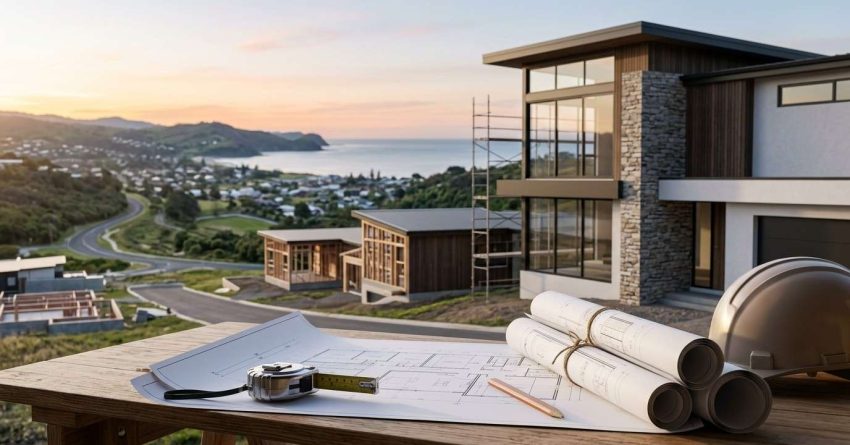
The best markets to build spec homes in the USA right now include Nashville, Charlotte, Austin, Dallas-Fort Worth, Phoenix, Boise, and Columbus — cities where population growth, lot availability, and strong buyer demand consistently support profitable spec builds.
Choosing the wrong market can turn a well-built home into a carrying-cost problem. The right market, by contrast, can move a finished spec home in weeks.
This guide breaks down the top U.S. markets for spec home construction, explains what separates high-performing markets from risky ones, and helps you evaluate where your next build makes the most financial sense.
What Makes a Market Ideal for Spec Home Construction?
Not every growing city is a good spec home market. The best markets share three measurable conditions that work together to reduce risk and accelerate sale timelines.
Population Growth and Housing Demand
Markets with consistent in-migration create sustained demand for new housing. When more people are moving into an area than the existing housing stock can absorb, spec homes fill a real gap. According to the U.S. Census Bureau, Sun Belt and Mountain West metros have led domestic migration patterns for several consecutive years, making them reliable targets for spec builders.
Lot Availability and Land Costs
Strong demand means nothing if buildable lots are unavailable or priced beyond what the finished home can support. The best spec markets still have accessible infill lots, suburban subdivisions with available parcels, or new master-planned communities with builder-friendly lot programs. Land cost as a percentage of projected sale price should stay below 20 to 25 percent to preserve margin.
Builder-Friendly Permitting and Regulations
Permitting timelines directly affect carrying costs. A market where permits take six months adds six months of loan interest, insurance, and overhead to every project. States like Texas, Tennessee, and Idaho have consistently ranked among the most builder-friendly regulatory environments in the country, which is a meaningful competitive advantage for spec builders working on tight timelines.
Understanding what drives demand in a given area is only one part of the equation — our spec home building guide covers the full process from land acquisition through final sale so you can approach each market with a complete strategy.
Top Markets in the Southeast for Spec Home Builders
The Southeast continues to attract both relocating families and remote workers, creating durable demand for move-in-ready housing across multiple price points.
Nashville, Tennessee
Nashville has ranked among the top relocation destinations in the country for several years running. The metro’s job market, anchored by healthcare, technology, and music industry sectors, draws a consistent stream of buyers with strong purchasing power. Median home prices have risen steadily, and inventory remains tight enough that well-priced spec homes in desirable suburbs like Nolensville, Spring Hill, and Murfreesboro move quickly. Tennessee’s lack of state income tax adds an additional draw for out-of-state buyers.
Builders entering the Nashville market will find strong buyer demand for move-in-ready finishes, and our remodeling services team can help ensure every spec home meets the quality expectations of today’s competitive buyers.
Charlotte, North Carolina
Charlotte’s financial sector and growing tech presence have made it one of the most economically stable metros in the Southeast. The city’s suburban ring — including areas like Concord, Mooresville, and Huntersville — offers buildable lots at prices that still support healthy margins. North Carolina’s permitting environment is generally efficient, and the state’s population growth shows no signs of slowing.
Raleigh, North Carolina
The Research Triangle’s concentration of universities, biotech firms, and technology companies has made Raleigh one of the most educated and economically resilient metros in the country. Buyer demand skews toward quality construction and energy-efficient features, which rewards spec builders who invest in above-average finishes and systems.
Best Markets in the South-Central Region
Texas dominates this category, offering a combination of population growth, land availability, and a regulatory environment that actively supports new construction.
Austin, Texas
Austin’s tech-driven economy and cultural appeal have made it one of the most discussed housing markets in the country. While land costs in the urban core have risen sharply, suburban submarkets like Pflugerville, Kyle, and Buda still offer viable lot prices for spec builders targeting the $350,000 to $550,000 price range. Buyer demand remains strong, particularly for homes with dedicated home office space and energy-efficient HVAC systems.
In high-heat markets like Austin and San Antonio, roofing material selection directly affects buyer appeal and long-term durability — our roofing services outlines the options best suited to Southern climates and spec build timelines.
Dallas-Fort Worth, Texas
The DFW metroplex is one of the largest and most active new construction markets in the United States. Its sheer geographic size means that buildable land remains available across dozens of submarkets at a wide range of price points. The area’s diverse economy — spanning finance, logistics, healthcare, and technology — creates broad buyer demand that supports spec builds across multiple price tiers.
San Antonio, Texas
San Antonio offers some of the most accessible land prices among major Texas metros, making it an attractive entry point for builders who want Texas market exposure without Austin or Dallas land costs. The city’s military presence, healthcare sector, and growing tourism economy provide a stable employment base that supports consistent housing demand.
High-Growth Markets in the Mountain West
The Mountain West has emerged as one of the most active regions for domestic migration, driven by quality of life, outdoor recreation access, and relatively lower costs compared to coastal metros.
Phoenix, Arizona
Phoenix is one of the highest-volume new construction markets in the country. The metro’s warm climate, job growth, and affordability relative to California have made it a top destination for relocating households. Suburban areas like Queen Creek, Gilbert, and Surprise continue to see strong absorption of new spec inventory. Builders should note that Phoenix’s summer heat makes HVAC system quality a primary buyer concern.
Phoenix and Salt Lake City present extreme seasonal temperature swings that make proper climate control a top buyer priority, and our HVAC installation services are designed to meet the efficiency standards that move-in-ready buyers expect in these markets.
Boise, Idaho
Boise has transformed from a regional market into a nationally recognized growth destination over the past decade. While land prices have risen significantly from their pre-2020 levels, the market still offers viable opportunities for spec builders, particularly in surrounding communities like Meridian, Nampa, and Caldwell. Idaho’s regulatory environment is among the most builder-friendly in the Mountain West.
Salt Lake City, Utah
Salt Lake City’s technology sector — sometimes called the Silicon Slopes — has driven sustained job growth and in-migration from higher-cost coastal markets. Utah’s strong family formation rates create consistent demand for larger floor plans, and the state’s relatively efficient permitting process supports builder timelines.
Emerging Midwest Markets Worth Watching
While the Sun Belt and Mountain West dominate most spec home conversations, two Midwest metros deserve serious attention from builders looking for markets with lower entry costs and growing demand.
Columbus, Ohio
Columbus is one of the fastest-growing cities in the Midwest, supported by Ohio State University, a growing tech sector, and a diversified economy. The metro’s housing costs remain well below national averages, which means spec homes can be priced competitively while still delivering strong margins. Suburban submarkets like Dublin, Westerville, and New Albany have active buyer pools and consistent absorption rates.
Indianapolis, Indiana
Indianapolis offers a combination of affordable land, a business-friendly regulatory environment, and steady population growth driven by healthcare, logistics, and manufacturing. The city’s cost of living advantage continues to attract relocating households from higher-cost metros, and its housing market has shown consistent appreciation without the volatility seen in Sun Belt markets.
Key Risks to Evaluate Before Breaking Ground
Every market on this list carries real risks. Identifying them before committing capital is what separates experienced spec builders from those who get caught in difficult positions.
Oversaturation and Inventory Surplus
Markets that attract large numbers of national builders can shift from undersupplied to oversupplied faster than local builders anticipate. Monitoring active listing counts, days on market, and new permit issuance in your target submarket gives you early warning signals before you commit to a lot purchase.
Rising Material and Labor Costs
Material and labor costs have remained elevated across most U.S. markets. According to the Bureau of Labor Statistics, construction input costs have seen significant fluctuation since 2021, and builders who do not build cost escalation buffers into their pro formas risk margin compression on projects with longer timelines.
Builders who rush timelines in high-demand markets risk construction defects that lead to costly callbacks — our water damage repair services help address moisture intrusion issues before they become deal-breakers during buyer inspections.
How Home Services Support Spec Home Readiness
Getting a spec home to market-ready condition requires more than structural completion. The finishing details — paint quality, fixture installation, punch-list repairs, and exterior presentation — are what buyers actually see and respond to during showings.
From punch-list repairs to pre-listing touch-ups, our handyman services team provides the reliable, fast-turnaround support spec builders need to get homes market-ready without delays. A fresh, professionally applied coat of paint is one of the highest-ROI finishing steps in any spec build, and our interior painting services deliver the clean, consistent results that help homes sell faster in competitive markets.
Working with a single provider across multiple finishing services reduces coordination time, keeps timelines tight, and ensures consistent quality across every home in your pipeline.
Before breaking ground in any of these markets, working through a structured new construction checklist ensures every phase — from permitting to final walkthrough — is planned, documented, and completed on schedule.
Conclusion
The best markets to build spec homes in 2025 share a consistent profile: population growth, accessible land, efficient permitting, and buyer demand that outpaces existing inventory. Nashville, Charlotte, Austin, DFW, Phoenix, Boise, and Columbus lead the list, with Indianapolis and Raleigh close behind.
Selecting the right market is the first decision — but execution quality determines whether that market delivers the returns you’re projecting. Every finishing detail, from roofing to interior paint, affects how quickly a spec home sells and at what price.
At Mr. Local Services, we help spec builders get homes across the finish line with reliable, coordinated home services that cover everything from pre-drywall inspections to final punch-list completion — so your next spec home is market-ready on time and built to impress.
Frequently Asked Questions
What is a spec home and how does it differ from a custom home?
A spec home is built by a developer or builder without a specific buyer under contract, with the intention of selling it on the open market after completion. A custom home, by contrast, is built to a specific buyer’s requirements and preferences before construction begins.
How much profit can a spec home builder expect to make?
Profit margins on spec homes typically range from 10 to 25 percent of the sale price, depending on land costs, construction costs, market conditions, and sale timeline. Markets with faster absorption rates and lower carrying costs tend to produce stronger margins.
How long does it take to build and sell a spec home?
Most spec homes take between six and twelve months to complete from permit approval to certificate of occupancy. Sale timelines vary by market, but well-priced spec homes in high-demand markets often go under contract within 30 to 60 days of listing.
What financing options are available for spec home construction?
Spec home builders typically use construction loans, which convert to permanent financing or are paid off at sale. Some builders use private lenders or hard money loans for faster access to capital, though these carry higher interest rates than conventional construction financing.
Which states are most builder-friendly for spec home construction?
Texas, Tennessee, Florida, Idaho, and Arizona consistently rank among the most builder-friendly states based on permitting efficiency, regulatory environment, and overall cost of doing business. These states also align closely with the top spec home markets identified in this guide.