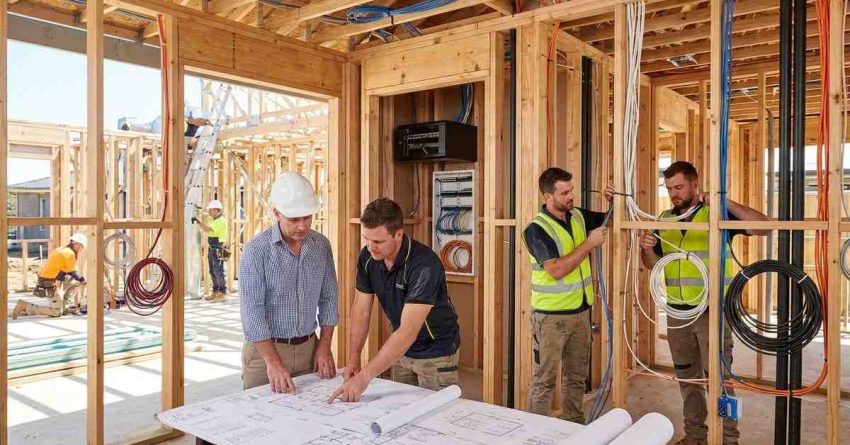
Low-voltage rough-in is the stage of construction or renovation where all the cables, conduit, and wiring pathways for smart home systems are installed inside walls, ceilings, and floors before surfaces are closed up. It covers data networks, smart lighting controls, security systems, audio wiring, and home automation infrastructure — everything a modern connected home depends on. Getting this stage right determines how well every smart device in the home performs for years to come.
Skipping or rushing low-voltage rough-in creates problems that are expensive to fix later, since accessing wires after drywall is installed requires cutting into finished walls.
This guide explains what low-voltage rough-in includes, when to schedule it, how the process works step by step, and what homeowners and property managers should expect from a professional installation.
What Is Low-Voltage Rough-In?
Low-voltage rough-in is the process of running cables and installing wiring infrastructure for systems that operate at 50 volts or less. Unlike standard electrical wiring, which carries 120V or 240V power to outlets and fixtures, low-voltage wiring carries data, audio signals, video feeds, and control commands between devices.
In a smart home, low-voltage rough-in creates the physical backbone that connects every intelligent system in the building. Without it, smart devices either cannot communicate reliably or must rely on wireless signals alone, which introduces latency, dead zones, and security vulnerabilities.
How It Differs from Standard Electrical Rough-In
Standard electrical rough-in involves running power cables, installing junction boxes, and routing circuits to panels. Low-voltage rough-in is a separate scope of work performed by a different specialist, using different cable types, different routing paths, and different code requirements.
The two types of rough-in are often scheduled in sequence during new construction. Power rough-in typically happens first, followed by low-voltage rough-in before insulation and drywall are installed.
Why Smart Homes Require Dedicated Low-Voltage Planning
Smart home systems generate significant data traffic and require consistent, low-latency connections to function correctly. A thermostat, security camera, lighting controller, and audio system all compete for bandwidth and signal clarity. Dedicated low-voltage infrastructure separates these systems, reduces interference, and ensures each one performs to its rated specification.
Planning low-voltage rough-in before construction begins also allows homeowners to future-proof the property. Running extra conduit or additional cable runs during rough-in costs a fraction of what it costs to retrofit them later.
Low-voltage rough-in is one component of a broader set of home electrical services — our electrical services guide covers the full range of wiring, panel, and installation work available for residential and commercial properties.
What Low-Voltage Rough-In Includes in a Smart Home
The scope of low-voltage rough-in varies by home size, system complexity, and the number of smart devices planned. Most residential smart home projects include several core wiring categories.
Structured Wiring and Data Cabling
Structured wiring refers to a centralized, organized cabling system that routes all data, telephone, and video signals through a single distribution point. CAT6 or CAT6A ethernet cables are run from a central panel to every room where a wired network connection is needed, including home offices, media rooms, and smart device hubs.
Coaxial cable is also run during this stage for television and satellite connections. Fiber optic cable may be included in high-performance installations where maximum bandwidth is required.
Smart Lighting and Dimmer Control Wiring
Smart lighting systems require dedicated low-voltage control wiring in addition to standard power wiring. Dimmer controls, occupancy sensors, and scene controllers all communicate over low-voltage signal wires that must be routed during rough-in.
Proper placement of these control wires determines where switches and sensors can be located. Changing their position after drywall is installed requires patching and repainting, which adds cost and disruption.
Security, Audio, and Automation Wiring
Security systems require wiring for door and window sensors, motion detectors, cameras, keypads, and alarm panels. Each device needs a dedicated cable run back to a central control location.
Whole-home audio systems use speaker wire routed to in-wall or in-ceiling speakers in each zone. Home automation systems may also require dedicated control wiring for motorized shades, smart locks, and HVAC zone controllers.
Every system wired during rough-in eventually connects to a fully integrated network — our smart home installation explains how each component is configured, programmed, and tested after the rough-in stage is complete.
When to Schedule Low-Voltage Rough-In
The ideal time to complete low-voltage rough-in is during new construction, after framing is complete and before insulation and drywall are installed. At this stage, walls are open, cable runs are straightforward, and there is no finished surface to protect or repair.
New Construction vs. Retrofit Installations
In new construction, low-voltage rough-in is planned alongside the architectural drawings. Cable pathways, panel locations, and device placements are mapped before a single wall goes up, which minimizes labor time and material waste.
Retrofit installations in existing homes are more complex. Cables must be fished through finished walls, which requires drilling through framing, using flexible drill bits, and pulling wire through tight spaces. Retrofit work takes longer, costs more, and may require minor drywall patching after installation.
For homeowners planning a renovation that involves opening walls for any reason, scheduling low-voltage rough-in at the same time is the most cost-effective approach. Once walls are closed, the opportunity to run clean, organized cable infrastructure is gone until the next major renovation.
How the Low-Voltage Rough-In Process Works
A professional low-voltage rough-in follows a structured sequence that ensures every cable is correctly placed, labeled, and ready for device installation after construction is complete.
Planning and Layout Stage
The process begins with a detailed site plan that maps every device location, cable pathway, and panel position. The installer reviews architectural drawings, identifies the location of the central distribution panel, and marks cable routes on walls and ceilings.
This planning stage also accounts for code requirements. The National Electrical Code (NEC) sets minimum separation distances between low-voltage and power wiring to prevent signal interference, and local jurisdictions may have additional requirements.
Low-voltage rough-in is often scheduled alongside structural and finish work — if you are planning a larger renovation, our home remodeling services outlines how electrical, wiring, and smart system work fits into a full remodel timeline.
Running Cables and Installing Conduit
Once the layout is approved, the installer drills through framing members and runs cables along planned pathways. Cables are secured with staples or cable clips at regular intervals to prevent sagging and movement.
In some installations, conduit is used instead of or in addition to direct cable runs. Conduit creates a protected pathway that allows cables to be replaced or upgraded in the future without opening walls. This is particularly valuable in high-traffic areas or locations where cable damage is a risk.
Labeling, Testing, and Inspection
Every cable run is labeled at both ends before walls are closed. Clear labeling prevents confusion during the finish stage, when devices are connected and systems are configured.
After labeling, the installer performs continuity testing on each cable run to confirm there are no breaks, shorts, or wiring errors. In jurisdictions that require it, a low-voltage rough-in inspection is scheduled before insulation and drywall proceed.
Common Low-Voltage Systems Installed During Rough-In
Most smart home rough-in projects include wiring for several systems simultaneously. The most common include:
- Ethernet and data networking — CAT6 or CAT6A runs to every room for wired internet and device connectivity
- Security cameras and sensors — dedicated cable runs for cameras, door contacts, motion detectors, and alarm panels
- Smart lighting controls — control wiring for dimmers, occupancy sensors, and scene controllers
- Whole-home audio — in-wall speaker wire routed to each audio zone
- Home theater pre-wire — HDMI, speaker, and subwoofer cable runs for dedicated media rooms
- Smart thermostat and HVAC control — low-voltage control wiring for multi-zone HVAC systems
- Motorized shades and blinds — power and control wiring for automated window treatments
- Video doorbell and intercom — wiring for front-door cameras and whole-home intercom systems
Security wiring is one of the most requested low-voltage systems during rough-in — our security system installation details the camera, sensor, and alarm options available for new and existing homes.
Low-Voltage Rough-In Costs and What Affects Pricing
The cost of low-voltage rough-in depends on the size of the home, the number of systems being wired, the complexity of the cable routes, and whether the work is part of new construction or a retrofit.
For new construction, low-voltage rough-in typically ranges from $1,500 to $6,000 for a standard single-family home, depending on the number of cable runs and systems included. Larger homes or projects with extensive smart home infrastructure can exceed this range.
Retrofit installations cost more per cable run because of the additional labor required to fish cables through finished walls. Homeowners should expect to pay a premium of 30 to 50 percent over new construction pricing for comparable retrofit work.
Key factors that affect pricing include:
- Number of cable runs — each additional run adds material and labor cost
- Cable type — CAT6A and fiber optic cable cost more than standard CAT6 or coaxial
- Conduit installation — adds material cost but improves long-term flexibility
- Panel and distribution equipment — structured media centers and patch panels add to the total
- Local labor rates — vary significantly by region across the USA
For smaller low-voltage tasks that fall outside a full rough-in scope, our handyman services covers the types of minor wiring, mounting, and device installation work that can be handled on a per-task basis.
Hiring a Professional for Low-Voltage Rough-In
Low-voltage rough-in requires a technician with specific training in structured cabling, smart home systems, and local code compliance. While low-voltage work is not always subject to the same licensing requirements as high-voltage electrical work, many states and municipalities require a low-voltage contractor license or a general electrical license that covers this scope.
When evaluating contractors, homeowners should ask about experience with smart home systems specifically, not just general wiring. A technician familiar with the specific brands and protocols used in the planned smart home installation will produce cleaner, more reliable results.
Choosing the right contractor starts with understanding what credentials and experience to look for — our on licensed electrical professionals explains the qualifications, licensing requirements, and service standards that apply to low-voltage and smart home wiring work.
Mr. Local Services connects homeowners and property managers with skilled low-voltage professionals who understand smart home infrastructure from planning through installation. Every project is handled with transparent pricing, clear timelines, and workmanship backed by a commitment to quality.
Conclusion
Low-voltage rough-in is the foundation every smart home is built on, covering the data, security, lighting, audio, and automation wiring that connects every intelligent system in the property.
Planning this work at the right stage of construction or renovation prevents costly retrofits and ensures every smart device performs reliably for the long term.
Contact Mr. Local Services today to schedule a low-voltage rough-in assessment and connect with a qualified professional who can plan and install the smart home infrastructure your property needs.
Frequently Asked Questions
What is the difference between low-voltage and high-voltage wiring?
High-voltage wiring carries 120V or 240V power to outlets, appliances, and fixtures. Low-voltage wiring carries 50V or less and is used for data, audio, video, security, and smart home control systems. Both types are installed during rough-in but require different specialists and follow different code requirements.
Can low-voltage rough-in be done after drywall is installed?
Yes, but it is significantly more difficult and expensive. Cables must be fished through finished walls, which requires drilling through framing and may require patching drywall afterward. Scheduling rough-in before walls are closed is always the more cost-effective approach.
Do I need a permit for low-voltage rough-in?
Permit requirements vary by state and municipality. Some jurisdictions require a permit and inspection for low-voltage rough-in, particularly for security systems and structured wiring. A licensed low-voltage contractor will know the requirements in your area and can pull the necessary permits.
How many cable runs does a typical smart home need?
The number of cable runs depends on the size of the home and the systems being installed. A standard three-bedroom home with basic smart home features typically requires 20 to 40 individual cable runs. Larger homes with extensive automation, multi-zone audio, and full security systems may require 60 or more runs.
What cable type is best for smart home rough-in?
CAT6A is the current standard for data and ethernet runs in smart home installations, offering higher bandwidth and better interference resistance than CAT6. Coaxial RG6 is used for video and satellite connections. Speaker wire gauge depends on the audio system specifications, with 16-gauge being common for standard installations.
How long does low-voltage rough-in take?
A standard single-family home typically requires one to three days for low-voltage rough-in, depending on the number of systems and cable runs. Larger homes or complex smart home projects may take four to five days. Retrofit installations take longer than new construction due to the additional labor of fishing cables through finished walls.
Can I add more smart home systems after rough-in is complete?
Yes, but adding systems after walls are closed requires retrofit work. The most practical approach is to run extra conduit or spare cable runs during the original rough-in to accommodate future expansion. This adds minimal cost during construction and eliminates the need for invasive retrofit work later.