
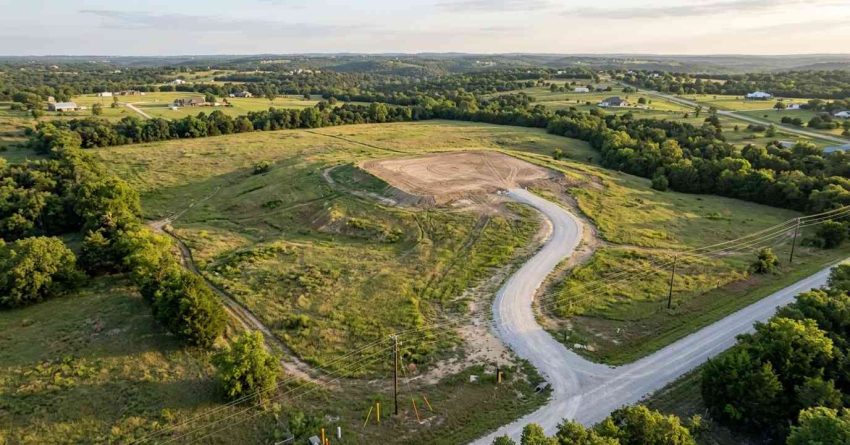
Buying land is one of the most significant financial decisions a property owner can make, and the land loan process follows a distinct path that differs from a standard home mortgage in several important ways. Unlike residential loans, land loans carry higher risk for lenders, require larger down payments, and involve a more detailed review of the property itself. Knowing each step before you begin saves time, prevents costly surprises, and puts you in a stronger position when you sit down with a lender.
This guide matters now because land values across the USA have shifted significantly, and lenders have tightened qualification standards in response to changing market conditions.
You will find a clear, step-by-step breakdown of the entire land loan process — from assessing your financial readiness to closing day and beyond.
What Is a Land Loan and How Does It Differ from a Mortgage
A land loan is a financing product used specifically to purchase a plot of land rather than an existing structure. Because lenders cannot use a completed home as collateral, land loans are considered higher-risk instruments, which typically results in shorter repayment terms, higher interest rates, and stricter down payment requirements compared to traditional mortgages.
Understanding the full scope of land financing starts with the basics — our land loan overview covers every loan category, eligibility requirement, and lender type in one place, giving you the foundation you need before starting the application process.
Types of Land Loans Available in the USA
Three primary land loan types exist in the USA market. Raw land loans apply to completely undeveloped parcels with no utilities, roads, or infrastructure. Unimproved land loans cover parcels that have some basic development but lack full utility connections. Improved land loans apply to lots that are fully prepared for construction, with utilities, road access, and grading already in place. Improved land loans are the easiest to qualify for because the property presents the least risk to the lender.
Raw Land vs. Improved Land: What Lenders Look For
Lenders evaluate land based on its development status, intended use, access to utilities, zoning classification, and proximity to established infrastructure. Raw land receives the most scrutiny because its future value is harder to predict. Lenders will ask about your intended use — whether residential construction, agricultural use, or long-term investment — and your timeline for development. A clear, documented plan for the land significantly improves your approval odds.

Step 1 — Assess Your Land Purchase Goals and Financial Readiness
Before approaching any lender, you need a clear picture of both your goals for the land and your current financial position. Lenders will ask what you intend to do with the property, when you plan to develop it, and how you will service the debt if development is delayed. Buyers who arrive with a documented plan — including a timeline, intended use, and estimated development costs — are viewed as lower-risk applicants.
Credit Score and Debt-to-Income Requirements for Land Loans
Most lenders require a minimum credit score of 680 for land loans, though some community banks and credit unions may work with scores as low as 620 for improved lots. Your debt-to-income ratio should generally fall below 43%, meaning your total monthly debt obligations — including the proposed land loan payment — should not exceed 43% of your gross monthly income. Buyers with scores above 720 and clean credit histories will access the most competitive rates and terms.
How Much Down Payment Do You Need for a Land Loan
Land loans typically require a down payment between 20% and 50% of the purchase price, depending on the land type and lender. Raw land purchases often require 30% to 50% down because of the higher risk profile. Improved lots with utilities and road access may qualify for down payments as low as 20%. Some USDA programs offer reduced down payment options for eligible rural properties, which is worth exploring if your target parcel falls within a qualifying zone.
Step 2 — Research Land Loan Lenders and Loan Types
Not every lender offers land loans, and the terms vary significantly between institutions. Researching your options before submitting any application protects your credit score and ensures you are comparing equivalent products.
Banks, Credit Unions, and Farm Credit Lenders
Local community banks and credit unions are often the most accessible land loan lenders for individual buyers. They have more flexibility in underwriting than large national banks and are more familiar with local land values. Farm Credit System lenders — including AgriBank, CoBank, and Farm Credit Services of America — specialize in agricultural and rural land financing and offer competitive long-term rates for qualifying buyers. National banks generally offer land loans only for improved lots in established markets.
USDA Land Loan Programs and Eligibility
Buyers purchasing rural or agricultural land may qualify for government-backed financing — our guide to USDA loan programs explains income limits, eligible property zones, and how to apply through the Farm Service Agency. USDA programs are particularly valuable for buyers with limited down payment funds or those purchasing land in designated rural development zones.

Step 3 — Get Pre-Qualified and Gather Required Documents
Pre-qualification gives you a realistic picture of how much you can borrow and signals to sellers that you are a serious buyer. Most lenders offer a pre-qualification review within a few business days once you submit your financial documents.
Documents Required for a Land Loan Application
Lenders typically require the following for a land loan application:
- Two years of federal tax returns
- Two months of recent bank statements
- Proof of income (pay stubs or profit-and-loss statements for self-employed buyers)
- Government-issued photo identification
- A copy of the purchase agreement or letter of intent
- A survey or legal description of the parcel
- Documentation of intended land use or development plan
Preparing your documents in advance dramatically speeds up approval — our loan pre-qualification guide walks through every form, financial statement, and verification lenders require so nothing delays your application.
Step 4 — Submit Your Land Loan Application
Once pre-qualified and documents are in order, you submit a formal loan application. This triggers the underwriting process, during which the lender verifies all submitted information, orders a title search, and begins the appraisal process.
What Happens During Land Loan Underwriting
Underwriting for a land loan is more intensive than for a standard mortgage because the lender must assess both your creditworthiness and the land’s standalone value and development potential. The underwriter will review your financial profile, verify the title is clear of liens or encumbrances, confirm zoning compliance, and evaluate the appraisal report. Underwriting for land loans typically takes two to four weeks, though complex parcels or incomplete documentation can extend this timeline.
Step 5 — Land Appraisal and Environmental Review
Every land loan requires a formal appraisal conducted by a licensed appraiser with experience in vacant land valuation. The appraisal determines the market value of the parcel, which directly affects how much the lender will finance.
How Land Is Appraised Differently from Residential Property
Land is valued differently than improved residential property, and understanding how lenders assess raw acreage is critical — our guide to the land appraisal process explains comparable sales methods, site access factors, and how appraisal results affect your loan amount. Appraisers evaluate land using comparable sales of similar parcels in the area, adjusted for differences in size, location, zoning, utility access, and topography. Environmental reviews may also be required for parcels near wetlands, flood zones, or areas with potential contamination history.
Step 6 — Loan Approval, Closing Costs, and Funding
After underwriting is complete and the appraisal is accepted, the lender issues a formal loan commitment letter. This document outlines the approved loan amount, interest rate, repayment term, and any conditions that must be satisfied before closing.
Typical Land Loan Closing Costs and Timeline
Closing on a land loan involves several fees that buyers often underestimate — our closing cost breakdown details every charge, from title insurance to recording fees, so you can budget accurately before your closing date. Typical land loan closing costs range from 2% to 5% of the loan amount and may include origination fees, title search and insurance, survey fees, recording fees, and prepaid interest. The closing process for a land loan generally takes 30 to 60 days from application to funding, though rural parcels or those requiring environmental review may take longer.
What to Do After Your Land Loan Closes
Closing on your land loan is the beginning of the next phase, not the end of the process. Once the deed is recorded in your name, you will need to manage property taxes, maintain any existing fencing or access roads, and begin the planning process for your intended use.
Planning Construction or Development After Purchase
Once your land purchase is complete, the next phase requires its own preparation — our resource on construction planning steps covers permits, contractor selection, utility connections, and timeline management for building on newly purchased land. If you plan to build, you will need to secure a construction loan or construction-to-permanent loan, obtain building permits, connect utilities, and work with a licensed contractor to develop site plans. Starting this process early — ideally before your land loan closes — reduces delays and keeps your overall project timeline on track.
Conclusion
The land loan process involves more steps and stricter requirements than a standard home mortgage, but each stage follows a logical sequence that becomes manageable when you understand what lenders need and why. From assessing your financial readiness to navigating appraisals and closing costs, preparation is the single most important factor in a smooth approval.
Buyers who research lender options early, organize their documents before applying, and arrive with a clear development plan consistently achieve better terms and faster approvals than those who approach the process without preparation.
At Mr. Local Services, we connect property owners with trusted professionals across every stage of land development and home improvement — reach out today to find the right experts for your project.
Frequently Asked Questions
What credit score do I need to get a land loan?
Most lenders require a minimum credit score of 680 for a land loan, though some community banks accept scores as low as 620 for improved lots. A score above 720 gives you access to the most competitive rates and terms available.
How long does the land loan process take from application to closing?
The land loan process typically takes 30 to 60 days from application to closing. Complex parcels, environmental reviews, or incomplete documentation can extend this timeline to 90 days or more.
Can I use a land loan to buy agricultural property?
Yes, land loans can be used to purchase agricultural property. Farm Credit System lenders and USDA programs are specifically designed for agricultural and rural land purchases and often offer more favorable terms than conventional bank loans for these property types.
What is the difference between a land loan and a construction loan?
A land loan finances the purchase of a vacant parcel only. A construction loan finances the cost of building a structure on land you already own or are purchasing simultaneously. Some lenders offer construction-to-permanent loans that combine both phases into a single financing product.
Do land loans have higher interest rates than home mortgages?
Yes, land loans typically carry higher interest rates than conventional home mortgages because the land itself is considered higher-risk collateral. Rates vary by land type, with raw land loans carrying the highest rates and improved lot loans offering rates closer to standard mortgage products.
Can I get a land loan with no down payment?
Standard land loans require a down payment of 20% to 50%. However, certain USDA programs for rural land purchases may offer reduced or no down payment options for buyers who meet income and property eligibility requirements.
What happens if my land appraisal comes in lower than the purchase price?
If the appraisal value is lower than the agreed purchase price, the lender will base the loan amount on the appraised value, not the purchase price. You will need to either renegotiate the purchase price with the seller, cover the difference in cash, or walk away from the transaction if your contract includes an appraisal contingency.