
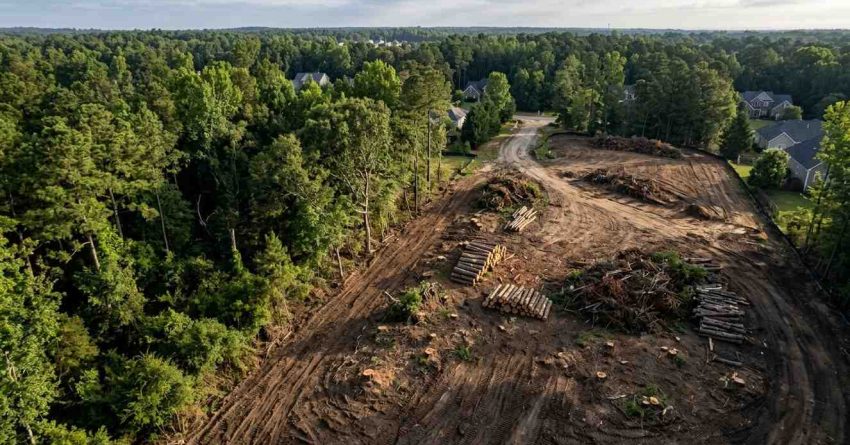
Land clearing typically costs between $1,500 and $6,000 for a standard residential lot, though prices vary widely based on lot size, vegetation density, terrain, and the methods used. Understanding both the cost and the step-by-step process helps you plan your project accurately, avoid surprise charges, and choose the right professional for the job.
Knowing what land clearing involves before you hire saves time, money, and frustration when your project gets underway.
This guide covers average costs, key pricing factors, the full clearing process, and how to decide between DIY and professional services.
What Is Land Clearing?
Land clearing is the process of removing trees, shrubs, brush, stumps, rocks, and other obstacles from a piece of land to prepare it for construction, landscaping, farming, or general use. It transforms raw, overgrown, or wooded land into a usable surface.
Clearing is not a single task. It is a coordinated set of activities that may include tree felling, stump grinding, brush removal, grading, and debris hauling — all sequenced to prepare the site for whatever comes next.
Land clearing is one component of a broader range of outdoor property work — our landscape services guide covers every service available to help homeowners and property managers maintain, improve, and transform their outdoor spaces.
What Does Land Clearing Include?
A standard land clearing project typically includes:
- Tree and shrub removal
- Stump grinding or extraction
- Brush and undergrowth clearing
- Rock and debris removal
- Rough grading to level the surface
- Debris hauling and disposal
Not every project requires all of these steps. A lightly wooded lot may only need brush clearing and grading, while a heavily forested parcel requires full tree removal, stump grinding, and multiple debris hauls. Your contractor will assess the site and quote based on what is actually needed.
If your property has specific permit requirements for tree removal or clearing near waterways, those steps are handled before any physical work begins — covered in detail in the land clearing permits guide .

How Much Does Land Clearing Cost?
The national average cost for land clearing ranges from $1,500 to $6,000 for a typical residential lot. Smaller lots with light vegetation may cost as little as $500, while heavily wooded or large parcels can exceed $10,000 or more.
These figures reflect total project costs including labor, equipment, and debris disposal. Always request an itemized quote so you can see exactly what is included.
Land Clearing Cost by Lot Size
| Lot Size | Estimated Cost Range |
| Under 1/4 acre | $500 – $2,000 |
| 1/4 to 1/2 acre | $1,500 – $4,000 |
| 1/2 to 1 acre | $3,000 – $6,000 |
| 1 to 2 acres | $5,000 – $10,000 |
| 2+ acres | $10,000+ |
These ranges assume moderate vegetation density. Heavily wooded lots at any size will fall toward the upper end of each range.
Land Clearing Cost by Method
| Clearing Method | Best For | Estimated Cost |
| Manual clearing | Small areas, light brush | $20 – $200 per hour |
| Mechanical clearing | Medium to large lots | $100 – $200 per hour |
| Bulldozing | Dense vegetation, large parcels | $75 – $175 per hour |
| Burning (where permitted) | Rural, large acreage | Lower cost, permit required |
| Chemical clearing | Brush and invasive plants | $150 – $500 per acre |
Mechanical clearing using excavators and bulldozers is the most common method for residential projects. Manual clearing is reserved for smaller areas or sensitive zones where heavy equipment cannot operate safely.
Factors That Affect Land Clearing Costs
Several variables determine where your project lands within the cost ranges above. Understanding these factors helps you anticipate your total investment before requesting quotes.
Vegetation density and type. Light brush clears faster and cheaper than mature hardwood trees. Dense, overgrown lots with large-diameter trees require more labor, heavier equipment, and more disposal trips.
Lot size and terrain. Steep slopes, wet ground, and irregular terrain slow equipment operation and increase labor hours. Flat, dry lots are the most cost-efficient to clear.
Stump removal. Stump grinding and extraction are often quoted separately from clearing. Leaving stumps in place reduces upfront cost but creates problems for future construction or landscaping.
Debris disposal. Hauling and dumping fees vary by location and volume. Some contractors include disposal in their quote; others charge per load. Clarify this before signing any agreement.
Permits and inspections. Some municipalities require permits before clearing begins, particularly near wetlands, protected trees, or waterways. Permit fees and inspection timelines add to both cost and schedule.
Accessibility. If heavy equipment cannot reach the site easily, contractors may charge more for manual labor or specialized equipment.
When trees are large, diseased, or deeply rooted, the cost of clearing rises significantly — our tree removal services explains what professional tree work involves and how it is priced separately from general clearing.

The Land Clearing Process Step by Step
Land clearing follows a defined sequence. Skipping steps or working out of order creates problems that are expensive to fix later. Here is what a professional clearing project looks like from start to finish.
Site Assessment and Permits
Every clearing project begins with a site assessment. A contractor walks the property to evaluate vegetation type and density, terrain conditions, access points for equipment, and any environmental or regulatory restrictions.
Based on the assessment, the contractor prepares a scope of work and quote. If permits are required — for tree removal, grading, or clearing near protected areas — those applications are submitted before any physical work begins. Permit timelines vary by municipality, ranging from a few days to several weeks.
Skipping the permit step is a costly mistake. Unpermitted clearing can result in fines, stop-work orders, and mandatory restoration of removed vegetation.
Clearing, Grading, and Debris Removal
Once permits are in hand, physical clearing begins. The sequence typically follows this order:
- Large tree felling and removal
- Stump grinding or extraction
- Brush and undergrowth removal
- Rock and obstacle clearing
- Rough grading to establish a level surface
- Debris hauling and site cleanup
Grading is the final active step before the site is ready for its next use. It establishes proper drainage and a stable surface for construction, landscaping, or seeding. Detailed grading work — including precision leveling for foundations or drainage systems — is often scoped as a separate service.
Once clearing is complete, many homeowners move directly into landscaping and grading work — our outdoor property services outlines the full range of follow-on services that help transform a cleared lot into a functional, finished space.
When Do You Need Land Clearing?
Land clearing is needed any time vegetation, debris, or obstacles prevent a property from being used as intended. Common situations that require clearing include:
- Preparing a lot for new home construction
- Creating space for a garage, barn, or outbuilding
- Installing a driveway or access road
- Developing a garden, lawn, or landscaped yard
- Removing hazardous trees or overgrown brush
- Reclaiming unused land that has become overgrown
- Preparing land for agricultural use
Timing matters. Clearing during dry seasons reduces equipment damage to the soil and speeds up the process. In regions with wet winters or spring thaws, scheduling clearing in late summer or early fall gives the site time to stabilize before construction begins.
Homeowners who clear land for outdoor living projects often follow up with construction — our deck installation services explains what is involved in building a deck on a newly cleared and graded lot.
DIY vs. Professional Land Clearing
Small-scale clearing — removing a few shrubs, cutting back brush along a fence line, or clearing a garden bed — is manageable for most homeowners with the right tools and time. Renting a brush cutter or small chipper for a weekend project is a reasonable approach for light work on a small area.
Professional clearing is the right choice when:
- The lot is larger than a quarter acre
- Mature trees need to be felled
- Stumps require grinding or extraction
- Grading is needed after clearing
- Permits are required
- Terrain is steep, wet, or difficult to access
Attempting to clear a heavily wooded lot without professional equipment and experience creates safety risks, increases the chance of property damage, and often costs more in the long run when mistakes need to be corrected.
Smaller clearing tasks — such as brush removal or minor grading — may fall within the scope of general property maintenance — our handyman services outlines what a skilled handyman can handle versus when a specialist is required.
For projects that go beyond light maintenance, working with a licensed land clearing contractor ensures the job is done safely, on schedule, and in compliance with local regulations.
Conclusion
Land clearing costs and timelines depend on lot size, vegetation density, terrain, and the methods required to prepare the site. Understanding these variables before you hire puts you in a stronger position to evaluate quotes and plan your budget accurately.
The clearing process follows a defined sequence — from site assessment and permits through physical clearing, grading, and debris removal — and each step builds on the one before it.
At Mr. Local Services, we connect homeowners and property managers with skilled professionals who handle land clearing and every follow-on service needed to bring your property to its full potential. Contact us today to get started.
Frequently Asked Questions
How long does land clearing take?
Most residential land clearing projects take one to three days. Larger or more heavily wooded lots may take a full week or longer, depending on vegetation density, terrain, and debris volume.
Is land clearing included in construction quotes?
Not always. Many general contractors exclude land clearing from their base quotes. Always confirm what site preparation work is included before signing a construction contract to avoid unexpected costs.
Do I need a permit to clear land on my own property?
Permit requirements vary by location. Many municipalities require permits for clearing near wetlands, protected trees, or waterways. Contact your local planning or zoning office before starting any clearing work.
What happens to the trees and debris after clearing?
Contractors typically chip brush on-site, haul logs for sale or disposal, and remove all debris. Some contractors include disposal in their quote; others charge per load. Confirm disposal terms before work begins.
Can land clearing damage the soil?
Heavy equipment can compact soil and disturb topsoil layers. Professional contractors use appropriate equipment for the terrain and may recommend soil remediation or grading after clearing to restore a healthy surface for planting or construction.
What is the difference between land clearing and grading?
Land clearing removes vegetation and obstacles from the surface. Grading reshapes the terrain to achieve a level, properly draining surface. Clearing typically comes first; grading follows to prepare the site for its intended use.
How do I get an accurate land clearing quote?
Request on-site assessments from at least three licensed contractors. Provide details on lot size, vegetation type, terrain, and intended use. Ask for itemized quotes that separate labor, equipment, stump removal, and debris disposal so you can compare accurately.