Finding a certified Passive House builder means locating a contractor who has completed accredited training, passed performance-based assessments, and demonstrated the technical ability to construct buildings that meet strict energy, airtightness, and comfort standards. In the USA, two primary certification bodies — PHIUS (Passive House Institute US) and PHI (Passive House Institute) — credential builders who have proven competency in these methods. Choosing a certified professional is the single most important step toward a successful Passive House project.
Passive House construction is one of the most demanding building standards in the world, and hiring the wrong contractor can result in costly performance failures that are difficult to correct after construction.
This guide explains what certification means, how to verify a builder’s credentials, what questions to ask, and what the construction process looks like from start to finish.
What Is a Certified Passive House Builder?
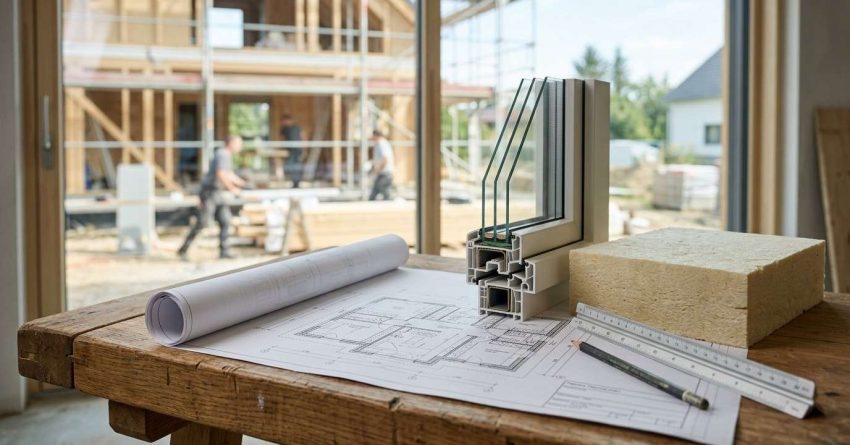
A certified Passive House builder is a construction professional who has completed a recognized training program and passed a formal examination covering the principles, techniques, and performance requirements of Passive House construction. Certification is not a general contractor license — it is a specialized credential that confirms a builder understands how to achieve the five core Passive House principles: superior insulation, thermal bridge-free construction, high-performance windows and doors, controlled mechanical ventilation, and an airtight building envelope.
In the USA, PHIUS offers the Certified Passive House Builder (CPHB) credential, which requires candidates to complete coursework, pass a written exam, and demonstrate hands-on project experience. The PHI credential, developed in Germany, is also recognized internationally and held by some US-based builders.
How Passive House Certification Works
Certification is issued after a builder completes an approved training course, passes a proctored exam, and in many cases submits documentation of completed Passive House projects. Credentials are maintained through continuing education requirements. Certified builders are listed in publicly searchable directories maintained by PHIUS and PHI, making it straightforward for homeowners to verify a contractor’s standing before hiring.
Understanding what a certified builder does is only one part of the picture — our passive house construction guide covers the full scope of standards, materials, and performance targets that define a compliant build from the ground up.
Why Certification Matters When Choosing a Builder
Passive House construction requires a level of precision that goes well beyond standard residential building practice. Insulation continuity, airtight membrane installation, and thermal bridge elimination must be executed correctly at every stage of the build. A builder without formal training in these methods is unlikely to achieve the performance targets required for certification — and the homeowner bears the cost of any shortfall.
Certified builders understand how to use energy modeling software, interpret PHIUS or PHI project documentation, and coordinate with certified designers and raters to ensure the finished building performs as designed. They also understand the blower door test — the final airtightness verification that every certified Passive House must pass before receiving its certification.
The certification process is built on a precise set of performance benchmarks — our overview of Passive House standards explains each requirement in detail, including airtightness thresholds, thermal bridge limits, and energy use targets.
Risks of Hiring an Uncertified Contractor
Hiring a contractor who claims familiarity with Passive House methods but holds no formal credential introduces significant risk. Common failure points include improper air barrier installation, inadequate insulation detailing at structural connections, and incorrect ventilation system commissioning. These failures are often invisible until the blower door test reveals excessive air leakage — at which point remediation is expensive and disruptive. Certification is the most reliable indicator that a builder has the knowledge to avoid these problems.
How to Find a Certified Passive House Builder in the USA
The most direct method for finding a certified builder is to search the official credential databases maintained by PHIUS and PHI. Both organizations publish searchable directories that allow homeowners to filter by location, credential type, and project experience. These directories are updated regularly and reflect current certification status.
Using the PHIUS Certified Builder Directory
PHIUS maintains a public directory of all active CPHB credential holders, searchable by state. Each listing includes the builder’s name, company, location, and credential status. The most reliable starting point for any homeowner is the official PHIUS builder directory , which lists verified professionals by state and includes credential details for every listed contractor. PHI maintains a parallel directory for its own credential holders, and some builders hold credentials from both organizations.
Questions to Ask Before You Hire
Once you have identified candidates from a certified directory, a structured interview process helps confirm that the builder’s experience matches your project’s scope and complexity. Key questions include: How many certified Passive House projects have you completed? Can you provide references from past Passive House clients? Are you familiar with the PHIUS or PHI certification process for the finished building? Do you work with a certified Passive House designer and rater? Before committing to any builder, working through a structured contractor hiring checklist helps homeowners compare credentials, project experience, and communication style before signing any agreement.
What to Expect During a Passive House Build
A certified Passive House build follows a more structured and documentation-intensive process than standard residential construction. The project begins with energy modeling — typically using PHIUS+ or WUFI Passive software — to verify that the design will meet performance targets before a single foundation is poured. This modeling phase involves the builder, the designer, and a certified Passive House rater working together to confirm that insulation levels, window specifications, and mechanical systems are correctly specified.
Key Phases of a Certified Passive House Project
The construction process moves through several distinct phases: design verification, foundation and substructure, wall and roof assembly, window and door installation, air barrier completion and testing, mechanical system installation, and final blower door testing. Each phase requires inspection and documentation to support the final certification submission. Every certified build follows a structured sequence of phases — our Passive House project timeline breaks down each stage from design verification through final blower door testing so homeowners know exactly what to expect.
Passive House vs. Standard Construction: What Homeowners Need to Know
Standard residential construction in the USA is governed by the International Energy Conservation Code (IECC), which sets minimum energy performance requirements. Passive House construction exceeds these minimums significantly — typically by a factor of three to five in terms of heating and cooling energy demand. The key differences lie in insulation thickness, window performance specifications, airtightness requirements, and the inclusion of a heat recovery ventilation (HRV) or energy recovery ventilation (ERV) system.
For homeowners, the practical implications are lower utility bills, more consistent indoor temperatures, better indoor air quality, and reduced mechanical system wear. The trade-off is higher upfront construction cost and a longer, more documentation-intensive build process. Homeowners weighing their options will find a detailed side-by-side breakdown in our energy-efficient home building resource, which compares insulation systems, mechanical requirements, and long-term operating costs across construction methods.
Cost Considerations for Certified Passive House Construction
Certified Passive House construction typically costs between 5% and 15% more than a comparable standard build, depending on location, design complexity, and the local availability of certified builders and Passive House-specific materials. The premium reflects the cost of higher-performance insulation, triple-glazed windows, HRV or ERV systems, and the additional labor required for airtight construction detailing.
Over the life of the building, these upfront costs are offset by significantly reduced heating and cooling expenses. Many homeowners also benefit from improved resale value, as Passive House certification is a recognized quality marker in the real estate market. For a broader view of how Passive House pricing fits within the wider new-build market, our construction cost guide provides current benchmarks across build types, regions, and specification levels.
Conclusion
Finding a certified Passive House builder connects homeowners with professionals who have the verified training, technical knowledge, and project experience to deliver a building that performs to the Passive House standard.
Certification from PHIUS or PHI is the most reliable indicator of builder competency — it confirms that the contractor understands energy modeling, airtight construction, and the documentation process required for final project certification.
At Mr. Local Services, we connect homeowners with skilled, vetted professionals across a wide range of construction and home improvement services — contact us today to find the right expert for your project.
Frequently Asked Questions
What is the difference between a PHIUS and a PHI certified builder?
PHIUS (Passive House Institute US) and PHI (Passive House Institute, Germany) are separate certification bodies with distinct but related standards. PHIUS credentials are climate-specific and widely recognized across North America, while PHI credentials follow a single international standard. Some builders hold both credentials.
How do I verify that a builder is currently certified?
The most reliable method is to search the official PHIUS or PHI online directories directly. Both organizations maintain up-to-date listings of active credential holders, searchable by name, company, and location. Always verify directly with the certifying body rather than relying on a builder’s self-reported credentials.
How many certified Passive House builders are there in the USA?
As of 2025, PHIUS lists several hundred active Certified Passive House Builder credential holders across the United States, with concentrations in the Northeast, Pacific Northwest, and upper Midwest. The number has grown steadily as demand for high-performance construction has increased.
Do I need a certified builder to get my home Passive House certified?
Yes. While the homeowner or developer technically applies for project certification, the construction must be executed by a builder with the technical knowledge to meet performance requirements. In practice, most certifying bodies and raters require or strongly recommend working with a credentialed builder to ensure the project passes final testing.
What is a blower door test and why does it matter?
A blower door test measures the airtightness of a completed building by depressurizing the structure and measuring air leakage. Passive House certification requires the building to achieve a specific airtightness threshold — typically 0.6 air changes per hour at 50 pascals (ACH50) for PHI, or a PHIUS-specific target. Failing this test after construction is complete is costly to remediate.
How long does a certified Passive House build take?
A certified Passive House build typically takes 20% to 40% longer than a comparable standard build, depending on project complexity and the builder’s experience level. The additional time reflects the energy modeling phase, more detailed construction documentation, and the inspection and testing requirements at each phase of construction.
Can an existing home be retrofitted to Passive House standard by a certified builder?
Yes, though deep energy retrofits to Passive House standard are significantly more complex and costly than new construction. Certified builders with retrofit experience can assess an existing home’s potential and develop a phased improvement plan. Full EnerPHit certification — the PHI standard for retrofits — is achievable but requires meeting specific performance targets for the existing building type.