
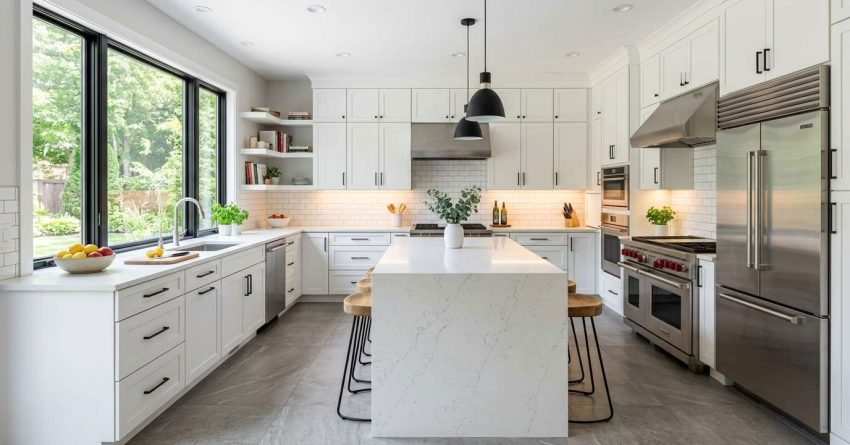
The kitchen is the most financially impactful room in any home. Targeted kitchen upgrades can return 60% to 80% of their cost at resale, according to Remodeling Magazine’s Cost vs. Value Report, while also improving daily function and comfort for the people living there.
Knowing which upgrades are worth the investment — and which ones simply drain your budget — is the difference between a smart home improvement decision and an expensive mistake.
This guide covers the most valuable custom kitchen upgrades available to homeowners in the USA, explaining what each one involves, what it typically costs, and how it adds measurable value to your property.
What Makes a Kitchen Upgrade Worth the Cost?
Not every kitchen improvement delivers equal value. An upgrade is worth the cost when it improves daily function, increases resale appeal, reduces long-term maintenance expenses, or addresses a safety or structural issue. The best upgrades do more than one of these things at once.
Cosmetic changes like paint and hardware can refresh a kitchen for a few hundred dollars. Structural changes like cabinet replacement or layout reconfiguration cost significantly more but deliver proportionally higher returns. The key is matching the scale of the upgrade to your goals — whether that is maximizing resale value, improving livability, or both.
ROI vs. Comfort: How to Weigh the Value
Return on investment is one measure of value, but it is not the only one. A kitchen upgrade that makes daily cooking easier, reduces cleaning time, or improves safety has real value even if it does not show up directly in an appraisal. Homeowners and property managers should weigh both financial return and quality-of-life improvement when evaluating any upgrade.
When to Upgrade vs. When to Repair
If a cabinet door is loose, a hinge replacement is the right call. If the cabinet boxes are warped, water-damaged, or structurally compromised, a full replacement makes more sense. The same logic applies to appliances, flooring, and fixtures. Repair when the core component is sound. Upgrade when the component has reached the end of its useful life or when an upgrade delivers a meaningful improvement in function or value.
Understanding which upgrades deliver the best return starts with knowing the full scope of what kitchen remodeling services cover — from structural changes to cosmetic improvements that directly affect resale value and daily function.

Cabinet Refacing and Replacement
Cabinets are the visual anchor of any kitchen. They occupy more surface area than any other element and have an outsized effect on how the space looks and functions. Cabinet upgrades consistently rank among the highest-ROI kitchen improvements available.
Cabinet refacing — replacing doors, drawer fronts, and hardware while keeping the existing cabinet boxes — typically costs between $4,000 and $9,000 for an average kitchen. It delivers a near-complete visual transformation at roughly half the cost of full replacement.
Full cabinet replacement makes sense when the existing boxes are structurally compromised, when the layout needs to change, or when the homeowner wants custom sizing, deeper storage, or soft-close hardware throughout. Full replacement typically ranges from $8,000 to $20,000 or more depending on materials and kitchen size.
Refacing vs. Full Replacement — Which Pays Off More?
Refacing delivers a higher percentage return on cost because the investment is lower. Full replacement delivers a higher absolute dollar return at resale and a more significant improvement in function and storage. For kitchens with sound cabinet boxes and a layout that works, refacing is the smarter financial choice. For kitchens with outdated layouts or damaged boxes, full replacement is the better long-term investment.
Cabinet refacing and full replacement both require skilled carpentry and cabinet work, and working with experienced professionals in carpentry and cabinet work ensures the finished result is structurally sound, properly fitted, and built to last.
Countertop Upgrades That Add Real Value
Countertops are one of the first things buyers and guests notice in a kitchen. Upgrading from laminate to stone, quartz, or solid surface materials delivers an immediate visual improvement and a meaningful increase in perceived value.
Quartz countertops are the most popular choice for homeowners seeking durability and low maintenance. They are non-porous, resistant to staining, and available in a wide range of colors and patterns. Installed cost typically ranges from $50 to $120 per square foot.
Granite remains a strong choice for resale appeal and heat resistance. It requires periodic sealing but offers a natural, high-end appearance that buyers respond to positively.
Butcher block is a cost-effective option for homeowners who want warmth and character. It requires more maintenance than stone but can be sanded and refinished if damaged.
Best Countertop Materials by Budget and Durability
| Material | Avg. Installed Cost (per sq ft) | Durability | Maintenance |
| Laminate | $15–$40 | Moderate | Low |
| Butcher Block | $30–$80 | Moderate | Medium |
| Quartz | $50–$120 | High | Low |
| Granite | $45–$100 | High | Medium |
| Marble | $75–$150 | Moderate | High |
Countertop installation is one component of a broader set of home remodeling options that can be planned together to maximize budget efficiency and minimize disruption to your household.
Kitchen Appliance Upgrades Worth Considering
Appliance upgrades deliver value in two ways: they improve daily function immediately, and energy-efficient models reduce utility costs over time. For landlords and property managers, updated appliances also increase rental appeal and reduce maintenance call frequency.
The highest-value appliance upgrades are typically the refrigerator, range or cooktop, and dishwasher. These are the three appliances buyers and renters evaluate most closely. Upgrading all three to matching stainless steel or panel-ready finishes creates a cohesive, high-end appearance that supports higher asking prices.
Energy-Efficient Appliances and Long-Term Savings
ENERGY STAR-certified appliances use significantly less energy than standard models. According to the U.S. Department of Energy, an ENERGY STAR-certified dishwasher uses 3.5 gallons of water per cycle compared to over 10 gallons for older models, generating meaningful savings over the appliance’s lifespan.
Before committing to a full appliance replacement, it is worth consulting professionals in appliance repair and installation who can assess whether a repair or a targeted upgrade is the more cost-effective path for your specific situation.
Flooring Upgrades for the Kitchen
Kitchen flooring takes more abuse than almost any other surface in the home. It faces constant foot traffic, spills, dropped items, and temperature fluctuations. Upgrading to a durable, easy-to-clean material improves both the appearance and the long-term maintenance profile of the space.
Luxury vinyl plank (LVP) is the most practical choice for most kitchens. It is waterproof, comfortable underfoot, scratch-resistant, and available in realistic wood and stone looks. Installed cost typically ranges from $3 to $7 per square foot.
Porcelain tile is the most durable option and the easiest to clean. It is ideal for high-traffic kitchens and works well in homes with pets or children. Installed cost ranges from $5 to $15 per square foot depending on tile size and complexity.
Hardwood adds warmth and resale appeal but requires more careful maintenance in a kitchen environment. Engineered hardwood is a better choice than solid hardwood in kitchens because it handles moisture fluctuations more reliably.
Best Kitchen Flooring Options by Durability and Cost
| Material | Avg. Installed Cost (per sq ft) | Water Resistance | Durability |
| Luxury Vinyl Plank | $3–$7 | Excellent | High |
| Porcelain Tile | $5–$15 | Excellent | Very High |
| Engineered Hardwood | $6–$12 | Moderate | High |
| Solid Hardwood | $8–$15 | Low | High |
| Laminate | $3–$8 | Low-Moderate | Moderate |
Selecting the right material is only part of the decision — proper kitchen flooring installation by a skilled professional ensures the floor is level, sealed correctly, and built to withstand the high-traffic demands of a working kitchen.
Lighting Improvements That Transform the Space
Lighting is one of the most underestimated kitchen upgrades. A well-lit kitchen feels larger, cleaner, and more functional. Poor lighting makes even a beautifully renovated kitchen feel dark and uninviting.
The most impactful lighting upgrades are recessed ceiling lights, under-cabinet task lighting, and a statement pendant or chandelier over an island or dining area. Together, these three layers — ambient, task, and accent — create a kitchen that works well at every time of day.
Under-Cabinet and Recessed Lighting ROI
Under-cabinet lighting is one of the highest-value lighting upgrades available. It eliminates shadows on work surfaces, makes food preparation safer, and adds a premium feel to the kitchen at a relatively low cost. LED strip systems can be installed for as little as $200 to $500 in materials, with professional installation adding to that cost depending on wiring complexity.
Installing recessed lighting, under-cabinet fixtures, or updated overhead lighting requires permitted electrical upgrade services to ensure the work meets local code and is safely connected to your home’s existing circuits.

Plumbing Fixtures and Sink Upgrades
The kitchen sink and faucet are used dozens of times every day. Upgrading to a deeper single-basin sink, a pull-down faucet with a high-arc spout, or a touchless model improves daily function in ways that are immediately noticeable. These upgrades are also among the most affordable high-impact improvements available, with quality faucets ranging from $150 to $600 and professional installation adding $150 to $300.
When a Faucet or Sink Upgrade Makes Financial Sense
A faucet upgrade makes financial sense when the existing fixture is corroded, leaking, or simply outdated in appearance. A sink upgrade makes sense when the basin is stained beyond cleaning, cracked, or too shallow for practical use. Both upgrades are straightforward improvements that deliver immediate daily value and improve the kitchen’s overall appearance.
Replacing a kitchen sink, faucet, or garbage disposal involves more than a simple swap — professional plumbing fixture upgrades ensure proper sealing, correct water pressure, and compliance with local plumbing standards.
Backsplash and Wall Finish Upgrades
A backsplash upgrade is one of the most cost-effective ways to elevate a kitchen’s appearance. It protects the wall behind the cooktop and sink from moisture and grease while adding color, texture, and visual interest to the space.
Subway tile remains the most popular choice for its clean look, durability, and broad appeal to buyers. Mosaic tile and large-format porcelain are strong alternatives for homeowners seeking a more distinctive look. Peel-and-stick backsplash panels offer a budget-friendly DIY option, though they do not deliver the same durability or resale impact as professionally installed tile.
A clean, properly prepared surface is essential before any tile or backsplash installation, and professional drywall and wall prep services ensure the substrate is smooth, moisture-resistant, and ready for a lasting finish.
Kitchen Remodeling vs. Targeted Upgrades
A full kitchen remodel — replacing cabinets, countertops, flooring, appliances, and fixtures all at once — delivers the highest total return but also requires the largest upfront investment. Targeted upgrades allow homeowners to improve the kitchen incrementally, prioritizing the changes that deliver the most value for their specific situation.
For homeowners planning to sell within two to three years, a targeted upgrade strategy focused on cabinets, countertops, and appliances typically delivers the best return relative to cost. For homeowners planning to stay long-term, a phased approach that addresses the kitchen systematically over several years can achieve a full transformation without the financial strain of a single large project.
How to Prioritize Upgrades on a Budget
Start with the upgrades that address functional problems first — a leaking faucet, damaged flooring, or non-functional appliances. Then move to the upgrades with the highest visual impact relative to cost: cabinet hardware, lighting, and backsplash. Save the larger investments — cabinet replacement, countertops, and appliances — for when the budget allows a quality result.
How to Choose the Right Professionals for Kitchen Upgrades
The quality of any kitchen upgrade depends as much on the professional doing the work as it does on the materials selected. Choosing the right contractor means verifying licensing and insurance, reviewing past work, getting itemized written estimates, and confirming the scope of work in writing before any project begins.
Choosing the right home improvement professionals for your kitchen upgrades means looking for licensed, insured contractors with clear pricing, verifiable experience, and a track record of quality work across multiple service categories.
For smaller, targeted improvements like hardware swaps, minor fixture replacements, or cosmetic touch-ups, a skilled handyman for small upgrades can complete the work efficiently without the cost of a full contractor engagement.
Mr. Local Services connects homeowners and property managers with vetted professionals across every kitchen upgrade category — from cabinet installation and countertop fabrication to electrical, plumbing, and flooring. One call covers the full scope of your project.
Conclusion
Custom kitchen upgrades deliver measurable returns in resale value, daily function, and long-term property maintenance when the right improvements are chosen and executed by skilled professionals. Cabinets, countertops, flooring, and appliances consistently rank as the highest-value investments for homeowners and property managers across the USA.
Prioritizing upgrades based on functional need, visual impact, and budget ensures every dollar spent moves the property forward in a meaningful way. The most successful kitchen improvement projects combine quality materials with experienced workmanship and a clear plan.
Mr. Local Services is ready to help you identify the right upgrades for your kitchen, connect you with trusted professionals, and deliver results that last. Contact us today to get started.
Frequently Asked Questions
What kitchen upgrades add the most value to a home?
Cabinet upgrades, countertop replacements, and new appliances consistently deliver the highest return on investment in kitchen renovations. These three improvements have the greatest impact on buyer perception and resale value.
How much does a custom kitchen upgrade typically cost?
Costs vary widely depending on scope and materials. Minor upgrades like hardware, lighting, and backsplash can cost $500 to $3,000. Major upgrades involving cabinets, countertops, and appliances typically range from $10,000 to $30,000 or more for a full kitchen.
Is it better to remodel the entire kitchen at once or upgrade in stages?
Staged upgrades are often more practical for budget-conscious homeowners. Prioritizing functional repairs first, then high-impact cosmetic improvements, allows you to improve the kitchen incrementally without taking on a large single expense.
Do kitchen upgrades increase home resale value?
Yes. According to Remodeling Magazine’s Cost vs. Value Report, minor kitchen remodels recoup an average of over 70% of their cost at resale, making the kitchen one of the highest-return rooms for improvement investment.
How do I find a reliable contractor for kitchen upgrades?
Look for licensed, insured contractors with verifiable references and written estimates. Mr. Local Services connects homeowners with vetted professionals across all kitchen upgrade categories, making it easy to find the right expert for any scope of work.


