Building a custom home in the USA costs between $150 and $500 per square foot on average, with most homeowners spending $250,000 to $500,000 for a standard single-family build — but where that money actually goes surprises nearly every first-time builder.
Understanding the full cost structure before you break ground protects your budget and prevents the expensive surprises that derail most custom home projects.
This guide walks through every major cost category — from land and site prep through mechanical systems, interior finishes, and outdoor improvements — so you can plan with precision and confidence.

What Does It Actually Cost to Build a Custom Home?
The total cost of a custom home depends on four primary variables: location, size, design complexity, and material selections. According to the U.S. Census Bureau’s 2025 Survey of Construction, the average sales price of a new single-family home in the United States reached $511,100 in 2024, with construction costs representing roughly 60 to 65 percent of that figure.
Most custom home budgets fall into three broad tiers. Entry-level custom builds using standard materials and straightforward floor plans typically run $150 to $200 per square foot. Mid-range builds with upgraded finishes and moderate design complexity land between $200 and $350 per square foot. High-end custom homes with premium materials, complex architecture, and luxury finishes regularly exceed $400 per square foot.
Understanding where every dollar goes starts with a clear picture of total project scope — our home building cost guide covers the full range of budget variables, from lot selection through final inspection, so you can plan with confidence from day one.
Breaking Down the Per-Square-Foot Cost
A 2,000-square-foot custom home at $250 per square foot carries a $500,000 construction budget. That figure distributes across roughly eight major cost categories, each representing a predictable percentage of total spend. Land and site preparation typically accounts for 10 to 15 percent. Foundation and framing together represent 15 to 25 percent. Mechanical systems — HVAC, plumbing, and electrical — consume another 20 to 25 percent. Interior finishes, including flooring, drywall, and paint, account for 20 to 30 percent. The remaining budget covers roofing, exterior work, landscaping, permits, and contractor fees.
Land and Site Preparation Costs
Land cost varies more than any other budget category because it depends entirely on location, lot size, and local market conditions. In rural areas, raw land may cost $5,000 to $50,000 per acre. In suburban markets, improved lots regularly sell for $100,000 to $300,000 or more before a single foundation is poured.
Site preparation adds another layer of cost that many homeowners underestimate. Clearing trees, grading the lot, installing a driveway, connecting utilities, and managing drainage can add $15,000 to $75,000 to your pre-construction budget depending on site conditions.
What Site Work Includes and Why It Varies
Site work encompasses every task required to make a raw lot buildable. This includes demolition of existing structures, tree and stump removal, soil testing, grading and compaction, erosion control, utility trenching, and septic or sewer connection. Rocky terrain, high water tables, and steep slopes all increase site preparation costs significantly. Flat, cleared lots in established subdivisions with existing utility connections represent the lowest site preparation cost scenario.
Foundation and Structural Framing Costs
The foundation is the most permanent decision in any custom home build, and it directly affects every cost that follows. Slab foundations are the most affordable option, typically costing $5 to $14 per square foot. Crawl space foundations run $8 to $21 per square foot. Full basements represent the highest foundation cost at $18 to $30 per square foot but add significant livable square footage.
Structural framing — the wood or steel skeleton of the home — typically costs $20,000 to $50,000 for a standard 2,000-square-foot build. Complex rooflines, open floor plans with long spans, and multi-story designs all increase framing costs.
Why Structural Choices Drive Budget Decisions
Foundation and framing decisions are irreversible once construction begins, which makes them the most consequential budget choices in the entire project. A basement adds cost upfront but can reduce the effective per-square-foot cost of finished living space significantly. Engineered lumber and steel framing cost more than dimensional lumber but reduce long-term maintenance and improve structural performance. Every structural upgrade compounds through the rest of the build because it affects insulation, drywall, and finish work that follows.
Roofing, Windows, and Exterior Costs
The exterior envelope — roof, windows, doors, and siding — protects everything inside and represents a significant portion of the total construction budget. Roofing alone typically costs $8,000 to $25,000 for a standard home, with material selection driving most of the variation.
The roof is one of the largest single line items in a custom home exterior budget, and material selection affects both upfront cost and long-term maintenance requirements — our roofing material costs compares asphalt, metal, tile, and specialty options so you can match your budget to your performance expectations.
Window selection affects energy efficiency, natural light, and curb appeal simultaneously, making it one of the most impactful exterior decisions in a custom build — our window installation costs covers frame materials, glazing options, and labor so you understand the full cost before ordering.
Material Choices and Their Long-Term Value
Asphalt shingles remain the most common roofing choice for cost-conscious builders, with a lifespan of 20 to 30 years and a cost of $3 to $7 per square foot installed. Metal roofing costs $7 to $14 per square foot but lasts 40 to 70 years with minimal maintenance. Vinyl siding costs $3 to $8 per square foot installed, while fiber cement runs $6 to $13 per square foot and offers superior durability. These material decisions affect both your construction budget and your long-term maintenance costs, making them worth careful evaluation before finalizing your specifications.
Interior Finish Costs: Flooring, Drywall, and Painting
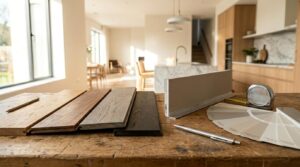
Interior finishes are where most custom home budgets experience the greatest variation — and the greatest overspending. Flooring, drywall, and paint together typically represent 20 to 30 percent of total construction cost, and material upgrades in these categories compound quickly across a full home.
Flooring is one of the highest-visibility finish decisions in any custom home, and material choice drives significant variation in both cost and installation complexity — our flooring installation costs compares hardwood, tile, LVP, and carpet across price tiers so you can match your selection to your budget and lifestyle.
Drywall and ceiling work form the structural canvas for every interior finish that follows, and understanding what this phase costs helps you sequence your budget correctly — our drywall installation costs explains what the scope includes, how ceiling height and room count affect pricing, and what to expect during the finishing stages.
Paint is the final layer of every interior finish phase and one of the most cost-effective ways to elevate the overall quality of a custom home — our interior painting costs covers prep work, primer, finish coats, and labor so you can budget accurately for every room.
Flooring, drywall, and paint represent the most visible layer of your investment, and choosing the right materials and professionals makes a measurable difference — our interior finishing services explains what each finish category includes, typical timelines, and how to get consistent results across every room.
Where Homeowners Overspend and How to Plan Better
The most common interior finish budget mistake is selecting materials at the high end of one category without adjusting elsewhere. Upgrading to hardwood flooring throughout a 2,000-square-foot home adds $15,000 to $30,000 over standard LVP. Vaulted ceilings increase drywall and paint costs by 20 to 40 percent. Custom millwork and trim work can add $10,000 to $40,000 depending on scope. The solution is to prioritize finish upgrades in the rooms where you spend the most time — typically the kitchen, primary bedroom, and main living area — and use cost-effective materials in secondary spaces.

Mechanical Systems: HVAC, Plumbing, and Electrical Costs
Mechanical systems represent the least flexible portion of any custom home budget. Unlike finishes, which can be upgraded or downgraded based on preference, mechanical systems must meet code requirements and serve the full square footage of the home. Together, HVAC, plumbing, and electrical typically account for 20 to 25 percent of total construction cost.
Rough-in plumbing is one of the earliest and most consequential mechanical decisions in a custom build, and getting the scope right from the start prevents expensive rework — our plumbing service costs details what residential plumbing installation covers, from supply lines through fixture connections.
Panel sizing, circuit planning, and outlet placement all affect both safety and resale value in a custom home — our residential electrical work explains what a full electrical installation includes and what homeowners should verify before rough-in inspection.
Mechanical systems are among the least flexible line items in any custom home budget, and understanding what drives pricing helps you avoid costly surprises — our on HVAC installation costs breaks down equipment selection, labor requirements, and efficiency upgrades that affect both upfront spend and long-term utility bills.
Why Mechanical Work Represents a Fixed Budget Floor
HVAC installation for a 2,000-square-foot home typically costs $8,000 to $15,000 for a standard central system. High-efficiency systems and zoned configurations add $3,000 to $8,000 but reduce long-term energy costs. Rough-in plumbing runs $8,000 to $15,000 for a standard two-bathroom home, with each additional bathroom adding $3,000 to $5,000. Electrical rough-in and panel installation typically costs $8,000 to $15,000, with smart home systems and EV charging infrastructure adding to that baseline. These costs are largely non-negotiable — cutting corners on mechanical systems creates safety risks and expensive remediation costs later.
Kitchen and Bathroom Remodeling Costs
Kitchens and bathrooms are the two rooms that drive the most cost variation in any custom home build. They are also the two rooms that deliver the highest return on investment at resale. According to Remodeling Magazine’s 2025 Cost vs. Value Report, a mid-range kitchen remodel recoups approximately 68 percent of its cost at resale, while a bathroom addition recoups roughly 54 percent.
Kitchens and bathrooms consistently deliver the highest return on investment in any custom home, and understanding what drives cost variation helps you allocate your budget where it matters most — our kitchen remodeling costs walks through cabinetry, countertops, fixtures, and labor so you can set realistic expectations before finalizing your design.
High-Impact Rooms That Drive the Most Variation
A standard kitchen in a custom home build costs $25,000 to $60,000 for mid-range cabinetry, countertops, and appliances. High-end kitchens with custom cabinetry, stone countertops, and professional appliances regularly exceed $80,000 to $150,000. A standard primary bathroom costs $15,000 to $35,000. Spa-style primary bathrooms with heated floors, custom tile work, and freestanding tubs can reach $50,000 to $80,000. The key budget decision is determining which rooms justify premium investment based on how you use the space and your long-term plans for the property.
Landscaping, Decks, and Outdoor Improvement Costs
Outdoor improvements are consistently the last category homeowners budget for and the first category where costs get cut when the build runs over budget. This is a mistake. Landscaping, decks, and outdoor structures directly affect curb appeal, livability, and resale value from the day you move in.
Outdoor improvements are often the last budget category homeowners plan for, yet they directly affect curb appeal, property value, and livability from day one — our landscaping cost breakdown covers grading, planting, irrigation, and hardscape so you can build a realistic outdoor budget alongside your home construction plan.
Site clearing and tree removal are often required before construction begins, and these costs belong in your land preparation budget rather than your landscaping budget — our tree removal costs explains what site clearing involves, how tree size and location affect pricing, and when stump grinding is necessary.
A well-built deck extends your living space and adds measurable resale value, but material selection and structural requirements drive significant cost variation — our deck construction costs explains what composite, pressure-treated, and hardwood decks cost to build, including footings, framing, and finishing.
Curb Appeal Investments That Add Real Value
Basic landscaping — grading, seeding, and foundation plantings — typically costs $5,000 to $15,000 for a standard lot. A full landscape design with irrigation, hardscape, and mature plantings can reach $30,000 to $75,000. A pressure-treated wood deck costs $15 to $25 per square foot installed, while composite decking runs $25 to $45 per square foot. A 400-square-foot deck therefore costs $6,000 to $18,000 depending on material selection. These investments pay dividends in daily enjoyment and measurable resale value.
Permits, Labor, and Contractor Fees
Permits, labor markups, and general contractor fees are the cost categories that most homeowners fail to budget for accurately. These are not optional expenses — they are legally required, structurally necessary, and directly tied to the quality and safety of your finished home.
Building permits typically cost $1,200 to $2,000 for a standard single-family home, though costs vary significantly by municipality. Some jurisdictions charge permit fees as a percentage of total construction value, which can push permit costs to $5,000 to $15,000 on high-value builds.
Not every task in a custom home build requires a licensed specialist, and understanding where handyman labor fits in your project helps you allocate your contractor budget more efficiently — our handyman labor rates explains what tasks fall within handyman scope and how to use skilled generalist labor to reduce overall project costs.
The Hidden Costs Most Homeowners Underestimate
General contractor fees typically run 10 to 20 percent of total construction cost. On a $400,000 build, that represents $40,000 to $80,000 in contractor overhead and profit. Subcontractor labor markups add another layer of cost on top of material prices. Architectural and engineering fees typically run 5 to 15 percent of construction cost for custom designs. Soil testing, surveys, and inspections add $2,000 to $8,000 depending on site complexity. Budgeting 15 to 20 percent above your estimated construction cost as a contingency reserve is the single most effective way to protect your project from financial disruption.
How to Budget Smarter for Your Custom Home Build
Smart custom home budgeting starts with understanding which cost categories are fixed and which are flexible. Mechanical systems, permits, and structural work are largely fixed — they must meet code and serve the full home. Finishes, fixtures, and outdoor improvements are flexible — they can be phased, upgraded over time, or value-engineered without compromising structural integrity.
Prioritize your budget in this order: land and site preparation first, foundation and structure second, mechanical systems third, and finishes last. This sequence ensures that every dollar spent on permanent, non-negotiable work is protected before discretionary finish decisions are made.
Building a realistic budget requires understanding how every cost category connects to the others, and our full renovation cost guide provides the complete framework — from initial land costs through final punch-list items — so you can plan your custom home build without financial surprises.
Conclusion
A custom home cost breakdown reveals that no single category dominates the budget — land, structure, mechanical systems, and finishes each carry significant weight and require careful planning.
The most successful custom home projects share one common trait: owners who understood their full cost structure before breaking ground and built contingency reserves into every phase.
At Mr. Local Services, our network of skilled professionals covers every category in this breakdown — from foundation to finishes — so you can build with confidence, quality workmanship, and transparent pricing at every step.
Frequently Asked Questions
What is the average cost per square foot to build a custom home in the USA?
Most custom homes in the USA cost between $150 and $500 per square foot to build, with the national average landing around $250 per square foot for a mid-range build. Location, design complexity, and material selections drive most of the variation.
How much should I budget for permits and contractor fees?
Budget 15 to 20 percent of your total construction cost for permits, general contractor fees, and contingency. On a $400,000 build, that means setting aside $60,000 to $80,000 for these non-construction costs before you finalize your material budget.
What is the most expensive part of building a custom home?
Interior finishes — including flooring, cabinetry, countertops, and fixtures — typically represent the largest variable cost in a custom home build. Mechanical systems (HVAC, plumbing, and electrical) represent the largest fixed cost category.
How much does site preparation cost for a custom home?
Site preparation costs range from $15,000 to $75,000 depending on lot conditions. Flat, cleared lots with existing utility connections cost the least. Rocky terrain, steep slopes, and remote locations with no utility access cost the most.
Can I reduce custom home costs without sacrificing quality?
Yes. The most effective strategies are using standard floor plan dimensions to reduce framing complexity, selecting mid-range finishes in secondary rooms while upgrading primary spaces, phasing outdoor improvements after move-in, and locking in material prices early to avoid supply chain cost increases.
How much does a custom home kitchen typically cost?
A mid-range custom home kitchen costs $25,000 to $60,000. High-end kitchens with custom cabinetry, stone countertops, and professional appliances regularly exceed $80,000. Kitchen cost is the single largest variable in any custom home interior budget.
What contingency reserve should I build into my custom home budget?
A 15 to 20 percent contingency reserve above your estimated construction cost is the industry standard recommendation. Custom builds encounter unexpected site conditions, material price changes, and design modifications that make contingency reserves essential rather than optional.