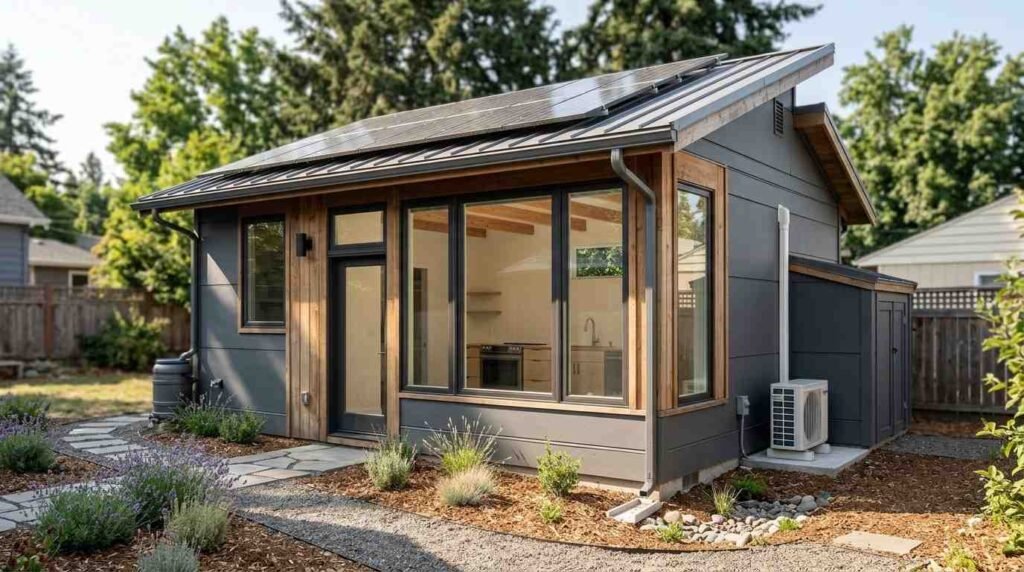
A sustainable ADU is an accessory dwelling unit built and equipped to use dramatically less energy, water, and material than a conventional home of the same size. I work with homeowners, landlords, and property managers who want a second unit that stays cheap to run for decades.
Energy prices climb, water restrictions tighten, and tenants now compare utility costs before they sign. A poorly built ADU drains money every single month.
This guide covers sustainable design basics, energy systems, insulation, solar, water, materials, air quality, landscaping, certifications, rebates, costs, and long-term maintenance.
What Makes an ADU Sustainable?
A sustainable ADU performs better than a standard build across four measurable areas: energy use, water use, material impact, and indoor air quality. I judge every green ADU by those four numbers, not by marketing labels.
The core principles stay consistent no matter the design. Reduce demand first through a tight, well-insulated shell. Then meet that smaller demand with high-efficiency equipment. Finally, offset whatever remains with renewable generation.
Core Principles of Green ADU Design
Orientation, shading, and window placement do free work. South-facing glass with proper overhangs brings winter warmth and blocks summer heat.
Compact plumbing runs shorten the distance hot water travels. Shorter runs mean less waiting, less waste, and less pipe insulation to buy.
I also plan for the whole lifecycle. Durable flooring installation and finishes that last twenty years beat cheap materials replaced three times.
Sustainable ADU vs. Standard ADU Build
| Feature | Standard ADU | Sustainable ADU |
| Wall insulation | Code minimum | Above code, continuous exterior |
| Heating and cooling | Gas furnace or resistance | Inverter heat pump |
| Water heating | Tank gas or electric | Heat pump water heater |
| Ventilation | Bath and kitchen fans only | Balanced ERV or HRV |
| Fixtures | Standard flow | WaterSense certified |
| Operating cost | Baseline | 40 to 70 percent lower |
Why Small Footprints Deliver Big Efficiency Gains
ADUs win on scale. Fewer square feet means less surface area losing heat and fewer fixtures drawing water.
The average new US single-family home reached 2,438 square feet in recent Census data, while most ADUs land between 400 and 1,200. That size difference alone cuts baseline consumption before a single green feature gets installed.
Small also makes premium upgrades affordable. Triple-pane windows across an 800 square foot unit cost a fraction of what they cost across a full house.
Energy-Efficient Systems for ADUs
Mechanical systems drive most of an ADU’s utility bill. Space conditioning and water heating together account for roughly half of residential energy consumption according to EIA survey data.
I specify all-electric equipment in nearly every sustainable ADU now. It removes combustion safety risks, eliminates gas line costs, and lets solar offset the load later.
High-Efficiency HVAC and Mini-Split Heat Pumps
Ductless mini-splits fit ADUs perfectly. One outdoor unit serves one or two indoor heads, and there are no ducts leaking conditioned air into a crawlspace.
Look at SEER2 and HSPF2 ratings when comparing units. Higher numbers mean more heating and cooling delivered per kilowatt-hour consumed.
A qualified HVAC installation professional sizes the equipment to the actual load. Oversized systems short-cycle, waste energy, and never dehumidify properly.
Heat Pump Water Heaters
Heat pump water heaters pull warmth from surrounding air instead of generating it. They typically use about a third of the electricity a resistance tank uses.
They need air volume and they cool the space around them. I place them in a utility closet with louvered doors or in a garage-adjacent bay.
Smart Thermostats and Electrical Load Planning
Smart thermostats matter more in rentals than owner-occupied units. Remote setpoint limits stop a tenant from running the heat pump at 80 degrees all winter.
Load planning comes first though. An electrician needs to confirm panel capacity before you add a heat pump, a heat pump water heater, an induction range, and an EV charger. Getting the electrical panel and wiring right at framing stage costs far less than retrofitting later.
Building Envelope, Insulation, and Air Sealing
The envelope is the shell: walls, roof, floor, windows, and doors. I always spend here before spending on equipment, because a tight shell lets you install smaller, cheaper systems.
Envelope work is also the least replaceable part of the build. You upgrade a heat pump in a weekend. You do not upgrade wall insulation without opening walls.
Insulation Types and R-Value Targets
Dense-pack cellulose, mineral wool, and closed-cell spray foam all perform well. Cellulose carries the lowest embodied carbon of the three and uses recycled paper content.
Continuous exterior rigid insulation stops thermal bridging through studs. That single detail often delivers more real-world benefit than bumping cavity R-value.
Any insulation and drywall work needs to happen in the right sequence, with air barrier details finished before board goes up.
Air Sealing and Blower Door Testing
Air leakage wastes more energy than most homeowners expect. Sealing plates, penetrations, rim joists, and can lights costs a few hundred dollars in materials.
A blower door test gives you a number instead of a guess. I treat anything above three air changes per hour at 50 pascals as unfinished work in a new ADU.
Energy-Efficient Windows and Exterior Doors
Low-E coatings and warm-edge spacers cut heat transfer without cutting daylight. U-factor tells you insulation performance, and SHGC tells you solar heat admitted.
Installation quality decides whether those ratings mean anything. Proper flashing and sealing during window installation prevents both air leaks and water damage.
Exterior doors deserve the same attention. Insulated cores plus quality door installation and adjustable thresholds keep the weather outside where it belongs.
Solar Power, Battery Storage, and Net-Zero ADUs
Solar turns a small efficient ADU into a near-zero-cost unit to operate. Residential solar costs have fallen sharply, with NREL benchmarking residential systems near $2.50 per watt in recent analysis.
I generate the load calculation first, then size the array. Guessing produces either wasted panels or a disappointing bill.
Rooftop Solar Sizing for Small Footprints
An efficient all-electric ADU often runs on 4 to 6 kilowatts of solar. That fits on most ADU roofs with room to spare.
Simple gable roofs facing south or west perform best. Complex rooflines and shade from mature trees force compromises, so I plan roof geometry during design.
Battery Backup and Grid Independence
Batteries deliver value in two situations: frequent outages and utility rate structures that punish evening usage. A small ADU load makes battery sizing manageable.
Backup priority wiring keeps the refrigerator, lights, internet, and one mini-split head running. Full-house backup rarely makes sense at this scale.
The Path to Net-Zero and All-Electric ADUs
Net-zero means annual generation matches annual consumption. Efficiency gets you most of the way, and solar closes the gap.
Skip the gas line entirely and the math gets simpler. One energy source, one meter, one offset calculation.
Water Conservation and Efficient Plumbing
Water efficiency saves money twice: on the water bill and on the energy used to heat it. Household leaks alone waste nearly 10,000 gallons per home each year according to EPA WaterSense.
ADUs make conservation easier because there are fewer fixtures to manage. One bathroom, one kitchen, one laundry hookup.
Low-Flow Fixtures and WaterSense Certification
WaterSense labeled fixtures use at least 20 percent less water while meeting performance standards. Showerheads at 1.5 gallons per minute and toilets at 1.28 gallons handle daily use without complaints.
Aerators on kitchen and bath faucets cost a few dollars each. They are the cheapest water savings available in any unit.
Greywater Reuse and Rainwater Harvesting
Laundry-to-landscape greywater systems are the simplest legal starting point in many jurisdictions. Wash water irrigates fruit trees and shrubs instead of going down the sewer.
Rainwater harvesting fits ADUs with decent roof area and a place for a cistern. Local code governs both, so verify before you design.
Tankless and Point-of-Use Hot Water
Tankless units eliminate standby losses and free up closet space. Electric tankless draws heavy amperage though, so panel capacity decides feasibility.
Point-of-use heaters at a distant kitchen sink cut the wait and the wasted water. A licensed plumbing contractor confirms sizing, venting, and code compliance for whichever route you choose.
Sustainable Materials and Healthy Interior Finishes
Material choices affect embodied carbon, durability, and the air your tenants breathe. I weigh all three, and durability usually wins ties.
Small units let you afford better materials. The quantity is low enough that premium choices stay within budget.
Reclaimed, Recycled, and Rapidly Renewable Materials
Reclaimed lumber, recycled-content steel, fly ash concrete mixes, and FSC-certified framing all reduce impact. Bamboo and cork regrow in years rather than decades.
Salvaged doors, cabinets, and fixtures cut cost and waste together. I check condition and hardware compatibility before committing to any salvage piece.
Low-VOC Paints, Sealants, and Adhesives
Volatile organic compounds off-gas for months in a small sealed space. Zero-VOC and low-VOC products cost slightly more per gallon and eliminate the problem.
Adhesives and caulks matter as much as paint. Skilled interior painting services using low-VOC products keep a compact ADU comfortable from day one.
Eco-Friendly Flooring and Tile Options
Cork, bamboo, linoleum, and recycled-content tile all perform well in small units. Solid hardwood refinishes multiple times, which extends its useful life dramatically.
Recycled glass and porcelain tile handle bathrooms and entries. Quality tile installation with proper substrate prep prevents cracking and moisture intrusion.
Indoor Air Quality and Ventilation
Tight construction demands mechanical ventilation. Sealing an ADU without ventilating it traps moisture, CO2, and cooking byproducts inside.
I treat ventilation as a health requirement, not an upgrade. It is the single most overlooked item in green ADU builds.
ERV and HRV Balanced Ventilation
Energy recovery ventilators and heat recovery ventilators exchange stale indoor air for fresh outdoor air while retaining most of the heat. ERVs also manage humidity transfer, which suits humid climates.
Compact units sized for 400 to 1,200 square feet mount in a closet or ceiling cavity. Filter changes twice a year keep them working.
Moisture Control and Mold Prevention
Bath and kitchen exhaust need to actually vent outside, not into an attic. Undersized or disconnected ducting causes most ADU mold problems I see.
Dryers deserve the same scrutiny. Proper dryer vent installation and cleaning removes moisture and lint that otherwise feed mold and fire risk.
Catch a leak early and remediation stays small. Prompt water damage restoration protects insulation, framing, and air quality all at once.
Sustainable Landscaping and Outdoor Living
Outdoor space around an ADU affects water use, stormwater runoff, and cooling load. Shade on the west wall lowers summer bills measurably.
I design ADU landscaping for low input. Less irrigation, less mowing, less chemical treatment.
Native and Drought-Tolerant Planting
Native plants survive on local rainfall once established. They also support pollinators and resist regional pests without spraying.
Drip irrigation on a timer delivers water at the root zone. Overhead spray on a small lot wastes most of what it throws. Thoughtful landscaping services make the difference between a low-water yard and a struggling one.
Permeable Surfaces and Stormwater Management
Permeable pavers, gravel, and decomposed granite let rain soak in rather than run off. Many jurisdictions now credit permeable area against stormwater requirements.
Rain gardens and swales handle roof runoff on site. Both cost less than piped drainage and look better.
Sustainable Decks, Fencing, and Shade Structures
Composite decking from recycled content resists rot without chemical treatment. FSC-certified cedar and thermally modified wood are strong alternatives.
Pergolas and trellises shade glazing during peak sun. Experienced deck builders can integrate shade structures into the deck frame from the start.
Trees deliver the best shade value of anything you plant. Regular tree care and trimming keeps canopy healthy and away from the roof.
Green Certifications, Codes, and Rebates
Certifications verify performance and unlock incentives. Codes set the floor, and rebates lower the cost of clearing it by a wide margin.
I always check three layers before budgeting: federal credits, state and utility programs, and local ADU-specific rules.
ENERGY STAR, LEED, and Passive House Pathways
ENERGY STAR certification is the most accessible path for a small ADU. It requires third-party verification of envelope, HVAC, and duct performance.
LEED for Homes scores broader categories including materials, water, and site. Passive House sets the strictest envelope and airtightness targets and produces the lowest operating costs.
Federal Tax Credits and Utility Rebates
The federal Energy Efficient Home Improvement Credit covers a percentage of qualifying equipment, and the IRS outlines annual limits including $2,000 for heat pumps. The Residential Clean Energy Credit covers 30 percent of solar and battery costs.
Utility rebates stack on top in many service territories. Heat pump water heaters, insulation, and windows commonly qualify.
Local Codes, Permits, and Local Energy Requirements
ADU rules vary by city, and energy codes vary by state. California’s Title 24 and similar state codes set mandatory efficiency baselines that shape design decisions.
Permit review catches ventilation, egress, and setback issues early. I submit energy compliance documentation with the plan set to avoid revision cycles.
Cost, ROI, and Property Value Impact
Sustainable features add upfront cost and remove monthly cost. The trade usually favors the owner within a decade, sooner with rebates applied.
I break the premium into three buckets: envelope, mechanical, and renewable. Envelope pays back slowest on paper and longest in practice.
Upfront Premium vs. Lifetime Operating Savings
Green upgrades typically add 5 to 15 percent to an ADU build budget. Utility savings of 40 to 70 percent then run for the life of the unit.
Rebates and tax credits compress that payback substantially. Solar plus a heat pump often reaches breakeven inside seven years.
Rental Appeal and Resale Value
Tenants notice low utility bills immediately. Efficient units rent faster and turn over less often in competitive markets.
Appraisers increasingly recognize verified efficiency features. Certification paperwork and utility history give you documentation at sale time.
Maintaining an Eco-Friendly ADU Year-Round
Green systems only stay efficient with maintenance. A clogged filter erases a heat pump’s rating in a single season.
I run ADU maintenance on a simple twice-yearly rhythm. Spring for cooling and water, fall for heating and envelope.
Seasonal Efficiency Checklist
Filters, condenser coils, ERV cores, and drip emitters need routine attention. Gutters and downspouts protect the envelope from water damage.
Weatherstripping and caulk fail gradually. A yearly walkaround catches gaps before they cost real money.
Exterior surfaces stay durable longer when cleaned. Periodic pressure washing removes mildew and grit that degrade siding and decking.
Systems That Need Professional Servicing
Heat pumps, ERVs, solar inverters, and tankless heaters all have manufacturer service intervals. Skipping them voids warranties and shortens equipment life.
General upkeep between visits is straightforward. A reliable handyman service handles filters, fixtures, hardware, and small repairs on schedule.
Pest pressure rises around organic mulch and dense planting. Preventive pest control protects insulation, framing, and stored materials.
How to Plan and Build a Sustainable ADU
Sequence matters more than any single product choice. Design decisions made in week one determine what is possible in month six.
I start with an energy model, then let it drive the specification. That order prevents expensive reversals.
Choosing the Right Contractors and Trades
Ask for blower door results, HERS ratings, and past green ADU addresses. Experience with tight envelopes is a specific skill, not a general one.
Coordination between trades protects the air barrier. Electricians, plumbers, and HVAC installers all penetrate it, so sequencing and sealing responsibility need to be assigned in writing.
Some owners convert existing structures instead of building new. Thoughtful remodeling and conversion work on a garage or basement reuses an existing shell and cuts embodied carbon.
Common Mistakes That Undermine Efficiency
Oversized HVAC, skipped ventilation, and unsealed penetrations top my list. Each one wastes money already spent elsewhere.
Value engineering the envelope late in the process causes the most damage. Cut finishes before you cut insulation, windows, or air sealing.
Conclusion
I covered what makes an ADU sustainable: tight envelopes, efficient electric systems, solar, water savings, healthy materials, ventilation, and smart landscaping.
Each of these areas connects to deeper resources, from certification pathways and rebate programs to seasonal maintenance and contractor selection.
We help you plan, build, and maintain an efficient ADU. Connect with Mr. Local Services and get matched with vetted local pros today.
Frequently Asked Questions
What is the most important sustainable feature in an ADU?
The building envelope. Insulation, air sealing, and quality windows reduce demand permanently, which makes every other efficiency upgrade smaller and cheaper.
How much more does a sustainable ADU cost to build?
Green features typically add 5 to 15 percent to the build budget. Rebates and tax credits offset much of that premium in most markets.
Can an ADU run entirely on solar power?
Yes. An efficient all-electric ADU usually needs 4 to 6 kilowatts of solar, which fits comfortably on most ADU rooftops.
Do sustainable ADUs increase property value?
They do. Documented efficiency features and lower utility costs support both stronger rental rates and better appraisal outcomes at sale.
What rebates apply to eco-friendly ADU features?
Federal credits cover heat pumps, insulation, windows, and solar. State and utility programs frequently stack additional rebates on the same equipment.
Does a tightly sealed ADU need mechanical ventilation?
Absolutely. An ERV or HRV supplies fresh air continuously and prevents moisture, carbon dioxide, and pollutant buildup inside a small sealed space.
How often should ADU green systems be serviced?
Twice yearly works for most units. Spring covers
cooling, water, and irrigation, while fall covers heating, ventilation, and envelope checks.