Park model homes need a different maintenance rhythm than a standard house. The roof, plumbing, and skirting take the most wear, and catching small issues early saves thousands in repairs. I’ve walked through enough of these units to know exactly where problems start and how fast they spread when ignored.
Park models sit closer to the elements than site-built homes. Temperature swings, moisture, and pest access all move faster through a smaller structure, and that changes how often things need checking.
This guide covers the foundations of park model care, the core systems like roofing, plumbing, electrical, and HVAC, structural and interior upkeep, seasonal prevention planning, and how to know when it’s time to call in a professional versus handle something yourself.
What Is a Park Model Home and Why Maintenance Matters
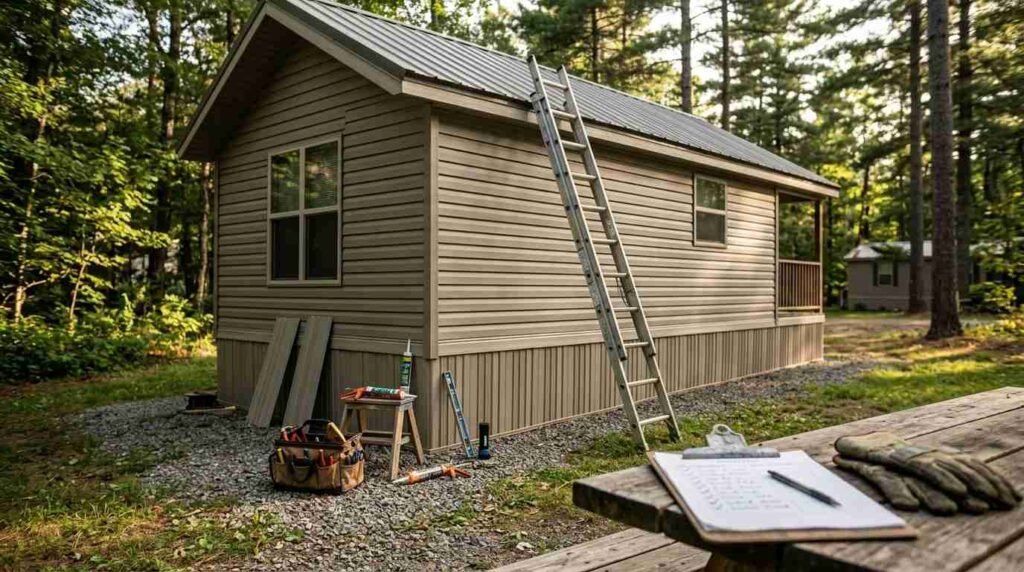
A park model home is a manufactured structure built on a single chassis, typically under 400 square feet, designed for extended stays in a fixed location rather than frequent travel. It shares some construction traits with RVs but functions more like a permanent residence once it’s set up on a lot.
I look at park models as a hybrid. They’ve got RV-style plumbing and electrical shortcuts in some cases, but the walls, roof, and insulation behave more like a small house.
That hybrid nature is exactly why maintenance gets overlooked. Owners either treat it like an RV and skip structural checks, or treat it like a house and ignore the mobile-home-specific weak points.
Key Structural Differences from Traditional RVs and Homes
The chassis and skirting are the biggest structural differences. A park model sits on a steel frame with a gap underneath, and that gap becomes a highway for pests, moisture, and temperature loss if the skirting isn’t sealed right.
Traditional homes have full foundations. RVs are built to move constantly and shed weight fast. Park models split the difference, and that means the maintenance checklist borrows from both worlds.
How Climate and Season Affect Maintenance Needs
Humidity, freeze-thaw cycles, and intense sun all hit a park model harder than a full-size house because the structure is smaller and the materials are thinner in places. I’ve seen roofs age twice as fast in high-UV climates compared to shaded lots.
Winterizing plumbing isn’t optional in freeze zones; it’s the single most common repair I see skipped. Every season brings its own priority, and I break that down later in the seasonal checklist section.
Roof Maintenance and Repair for Park Model Homes
The roof on a park model takes more direct sun and wind exposure than a standard home roof because the structure sits lower and often lacks tree cover on a park lot. I check roofs first on every inspection because leaks here cause the most expensive downstream damage.
Small punctures or seam separations go unnoticed for months and then show up as water stains inside. By the time you see the stain, the damage has usually spread into the insulation.
Common Roof Materials and Their Lifespans
Rubber (EPDM) roofing lasts roughly 12 to 20 years with regular resealing. Metal roofing holds up longer, often 25 to 30 years, but shows dents and scratches faster.
TPO membrane roofing sits in between, offering good UV resistance for around 15 to 20 years. I always ask what material is on the roof before recommending a repair timeline, because each one fails differently.
Signs of Roof Damage That Need Immediate Attention
Soft spots underfoot, visible seam separation, and ceiling stains are the three signs I never let slide. Ponding water after rain also signals a drainage problem that gets worse every cycle.
Catching a small seam issue costs a fraction of what a full roof replacement runs. I’d rather see an owner call too early than too late.
Plumbing System Care and Common Repairs
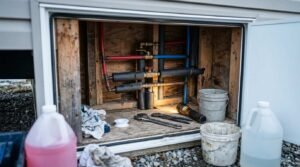
Park model plumbing runs through more exposed and compact spaces than a standard home, which means pipes sit closer to cold air and mechanical stress. I treat plumbing inspections as a twice-a-year minimum, not an annual afterthought.
Most plumbing failures I see trace back to freeze damage or a fitting that was never properly sealed at installation. Both are preventable with routine checks.
Winterizing Park Model Plumbing
Draining the water lines and adding antifreeze to traps prevents the single most expensive plumbing repair: a burst pipe. This process typically takes under two hours and protects the entire system through freeze season.
Skipping winterization even one season is enough to crack a fitting that fails months later. I’ve seen the delayed damage show up as a slow leak nobody notices until the floor starts softening.
Common Leak Points and Water Damage Risks
Under-sink connections, the water heater fitting, and the exterior hose bib are the three spots I check first on every service call. These joints see the most temperature swings and mechanical stress over time.
A slow leak under a sink can run for weeks before anyone notices the smell or the soft flooring. That’s exactly the kind of damage that turns a $50 fix into a flooring replacement.
Electrical System Maintenance and Safety Checks
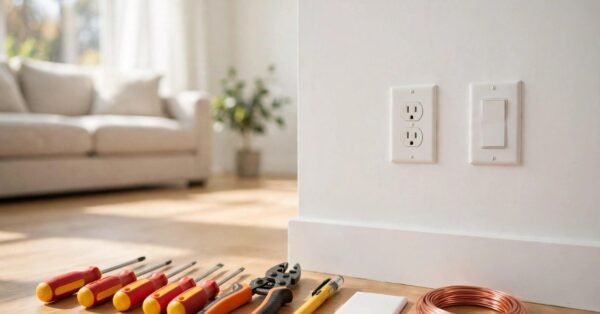
Park model electrical systems often run on a mix of 30-amp and 50-amp service depending on the unit’s size and appliance load. I check the panel condition and breaker function on every visit because electrical issues escalate into fire risks faster than almost any other maintenance category.
Loose connections and outdated wiring show up more often in older park models that have been retrofitted for modern appliances. That mismatch between old wiring and new demand is where I find most of the real hazards.
Panel and Wiring Inspections
A visual panel check looks for scorch marks, loose breakers, and any signs of corrosion around the connections. I recommend this inspection annually, and immediately after any storm with heavy rain or wind.
Wiring that’s original to an older unit often wasn’t sized for today’s appliance loads. That gap is worth flagging even before something fails.
When to Call a Licensed Electrician
Flickering lights, warm outlet covers, or a breaker that trips repeatedly are signals to stop troubleshooting and call a professional. These symptoms point to problems inside the wall that a visual check won’t catch.
I never recommend DIY work past the outlet or switch level in a park model. The wiring runs are tighter and less forgiving than in a standard house.
HVAC and Climate Control Upkeep
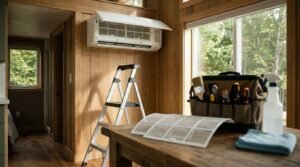
Park model HVAC systems typically run smaller mini-split or ducted units sized specifically for the compact square footage. I find that owners either oversize their system and waste energy, or undersize it and run the unit constantly, both of which shorten its lifespan.
Filter changes and coil cleaning matter more here than in a full-size home because the whole system works harder relative to the space it’s cooling. A dirty filter in a park model unit restricts airflow noticeably faster than in a larger central system.
Mini-Split and Ducted System Differences
Mini-split systems mount directly on a wall and condition a single zone efficiently without ductwork. Ducted systems distribute air through a compact duct network but need more clearance and maintenance access.
I lean toward mini-splits for most park models because they’re easier to service and don’t lose efficiency through duct leaks. Ducted setups still work well in larger units, though.
Seasonal HVAC Maintenance Schedule
Filters get checked monthly during heavy-use seasons and swapped every 60 to 90 days depending on dust and pet presence. Coil cleaning happens once per season, ideally right before the heavy cooling or heating months start.
Skipping a filter change for a full season is one of the fastest ways to burn out a compressor early. That single part replacement costs far more than the filters would have over several years.
Exterior Siding, Skirting, and Structural Maintenance
Skirting does more than hide the chassis. It blocks pests, holds in warmth around the plumbing, and protects the underside of the unit from moisture buildup.
I inspect skirting seams every spring because that’s when small gaps from winter settling become obvious. A gap the size of a fist is enough for rodents to get underneath.
Skirting Repair and Pest Prevention
Vinyl skirting cracks in cold weather and separates at the seams over a few seasons of temperature cycling. Metal skirting holds up longer but dents easily if it takes a direct hit.
Sealing gaps promptly keeps the crawlspace dry and blocks the entry points pests use most. This connects directly to the pest control strategies that protect the rest of the structure once they’re inside.
Foundation and Leveling Checks
A park model that’s shifted off level puts stress on doors, windows, and interior drywall seams. I check level with a simple bubble tool at each corner and along the centerline of the frame.
Releveling is a straightforward fix when caught early, but a unit left unlevel for years develops secondary damage that costs far more to reverse.
Interior Maintenance: Flooring, Drywall, and Ceilings
Interior surfaces in a park model show damage faster than in a full-size home because moisture and structural movement have less material to travel through before reaching the inside. I always trace an interior stain back to its exterior source before repairing it, or the same damage just comes back.
Ceiling stains almost always point to a roof issue, and soft flooring almost always points to a plumbing leak. Treating the symptom without finding the source wastes money.
Moisture-Related Flooring Damage
Soft spots near sinks, tubs, and exterior doors are the first places I check for hidden water damage. Subfloor material in a park model is often thinner than in a standard house, so it softens faster once moisture gets in.
Catching this early means replacing a section of subfloor instead of a full room. That difference in scope is significant, both in cost and downtime.
Drywall Cracks and Ceiling Stains
Hairline cracks near windows and doors usually trace back to normal settling, but wider cracks or stains signal a moisture or structural issue. I always check the attic space or roofline above any ceiling stain before patching it.
Patching drywall without fixing the source just delays the same repair by a few months. The stain always comes back until the leak is gone.
Window, Door, and Insulation Maintenance
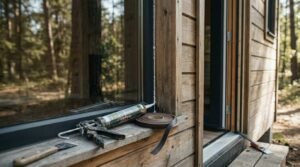
Windows and doors in a park model see more thermal stress than in a standard home because the walls are thinner and the frame flexes slightly with temperature changes. Gaps around these openings are one of the biggest sources of energy loss I find during inspections.
Resealing and weatherstripping every year or two keeps heating and cooling costs predictable. Skipping this maintenance shows up directly on the utility bill.
Sealing Gaps to Prevent Energy Loss
Caulking around window frames and replacing worn weatherstripping on doors closes the two biggest gaps in a park model’s thermal envelope. I check for daylight visible around a closed door frame as a quick diagnostic.
This is a low-cost fix that pays for itself within a season or two in energy savings. It’s one of the easiest wins in the entire maintenance list.
Door Alignment and Weatherproofing
A door that’s dragging or not latching cleanly usually means the frame has shifted slightly, often tied to the leveling issues covered earlier. Adjusting hinges and strike plates solves most of these without a full frame replacement.
Weatherproofing that alignment issue also cuts down on drafts that make the HVAC system work harder than it needs to.
Pest Control and Water Damage Prevention
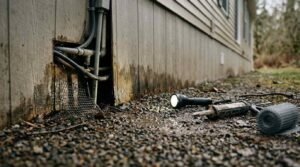
Pests and water intrusion are the two threats that cause the most hidden, cumulative damage in a park model home. Both problems start small and stay invisible until the repair bill is much larger than it needed to be.
I treat these two categories together because they share the same entry points. Wherever moisture gets in, pests usually aren’t far behind.
Common Pest Entry Points in Park Models
Skirting gaps, unsealed utility penetrations, and loose vent covers are the three spots where I find most pest activity. Rodents and insects both exploit these same weak points because they lead directly into warm, sheltered spaces.
Sealing these entry points is far cheaper than dealing with an active infestation later. A comprehensive pest inspection catches these before they become a bigger issue.
Early Signs of Water Intrusion
A musty smell, discoloration on baseboards, or a slightly spongy feel underfoot are the earliest signs of water getting where it shouldn’t. These signs show up well before visible mold or structural softening.
Acting on these early signals prevents the kind of water damage repair that turns into a multi-week project. Waiting even a few weeks changes the scope significantly.
Seasonal Maintenance Checklist and Timeline
Spreading maintenance tasks across the year keeps any single season from becoming overwhelming, and it catches problems while they’re still small. I build this schedule around the seasonal stress points I’ve already covered in each system section.
Consistency matters more than intensity here. A quick check every season beats a single exhaustive inspection once a year.
Spring, Summer, Fall, and Winter Task Breakdown
Spring focuses on skirting seams, roof inspection after winter, and re-leveling checks following ground thaw. Summer shifts attention to HVAC filter changes, coil cleaning, and exterior caulking before peak heat arrives.
Fall means winterizing plumbing, checking weatherstripping, and clearing debris from roof drainage paths. Winter is mostly monitoring for ice dams, condensation, and any signs of the electrical system struggling under heater load.
When to Repair vs. Replace and Hiring a Professional
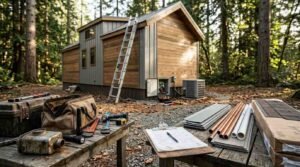
Every repair decision eventually comes down to cost versus remaining lifespan of the component in question. I always weigh how much life is left in the roof, the plumbing, or the HVAC system before recommending a repair over a replacement.
A unit under ten years old usually justifies repair. Past that point, especially with major systems, replacement often makes more financial sense over a five-year horizon.
Cost Factors That Influence the Decision
Labor access is a real cost driver in park models because tight spaces sometimes mean more time on a job than the same repair would take in a standard house. Material availability also matters, since some park model parts aren’t stocked at every supply house.
I factor in both of those before quoting any job, because the sticker price on materials rarely tells the whole story.
Questions to Ask Before Hiring a Contractor
Ask whether the contractor has specific park model or manufactured home experience, not just general residential experience. The construction quirks matter, and a contractor unfamiliar with them can misdiagnose a straightforward issue.
Ask for a written scope and timeline before work starts. That single step prevents most of the disputes I’ve seen between owners and contractors down the line.
Conclusion
Park model homes reward consistent, seasonal attention across roofing, plumbing, electrical, and structural systems. Small issues caught early stay small, while ignored ones compound fast in a compact structure.
Every system in this guide connects to the others: a skirting gap invites pests, a roof leak damages ceilings, a plumbing leak softens floors. Staying ahead of these connections protects the whole unit.
We built Mr. Local Services to handle exactly this kind of work. Reach out, and we’ll get your park model inspected, repaired, and protected before small problems turn into expensive ones.
Frequently Asked Questions
How often should I inspect my park model roof?
I recommend checking the roof twice a year, in spring and fall, plus after any major storm. Catching seam separation or soft spots early prevents costly interior water damage.
What’s the biggest maintenance mistake park model owners make?
Skipping plumbing winterization is the most common and most expensive mistake I see. A single freeze can crack a fitting that leads to a slow leak nobody notices for weeks.
How long does park model skirting last?
Vinyl skirting typically lasts 8 to 12 years before cracking or seam separation becomes a real problem. Metal skirting lasts longer but shows dents from impact more easily.
Can I do park model electrical repairs myself?
Basic outlet and switch work is fine for most owners, but anything involving the panel or wiring behind the wall needs a licensed electrician. Park model wiring runs are tighter and less forgiving than standard home wiring.
What causes musty smells in a park model?
A musty smell almost always points to hidden moisture, often from a slow plumbing leak or a gap in the skirting letting dampness build up underneath. I treat that smell as an early warning sign, not something to ignore.
How do I know if I need to relevel my park model?
Doors that stick, windows that won’t latch cleanly, and new drywall cracks near openings are the clearest signs a unit has shifted off level. A simple bubble level check at each corner confirms it quickly.
Is it cheaper to repair or replace an aging HVAC system?
Units under ten years old usually make more financial sense to repair. Past that point, especially with a failing compressor, replacement often costs less over a five-year outlook than repeated repairs.
What should I look for when hiring a park model repair contractor?
Look for specific park model or manufactured home experience, not just general residential work. Ask for a written scope and timeline before anything starts; it prevents most disputes down the line.