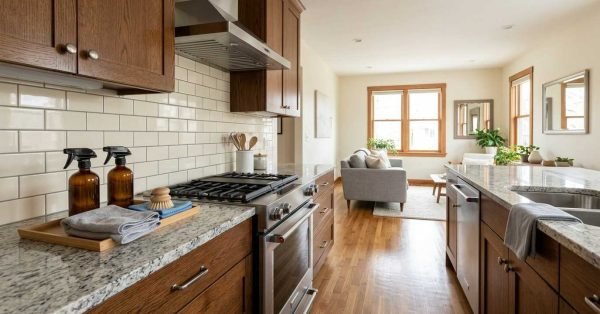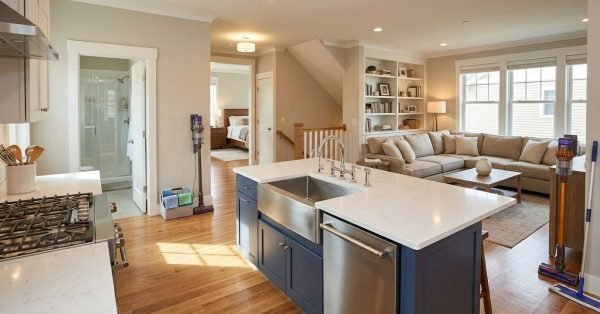
A luxury feature in a custom home is any element built above standard construction grade to deliver better materials, better performance, or a better daily experience. I’ve watched these choices shape how a house lives, holds value, and ages.
Luxury spending is climbing fast, and the wrong feature choices lock owners into cost and upkeep they never planned for. Getting this right early protects both comfort and equity.
This guide covers definitions, budgets, architecture, finishes, kitchens, baths, technology, comfort systems, signature rooms, exteriors, envelope performance, accessibility, hiring, maintenance, and the mistakes I see most.
What Defines a Luxury Feature in a Custom Home?
A luxury feature is a component specified above builder-grade standard in material quality, engineering, customization, or performance. That definition matters because “luxury” gets used loosely in marketing, and homeowners end up paying premium prices for standard products.
I use a simple test. A feature qualifies as luxury when it requires specialized trades, custom fabrication, or engineering beyond code minimums.
Luxury vs. High-End vs. Premium: How the Terms Differ
High-end usually describes upgraded stock products, like a premium appliance line or a thicker quartz slab. Luxury goes further into custom fabrication and bespoke design.
Premium sits in the middle. It signals better materials without the custom design work that defines true luxury construction.
The Four Pillars of Luxury: Materials, Craft, Systems, Space
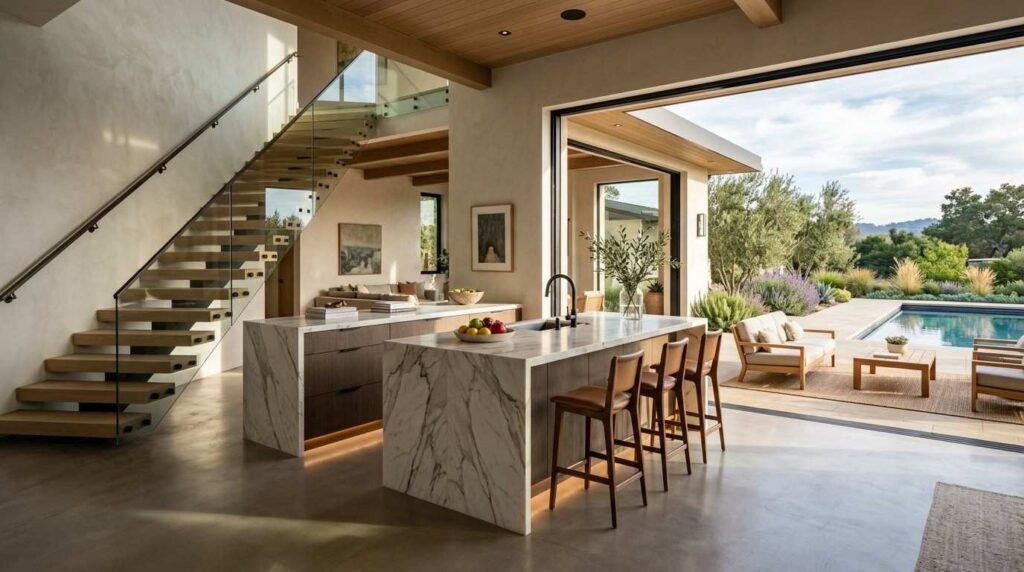
Every genuine luxury feature draws from at least two of four pillars: material quality, craftsmanship, integrated systems, and generous spatial planning. A marble slab alone is material. A book-matched marble waterfall island with hidden support and integrated lighting hits all four.
I tell clients to audit every line item against these pillars. It kills a lot of expensive noise fast.
How Luxury Features Affect Appraisal and Resale Value
Appraisers value features unevenly. Kitchens, primary baths, and functional square footage carry weight, while highly personal features like golf simulators rarely return their cost.
The National Association of Realtors’ 2025 Remodeling Impact Report shows interior projects like kitchen upgrades and refinished hardwood flooring recover a large share of cost, while niche additions recover far less. Market context drives everything here.
Planning Your Luxury Custom Home Feature Budget
Budget planning fails when homeowners price features individually instead of as a system. A steam shower is not just a fixture. It brings waterproofing, ventilation, electrical, and a dedicated generator with it.
I build budgets in three layers: structure and envelope, mechanical systems, then visible finishes. That order prevents the classic mistake of spending the finish budget before the systems are priced.
Allocating Budget Across Structure, Systems, and Finishes
A workable starting split puts roughly half the budget into structure and envelope, a quarter into mechanical and electrical systems, and a quarter into finishes and fixtures. Luxury projects push the systems share higher because automation, HVAC zoning, and water treatment stack up.
Custom home construction costs vary widely by region and specification level, and HomeAdvisor’s 2025 cost data places typical custom builds well above standard tract construction per square foot.
Cost Tiers: Entry Luxury, Mid Luxury, Ultra Luxury
Entry luxury upgrades finishes and appliances on a conventional plan. Mid luxury adds custom millwork, integrated automation, and specialty rooms. Ultra luxury introduces bespoke fabrication, imported materials, and engineered structural moves.
Naming your tier early keeps the design team honest and the bids comparable.
Contingency Planning and Change-Order Control
I hold 10% to 15% of the total budget as contingency on luxury builds. Custom work uncovers surprises, and change orders during framing cost far less than change orders during finish.
Every allowance line needs a real number behind it. Vague allowances are where luxury budgets quietly break.
Architectural and Structural Luxury Features
Architectural features set the emotional tone of a home before a single finish is chosen. Ceiling height, sightlines, and structural openness cannot be added later without major cost.
These decisions carry the longest lifespan of anything in the build. I push clients to spend here first.
Vaulted Ceilings, Coffered Details, and Ceiling Treatments
Vaulted, tray, and coffered ceilings change how light and sound behave in a room. Coffered work in particular demands precise custom carpentry and trim installation to hold clean reveals.
Higher ceilings also raise HVAC load and lighting requirements. Plan those together.
Grand Staircases, Curved Walls, and Custom Millwork
Staircases are the most visible piece of custom fabrication in most luxury homes. Curved stringers, floating treads, and steel-and-glass railings are engineering projects, not carpentry projects.
Millwork packages, paneled walls, and built-ins follow the same rule. Shop drawings prevent expensive field improvisation.
Indoor-Outdoor Transitions and Glass Wall Systems
Multi-slide and bi-fold glass walls dissolve the line between living space and patio. They require structural headers, precise sill drainage, and coordinated window and door installation to perform in real weather.
I always verify the thermal rating. Big glass with weak performance creates comfort problems no HVAC system fixes cheaply.
Premium Interior Finishes and Surfaces
Finishes are what people touch every day, and they carry the strongest perception of quality. They also age faster than structure, so material selection needs to match how the household actually lives.
I separate finishes into three categories: surfaces underfoot, surfaces at hand, and surfaces on the wall.
Natural Stone, Quartzite, and Slab Selection
Marble, quartzite, and engineered quartz behave very differently. Marble etches, quartzite resists almost everything, and engineered quartz offers consistency at lower cost.
Slab selection happens in person. Two slabs from the same quarry block look nothing alike, and book-matching only works when you reserve the material early.
Hardwood, Wide-Plank, and Specialty Flooring
Wide-plank white oak dominates current luxury builds, usually in engineered form for dimensional stability. Site-finished floors give a seamless look, while prefinished planks install faster with tougher factory coatings.
Radiant heat, moisture levels, and subfloor flatness all affect the outcome, which is why professional flooring installation matters as much as the product.
Venetian Plaster, Wall Paneling, and Decorative Painting
Venetian plaster, limewash, and specialty paint finishes add depth that flat paint never delivers. These are artisan applications with real skill gaps between installers.
Wall paneling, shiplap, and fluted wood details need flawless substrates. Any drywall imperfection telegraphs straight through, so drywall and ceiling preparation sets the ceiling on final quality.
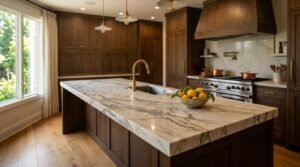
Luxury Kitchens and Chef-Grade Culinary Spaces
The kitchen absorbs more luxury budget than any other room, and it returns the most in both daily use and resale perception. Layout drives value more than brand names.
I design kitchens around workflow zones first, then select equipment. That order prevents a beautiful kitchen that cooks badly.
Professional Appliance Packages and Ventilation
Commercial-style ranges, dual fuel configurations, integrated refrigeration, and steam ovens define the professional package. Every high-BTU range demands matched ventilation and often a make-up air system.
Undersized hoods are the most common failure I see. Get the CFM calculation done before cabinets are ordered.
Butler’s Pantries, Sculleries, and Prep Zones
A scullery keeps mess out of the main kitchen during entertaining. It typically holds a second sink, dishwasher, and open shelving behind a door.
Butler’s pantries bridge kitchen and dining, handling glassware, staging, and beverage service. Both need plumbing and electrical planned at framing.
Custom Cabinetry, Islands, and Integrated Storage
Full-custom cabinetry gives exact dimensions, specialty species, and interior fittings that semi-custom lines cannot match. Islands over ten feet often require seam planning and additional support.
Integrated storage, from appliance garages to hidden charging drawers, is where custom cabinetry earns its premium.
Spa Bathrooms and Wellness Suites
The primary bath has become the second most valuable luxury space in a custom home. Homeowners increasingly want a private wellness environment, not just a functional bathroom.
Wellness features carry mechanical requirements that catch people off guard. Waterproofing and ventilation decide whether these spaces last.
Wet Rooms, Steam Showers, and Freestanding Soaking Tubs
A wet room encloses shower and tub in one waterproofed zone, which simplifies drainage and expands design freedom. Steam showers need a sloped ceiling, vapor-tight enclosure, and a properly sized generator.
Freestanding tubs look effortless and install anything but. Floor-mounted fillers and structural load both need early coordination with your plumbing installation team.
Heated Floors, Towel Warmers, and Comfort Systems
Electric radiant mats under tile are among the highest-satisfaction, lowest-cost luxury upgrades available. They pair naturally with heated towel bars and programmable thermostats.
Hydronic systems make sense when radiant heat serves the whole house. Electric mats win for single rooms.
Saunas, Cold Plunges, and Home Wellness Rooms
Traditional saunas, infrared cabins, and cold plunge tubs moved from commercial spas into private homes fast. Each brings dedicated electrical, drainage, and ventilation requirements.
I treat these as mechanical rooms with a nice finish. That framing keeps the planning honest.
Smart Home Technology and Integrated Automation
Smart home technology separates a modern luxury build from a merely expensive one. Integration is the differentiator, not the individual devices.
The global smart home market continues rapid expansion, with Statista projecting substantial revenue growth through 2029 as connected systems become standard in premium construction.
Whole-Home Control Systems and Structured Wiring
A unified control platform ties lighting, climate, audio, shades, and security into one interface. Structured wiring runs during framing and costs a fraction of retrofitting later.
I run conduit even where wireless works today. Standards change, cable does not.
Lighting Design, Shading, and Circadian Control
Layered lighting combines ambient, task, accent, and decorative sources on separate circuits. Tunable white fixtures shift color temperature across the day to support natural rhythms.
Motorized shades handle glare, privacy, and solar heat gain automatically. Coordinating this with licensed electrical work during rough-in avoids visible compromises later.
Security, Access Control, and Remote Monitoring
Integrated systems combine cameras, sensors, smart locks, and remote monitoring under one app. Keyless entry with individual codes gives property managers real control over contractor and staff access.
I always recommend professional smart lock and access control installation for exterior doors on high-value properties.

Advanced Comfort Systems: HVAC, Air, and Water
Comfort systems are invisible until they fail; then they define the entire experience of the home. Luxury here means precise control, quiet operation, and clean air and water.
Homeowners rarely see this budget line, and it is the one I protect hardest.
Zoned HVAC, Radiant Heat, and Humidity Control
Multi-zone systems let each floor or wing hold its own setpoint. Variable-speed equipment runs longer at lower output, which improves both humidity control and acoustics.
Dedicated dehumidification matters in humid climates. Proper HVAC system design and installation determine whether a large custom home feels consistent room to room.
Indoor Air Quality, Filtration, and Ventilation
Tight luxury homes need mechanical fresh air. Energy recovery ventilators bring in outside air while retaining conditioned energy.
The EPA reports that indoor air pollutant levels can run two to five times higher than outdoor levels, which is why MERV 13 or higher filtration belongs in the base spec.
Water Filtration, Softening, and Instant Hot Water
Whole-home filtration protects fixtures, appliances, and skin. Softeners extend the life of every water-using system in hard-water regions.
Recirculation loops deliver instant hot water at distant fixtures. On a large footprint, this is a comfort feature people notice daily.
Signature Rooms: Theaters, Wine Rooms, and Specialty Spaces
Signature rooms give a custom home its personality. They also carry the widest gap between cost and appraised value, so intent matters more than resale math here.
I ask one question first: will this room get used weekly? That answer decides everything.
Home Theaters, Media Rooms, and Acoustic Treatment
A dedicated theater needs isolated construction, acoustic panels, riser seating, and controlled lighting. Media rooms trade some performance for flexibility and daylight.
Acoustic isolation happens in framing with decoupled walls and dense insulation. Retrofitting it later means demolition.
Wine Cellars, Tasting Rooms, and Climate Control
Wine storage requires stable temperature near 55°F and humidity around 60%. That means a dedicated cooling unit, vapor barrier, and insulated envelope.
Glass-enclosed display cellars look stunning and stress the cooling load. Size the unit for the glazing, not the square footage.
Home Gyms, Golf Simulators, and Hobby Suites
Home gyms need rubber flooring, reinforced subfloor, mirrors, and serious ventilation. Golf simulators need ceiling height above ten feet and a dedicated impact bay.
Hobby suites, from studios to workshops, follow the same logic: power, air, light, and durable surfaces.
Luxury Exteriors, Outdoor Living, and Landscape Features
Outdoor living has become a full extension of the house rather than an afterthought. Covered, conditioned outdoor space now competes with interior square footage for budget.
Climate drives which features actually get used. I plan for the shoulder seasons, not just July.
Outdoor Kitchens, Covered Loggias, and Fire Features
An outdoor kitchen ranges from a built-in grill to a full setup with refrigeration, sink, pizza oven, and weatherproof cabinetry. Covered loggias with heaters and fans extend usable months significantly.
Fire pits and linear gas fireplaces anchor gathering areas. Gas runs and electrical need to be trenched before hardscape goes in.
Pools, Spas, and Water Features
Pools, integrated spas, and infinity edges are engineering projects with permitting, safety, and equipment demands. Automated chemistry and heating turn a pool from a chore into an amenity.
Decking material matters for heat and slip resistance. Regular pressure washing and surface maintenance keep hardscape and pool decks safe and presentable.
Landscape Lighting, Hardscape, and Privacy Design
Layered landscape lighting extends curb appeal after dark and improves security. Path, uplight, and wash fixtures each serve a different purpose.
Mature tree placement, screening, and grading create privacy that fences never match. Ongoing landscape design and maintenance protect that investment as plantings mature.
High-Performance Building Envelope and Energy Features
The envelope determines comfort, utility cost, and durability for the life of the house. This is the least glamorous luxury spend and the highest performing one.
I treat the envelope as a system: walls, windows, roof, and air sealing working together.
Windows, Doors, and Thermal Performance
Triple-pane and high-performance dual-pane windows with warm-edge spacers cut heat transfer and condensation. Solid-core and insulated entry doors add both security and thermal value.
Installation quality decides real performance. A premium window installed poorly underperforms a mid-grade window installed correctly, which is why professional door installation belongs in the spec.
Roofing Systems, Metal, Slate, and Tile
Standing seam metal, natural slate, and clay tile all deliver multi-decade service life with distinct aesthetics. Each carries different structural load requirements.
Underlayment, ventilation, and flashing details matter more than the visible material. Quality roof installation and inspection protect everything beneath it.
Solar, Battery Backup, and Standby Generators
Rooftop or ground-mount solar paired with battery storage delivers resilience alongside savings. Whole-home standby generators cover extended outages without any user action.
Conduit and panel capacity for future solar cost very little at rough-in. I include them on every build.
Accessibility, Aging in Place, and Universal Luxury Design
Universal design has moved from institutional to genuinely elegant. Done well, accessibility features read as spaciousness and ease rather than accommodation.
The U.S. Census Bureau projects adults 65 and older will outnumber children by 2034, and multigenerational households make these features practical for a much wider group than people assume.
Elevators, Wide Halls, and Zero-Step Entries
Residential elevators, or at minimum a stacked-closet elevator shaft for future installation, cost far less when framed in. Wider halls and 36-inch doorways improve flow for everyone.
Zero-step entries at the front and garage eliminate the most common fall hazard in a home.
Curbless Showers, Grab Bar Integration, and Mobility Safety
Curbless showers with linear drains look contemporary and remove a trip risk. Blocking behind bathroom walls lets grab bars go in later without demolition.
Lever handles, rocker switches, and better task lighting round it out. Adding mobility and safety upgrades during construction costs a fraction of retrofitting.

Choosing Builders, Designers, and Specialty Trades
The team matters more than the specification. I’ve seen modest budgets produce extraordinary homes with the right builder, and enormous budgets produce disappointment with the wrong one.
Luxury construction depends on specialty trades that most general contractors subcontract. Verify those relationships before signing.
Vetting Credentials, Portfolios, and References
Ask for three completed projects at your budget tier and visit at least one in person. Talk to owners two or three years post-completion, not fresh move-ins.
Confirm licensing, general liability, and workers’ compensation coverage directly with the carrier. Check lien history in your county.
Contracts, Allowances, and Transparent Pricing
Cost-plus contracts with a published fee suit highly custom work. Fixed-price contracts suit well-defined scopes with complete drawings.
Every allowance needs a specific product behind it, not a dollar figure alone. Vague allowances produce budget shock at selection time, and clear scope on general handyman and finishing work prevents the same problem on smaller line items.
Maintaining Luxury Features After Move-In
Luxury features carry luxury maintenance. Natural stone, wine cooling, water treatment, and automation systems all need scheduled attention to perform as designed.
I hand every client a maintenance calendar at closing. Deferred maintenance destroys more high-end finishes than actual wear.
Seasonal Maintenance Calendar for High-End Systems
Spring covers HVAC service, exterior wash, gutter clearing, and irrigation startup. Fall covers heating service, chimney inspection, and winterization.
Quarterly items include filter changes, water treatment checks, and sealing natural stone. Annual appliance servicing protects professional-grade equipment where parts and labor run high.
Protecting Warranties and Preventing Costly Failures
Most manufacturer warranties on premium equipment require documented professional service. Keep records and receipts organized from day one.
The fastest path to a six-figure loss is an unnoticed leak behind finished walls. Leak detection sensors and prompt water damage restoration response contain problems before they reach framing and millwork.
Common Mistakes in Luxury Custom Home Feature Selection
The most expensive mistake is spending on visible finishes while underfunding systems and envelope. Owners feel that tradeoff every single day.
The second is over-personalizing. Highly specific features narrow the buyer pool sharply when it’s time to sell.
I also see homeowners skip the maintenance conversation entirely. Every luxury feature carries an ongoing cost, and understanding that upfront changes which features make the final list.
Sequencing errors round out the list. Adding a steam shower after tile is set, or automation after drywall is closed, multiplies cost several times over.
Conclusion
We’ve covered how luxury features are defined, budgeted, built, and maintained across architecture, finishes, kitchens, baths, technology, comfort systems, exteriors, envelope, and accessibility.
Each of these areas connects to deeper resources on materials, trades, and system-specific planning that expand well beyond what a single hub guide holds.
We help homeowners and property managers connect with vetted professionals across every one of these categories. Reach out to Mr. Local Services to start your project.
Frequently Asked Questions
What is considered a luxury feature in a custom home?
A luxury feature exceeds builder-grade standards through custom fabrication, premium materials, or engineered performance. Examples include book-matched stone, whole-home automation, and zoned climate systems.
How much should I budget for high-end features?
Luxury features typically consume 25% to 40% of a custom build budget. I recommend allocating systems and envelope first, then finishes, with 10% to 15% held as contingency.
Which luxury features add the most resale value?
Kitchens, primary bathrooms, and functional square footage return the most consistently. Highly personal features like simulators and dedicated theaters recover far less at sale.
Are smart home systems worth it in a custom build?
Yes, when wired during construction. Structured wiring and conduit cost a fraction at rough-in compared to retrofitting, and integration adds daily convenience plus security value.
How long does a luxury custom home take to build?
Most luxury custom homes take 12 to 24 months from groundbreaking to completion. Custom fabrication lead times and specialty trade scheduling drive most of that timeline.
Do luxury features cost more to maintain?
Yes. Natural stone, wine cellars, water treatment, and automation platforms all require scheduled professional service to perform and stay under warranty.
Can I add high-end features to an existing home?
Many features retrofit well, including flooring, lighting, and appliance upgrades. Structural changes, radiant heat, and acoustic isolation cost substantially more after construction.