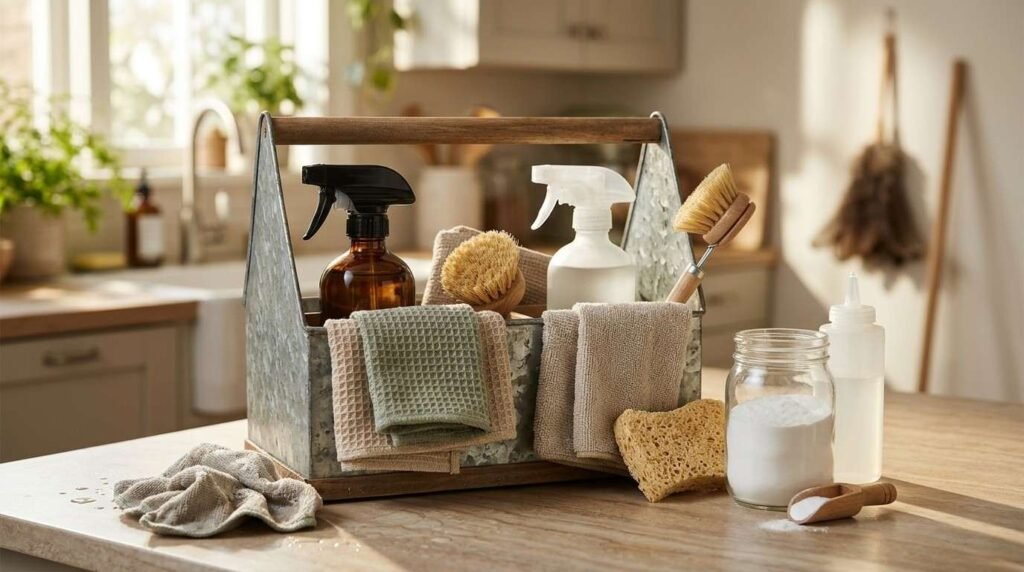
A stocked cleaning caddy with an all-purpose cleaner, microfiber cloths, and a good scrub brush handles about 80% of what your home throws at you. I’ve watched people overspend on gadget-y tools that sit in a cabinet for a year while the basics run out. Getting this list right saves money and saves you from mid-clean trips to the store.
Most of us own more cleaning products than we actually use. And a lot of the stuff that matters good gloves, the right disinfectant, a mop that doesn’t fall apart, gets overlooked entirely.
I’m walking through the core supplies every home needs, then room-specific essentials, specialty tools for tougher jobs, eco-friendly swaps worth considering, and how to store everything so it’s actually easy to grab and use. By the end, you’ll know exactly what belongs in your cleaning closet.
The Core Cleaning Supplies Every Home Needs
Every home starts with the same foundation. Get these right and you’re covered for 90% of routine cleaning tasks.
An all-purpose cleaner is the backbone of the whole list. It handles counters, appliance exteriors, and general wipe-downs without needing a separate product for every surface.
All-Purpose Cleaners and Disinfectants
A disinfectant is a cleaning product that kills bacteria and viruses on hard surfaces. The Centers for Disease Control and Prevention notes that cleaning removes germs while disinfecting kills them, and both steps matter for a genuinely clean home.
I keep two products on hand: a general all-purpose cleaner for daily wipe-downs and an EPA-registered disinfectant for high-touch areas like doorknobs and light switches. Skipping the disinfectant step means germs just get moved around, not eliminated.
Microfiber Cloths, Sponges, and Scrub Brushes
Microfiber cloths trap dust and grime instead of just pushing them around, which is why I’ve replaced almost every paper towel in my routine with them. They’re washable, reusable, and genuinely cut down on waste.
Sponges handle dishes and light scrubbing. A stiff-bristle scrub brush takes over where sponges can’t cut it grout lines, baseboards, and stovetop buildup.
Mops, Buckets, and Vacuum Cleaners
A good mop and bucket combo covers hard flooring, and a vacuum with strong suction handles carpets, rugs, and pet hair. I don’t overthink the vacuum brand, but I do care about a washable filter, since that’s what keeps suction strong over time.
Floor care tools wear out faster than people expect. A mop head that’s gone stiff or frayed just spreads dirty water instead of lifting it.
Room-Specific Supplies You Shouldn’t Skip
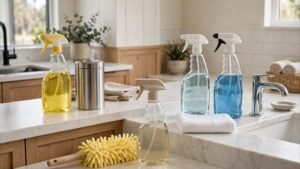
The core supplies handle general cleaning, but specific rooms need their own gear. Skipping these leads to half-finished jobs and surfaces that never quite feel clean.
Kitchen Cleaning Essentials
Degreasers matter more in the kitchen than almost anywhere else. Stovetops, range hoods, and cabinet fronts near the stove build up grease that an all-purpose cleaner just smears around.
I also keep a dedicated cutting board cleaner and a stainless steel polish nearby. Appliances show fingerprints fast, and a proper stainless cleaner leaves way less streaking than a paper towel and water.
Bathroom Cleaning Essentials
Bathrooms need a toilet bowl cleaner, tile and grout cleaner, and a glass cleaner for mirrors and shower doors. Mold and mildew show up fast in humid bathrooms, so a cleaner rated for both is worth having on hand year-round.
A separate toilet brush and a dedicated bathroom sponge keep bathroom germs from spreading to kitchen surfaces. That separation is a small habit that makes a real difference.
Bedroom and Living Area Essentials
Dusting tools matter most here, a microfiber duster for shelves and electronics, plus a fabric-safe upholstery cleaner for couches and chairs. Dust accumulates fastest on flat surfaces like dressers, nightstands, and TV stands.
A fabric refresher spray handles curtains and upholstery between deep cleans. It’s a small addition that keeps living spaces smelling clean without a full wash cycle.
Specialty Tools for Tougher Cleaning Jobs
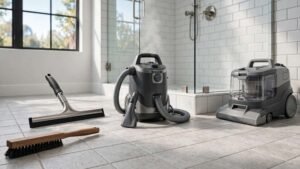
Some cleaning jobs need tools that go beyond the basics. These aren’t daily-use items, but they earn their spot in the closet.
Grout Brushes and Tile Cleaners
A dedicated grout brush has stiffer, narrower bristles than a standard scrub brush, built specifically to get into tile lines. Regular sponges just can’t reach into that narrow space effectively.
Paired with a grout-specific cleaning solution, this combo handles buildup that all-purpose cleaners leave behind. I pull this tool out every few months, not weekly.
Glass and Window Cleaning Tools
A squeegee paired with a proper glass cleaner beats paper towels every time for streak-free windows and mirrors. Paper towels tend to leave lint and streaking that a squeegee just doesn’t.
For larger windows, an extendable squeegee handle saves a lot of effort and skips the step-ladder entirely.
Steam Cleaners and Deep-Cleaning Equipment
A steam cleaner is an appliance that uses high-temperature vapor to sanitize surfaces without chemical cleaners. It works well on tile, grout, and even upholstery, and it’s a genuinely useful investment for anyone dealing with allergies or pet dander.
Carpet cleaning machines fall into this same category. They’re not something most homes need monthly, but they make a real difference before hosting or after a spill that’s set in.
Eco-Friendly and Non-Toxic Supply Alternatives
More households are shifting toward greener cleaning products, and the shift makes sense both for health and for the environment. Statista reports that a majority of global consumers now say they actively look for environmentally friendly cleaning products when shopping.
I’ve swapped several harsh chemical products for greener versions without losing cleaning power. The difference shows up mostly in air quality, not in how clean the surface ends up.
Natural Cleaning Ingredients That Work
White vinegar and baking soda handle a surprising number of jobs — deodorizing drains, cutting through soap scum, and freshening carpets before vacuuming. Castile soap works as a gentle all-purpose cleaner for most washable surfaces.
These ingredients cost less than specialty products and usually sit in the pantry already. That’s a genuine advantage for anyone trying to cut down on the number of bottles under the sink.
When to Choose Green Products Over Chemical Cleaners
Green products make the most sense in homes with kids, pets, or anyone with respiratory sensitivities. Chemical disinfectants still win for situations requiring true sanitization, like flu season cleanups or after illness in the home.
I don’t treat this as all-or-nothing. Using both, depending on the task, covers health concerns and cleaning power at the same time.
How to Organize and Store Your Cleaning Supplies
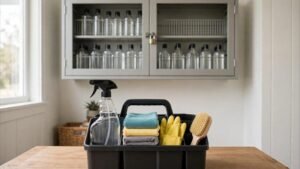
Owning the right supplies only helps if you can find them when you need them. A disorganized cleaning closet wastes time and leads to duplicate purchases.
Creating a Cleaning Caddy for Efficiency
A portable caddy holds daily-use items, all-purpose cleaner, microfiber cloths, gloves, and a scrub brush, in one place you can carry room to room. This single change cuts cleaning time significantly because there’s no back-and-forth to a supply closet.
I keep specialty tools like the steam cleaner and carpet machine stored separately, since they don’t need to travel with the daily caddy.
Safe Storage Practices Around Kids and Pets
Cleaning chemicals belong on a high shelf or in a locked cabinet, away from anywhere kids or pets can reach. Original labels stay on every bottle, since transferring chemicals into unlabeled containers creates a real poisoning risk.
Keeping supplies dry and away from direct sunlight also extends their shelf life. Heat breaks down active ingredients faster than most people realize.
Signs It’s Time to Call a Professional Cleaning Service
A well-stocked supply list handles most day-to-day cleaning, but some situations go past what DIY tools can manage. Deep-set stains, mold behind walls, or move-out cleans on a deadline often need equipment and expertise beyond a home cleaning closet.
When DIY Supplies Aren’t Enough
Persistent odors, visible mold growth, or grime that’s been building for years usually points to a job for professional cleaning services. A professional team brings commercial-grade equipment and products that go further than anything sold for home use.
Time constraints matter too. A property manager turning over multiple units, or a homeowner preparing for a big move, often gets more value from a professional deep clean than from another supply run.
Conclusion
A solid cleaning supplies list comes down to the basics done right, room-specific tools, and a few specialty items for tougher jobs. Green alternatives and smart storage round out a setup that actually gets used.
Even the best-stocked closet has limits, especially with mold, deep stains, or move-out timelines. We built Mr. Local Services to step in exactly there, connecting you with trusted professionals who finish the job right.
Frequently Asked Questions
What are the 5 basic cleaning supplies every home needs?
The five essentials are an all-purpose cleaner, microfiber cloths, a scrub brush, a mop and bucket, and a vacuum cleaner. These cover the majority of routine cleaning tasks across every room.
How often should I replace my cleaning supplies?
Mop heads and scrub brushes typically need replacing every 3 to 6 months with regular use. Sponges wear out faster and should be swapped every two to four weeks to avoid bacteria buildup.
Are natural cleaning products as effective as chemical ones?
Natural ingredients like vinegar and baking soda handle everyday grime and odors well. Chemical disinfectants still perform better for true sanitization needs, like illness cleanup or flu season.
What cleaning supplies do professional cleaners use that I don’t have?
Professionals typically use commercial-grade extraction equipment, industrial steam cleaners, and stronger disinfectant concentrations than what’s sold for home use. That equipment handles deep-set stains and large-scale jobs faster.
How much should I budget for a basic cleaning supply kit?
A solid starter kit with the core essentials typically runs $50 to $100. Specialty tools like steam cleaners add more, but they aren’t necessary for a functional starting setup.
Can I mix different cleaning chemicals together?
No, mixing cleaning chemicals is dangerous and can create toxic fumes. Bleach and ammonia-based products especially should never be combined under any circumstance.
Where should I store cleaning supplies to keep them safe?
Store chemicals on a high shelf or in a locked cabinet, out of reach of kids and pets. Keep original labels intact and store everything away from heat and direct sunlight.