
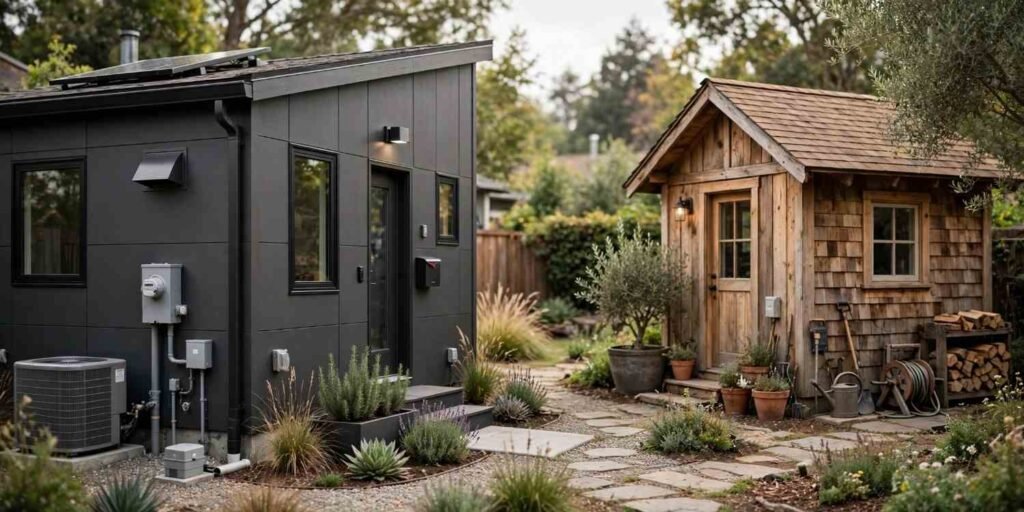
I get this question constantly from homeowners planning a backyard build. An ADU is a fully independent living unit with its own kitchen, bathroom, and utility connections, while a guest house is typically a secondary structure without full independent utilities or legal rental status. The distinction isn’t just semantics.
Zoning boards, lenders, and insurance companies treat these two structures very differently. Get the classification wrong on a permit application, and you’re looking at delays, fines, or a costly redesign. I’ve seen homeowners lose months over this exact mix-up.
Below, I break down what actually separates an ADU from a guest house, how each one is defined, what they cost, and which structure fits your property and goals. I also cover how value and zoning rules shift depending on which one you build.
What Is an ADU?
An accessory dwelling unit is a secondary, independent housing unit located on the same lot as a primary residence, complete with its own kitchen, bathroom, and separate entrance. That independence is what separates it from nearly every other backyard structure.
Most jurisdictions in the US now have specific ADU ordinances, thanks to state-level housing legislation pushing cities to allow them. California, Oregon, and Washington lead in ADU-friendly policy, and other states are catching up fast.
An ADU can be attached to the main house, built as a detached unit in the backyard, or converted from existing space like a garage or basement.
Key Features of an ADU
An ADU has a full kitchen, a full bathroom, and its own utility meter or sub-meter in most municipalities. It also has an independent entrance, separate from the main house.
Because it functions as a complete residence, an ADU is legally permitted for long-term rental in most zoning codes. That rental eligibility is one of the biggest draws for property owners.
Common ADU Types
Detached ADUs sit as standalone structures in the backyard, fully separate from the primary home. Attached ADUs share a wall with the main house but keep a private entrance and independent systems.
Garage conversions turn existing structures into livable units without adding new square footage to the lot. Basement or interior conversions carve out ADU space within the existing home footprint, which usually keeps permitting simpler and construction costs lower.
What Is a Guest House?
A guest house is a secondary structure on a residential property intended for temporary guests, family visits, or occasional use rather than full-time independent living. It’s built for hospitality, not permanent occupancy.
I tell clients to think of it as an extension of the main home’s hospitality function. It’s not designed to operate as a separate legal residence.
Key Features of a Guest House
A guest house often lacks a full kitchen. Many jurisdictions restrict kitchen installations specifically to prevent guest houses from functioning as rentable units, which keeps them classified separately from ADUs.
It may share utility connections with the main house instead of running independent meters. That shared-utility setup is a defining structural difference, not just a cost-saving choice.
How Guest Houses Are Typically Used
Guest houses host visiting family and friends for short stays throughout the year. They also work well as home offices, studios, or hobby spaces when nobody’s staying over.
Some owners use a guest house as a pool house or entertainment space tied to backyard living. None of those uses require the full independent systems an ADU needs.
ADU vs. Guest House: Core Differences

The differences between these two structures come down to three things: legal classification, utility independence, and permitted use. Each one carries real consequences for what you can build and how you can use it.
Legal Definitions and Zoning Rules
Zoning codes define ADUs explicitly, usually with minimum size requirements, parking rules, and setback distances specific to accessory dwellings. Guest houses fall under a separate, often looser zoning category with fewer requirements but more restrictions on function.
Many municipalities cap the number of ADUs per lot but allow guest houses without the same limits, precisely because guest houses aren’t treated as independent housing units. I always tell homeowners to pull their local zoning code before finalizing any design, since these rules vary block by block in some cities.
Utility Hookups and Independence
An ADU requires its own utility connections for water, sewer, and electric in most jurisdictions, which adds real cost to the build. A guest house typically taps into the main house’s existing utility lines, keeping the project simpler and cheaper.
That utility independence is exactly what allows an ADU to function as a separate legal dwelling. Remove it, and the structure legally reverts to guest house status regardless of size or design.
Permitted Use (Rental vs. Personal)
ADUs are legally eligible for long-term rental in most US jurisdictions, and many owners build them specifically for that reason. Guest houses generally can’t be rented long-term under most zoning codes, since they aren’t classified as independent dwellings.
Short-term rental rules vary widely by city and add another layer of complexity worth checking before committing to either structure.
Cost Differences Between ADUs and Guest Houses
Construction costs diverge fast once utility and permitting requirements enter the picture. I walk clients through both before they commit to a design.
Construction Cost Factors
An ADU typically costs more to build than a guest house of the same square footage, mainly due to full kitchen and bathroom installation plus independent utility hookups. The National Association of Home Builders reports that ADU construction costs commonly run $150,000 to $300,000 depending on location, size, and finish level.
A guest house without a full kitchen and separate utilities generally costs less, since it skips the most expensive systems. Site conditions, local labor rates, and material choices still swing the final number significantly either way.
Permitting and Compliance Costs
ADU permits often require more detailed plan review because of the added utility and occupancy requirements involved. That translates into higher permitting fees and longer approval timelines in many jurisdictions.
Guest house permits tend to move faster and cost less, since the structure doesn’t trigger the same independent-dwelling review process. I still recommend budgeting for inspection delays either way, since local permitting offices vary widely in turnaround time.
Which One Adds More Property Value?

An ADU generally adds more resale value than a guest house because it expands a property’s legal rentable square footage. Appraisers can count that rental income potential directly into the property’s value.
A guest house adds value too, but mostly as an amenity rather than an income-generating asset. Buyers see it as a nice-to-have, not a revenue stream.
Resale and Long-Term Investment Considerations
Properties with a rentable ADU often command higher offers in competitive markets, especially in cities with strong rental demand and limited housing supply. That income potential shows up directly in comparable sales data appraisers use.
A well-built guest house still boosts curb appeal and functional living space, which matters to plenty of buyers even without rental income attached. The right choice depends heavily on your local rental market and your own long-term goals for the property.
How to Decide Which Structure Is Right for You

The right structure depends on what you actually want out of the space. I always start with the same set of questions before recommending a direction.
Questions to Ask Before Building
Do you want rental income potential, or just extra space for family and guests? That single answer usually points toward an ADU or a guest house immediately.
What does your local zoning code allow on your specific lot size and setback requirements? And what’s your realistic budget once utilities, permitting, and finish-out costs are factored in together?
When to Bring in a Professional
A local contractor familiar with ADU and guest house permitting saves serious time navigating zoning code specifics unique to your municipality. Permitting mistakes on either structure type get expensive fast once framing or utility work is already underway.
We walk property owners through this exact decision every week, from zoning research through final walkthrough.
Conclusion
ADUs and guest houses solve different problems entirely. One functions as an independent legal residence with rental potential, while the other adds hospitality space without the same utility and zoning complexity.
Your lot, your budget, and your long-term goals for the property all point toward one option over the other. Getting the classification right from the start saves real money in permitting and construction.
We help homeowners work through zoning questions, permitting, and construction planning for both ADUs and guest houses. Reach out to Mr. Local Services, and we’ll help you figure out which structure actually fits your property.
Frequently Asked Questions
Can a guest house be converted into an ADU later?
Yes, a guest house can be converted into an ADU by adding a full kitchen and independent utility connections. The conversion typically requires new permits and an updated zoning classification.
Do ADUs require a separate address?
Some jurisdictions assign a separate address to an ADU, particularly when it’s approved for long-term rental. Requirements vary by city and county, so I always check local addressing rules early.
Is a guest house considered a livable space by appraisers?
A guest house adds value as livable amenity space, but appraisers typically don’t count it as separate rentable square footage. That distinction affects how much value it adds to a resale price.
Can I rent out a guest house short-term?
Short-term rental rules for guest houses vary significantly by city, and many municipalities restrict it under separate short-term rental ordinances. I recommend checking local codes before listing a guest house on any rental platform.
Does building an ADU increase my property taxes?
Adding an ADU typically increases assessed property value, which raises property taxes in most jurisdictions. The exact increase depends on local tax assessment rules and the ADU’s finished square footage.
What size limits apply to ADUs versus guest houses?
Most zoning codes cap ADU size as a percentage of the primary home’s square footage, often between 800 and 1,200 square feet. Guest house size limits vary and are sometimes less restrictive since they aren’t classified as independent dwellings.
Do I need a separate entrance for a guest house?
A separate entrance isn’t always required for a guest house the way it is for an ADU. Many guest houses share access through the main property without a fully independent entry point.


