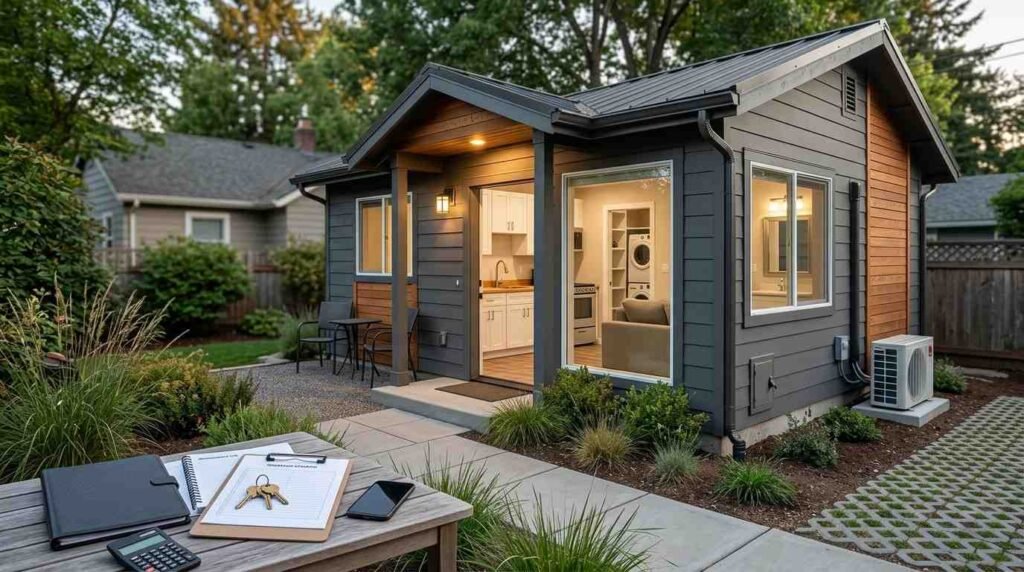
An accessory dwelling unit (ADU) is a self-contained secondary home on a single-family lot that earns rental income while the main house stays occupied. I work with owners who add one and suddenly become landlords overnight, and the learning curve is steep.
The money is real, but so is the workload. Rent covers the mortgage only when maintenance, vacancy, utilities, and repairs stay under control every single month of the year.
Here I cover ADU types, income potential, operating costs, rent-ready prep, legal basics, tenant screening, management models, maintenance calendars, emergency response, turnover, value protection, and service teams.
What Is an ADU and Why Rental Income Changes the Math
An ADU is a complete independent living space with its own kitchen, bathroom, sleeping area, and entrance, built on a lot that already holds a primary residence. Local codes call them granny flats, in-law suites, casitas, laneway houses, or secondary suites.
The moment you rent it, the property stops being purely residential in how it behaves. You now run a small housing operation with tenants, wear-and-tear cycles, and service obligations attached to a second full set of building systems.
That shift is what most owners underestimate. A single-family home has one furnace, one water heater, one roof to worry about. An ADU doubles several of those categories on the same parcel.
ADU Types: Detached, Attached, Garage Conversion, Interior
Detached ADUs are standalone structures in the backyard. They command the highest rent because tenants get full privacy and a separate entrance with no shared walls.
Attached ADUs share a wall with the main house. Garage conversions reuse existing footprint and usually cost the least to build. Interior conversions carve out a basement or upper floor.
Each type carries a different maintenance profile. Detached units need their own roof, siding, and foundation care, while a garage conversion inherits whatever condition the slab and framing were already in.
How ADUs Differ From Traditional Rental Units
Proximity is the defining difference. Your tenant lives feet away, shares a driveway, hears your dog, and sees your trash cans.
That closeness creates faster feedback on problems, which helps maintenance. It also creates friction over parking, noise, guests, and yard use that a standard duplex lease never has to address.
Utilities are the second difference. Many ADUs run off the main house meters, so billing and consumption need a clear structure written into the lease before day one.
Who Rents ADUs and What They Expect
ADU tenants skew toward single professionals, graduate students, older adults downsizing, and family members needing independence with support nearby. Roughly one in six U.S. adults lives in a multigenerational household, according to Pew Research Center analysis, and that demand feeds directly into ADU occupancy.
They expect a real home, not a converted storage room. Working appliances, reliable hot water, secure locks, adequate light, and responsive repairs form the baseline.
Meet that baseline and turnover drops. Miss it and you replace tenants every twelve months, which destroys the return faster than any single repair bill.
ADU Rental Income Potential: What Owners Actually Earn
ADU rent typically lands between 50% and 80% of a comparable full-size apartment in the same neighborhood, adjusted for square footage and privacy. In high-cost metros the gap narrows because supply is so tight.
National housing data helps set expectations. The median asking rent for vacant units sat near $1,600 per month in recent U.S. Census Bureau reporting, and a well-finished detached ADU in a strong market often meets or exceeds that figure.
The number that matters is net, not gross. I always tell owners to subtract utilities, insurance increases, property tax adjustments, vacancy allowance, and a maintenance reserve before they call any rent figure income.
Market Rent Drivers: Size, Privacy, Parking, Location
Square footage sets the floor, privacy sets the ceiling. A 500-square-foot detached unit with its own gate and patio outperforms a 700-square-foot basement unit with a shared laundry entrance.
Dedicated parking adds real dollars in dense areas. So does in-unit laundry, which removes the single biggest daily friction point for tenants.
Location still dominates everything. Transit access, school zones, hospital and campus proximity, and walkable retail move ADU rent more than any interior finish upgrade.
Long-Term vs. Mid-Term vs. Short-Term Rental Models
Long-term leases of twelve months or more deliver the most predictable cash flow and the lowest management load. This is the default I recommend for owners who have day jobs.
Mid-term furnished rentals of one to six months target traveling nurses, relocating professionals, and insurance-displaced families. Rent runs higher, turnover runs faster, and you supply furniture, linens, and utilities.
Short-term nightly rentals produce the highest gross and the highest workload. Many cities restrict them for ADUs specifically, so zoning verification comes before any revenue projection.
Vacancy, Turnover, and Realistic Annual Yield
Plan for at least three to four weeks of vacancy per year on a long-term ADU. That covers move-out, cleaning, repairs, listing, showings, and screening.
Turnover costs money twice: lost rent plus the reset work. A standard between-tenant refresh with cleaning, touch-up paint, and minor repairs runs several hundred to a couple thousand dollars depending on tenant care.
Build the reserve into your pro forma from month one. Owners who treat every rent check as spendable income get caught by the first water heater failure.
ADU Operating Costs Most Owners Underestimate
Operating an ADU costs more per square foot than operating the main house. The systems are smaller but the service calls cost the same, and minimum trip charges do not scale down.
I see four categories catch owners off guard: utilities, insurance, compliance, and the maintenance reserve. Each one is predictable and each one gets ignored in the first-year budget.
Utilities, Metering, and Shared-System Costs
Separate metering costs money upfront and saves arguments forever. Where separate meters are impractical, a flat monthly utility charge written into the lease keeps billing simple.
Shared water heaters, shared HVAC systems, and shared irrigation blur responsibility. Document who pays for what before the lease is signed, not after the first high summer bill.
Insurance, Taxes, and Ongoing Compliance
A rented ADU changes your insurance profile. Homeowners policies frequently exclude tenant-occupied structures, so a landlord or dwelling-fire endorsement becomes necessary.
Property taxes usually rise after an ADU is permitted and assessed. Some jurisdictions add rental registration fees, annual inspections, or business licensing on top.
The Maintenance Reserve Every ADU Needs
I recommend setting aside 1% to 2% of the ADU’s construction or replacement value annually for maintenance. On a $180,000 unit that means $1,800 to $3,600 per year held in reserve.
That money covers appliance replacement, water heater failure, HVAC service, roof repair, and interior refresh. Owners who fund the reserve never face an emergency they cannot pay for.
Getting an ADU Rent-Ready: The Pre-Lease Service Checklist
Rent-ready means a tenant moves in and nothing breaks in the first ninety days. That standard requires a systematic pass across structure, systems, finishes, and safety before you list.
I run this checklist in order because each layer depends on the one below it. Fresh paint over an active roof leak wastes the paint and the labor.
Structural, Roofing, and Envelope Readiness
Start at the top and work down. Roof condition, flashing, gutters, downspouts, and grading control the single largest source of expensive damage.
Check siding, trim, caulking, and window seals for water entry points. A qualified roofing inspection before the first lease catches problems while they are still cheap to fix.
Foundation cracks, sagging floors, and door frames out of square signal movement. Address those before finish work, never after.
Plumbing, Electrical, and HVAC Commissioning
Test every fixture, drain, shutoff valve, and supply line under real use. Run the shower, fill the tub, cycle the dishwasher, and watch for slow drains.
Verify the electrical panel capacity, GFCI and AFCI protection, outlet counts, and lighting levels in every room. Undersized service is common in garage and basement conversions.
Commission the heating and cooling system fully. A pre-lease HVAC service that includes filter replacement, coil cleaning, refrigerant check, and thermostat calibration prevents the no-heat call in January.
Interior Finish Work: Paint, Flooring, Drywall, Carpentry
Durable beats beautiful in a rental. Satin or eggshell paint cleans easily, luxury vinyl plank survives water and pets, and solid-core doors reduce noise complaints.
Repair drywall cracks, nail pops, and ceiling stains before painting. Cabinet hardware, closet systems, shelving, and trim carpentry finish the space and photograph well for listings.
Safety, Egress, Locks, and Accessibility
Smoke and carbon monoxide detectors are non-negotiable and often inspected. Every sleeping room needs code-compliant egress, meaning a window or door sized for escape.
Rekey or replace all locks between tenants. I recommend keypad locks on ADUs because they remove key handoffs and let you change codes remotely between showings.
Grab bars, lever handles, threshold ramps, and improved lighting expand your tenant pool. Accessibility upgrades cost little at rent-ready stage and cost a lot as retrofits.
Legal, Zoning, and Permit Basics for ADU Landlords
Every ADU rental sits on top of a local rulebook, and those rules vary block by block. Statewide ADU legislation has expanded sharply, with California alone permitting over 28,000 ADUs in a single year according to state housing data.
Verify three things before advertising: the unit is permitted, rental use is allowed, and any owner-occupancy requirement is satisfied. Unpermitted rentals expose you to fines, forced vacancy, and insurance denial.
Occupancy, Owner-Occupancy, and Rental Restrictions
Some jurisdictions require the owner to live in either the main house or the ADU. Others cap minimum lease terms to block short-term rentals.
Occupancy limits tie to bedroom count and square footage. Know your number before screening applicants so you apply it consistently.
Certificate of Occupancy and Inspection Records
Keep the certificate of occupancy, final inspection sign-offs, and permit records in one file. Insurers, lenders, and tenant attorneys all ask for them eventually.
Annual or periodic rental inspections apply in many cities. Passing them is easier when maintenance records are already organized.
Tenant Screening, Leasing, and Boundaries on a Shared Lot
Screening matters more for an ADU than for an off-site rental because you live with the outcome. The wrong tenant affects your evenings, your parking, and your yard.
Apply written, consistent criteria to every applicant. Income verification, credit review, rental history, and employment confirmation form the standard set.
Screening Standards and Fair Housing Basics
Federal fair housing law prohibits decisions based on race, color, national origin, religion, sex, familial status, or disability. Many states and cities add source of income, age, and other protected categories.
Write your criteria down, publish them, and apply them identically. Consistency is the strongest defense against a complaint.
Lease Clauses Unique to ADUs
Address parking assignment, guest policy, quiet hours, yard and outdoor space use, trash placement, and pet rules explicitly. Ambiguity becomes conflict.
Define maintenance access and notice periods clearly. Spell out who handles landscaping, snow removal, gutter cleaning, and pest control so nothing falls into a gap.
ADU Property Management Models: Self-Manage vs. Hire Out
Most ADU owners self-manage because the unit is on their property and the tenant count is one. That works well until the owner travels, gets busy, or faces a repair they cannot coordinate.
The real decision is not full management versus none. It is deciding which functions you keep and which you hand to professionals.
What Self-Management Really Costs in Time
Budget three to six hours per month on a stable long-term ADU tenancy. That covers rent collection, communication, scheduling, inspections, and vendor coordination.
Turnover months spike to twenty hours or more. Marketing, showings, screening, move-out inspection, repairs, and cleaning all compress into a few weeks.
When a Property Manager or Service Network Pays for Itself
Full-service property managers typically charge 8% to 12% of monthly rent plus leasing fees. On a single ADU that math often fails.
The middle path works better for most owners: self-manage the tenant relationship and outsource all the trade work to a vetted home maintenance service provider who handles scheduling, licensing verification, and quality control across categories.
Preventive Maintenance Calendar for ADU Owners
Preventive maintenance is the highest-return activity in ADU ownership. Small scheduled tasks prevent the large unscheduled failures that eat a year of profit.
I organize the calendar into monthly, seasonal, and annual layers. Each layer targets a different failure timeline.
Monthly and Quarterly Tasks
Change or check HVAC filters monthly in high-use units, quarterly in lighter ones. Clean the filter and the system runs efficiently and lasts longer.
Test smoke and carbon monoxide detectors quarterly. Walk the exterior for standing water, blocked drains, and new cracks after heavy weather.
Run water in unused drains and check under sinks for slow leaks. Catching a supply line drip early prevents a cabinet replacement later.
Seasonal Systems Work: HVAC, Roofing, Gutters, Dryer Vents
Service heating in fall and cooling in spring. Professional HVAC maintenance before each season catches worn capacitors, low refrigerant, and clogged condensate lines before they cause a mid-season outage.
Clean gutters in spring and fall. Overflowing gutters route water into the foundation, and ADUs sitting low on a lot suffer first.
Clear the dryer vent annually at minimum. Clothes dryers cause thousands of residential fires each year according to U.S. Fire Administration data, and lint buildup is the leading cause.
Inspect the roof after storms and at season change. Missing shingles, lifted flashing, and clogged valleys are cheap to fix and expensive to ignore.
Annual Deep Service and Inspection Items
Flush the water heater and inspect the anode rod annually. Sediment shortens tank life and reduces recovery speed.
Schedule a pest control inspection each year. ADUs sit close to fences, landscaping, and grade, which gives rodents and insects easy access.
Pressure wash walkways, siding, and the patio once a year. Clean exteriors photograph better, reduce slip hazards, and protect finishes.
Emergency Repairs and Response Planning
Emergencies happen at 2 a.m. and on holidays. The owners who handle them well are the ones who set up the response plan before they needed it.
Write a one-page emergency sheet for the tenant with shutoff locations, contact numbers, and what counts as an emergency. Post it inside a cabinet door.
Water Damage, Leaks, and Mold Response
Water is the most destructive and most time-sensitive failure. Mold growth begins within 24 to 48 hours of water intrusion according to EPA guidance, which makes response speed the whole ballgame.
Know where the ADU water shutoff is and make sure the tenant knows too. Immediate extraction, drying, and professional water damage restoration prevent a small leak from becoming a gut renovation.
Lockouts, Power Loss, and No-Heat Calls
Lockouts are the most common after-hours call. Keypad locks eliminate most of them, and a relationship with a licensed locksmith covers the rest.
No-heat and no-power calls carry habitability obligations in most states. Establish which electrical and HVAC providers offer emergency dispatch before winter arrives.
Turnover Management: Between-Tenant Reset
Turnover is where owners lose money quietly. Every extra day vacant is rent you never recover, and rushed repairs create the next tenant’s complaint list.
I treat turnover as a project with a fixed sequence. Inspect, repair, clean, photograph, list, show, screen, sign.
Move-Out Inspection and Damage Documentation
Photograph everything at move-in and move-out with timestamps. Documentation settles deposit disputes before they escalate.
Separate normal wear from tenant damage honestly. Faded paint and worn carpet are wear; holes, stains, and broken fixtures are damage.
Cleaning, Repainting, and Re-Listing Fast
Deep cleaning comes after repairs, never before. A professional move-out cleaning service covers appliances, grout, vents, and window tracks that a quick pass misses.
Touch-up paint beats full repaint when the walls are sound. Keep leftover paint labeled by room to make touch-ups fast and matched.
List with clean, bright photos taken in daylight the same week the unit is ready. Speed of listing drives speed of leasing.
Protecting and Growing ADU Property Value
An ADU adds measurable value to a property, and rental history makes that value verifiable to appraisers and buyers. Maintaining it well protects both the rent and the resale.
The goal is compounding: each improvement should either raise rent, reduce operating cost, or extend the life of an existing system.
Upgrades That Raise Rent vs. Upgrades That Do Not
In-unit laundry, dedicated parking, private outdoor space, and updated kitchens raise rent reliably. Tenants pay for daily convenience.
High-end finishes, luxury fixtures, and designer lighting rarely return their cost in a small rental. Durability outperforms luxury on a return basis.
Energy efficiency upgrades cut operating cost when you pay utilities. Insulation, sealed ducts, LED lighting, and efficient appliances lower the bill every month.
Curb Appeal, Landscaping, and Exterior Care
The path to the ADU is the first thing every applicant sees. Clear walkways, working exterior lighting, and trimmed plantings signal a well-run property.
Regular landscaping and tree care protects the structure too. Overhanging limbs damage roofs, and roots find foundations and sewer lines.
Exterior painting, deck maintenance, and fence repair preserve both appearance and material life. Deferred exterior work always costs more later.
Building Your ADU Service Team
Every ADU owner eventually needs the same question answered: who do I call, and can I trust them? Building that list before an emergency is the difference between a two-hour fix and a two-week ordeal.
I recommend identifying one reliable provider in each core trade and one coordinator who covers everything else.
Trades Every ADU Landlord Needs on Call
The core list is plumbing, electrical, HVAC, roofing, appliance repair, locksmith, and general handyman. Those seven cover the overwhelming majority of ADU service calls.
The secondary list includes cleaning, pest control, landscaping, tree service, drywall, flooring, window and door repair, and power washing. These are scheduled rather than urgent.
Working with a single network that covers multiple home service categories removes the burden of vetting each trade separately.
Vetting Providers: Licensing, Insurance, Pricing Transparency
Verify state licensing and active general liability insurance for every trade you hire. Ask for certificates, not verbal confirmation.
Require written estimates with scope, materials, and labor separated. Transparent pricing prevents the surprise invoice and makes comparison honest.
Check recent reviews and ask for references from other rental property owners. Landlord work has different demands than owner-occupied work, and providers who understand tenant scheduling save you real time.
Recordkeeping, Taxes, and Documentation
Good records turn an ADU from a side project into a documented asset. They also make tax season simple instead of stressful.
Track rental income, mortgage interest allocation, insurance, utilities, repairs, supplies, and depreciation. The IRS provides detailed guidance on residential rental property in Publication 527.
Separate repairs from improvements carefully. Repairs deduct in the current year while improvements depreciate over time, and the distinction affects your return meaningfully.
Keep a digital folder per year with leases, inspection reports, permits, receipts, and photos. Five minutes of filing per month saves hours in an audit or a sale.
Conclusion
You now understand ADU rental income drivers, operating costs, rent-ready standards, legal basics, tenant management, maintenance calendars, emergency response, turnover, and value protection.
ADUs sit inside the broader world of property maintenance and rental operations, and each subtopic here deserves deeper study through dedicated resources as your portfolio grows.
We connect you with vetted professionals across every trade your ADU needs. Contact Mr. Local Services and keep your rental profitable, compliant, and consistently well maintained.
Frequently Asked Questions
How much rental income does an ADU typically generate?
Most ADUs earn 50% to 80% of comparable apartment rent in the same area. Size, privacy, parking, and location drive the final number.
Do I need a separate insurance policy to rent out my ADU?
Yes, in most cases. Standard homeowners policies exclude tenant-occupied structures, so a landlord or dwelling-fire endorsement becomes necessary before the first lease.
What maintenance costs should I budget for an ADU each year?
Set aside 1% to 2% of the unit’s replacement value annually. That reserve covers appliances, HVAC service, plumbing repairs, and interior refresh.
Can I rent my ADU as a short-term vacation rental?
That depends entirely on local zoning. Many cities require minimum lease terms of 30 days or longer for ADUs, so verify rules before listing.
Who pays utilities in an ADU rental?
Separate meters make the tenant responsible directly. Shared systems require a flat monthly utility charge written clearly into the lease agreement.
How often should an ADU be professionally inspected?
Schedule a full systems check annually and a roof and exterior review each season change. Many cities also require periodic rental inspections.
Is it worth hiring a property manager for a single ADU?
Usually not at 8% to 12% of rent. Most owners self-manage the tenant relationship and outsource trade work to a vetted service network instead.