Barndominium permit issues are among the most common and costly surprises owners face during a build — because these structures do not fit neatly into the residential or agricultural categories most local permit offices use. Understanding where the process breaks down, what approvals are actually required, and how to work through zoning and code conflicts before breaking ground can save months of delays and thousands of dollars in corrections.
Permit problems on barndominium projects stem from classification gaps, code mismatches, and site plan rejections that standard home builders rarely encounter.
This guide covers the most common permit obstacles, how to navigate the approval process step by step, what happens when permits are skipped, and what the full permit process typically costs.
What Makes Barndominium Permits Different From Standard Home Permits
A barndominium is a metal building — typically a steel post-frame structure — converted or purpose-built to serve as a primary residence. That combination of agricultural-style construction and residential use creates an immediate classification problem for most local permit offices.
Standard residential permits are designed around wood-frame construction that follows prescriptive building codes. Barndominiums use post-frame engineering, which requires engineered drawings, load calculations, and documentation that most residential plan reviewers are not trained to evaluate. The result is a permit process that is slower, more document-intensive, and more likely to generate requests for additional information than a conventional home build.
Barndominiums sit in a unique category of alternative housing — our barndominium construction guide covers the full scope of what these structures are, how they are built, and why they require a different approach from standard residential construction.
Why Local Zoning Offices Often Struggle to Classify Barndominiums
Most zoning codes were written before metal residential buildings became common. When a permit application arrives for a barndominium, the reviewing office must decide whether the structure is a residence, an agricultural building, a commercial structure, or something else entirely. Each classification carries different setback requirements, utility connection rules, and inspection standards.
In rural counties, a metal building on agricultural land may be exempt from residential building codes — but only if it is not used as a primary dwelling. The moment a barndominium is intended as a home, it typically triggers full residential code compliance, even if the county has no clear process for reviewing post-frame residential construction. That gap between what the code requires and what the office knows how to process is where most permit delays begin.
The Most Common Barndominium Permit Problems Homeowners Face
Most barndominium permit problems fall into three categories: zoning classification conflicts, building code compliance gaps, and site plan or utility rejections. Understanding each one before submitting an application gives owners a significant advantage.
Zoning Classification Conflicts
The most frequent permit problem is a zoning conflict — the land is zoned agricultural or rural residential, but the intended use does not match the permitted uses listed in the local zoning ordinance. Some counties prohibit permanent residential structures on agriculturally zoned land entirely. Others allow them but require a conditional use permit or a variance, which adds weeks or months to the timeline.
When zoning conflicts arise, homeowners often discover that structural changes to resolve classification issues require their own approvals — our structural remodeling permits resource explains what triggers additional permit requirements during a build or conversion. a dedicated state-by-state zoning reference would serve readers who need jurisdiction-specific guidance beyond what this cluster can cover without topical bloat.–>
Building Code Compliance Gaps
Even when zoning is resolved, building code compliance creates a second layer of problems. Post-frame construction is governed by different engineering standards than wood-frame construction. Many jurisdictions default to the International Residential Code (IRC), which does not include prescriptive provisions for post-frame buildings. That means every structural element — columns, roof trusses, wall girts, anchor bolts — must be supported by stamped engineering drawings rather than standard code tables.
Owners who submit permit applications without engineered drawings almost always receive an immediate rejection or a lengthy request for additional documentation. state-level code requirements vary significantly and deserve a dedicated resource to avoid bloating this
Septic, Utility, and Site Plan Rejections
Rural barndominium sites frequently require a septic system, a well, and a driveway permit in addition to the building permit. Each of these is a separate application, often reviewed by a different county department. A site plan that does not account for required setbacks between the septic field and the well, or between the structure and the property line, will be rejected — and revising a site plan after initial submission adds significant time to the overall approval process.
Utility connections present a related challenge. Power companies and rural electric cooperatives have their own requirements for service entrance specifications, meter placement, and load calculations. If the electrical design on the permit application does not match the utility’s requirements, the permit may be approved by the county but rejected at the utility connection stage, creating a gap that stalls the entire project.
How to Navigate the Barndominium Permit Process Step by Step
The most effective way to avoid permit problems is to research requirements before finalizing a building design. Changes made on paper cost nothing. Changes made after a permit rejection cost time, money, and sometimes require redesigning structural elements that have already been ordered.
Research Local Zoning and Land Use Regulations First
Before contacting a builder or ordering a building kit, contact the local planning and zoning department directly. Ask three specific questions: Is the property zoned to allow a permanent residential structure? Does the county have a process for permitting post-frame residential construction? Are there any overlay districts, flood zones, or easements that affect what can be built?
The answers to these questions determine whether a standard permit application will work, whether a variance or conditional use permit is needed, or whether the site is unsuitable for a barndominium without significant additional steps. Getting these answers in writing — even as an email summary from the zoning office — creates a record that can be referenced if the application is later questioned.
Working With a Builder or Contractor Who Knows Permit Requirements
Not all contractors have experience with post-frame residential permitting. A builder who has never pulled a barndominium permit in a given county may not know which departments need to be involved, what documentation is required, or how to respond to a request for additional information without causing further delays.
Asking a prospective builder directly — how many barndominiums have you permitted in this county, and what was the most common issue you encountered — reveals quickly whether they have the local knowledge to manage the process effectively. For smaller site preparation tasks that fall outside a general contractor’s scope, connecting with licensed handyman support can help keep pre-permit groundwork on schedule without creating additional compliance complications.
What Happens If You Build a Barndominium Without the Right Permits
Building without permits is not a minor administrative oversight. It is a code violation that carries real financial and legal consequences, and those consequences tend to compound over time.
The most immediate risk is a stop-work order. If a county inspector or a neighbor reports unpermitted construction, the county can issue an order requiring all work to stop until permits are obtained. Depending on how far construction has progressed, this may require opening walls, exposing structural connections, and having completed work inspected before a permit can be issued retroactively.
Unpermitted construction also creates problems at the point of sale. Title companies and lenders routinely check permit records during real estate transactions. A barndominium with unpermitted construction may be uninsurable, unfinanceable, or unsaleable until the permit record is corrected — a process that can cost more than the original permit would have. Unpermitted construction often surfaces during inspections of interior finishes — understanding the risks of unpermitted drywall work helps owners see how one skipped permit can trigger a cascade of required corrections across multiple trades.
Finally, homeowner’s insurance policies typically exclude coverage for damage to unpermitted structures or unpermitted portions of a structure. A fire, storm, or structural failure in an unpermitted barndominium may result in a denied claim at exactly the moment coverage is most needed.
How Long Does It Take to Get a Barndominium Permit Approved
Permit timelines for barndominiums vary significantly by jurisdiction, but owners should plan for a longer process than a standard residential permit. In counties with established post-frame permitting processes, approval can take four to eight weeks from a complete application submission. In counties where barndominium permits are uncommon, the review process can extend to three to six months or longer.
The most common causes of extended timelines are incomplete applications, missing engineered drawings, zoning classification questions that require a board review, and coordination delays between multiple county departments. Each request for additional information resets the review clock in most jurisdictions.
Plumbing inspections are a common source of permit delays on barndominium projects, and our plumbing inspection process explains what inspectors check, what documentation is required, and how to avoid the most common causes of re-inspection.
Owners who submit a complete, well-documented application — including engineered drawings, a site plan with all required setbacks, septic and well permits, and utility coordination documentation — consistently experience shorter review times than those who submit incrementally and respond to information requests reactively.
Barndominium Permit Costs: What to Budget For
Permit costs for a barndominium vary by county, structure size, and the number of separate permits required. A building permit for a barndominium is typically calculated as a percentage of the estimated construction value or as a flat fee per square foot. For a 2,000-square-foot barndominium, building permit fees commonly range from $1,000 to $4,000 depending on the jurisdiction, though some rural counties charge significantly less and some suburban counties charge more.
Beyond the building permit, owners should budget for several additional permit fees. A septic permit typically costs $300 to $1,500 depending on the system type and county. A well permit, where required, adds $200 to $800. A driveway or access permit may cost $100 to $500. Electrical and plumbing permits are often pulled separately by licensed subcontractors and included in their bids, but owners should confirm this explicitly.
Electrical work on a barndominium almost always requires a separate permit pulled by a licensed electrician — our electrical permit requirements explains what that process involves and how it fits into the broader construction approval sequence.
Roofing is one of the most permit-sensitive components of any barndominium build, and our barndominium roofing permits breaks down what inspectors look for, what documentation is required, and how roofing choices affect overall permit approval timelines.
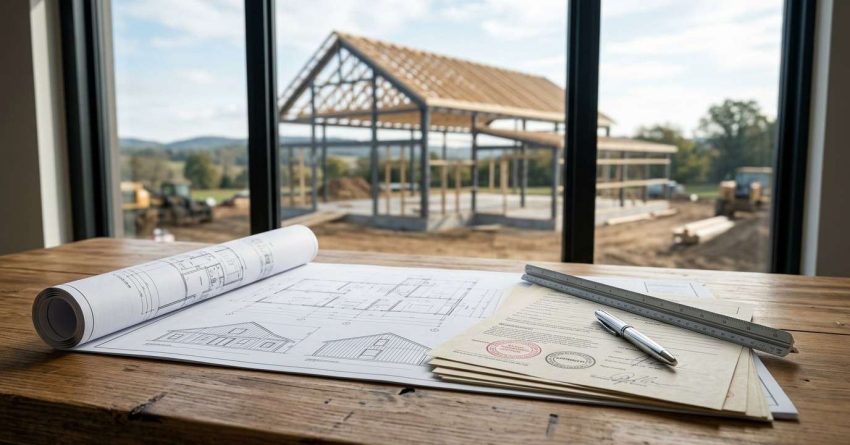
Engineered drawings, which are required in most jurisdictions for post-frame residential construction, are a separate cost that is not part of the permit fee. Structural engineering fees for a barndominium typically range from $1,500 to $5,000 depending on the complexity of the design and the engineer’s rates. This cost is unavoidable in most jurisdictions and should be factored into the project budget from the beginning.
Conclusion
Barndominium permit issues arise because these structures occupy a classification gap that most local permit offices were not designed to handle. Understanding zoning requirements, building code documentation standards, and the full scope of permits required before starting a project is the most effective way to avoid delays and unexpected costs.
Owners who research local requirements early, work with experienced contractors, and submit complete applications consistently move through the process faster and with fewer complications.
At Mr. Local Services, our network of skilled professionals includes contractors and tradespeople experienced in barndominium builds — contact us to connect with the right team for your project and get your build started on the right foundation.
Frequently Asked Questions
Do barndominiums require a residential building permit?
Yes, in most jurisdictions a barndominium intended as a primary residence requires a residential building permit. The specific requirements depend on local zoning and building codes, which vary significantly by county and state.
Can I build a barndominium on agriculturally zoned land?
It depends on the local zoning ordinance. Some counties allow permanent residences on agricultural land; others require a conditional use permit or variance. Contacting the local planning department before purchasing land is the safest approach.
Why do barndominiums need engineered drawings for permits?
Post-frame construction is not covered by prescriptive provisions in the International Residential Code. Because there are no standard code tables for post-frame structural elements, stamped engineering drawings are required to demonstrate that the structure meets load and safety requirements.
What is the most common reason a barndominium permit is rejected?
Incomplete applications are the most common cause of rejection or delay. Missing engineered drawings, incomplete site plans, or unresolved zoning classification questions account for the majority of initial rejections.
How do I find out if my county has a barndominium permit process?
Contact the local building and planning department directly and ask whether they have reviewed post-frame residential construction permits before. Ask what documentation they require and whether any pre-application meetings are available.
Can a barndominium be insured if it was built without permits?
Most homeowner’s insurance policies exclude coverage for unpermitted structures or unpermitted portions of a structure. Obtaining retroactive permits before seeking coverage is strongly recommended.
Does a barndominium need a separate electrical permit?
Yes. Electrical work on a barndominium almost always requires a separate permit pulled by a licensed electrician. This permit is typically obtained by the electrical contractor and is separate from the main building permit.