Barndominium inspections cover structural, mechanical, and safety elements that standard home inspections routinely miss. Because these buildings combine metal agricultural construction with finished residential living space, inspectors must evaluate steel framing, spray foam insulation, open-span HVAC systems, and fire separation barriers — all within a single walkthrough. Knowing which special items apply to your build helps you prepare, ask the right questions, and avoid costly surprises after closing.
Barndominiums are growing in popularity across the USA, and the inspection process has not kept pace — most general home inspectors are not trained to assess hybrid metal-frame construction.
This guide covers every special inspection item unique to barndominiums, from the metal shell and foundation slab to electrical panels, plumbing runs, and code-required fire barriers.
What Makes Barndominium Inspections Different
A standard home inspection follows a predictable checklist built around wood-frame construction, asphalt shingles, and conventional mechanical systems. Barndominiums break nearly every assumption on that list.
These structures are built on post-frame or steel-frame systems, clad in metal panels, and often feature open floor plans with exposed structural elements. The living quarters share a building envelope with shop space, storage areas, or garages — creating code compliance questions that a typical residential inspector may not be equipped to answer.
The result is a hybrid inspection that requires knowledge of both agricultural building standards and residential construction codes. Understanding what sets these structures apart is the foundation of any thorough evaluation — our barndominium inspection guide covers the full inspection process from initial walkthrough to final report, giving inspectors and homeowners a complete framework to work from.
Hybrid Construction and Why It Complicates Standard Inspections
The core challenge is that no single inspection standard fully governs barndominiums. Inspectors must draw from residential building codes, agricultural structure guidelines, and local jurisdiction requirements simultaneously. A qualified barndominium inspector understands where those frameworks overlap, where they conflict, and which takes precedence in your specific county or state.
Steel Frame and Metal Shell Inspection Points
The structural backbone of a barndominium is its steel or post-frame system, and this is where inspections diverge most sharply from standard residential practice. Inspectors evaluate the primary frame members for plumb, level, and connection integrity — checking that anchor bolts, base plates, and column connections meet the original engineering specifications.
Metal exterior panels require a separate review focused on fastener patterns, panel overlap, and sealant condition at all horizontal joints. Any gap, lifted panel, or missing fastener creates a direct water intrusion pathway that can saturate insulation and corrode the frame beneath.
Corrosion, Rust, and Fastener Integrity
Surface rust on exposed steel is cosmetic. Pitting corrosion at fastener holes, base plates, or weld points is structural. Inspectors use a combination of visual assessment and probing to distinguish between the two, paying particular attention to areas near grade level where moisture contact is highest.
Roof Panel Seams, Skylights, and Penetration Points
Every penetration through a metal roof — skylights, exhaust vents, HVAC curbs, pipe boots — is a potential leak point. Inspectors check sealant condition, flashing integration, and panel seam overlap at ridges and valleys. Metal roofs require a level of scrutiny that goes beyond standard shingle assessments, and our roofing inspection services detail exactly what qualified inspectors look for when evaluating seam integrity, fastener corrosion, and penetration points on metal structures.
Foundation and Concrete Slab Considerations
Most barndominiums are built on a monolithic concrete slab or a perimeter foundation with an interior slab. Inspectors evaluate the slab for cracking patterns, settlement, and surface condition — but the more critical assessment happens beneath the surface.
Vapor barriers installed under the slab prevent ground moisture from migrating upward into the living space. If the barrier was improperly lapped, punctured during construction, or omitted entirely, moisture will wick through the concrete and create conditions for mold growth, flooring failure, and long-term structural degradation.
Moisture Intrusion and Vapor Barrier Assessment
Inspectors use moisture meters and thermal imaging to identify elevated moisture readings in the slab and lower wall assemblies. Staining, efflorescence, or soft spots in flooring materials are secondary indicators. When moisture intrusion goes undetected beneath a concrete slab, the resulting damage can escalate quickly — a professional water damage assessment identifies early warning signs before they compromise the structural integrity of the entire build.
Insulation and Thermal Envelope Inspection
Insulation in a barndominium performs a dual function: it controls heat transfer through the metal shell and prevents condensation from forming on the interior face of cold steel panels. Both functions must work together, and failure in either creates serious long-term problems.
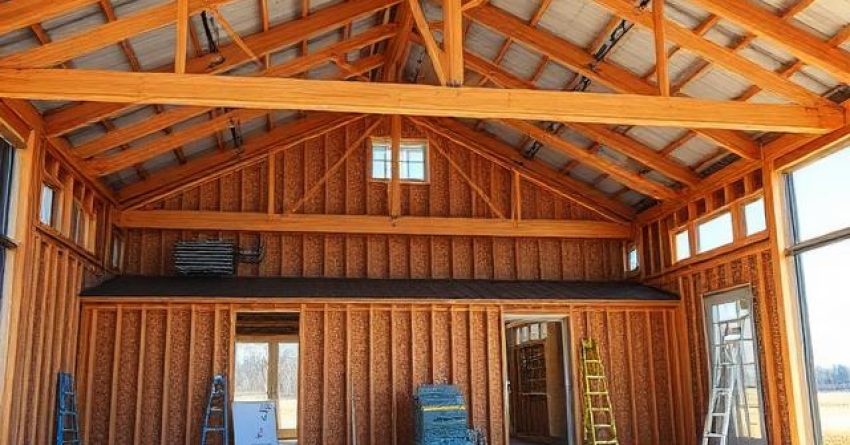
Spray polyurethane foam is the most common insulation choice for metal buildings because it adheres directly to the steel and eliminates the air gap where condensation forms. Inspectors verify foam thickness, coverage uniformity, and the absence of voids or gaps at structural connections. Batt insulation installed without a proper vapor retarder on the warm side is a red flag in any metal building.
Spray Foam, Batt, and Condensation Risk Zones
Condensation risk is highest at thermal bridges — locations where steel members pass through the insulation layer and connect the cold exterior to the warm interior. Inspectors identify these zones and assess whether the insulation strategy adequately addresses them. Understanding the insulation inspection process helps homeowners know what questions to ask and what red flags to watch for during any barndominium evaluation.
Electrical Systems in Barndominium Builds
Electrical inspections in barndominiums address both the residential living space and any attached shop or utility areas. The two zones often operate on different circuits, may have separate subpanels, and frequently include high-amperage circuits for welding equipment, compressors, or agricultural machinery.
Inspectors verify that the main panel is properly sized for the total connected load, that all circuits are correctly labeled, and that GFCI and AFCI protection is installed where required by code. Grounding and bonding of the metal structure itself is a specific requirement that standard residential inspections rarely address.
Panel Capacity, Grounding, and Non-Standard Wiring Layouts
Extended wiring runs from the main panel to outbuildings or remote shop areas must be evaluated for proper conductor sizing, conduit protection, and weatherproof terminations. Barndominiums frequently feature non-standard panel placements and extended wiring runs that require careful review — our electrical inspection services outline the specific checkpoints inspectors use to verify safe, code-compliant electrical installations in hybrid structures.
Plumbing Inspection Factors Unique to Barndominiums
Plumbing in a barndominium often runs longer distances than in a conventional home, particularly when the living space occupies one end of a large metal building. Supply lines may be exposed in uninsulated shop areas, creating freeze risk during cold weather. Drain lines must maintain proper slope across longer horizontal runs to prevent standing water and blockages.
Inspectors trace supply and drain lines from their point of entry through the building, checking for proper support, insulation on exposed runs, and correct slope on horizontal drain segments. Water heater placement, pressure relief valve discharge, and expansion tank installation are also reviewed.
Exposed Pipe Runs, Freeze Risk, and Drain Slope Verification
Any supply line running through an unheated space — including crawl spaces beneath the slab perimeter, uninsulated shop areas, or exterior wall cavities — must be insulated or heat-taped to prevent freezing. Exposed pipe runs and unconventional drain layouts are common in barndominium builds and demand a structured review process — our plumbing inspection checklist walks through every critical point, from supply line routing to drain slope verification.
HVAC and Ventilation Assessment
Heating and cooling a barndominium presents challenges that standard residential HVAC design does not anticipate. Open floor plans with high ceilings, large volumes of unconditioned shop space adjacent to living areas, and metal building envelopes with high thermal mass all affect how a system must be sized and configured.
Mini-split systems are common in barndominium builds because they allow zone-by-zone control without extensive ductwork. When ducted systems are used, duct sizing must account for the actual volume and layout of the conditioned space — not a standard residential square footage calculation.
Ductwork in Open-Span Spaces and Mini-Split Placement
Inspectors evaluate whether the installed system capacity matches the building’s actual heating and cooling load, whether ductwork is properly sealed and insulated, and whether mini-split heads are positioned to deliver effective airflow across large open areas. Open-span interiors create unique airflow challenges that standard duct sizing calculations do not account for, and a thorough HVAC system evaluation ensures the heating and cooling setup is properly matched to the building’s actual thermal load and layout.
Fire Separation and Safety Code Compliance
When a barndominium includes an attached shop, garage, or utility space, building codes require a fire-rated separation between those areas and the occupied living space. This is one of the most frequently overlooked compliance items in barndominium construction — and one of the most consequential.
Fire separation requirements typically specify a minimum wall assembly rating, self-closing fire-rated doors at all openings between spaces, and no unprotected penetrations through the rated assembly. Inspectors verify that the separation wall meets the required rating, that all doors are properly rated and equipped with closers, and that no gaps, holes, or unprotected penetrations compromise the assembly.
Shop-to-Living Area Barriers and Egress Requirements
Egress from the living space must not require passage through the shop or garage. Inspectors confirm that bedrooms and living areas have direct exterior egress that meets minimum size and height requirements. When a barndominium includes an attached shop or garage, the wall separating those spaces must meet specific fire-resistance standards — a dedicated fire safety inspection confirms that barriers, egress points, and alarm systems all meet current code requirements.
Conclusion
Barndominium inspections require a specialized approach that addresses steel framing, metal roofing, vapor management, and hybrid mechanical systems — elements that fall outside the scope of a standard residential inspection. Each special item covered here represents a real failure point that has caused significant repair costs for barndominium owners who skipped a thorough pre-purchase evaluation.
Working with an inspector who understands hybrid construction means getting answers to the questions that matter most — from slab moisture and insulation performance to panel capacity and fire separation compliance.
At Mr. Local Services, we connect barndominium owners and buyers with qualified professionals who know exactly what to look for — contact us today to schedule a thorough inspection and protect your investment from day one.
Frequently Asked Questions
What is a barndominium inspection special item?
A barndominium inspection special item is any structural, mechanical, or safety element unique to metal-frame hybrid construction that falls outside a standard residential inspection checklist. Examples include steel frame corrosion, spray foam insulation coverage, and fire separation wall compliance.
Do standard home inspectors qualify to inspect barndominiums?
Most standard home inspectors are not trained to evaluate metal-frame construction, agricultural building components, or the hybrid code requirements that apply to barndominiums. Hiring an inspector with specific experience in post-frame or steel-frame residential buildings is strongly recommended.
What is the most common problem found during barndominium inspections?
Moisture intrusion is the most frequently identified issue, typically caused by inadequate vapor barriers beneath the slab, missing or damaged panel sealants, or condensation forming on uninsulated steel members inside the building envelope.
How does insulation inspection differ in a barndominium?
Inspectors assess spray foam for thickness, coverage uniformity, and void-free adhesion to steel panels — not just R-value. They also identify thermal bridges where steel members bypass the insulation layer and create condensation risk zones that batt insulation alone cannot address.
Are barndominiums required to have fire separation walls?
Yes. When a barndominium includes an attached shop, garage, or utility space, most jurisdictions require a fire-rated wall assembly separating those areas from the occupied living space. The specific rating and door requirements vary by local code, but the separation requirement is nearly universal.
What electrical issues are most common in barndominium inspections?
The most common findings include undersized panels for the total connected load, missing GFCI protection in shop and utility areas, improper grounding of the metal structure, and unlabeled or incorrectly labeled circuits serving high-amperage equipment.
How long does a barndominium inspection take compared to a standard home inspection?
A thorough barndominium inspection typically takes longer than a standard residential inspection of comparable square footage — often three to five hours — because inspectors must evaluate both the residential and agricultural building components, trace longer mechanical runs, and assess structural elements not present in conventional construction.