Moving a park model home costs $3 to $12 per mile on average, with most full moves landing between $1,500 and $8,000 depending on distance, permits, and site access. I break down every cost driver, legal requirement, and logistics step below so you know exactly what to budget and plan for.
A park model move involves more than hitching a trailer. Permits, escorts, utility disconnects, and site clearance all factor into the final price and timeline, and skipping any of them causes delays or fines.
I cover what transport actually involves and what it costs, the permits and prep work required before moving day, how to pick a qualified transport company and handle delivery logistics, and what to expect around timelines, insurance, and common delays.
What Park Model Transport Actually Involves
Park model transport is the process of relocating a manufactured park model home from a factory, dealer lot, or previous site to its final destination using a specialized hauler. It differs significantly from moving a standard travel trailer or RV because of size, weight, and legal classification.
Park models typically measure 12 feet wide and up to 40 feet long, which classifies them as oversize loads in most states. That single fact drives almost every other requirement in this guide, from permits to escort vehicles.
How Park Models Differ From Standard RV Transport
A standard RV drives itself down the hig hway under its own power. A park model has no engine, no independent brakes in most cases, and needs a heavy-duty tow vehicle rated for its full weight.
I always tell clients to think of it less like towing a camper and more like moving a small building. The width alone puts it outside normal lane limits on most highways, which triggers the permit requirements I cover later in this guide.
Who Handles the Move Haulers, Movers, and Dealers
Three types of providers typically handle park model relocation: dedicated park model haulers, general heavy-haul trucking companies, and dealer-affiliated transport teams. Each comes with different pricing structures and service scope.
Dealer-affiliated movers often bundle transport into the purchase price, which simplifies things if you’re buying new. Independent haulers usually offer more flexibility on timing and destination, especially for resales or relocations between properties.
Park Model Transport Costs Explained

Total transport cost depends on distance, permit fees, escort requirements, and site complexity at both pickup and delivery. Most homeowners pay somewhere between $1,500 for short local moves and $8,000 or more for cross-state relocations.
I’ve seen quotes swing wildly based on one factor alone: how far the unit has to travel from the highway to its final pad. That last-mile stretch often costs more per foot than the entire highway leg.
Average Cost Per Mile and Flat-Rate Pricing
Most haulers charge $3 to $12 per mile, with rates dropping as distance increases past a few hundred miles. Some companies offer flat-rate pricing for common regional routes instead of a strict per-mile calculation.
Short moves under 50 miles often get quoted as a flat fee rather than per-mile pricing, since setup and permit costs stay fixed regardless of distance. I recommend asking for both quote types and comparing the total, not just the rate.
What Drives Price Up or Down
Permit fees, escort vehicle requirements, seasonal demand, and site accessibility all move the final number. A unit that needs a crane for placement costs noticeably more than one that rolls straight onto a prepared pad.
Winter moves in northern states often carry a premium due to road conditions and reduced daylight for safe travel. Booking during peak moving season, typically spring through early fall, can also push prices higher due to hauler demand.
Permits, Escorts, and Legal Requirements
Oversize load permits are required in nearly every state before a park model can legally travel on public roads. Requirements vary by state, county, and even the specific route taken.
I never let a client skip this step to save time. An unpermitted move risks fines, forced stops mid-transit, and in some cases impoundment of the unit until paperwork clears.
Oversize Load Permits by State
Each state sets its own width, height, and weight thresholds for oversize permits, and multi-state moves require a separate permit for every state crossed. The National Conference of State Legislatures maintains detailed truck size and weight regulations that vary significantly by jurisdiction, which is why professional haulers handle this paperwork rather than leaving it to homeowners.
Permit costs typically run $15 to $150 per state, depending on load dimensions and travel distance within that state. A reputable hauler builds this into your quote upfront rather than surprising you later.
When a Pilot Car or Escort Is Required
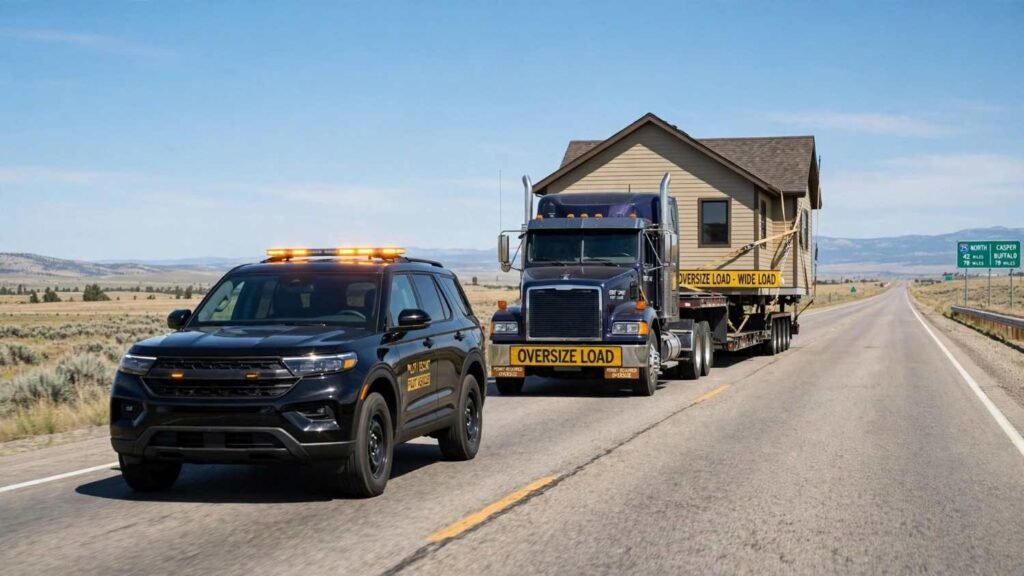
Most states require at least one pilot car when a load exceeds 12 feet in width, and some require escorts front and rear for wider units or night travel. Escort requirements add $1 to $3 per mile to the total cost.
Front escorts warn oncoming traffic and check clearance on bridges and turns ahead of the load. Rear escorts protect the load from following traffic and help manage lane changes on multi-lane highways.
Preparing a Park Model for Transport
Proper preparation prevents damage during transit and keeps the move on schedule. This includes mechanical checks on the frame and axles, plus securing everything inside the unit before it leaves the site.
Skipping prep work is the single most common cause of on-road delays and damage claims I see. A thirty-minute inspection before departure saves hours of trouble later.
Axle, Hitch, and Frame Checks
Before transport, a qualified technician inspects tires, bearings, brakes, and the hitch connection to confirm everything meets safe towing standards. Any unit sitting unused for more than a year needs this check even if it looks fine.
Frame integrity matters just as much as the running gear. A compromised frame flexes under road vibration and can crack further, so haulers typically require a frame inspection before accepting the job.
Utility Disconnects and Interior Securing
Every water, sewer, electrical, and gas connection needs full disconnection before the unit moves, and any loose interior items need securing or removal. Cabinets, appliances, and fixtures shift constantly during transit if left unsecured.
I always recommend removing anything fragile entirely rather than relying on padding. Dishes, mirrors, and glass fixtures are the most common casualties of an otherwise smooth move.
Choosing the Right Transport Company
The right transport company carries proper licensing, adequate insurance, and specific experience moving park models rather than general freight. Not every heavy-haul trucker has handled a park model before, and that experience gap shows up in pricing accuracy and on-site problem solving.
I tell every homeowner to treat this decision like hiring a contractor, not booking a moving truck. The stakes and the specialized knowledge required are closer to construction logistics than typical relocation.
Licensing and Insurance to Verify
A qualified hauler carries a valid USDOT number, state-specific oversize load licensing, and cargo insurance that explicitly covers park model structures. Standard auto insurance does not cover this type of load.
Ask to see proof of insurance before booking, not after. A company that hesitates to provide documentation is a clear warning sign.
Questions to Ask Before Booking
Ask how many park models the company has moved in the last year, whether the quote includes permits and escorts, and what happens if weather delays the trip. Vague answers to any of these questions signal inexperience.
I also recommend asking who handles site placement at the destination. Some haulers stop at the property line and leave final placement to a separate crew, which changes your total cost picture.
Delivery and Site Placement Logistics
Delivery logistics cover everything from the highway exit to the final resting position on your pad or foundation. This stage often requires different equipment than the highway leg, including cranes, toters, or dollies for tight maneuvering.
The delivery phase is where most on-site surprises happen. A site that looked fine on paper sometimes reveals clearance problems only once the unit actually arrives.
Site Access and Clearance Requirements
Delivery routes need enough clearance for a load roughly 12 feet wide and up to 14 feet tall, accounting for overhead wires, tree branches, and gate widths. A site visit before moving day catches most of these issues early.
Narrow driveways or tight turns sometimes require a smaller toter vehicle to complete the final approach. This adds cost but prevents damage to the unit or the property.
Crane and Toter Setup at Destination
Sites without direct road access sometimes need a crane to lift the unit over obstacles or onto an elevated foundation. Crane service adds $500 to $2,000 depending on lift complexity and rental duration.
A toter, which is a specialized short-haul mover, handles final positioning once the highway tractor drops the load near the site. This two-step handoff is standard practice for most residential park model deliveries.
Timelines Booking to Final Placement
A typical park model move takes two to six weeks from initial booking to final placement, depending on permit processing time and hauler availability. Rushed timelines almost always cost more.
I encourage clients to book transport the moment a delivery date becomes likely, not once it’s confirmed. Permit processing alone can eat up a week or more in busier states.
Peak season bookings, especially spring and summer, sometimes require four to eight weeks of lead time due to hauler demand. Off-season moves in fall and winter often book faster but face weather-related schedule risk.
Insurance Coverage During Transit
Cargo insurance covers physical damage to the park model itself during the move, while separate liability coverage protects against third-party property damage. These are two distinct policies, and a hauler needs both.
I always confirm the coverage limit matches the replacement value of the unit, not just a generic minimum. A policy that caps out well below your home’s value leaves you exposed if something goes wrong.
Ask for a certificate of insurance naming you or your property as an additional interest for the duration of the move. This gives you a direct line of recourse if damage occurs in transit.
Common Transport Delays and How to Avoid Them
Weather, permit processing backlogs, and site access surprises cause most park model transport delays. Each one is preventable with enough lead time and a proper site inspection.
Severe weather along the route forces haulers to pause rather than risk an oversize load in high winds or ice. Building a few flexible days into your timeline absorbs this risk without disrupting the rest of your move-in plans.
Permit delays usually stem from last-minute booking rather than the permitting process itself. Booking early and confirming your route in advance avoids nearly all of this risk category.
Long-Distance vs Local Park Model Moves
Local moves under 50 miles typically cost less overall but still carry the same permit and prep requirements as long-distance relocations. Distance affects total price more than it affects complexity.
Long-distance moves crossing multiple states multiply permit costs and add coordination risk, since each state has its own rules and processing timelines. A hauler experienced in multi-state moves handles this coordination as part of the quoted price.
I generally recommend budgeting extra buffer time for any move crossing three or more state lines. More jurisdictions simply mean more variables outside anyone’s direct control.
Conclusion
Park model transport combines permits, specialized equipment, and careful site preparation into one coordinated move. Costs vary widely based on distance, escort needs, and delivery complexity, but planning ahead keeps surprises to a minimum.
Every step from permits to final placement affects your timeline and budget in connected ways. Treating this as a logistics project, not a simple haul, sets realistic expectations from day one.
We help homeowners and property managers coordinate reliable, transparent park model transport from start to finish. Reach out to Mr. Local Services to get a clear quote and a dependable plan for your move.
Frequently Asked Questions
How much does it cost to transport a park model home?
Most park model moves cost between $1,500 and $8,000, depending on distance, permits, and delivery complexity. Short local moves land on the lower end, while multi-state relocations cost significantly more.
Do I need a permit to move a park model?
Yes, nearly every state requires an oversize load permit before a park model can travel on public roads. Permit costs and requirements vary by state and route.
How long does it take to transport a park model?
A typical move takes two to six weeks from booking to final placement. Peak season demand and permit processing time both affect this timeline.
Do park models need a pilot car during transport?
Most states require at least one pilot car for loads over 12 feet wide, which covers nearly every park model. Wider units or night travel sometimes require escorts front and rear.
What insurance covers a park model during a move?
Cargo insurance covers damage to the unit itself, while separate liability insurance covers third-party property damage. A qualified hauler carries both as standard practice.
Can any trucking company transport a park model?
Not effectively. Park model transport requires specialized equipment, oversize load licensing, and hauler experience with this specific structure type, which general freight companies typically lack.
What causes delays in park model transport?
Weather, permit processing backlogs, and unexpected site access issues are the most common causes. Booking early and inspecting the delivery site in advance prevents most delays.