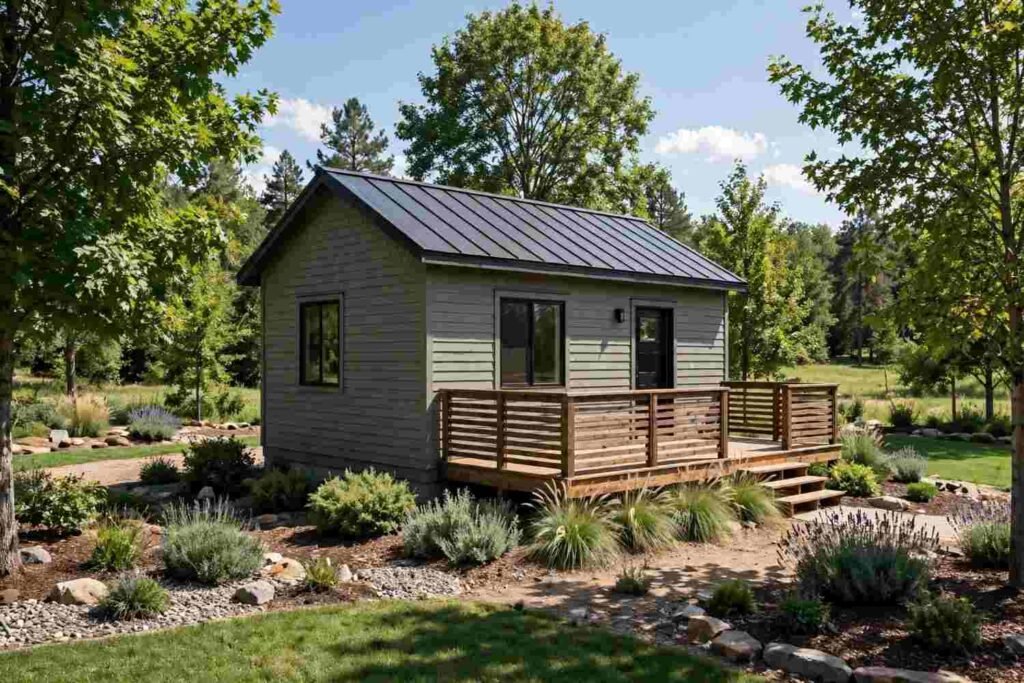
Park model homes take a beating that regular houses don’t. The materials that hold up best combine weather resistance with a lower long-term cost per year of service, not just a lower price tag today. I’ve watched too many owners pick the cheapest siding or flooring option and pay for it twice within five years.
A park model home has less structure protecting it than a full-size house, and it usually sits exposed to sun, wind, and moisture on all sides. That makes material choice a bigger factor in how long the home actually lasts. Get it right, and the home stays solid for decades. Get it wrong, and repairs start stacking up fast.
I’m walking through siding, roofing, framing, flooring, and window and door materials here, then closing with the real math on cost versus durability. Each section breaks down what holds up, what fails early, and where your money actually goes.
Siding Materials That Hold Up Best on Park Model Homes
Siding takes the brunt of weather exposure on a park model home, and it’s usually the first thing that shows wear. I look at three materials most often: vinyl, fiber cement, and wood.
Vinyl siding costs the least upfront and resists moisture well. It cracks in extreme cold and fades under constant sun exposure over 10 to 15 years. Fiber cement costs more initially but holds color and shape far longer, often 25 to 30 years with basic maintenance.
Wood siding gives park models a traditional look that a lot of buyers want. It needs the most upkeep of the three, with repainting or resealing every 3 to 5 years to prevent rot.
Vinyl vs. Fiber Cement vs. Wood Siding
Each material handles moisture and temperature swings differently. Vinyl flexes with temperature changes but becomes brittle below freezing, so it cracks in northern climates more than fiber cement does.
Fiber cement resists fire, pests, and rot better than either alternative. Fiber cement siding now makes up over 20% of the U.S. siding market, largely because it holds up under conditions that damage wood and vinyl faster.
Wood siding remains popular for aesthetic reasons alone. It needs consistent maintenance to avoid the moisture damage that shortens its lifespan the most.
Cost Per Square Foot and Expected Lifespan
Vinyl siding runs $3 to $8 per square foot installed and lasts 15 to 20 years under normal conditions. Fiber cement runs $6 to $13 per square foot and stretches past 30 years with basic care.
Wood siding costs $5 to $10 per square foot before factoring in the ongoing maintenance budget. I always tell owners to add that maintenance cost into the real price, because wood’s cheaper sticker price disappears fast once you’re repainting every few years.
Roofing Materials Built for Long-Term Weather Resistance

Roofing on a park model home deals with more relative exposure than a standard house roof, simply because the home’s smaller footprint means every square foot of roof matters more to the structure underneath.
Metal roofing and asphalt shingles cover most of the park model market. Each handles wind, hail, and sun exposure differently, and the climate someone lives in should drive this choice more than price alone.
Metal Roofing vs. Asphalt Shingles on Park Models
Metal roofing lasts 40 to 70 years and shrugs off hail, wind, and fire better than shingles do. It costs more upfront, usually $9 to $16 per square foot installed, but the lifespan math favors it heavily over time.
Asphalt shingles cost less initially, typically $4 to $7 per square foot, and remain the most common roofing choice nationwide. They last 15 to 25 years and need replacement sooner in areas with intense sun or frequent hail.
Climate Considerations for Roofing Choice
Hot, sun-heavy climates wear down asphalt shingles faster through UV degradation. Metal roofing reflects heat better and keeps interior temperatures more stable in these regions.
Cold climates with heavy snow load favor metal roofing’s ability to shed snow quickly. NOAA reports that ice dams form more readily on asphalt shingle roofs, which creates water intrusion risk that metal roofing avoids through faster snow shedding.
Framing and Structural Materials That Affect Longevity
The frame holds everything else together, and park models typically use either wood or steel framing. This choice affects the home’s structural lifespan, its weight, and even how insurance companies price a policy on it.
Wood Frame vs. Steel Frame Construction
Wood framing remains the standard in most park model construction. It’s lighter, cheaper to work with, and familiar to most contractors, which keeps labor costs down.
Steel framing resists pests, fire, and warping better than wood does. It costs more to install and requires specialized labor, but it holds its structural integrity longer in humid or termite-prone regions.
How Framing Choice Impacts Insurance and Resale
Insurance companies often price policies lower on steel-framed homes because of reduced fire and pest risk. That difference adds up over the life of the home and offsets some of the higher upfront framing cost.
Resale buyers increasingly ask about framing material, especially in regions with known termite pressure. A steel frame becomes a selling point in those markets, not just a construction detail.
Flooring Materials for Durability and Everyday Wear

Park model homes see concentrated foot traffic in a small footprint, so flooring wears faster than it does in a full-size house with more room to spread activity across.
Vinyl Plank, Laminate, and Engineered Wood Compared
Vinyl plank flooring resists moisture completely and holds up well under heavy daily use. It costs $2 to $7 per square foot installed and lasts 10 to 20 years depending on foot traffic.
Laminate flooring looks similar to hardwood at a lower price point, running $3 to $8 per square foot. It handles moisture poorly compared to vinyl, which makes it a weaker choice near kitchens and bathrooms.
Engineered wood brings real wood aesthetics with better moisture resistance than solid hardwood. It costs more than laminate, typically $4 to $11 per square foot, and lasts 20 to 30 years with proper care.
Moisture Resistance in Small-Footprint Homes
Small homes concentrate humidity from cooking, showering, and daily living into less total air volume. That makes moisture-resistant flooring a bigger priority in a park model than in a larger house.
Vinyl plank handles this pressure the best of the three options. Engineered wood comes in second, and laminate needs the most protection from standing water and humidity spikes.
Windows and Doors: Materials That Impact Efficiency and Cost
Windows and doors affect energy costs directly, and in a park model home, that impact shows up faster because the heating and cooling system works harder to condition a smaller, less insulated space.
Vinyl-Framed vs. Aluminum-Framed Windows
Vinyl-framed windows insulate better and cost less than aluminum. They run $300 to $700 per window installed and hold up well against condensation and thermal transfer.
Aluminum-framed windows conduct heat and cold more readily, which raises energy bills in extreme climates. ENERGY STAR data shows homes with older single-pane or poorly insulated windows lose up to 30% of heating and cooling energy through the window assembly alone.
Entry Door Material Choices for Weather Sealing
Steel entry doors seal tighter and resist warping better than wood doors in temperature swings. Fiberglass doors split the difference, offering good insulation with less maintenance than wood.
Wood doors give a classic look but expand and contract with humidity changes. That movement breaks the weather seal over time and lets drafts in around the frame.
Balancing Upfront Cost Against Long-Term Durability

Every material choice in a park model home comes down to the same tradeoff: pay more now for something that lasts longer, or pay less now and budget for earlier replacement.
Material Lifespan vs. Replacement Cost Math
A $9,000 metal roof lasting 50 years costs $180 per year of service. A $4,500 asphalt roof lasting 18 years costs $250 per year once you factor in a second replacement inside that same 50-year window.
Run this math on siding and flooring too. The cheaper material almost always costs more per year of actual use once replacement cycles get counted in.
Where Upgrading Materials Actually Pays Off
Roofing and siding upgrades pay off the most because they protect the structure underneath from water damage. Flooring upgrades matter most in high-traffic areas like entryways and kitchens.
Windows pay off fastest in extreme climates where energy costs are already high. In mild climates, the payback period stretches out, and other upgrades may earn their cost back sooner.
Conclusion
Material choice shapes how long a park model home lasts and what it actually costs you across that lifespan. Siding, roofing, framing, flooring, and windows each carry their own durability and cost tradeoffs worth weighing carefully.
The cheapest option upfront rarely stays the cheapest option over time. Lifespan, maintenance, and climate all factor into what actually saves money.
We help homeowners plan upgrades and repairs that match their home’s real needs. Reach out to Mr. Local Services when you’re ready to talk through your next project.
Frequently Asked Questions
What is the most durable siding for a park model home?
Fiber cement siding lasts the longest among common options, often 25 to 30 years. It resists fire, pests, and moisture better than vinyl or wood siding.
Is metal roofing worth the extra cost on a park model home?
Metal roofing costs more upfront but lasts 40 to 70 years versus 15 to 25 for asphalt shingles. The lifetime cost per year typically favors metal roofing.
Should I choose steel or wood framing for a park model home?
Steel framing resists pests, fire, and warping better and often lowers insurance costs. Wood framing costs less upfront and remains the more common industry standard.
What flooring holds up best in a small home with heavy foot traffic?
Vinyl plank flooring resists moisture and wear better than laminate or engineered wood. It typically lasts 10 to 20 years under regular daily use.
Do vinyl or aluminum windows perform better in park model homes?
Vinyl-framed windows insulate better and resist condensation more effectively than aluminum frames. They also generally cost less to install.
How do I know if paying more for materials is worth it?
Divide the material cost by its expected lifespan in years. Compare that number against a cheaper option’s cost divided by its shorter lifespan to see the real annual cost.
What door material seals best against drafts and weather?
Steel and fiberglass entry doors seal tighter and resist warping better than wood doors. Wood doors expand and contract with humidity, which breaks the seal over time.