
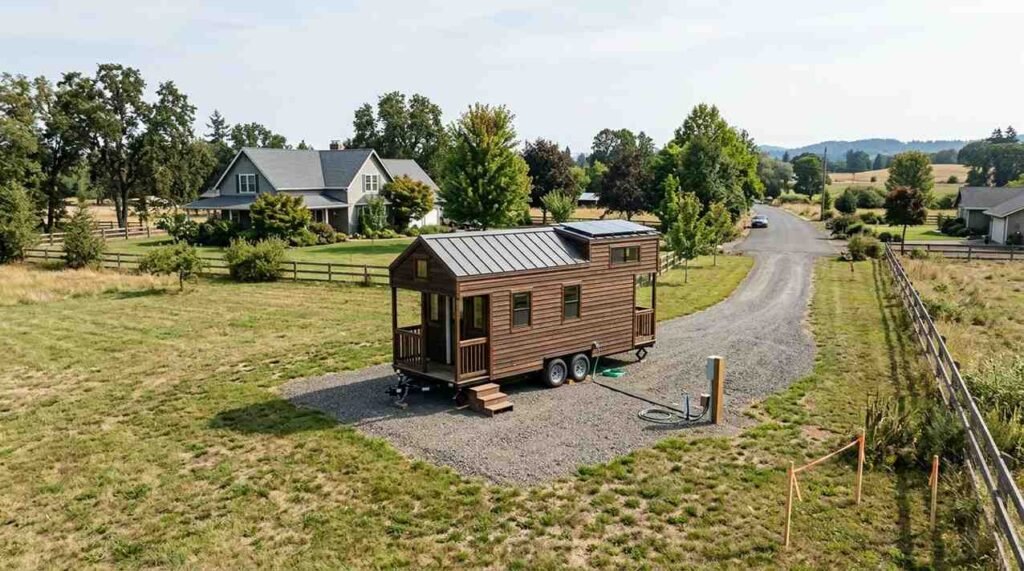
A tiny home on wheels is a compact dwelling built on a trailer chassis, and zoning laws decide where you can legally park it, live in it, and connect it to utilities. I get asked about this constantly by homeowners, landlords, and property managers.
The rules changed fast over the last five years. Getting them wrong costs you fines, forced removal, and a home you cannot legally occupy on land you already own.
This guide covers classification, zoning districts, ADU rules, placement options, utilities, permits, HOA covenants, rentals, enforcement, research steps, site prep, and professional help.
What Zoning Laws Mean for Tiny Homes on Wheels
Zoning is the local rulebook that tells you what you can build and how you can use a piece of land. Every city and county in the USA writes its own version, and that is exactly why tiny home answers vary so wildly from one address to the next.
I always start clients here, because zoning sits above everything else. Your trailer might be beautifully built and fully certified, and still be illegal to park in a particular backyard.
How a Tiny Home on Wheels Is Legally Classified
Most jurisdictions look at one question first: is this thing a vehicle or a building? A tiny home on wheels usually lands in the vehicle category by default, which pushes it under recreational vehicle rules instead of housing rules.
That single classification determines your permit path, your utility options, and whether anyone can legally live in it full time.
Zoning vs. Building Codes vs. Deed Restrictions
These three systems get confused constantly, and they operate independently. Zoning controls land use and placement, building codes control construction and safety, and deed restrictions are private contracts recorded against the property.
You need clearance from all three. Passing one means nothing if another blocks you.
Why Classification Decides Where You Can Park
An RV-classified tiny home goes in RV parks, campgrounds, and some agricultural parcels. A tiny home certified as a movable dwelling under Appendix AQ of the International Residential Code opens doors to residential lots in adopting jurisdictions.
The International Code Council added tiny house provisions to the IRC in 2018, and adoption spread state by state since then. That distinction is the hinge everything else swings on.
RV, Park Model, or Dwelling: The Classification That Controls Everything
I tell every buyer to settle classification before they settle on a builder. The label attached to your tiny home follows it for its entire life, and changing it later ranges from expensive to impossible.
Three categories cover almost every tiny home on wheels in the USA.
RVIA and ANSI A119.5 Certification
An RVIA seal certifies that your tiny home meets ANSI A119.5 standards for recreational park trailers. Lenders and insurers recognize it, and RV parks accept it without argument.
The catch is that RV certification signals temporary occupancy. Many jurisdictions cap RV stays at 30, 90, or 180 days per year on private land.
Park Model RVs and Seasonal Use Limits
Park model RVs run up to 400 square feet and sit in a middle zone between RV and manufactured home. They are built for extended seasonal placement in dedicated communities.
Full-time occupancy usually falls outside their intended use. Local ordinances reflect that intent with hard seasonal caps.
Movable Tiny House Appendix AQ Pathways
Appendix AQ recognizes tiny houses of 400 square feet or less as legitimate dwellings. States including Maine, Oregon, and California created pathways for wheeled versions to qualify as permanent residences.
This is the classification that unlocks true residential placement. It also brings full inspection requirements.
Residential Zoning Districts and Where THOWs Fit
Zoning maps divide every jurisdiction into districts, and each district carries a use table listing what is permitted, conditional, or prohibited. Your tiny home needs to appear somewhere on that table, or you need a mechanism to add it.
Most residential districts were written decades before tiny homes existed. That silence usually reads as prohibition.
Single-Family, Multi-Family, and Agricultural Districts
Single-family districts typically allow one primary dwelling per lot, which blocks a tiny home unless it qualifies as an accessory unit. Agricultural districts tend to be the most permissive, especially on acreage.
Multi-family districts occasionally allow tiny home clusters. Rural counties give you the widest latitude across the country.
Minimum Dwelling Size and Foundation Requirements
Minimum square footage rules kill more tiny home projects than any other provision. Ordinances requiring 600, 800, or 1,000 square feet automatically exclude a 300 square foot build.
Permanent foundation requirements do the same thing to anything on wheels. Both provisions are shrinking as cities update codes.
Conditional Use Permits and Variances
A conditional use permit asks the planning commission to allow something the use table does not automatically grant. A variance asks for relief from a specific dimensional standard like setback or minimum size.
Both involve public hearings, fees, and neighbor notification. Both succeed regularly when the application is well prepared.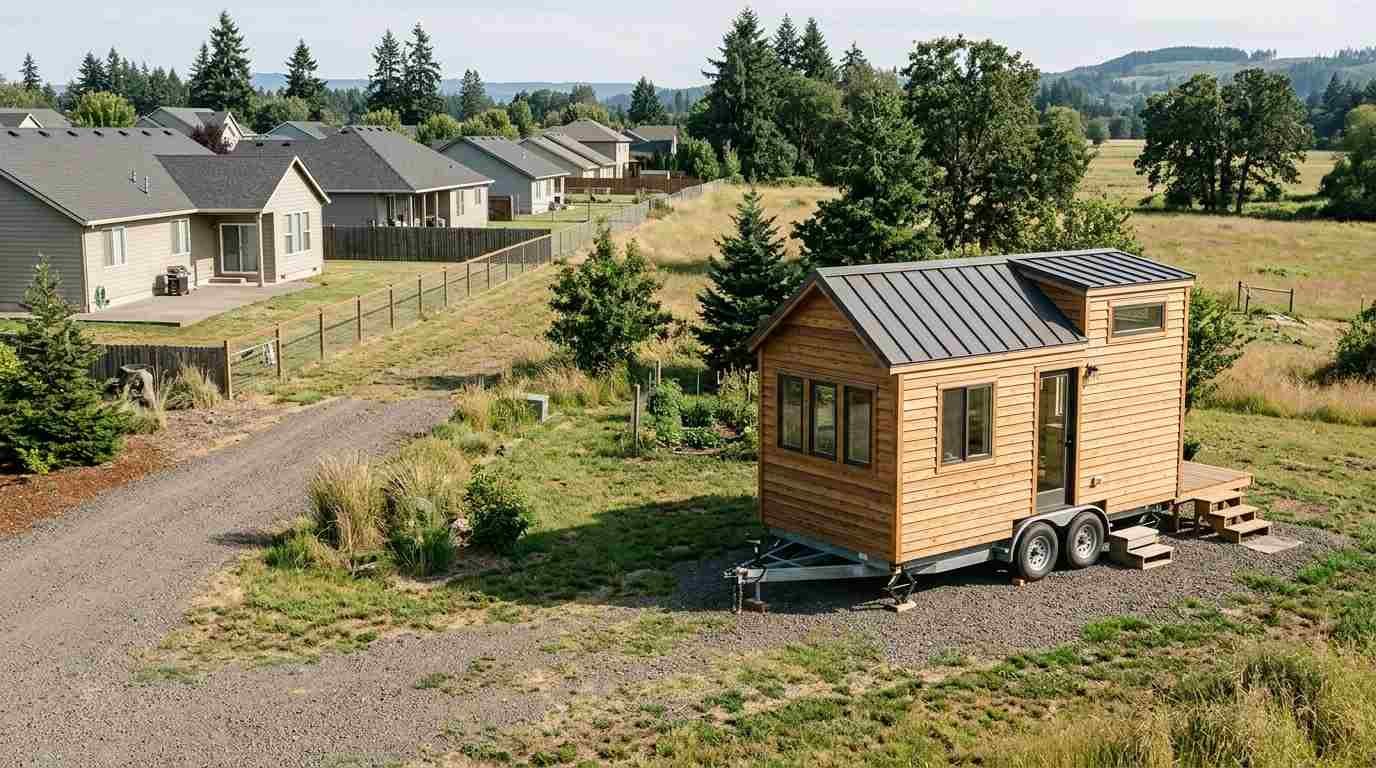
Accessory Dwelling Unit (ADU) Rules for Tiny Homes on Wheels
The ADU pathway is the strongest legal route for a tiny home on a residential lot in the USA right now. An accessory dwelling unit is a secondary residence on a lot that already contains a primary home.
I have watched this category transform from a niche exception into mainstream housing policy. AARP reports that ADU-enabling legislation now exists in a majority of states in some form.
Movable Tiny House as an ADU
Some jurisdictions explicitly name movable tiny houses as an allowed ADU type. California leads here, with state law recognizing movable tiny houses as ADUs in participating cities.
Others allow ADUs but require permanent foundations. The wheels come off, literally, in those places.
Owner-Occupancy, Setback, and Lot Coverage Rules
Owner-occupancy requirements force the property owner to live in either the primary home or the ADU. Setback rules dictate distance from property lines, and lot coverage caps limit total built area.
These three constraints shape where on your lot the tiny home actually lands. Corner lots and narrow parcels get complicated quickly.
State Preemption Laws Expanding ADU Access
State preemption laws override restrictive local ordinances and force cities to permit ADUs. California, Oregon, Washington, Montana, and Maine passed versions of this over the past several years.
California’s ADU legislation removed owner-occupancy mandates and capped local fees. That model spread to other states with housing shortages.
Legal Placement Options Across the USA
Once classification and zoning are clear, the practical question becomes simple: where does this thing actually go? I group legal placement into four realistic categories, and each carries a different cost, permanence, and paperwork profile.
Placement drives your entire experience of tiny home living. Choose it before you choose finishes.
Tiny House Communities and RV Parks
Dedicated tiny house communities handle zoning, utilities, and permits at the community level. You lease or buy a site, plug in, and skip most of the individual permitting burden.
RV parks accept RVIA-certified units readily. Length-of-stay caps vary by park and by local ordinance.
Private Land, Backyards, and Rural Parcels
Private land gives you the most control and the most responsibility. Backyard placement runs through the ADU pathway in most residential zones.
Rural parcels in permissive counties offer the fastest route to legal full-time occupancy. Acreage minimums and septic capacity become the limiting factors there.
Mobile Home Parks and Manufactured Housing Communities
Mobile home parks are zoned for exactly this kind of housing, which removes the classification fight entirely. Many parks now accept tiny homes on wheels alongside traditional manufactured homes.
Park rules govern skirting, anchoring, and appearance standards. Lot rent replaces land ownership.
Tiny House Friendly Cities and Counties
Certain jurisdictions actively welcome tiny homes through updated ordinances. Fresno, Spur, Rockledge, and several Colorado and Oregon counties built reputations for permissive rules.
I recommend confirming current ordinance language directly rather than trusting lists. Rules shift with every council election.
Utility Hookups, Septic, and Off-Grid Placement Rules
Utilities separate a legally parked tiny home from a legally occupied one. Health departments regulate water and waste independently of the zoning office, and they answer to different authority.
This is where projects stall most often. I always sequence utility approval alongside zoning research, never after.
Permanent Water, Sewer, and Electrical Connections
Permanent connections usually require the tiny home to be classified as a dwelling. RV-classified units connect through RV-style hookups rated for temporary service.
A permanent electrical connection triggers an electrical permit and inspection. Water and sewer taps carry connection fees that surprise most first-time owners.
Composting Toilets and Greywater Regulations
Composting toilets are legal in a growing number of states, and prohibited or restricted in others. The rule usually lives in the state plumbing code rather than local zoning.
Greywater discharge carries its own permit track. Some states allow simple laundry-to-landscape systems with minimal paperwork.
Solar, Propane, and Off-Grid Compliance
Off-grid systems still need permits in most jurisdictions. Solar arrays require electrical permits, and propane installations require gas line inspection and clearance distances.
Fully off-grid living is legal in far fewer places than social media suggests. Health departments generally require an approved potable water source and an approved waste disposal method regardless of your power source.
Permits, Inspections, and Certificates of Occupancy
Permits convert a parked trailer into a legal residence. The sequence matters, and skipping a step usually means redoing work at your own expense.
I walk clients through the paperwork order before anyone pours a pad or runs a trench.
Zoning Clearance and Placement Permits
Zoning clearance confirms your intended use is allowed at that address. It comes first, before any construction or utility permit gets issued.
Placement permits address the physical siting: setbacks, access, and site plan. Many jurisdictions bundle these into a single application.
Electrical, Plumbing, and Skirting Inspections
Electrical inspection covers the service connection, panel, and grounding. Plumbing inspection covers supply lines, drains, and backflow prevention.
Skirting requirements protect plumbing from freezing and satisfy appearance standards. Inspectors check for ventilation openings and access panels.
Anchoring, Tie-Downs, and Wind Zone Requirements
Wind zone requirements come from FEMA and HUD standards applied to manufactured and mobile housing. Coastal and tornado-prone regions enforce them strictly.
Tie-down systems anchor the frame to ground anchors or a concrete pad. Inspectors verify anchor spacing and strap tension.
HOA Rules, Deed Restrictions, and Private Covenants
Private restrictions defeat permissive zoning every single time. A homeowners association can prohibit a tiny home on a lot where the city would happily approve it.
I have seen fully permitted projects stopped by a covenant recorded in 1987. Read the paperwork first.
Covenants That Override Permissive Zoning
CC&Rs run with the land and bind every subsequent owner. Common provisions ban trailers, recreational vehicles, secondary dwellings, and structures below a minimum square footage.
Enforcement comes through the association, not the city. Remedies include fines, liens, and injunctions.
Reviewing CC&Rs Before You Buy Land
Request the full CC&R document and any architectural guidelines during your due diligence period. Look specifically for language about wheels, trailers, temporary structures, and minimum dwelling size.
Amendment requires a supermajority vote in most associations. Assume the current language stands.
Landlords, Property Managers, and Renting a THOW
Renting a tiny home on wheels adds a layer of regulation on top of placement rules. Occupancy, habitability, and insurance requirements all shift once a tenant moves in.
Property managers ask me about this more every year. The answer depends on classification and local rental ordinance.
Short-Term Rental and Occupancy Restrictions
Short-term rental ordinances regulate stays under 30 days and often require registration, permits, and lodging tax collection. Many cities exclude vehicles and RVs from eligible short-term rental inventory.
Long-term rental of an ADU-classified tiny home is broadly permitted where ADUs are legal. The classification decides which rulebook applies.
Insurance, Liability, and Tenant Habitability
Standard homeowners policies rarely cover a tiny home on wheels. RV policies, mobile home policies, and specialty tiny home policies each cover different risk profiles.
Habitability standards require working heat, potable water, safe electrical, and proper egress. Landlord obligations apply the same way they do in a conventional rental.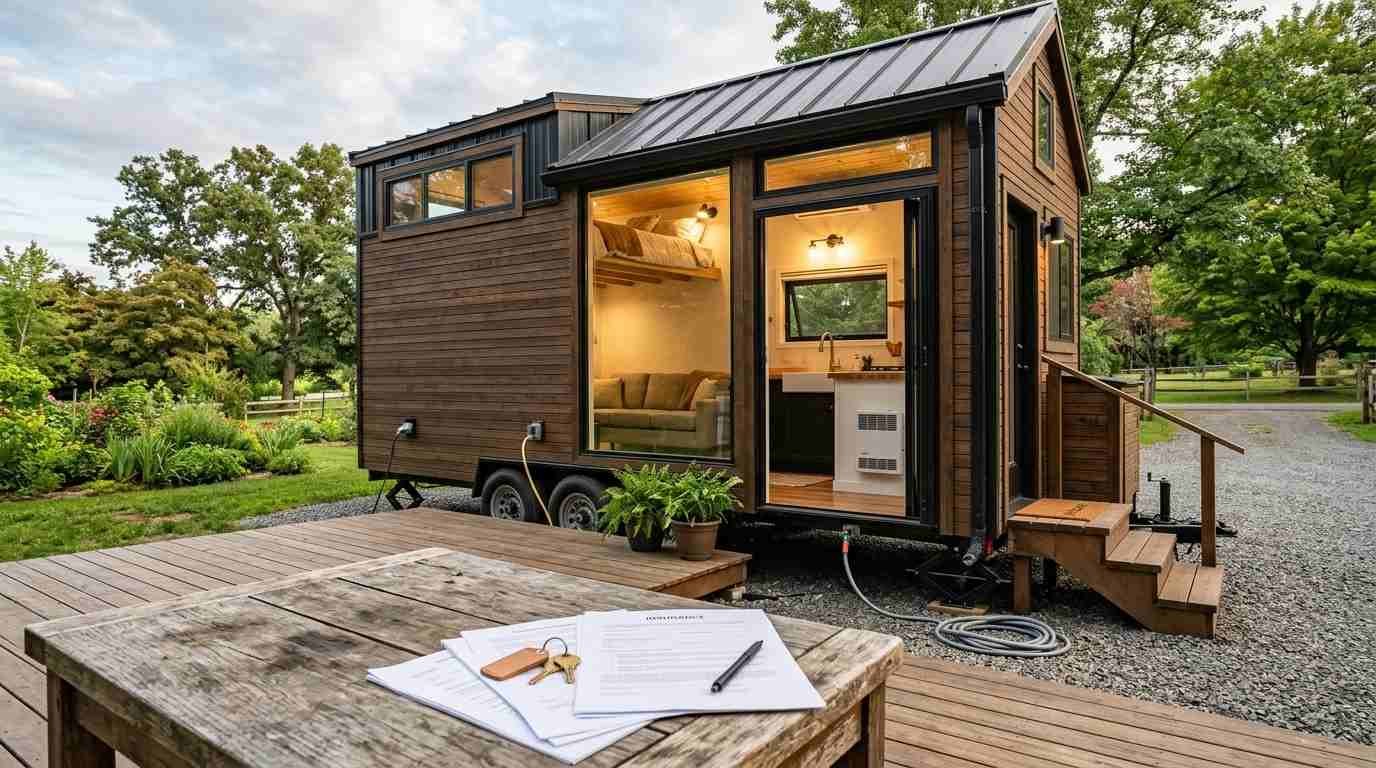
Common Zoning Violations and How Enforcement Works
Enforcement rarely arrives on a schedule. It arrives because someone made a phone call, and that reality shapes how most tiny home cases actually unfold.
Understanding the process removes a lot of anxiety. It also tells you exactly how much runway you have.
Complaint-Driven Enforcement and Code Officers
Code enforcement in most USA jurisdictions operates on complaints rather than patrols. A neighbor calls, an officer visits, and a notice of violation follows.
Officers document the condition and cite the specific ordinance section. That citation tells you precisely which rule you tripped.
Fines, Stop-Work Orders, and Removal Notices
Notices typically include a compliance deadline, often 30 days. Fines accrue daily in many jurisdictions after that window closes.
Stop-work orders halt construction immediately. Removal notices order the unit off the property, and appeals go to a zoning board of adjustment.
How to Find Out If Your Property Allows a Tiny Home on Wheels
Here is the practical research process I use, and it takes an afternoon rather than a month.
How to Research Your Local Zoning Ordinance
Every jurisdiction publishes its zoning ordinance, and most post it online. The document looks intimidating and reads mechanically once you know which three sections matter.
Start with your parcel number and work outward from there.
Reading a Zoning Map and Use Table
The zoning map assigns a district code to your parcel. The use table lists every land use as permitted, conditional, or prohibited within that district.
Find “dwelling, accessory,” “recreational vehicle,” and “manufactured home” in the table. Those three rows answer most of your question.
Questions to Ask Your Planning Department
Ask whether the jurisdiction adopted IRC Appendix AQ. Ask whether movable tiny houses qualify as ADUs, and ask what the minimum dwelling size is in your district.
Get answers in writing by email. Verbal guidance from a counter clerk carries no weight in an appeal.
Site Preparation and Ongoing Maintenance for a Compliant THOW
Legal placement is the beginning, not the end. The site itself needs preparation, and the home needs upkeep that differs from a conventional house.
I connect owners with the trades that handle this work every week.
Pads, Access Drives, and Drainage
A gravel or concrete pad distributes weight and prevents settling. Drainage away from the pad protects the trailer frame and undercarriage from moisture damage.
Access drives need enough width and turning radius for delivery. Emergency vehicle access is a code requirement in many jurisdictions.
Seasonal Upkeep, Skirting, and Winterization
Skirting insulates the underbelly and protects plumbing from freezing. Heat tape on exposed lines handles the coldest climates.
Roof inspection, sealant checks, and gutter clearing keep water out. Annual trailer frame and tire inspection matters even on a stationary unit.
Working With Professionals to Place a Tiny Home Legally
The permit path touches electrical, plumbing, site work, and inspection scheduling. Coordinating those trades is the difference between a two-month project and a two-year one.
Licensed electricians and plumbers pull the permits their work requires. Excavation and utility trenching contractors handle the pad and service connections.
We match property owners with vetted local professionals who understand tiny home requirements and inspection expectations in their jurisdiction.
Conclusion
Zoning classification, district rules, ADU pathways, utility approvals, permits, and private covenants together determine where a tiny home on wheels can legally sit.
This guide anchors a wider library covering ADUs, permits, utilities, and site work in depth, and rules keep loosening nationwide each year.
We help you place, connect, and maintain your tiny home correctly. Reach out to Mr. Local Services and get matched with trusted local pros today.
Frequently Asked Questions
Are tiny homes on wheels legal in all 50 states?
Tiny homes on wheels are legal to own everywhere, but full-time occupancy depends on local zoning. Rules vary by city and county, not by state alone.
Can I park a tiny home on wheels in my backyard?
Backyard placement usually requires ADU approval or a conditional use permit. Some jurisdictions allow it outright, while others prohibit occupied trailers entirely.
Do I need a permit to place a tiny home on wheels?
Most jurisdictions require zoning clearance plus electrical and plumbing permits for utility connections. Permanent placement typically triggers a certificate of occupancy process.
Is a tiny home on wheels considered an RV or a house?
Classification depends on certification. RVIA-certified units count as recreational vehicles, while Appendix AQ units qualify as dwellings in adopting jurisdictions.
Can a tiny home on wheels be connected to city utilities?
Permanent water, sewer, and electrical connections generally require dwelling classification. RV-classified units connect through temporary hookups rated for recreational service.
Do HOA rules override city zoning for tiny homes?
Private covenants restrict beyond zoning and win in practice. An HOA prohibits tiny homes on lots where city ordinances would allow them.
Which states are the most tiny home friendly?
California, Oregon, Maine, Colorado, and Texas offer the clearest legal pathways. Individual counties within those states still vary significantly in permissiveness.