Off-grid water systems give homeowners and rural property managers a fully independent water supply — no municipal connection required. These systems combine a water source, storage, filtration, and a delivery method to bring clean, reliable water to any property, regardless of location or infrastructure access.
Managing an off-grid property means making informed decisions about water supply before problems arise. Without the right system in place, access to safe drinking water, irrigation, and daily household use becomes unreliable and costly to fix.
This guide covers every core component of off-grid water systems — from source selection and storage sizing to filtration methods, pressure delivery, and ongoing maintenance requirements.
What Are Off-Grid Water Systems?
An off-grid water system is a self-contained water supply infrastructure that collects, stores, filters, and delivers water to a property without relying on a municipal water main or public utility. These systems are common on rural homesteads, remote cabins, agricultural properties, and increasingly on suburban lots where homeowners want water independence.
The core principle is simple: water is collected from a natural or captured source, stored in a tank or cistern, treated to meet safety standards, and then delivered through the property’s plumbing under adequate pressure. Each of these four stages requires specific equipment, proper sizing, and periodic maintenance to function reliably.
Off-grid water systems operate independently from municipal infrastructure, and understanding how they connect to broader residential plumbing systems helps homeowners plan installations, repairs, and upgrades with the right professional support.
Key Components of an Off-Grid Water System
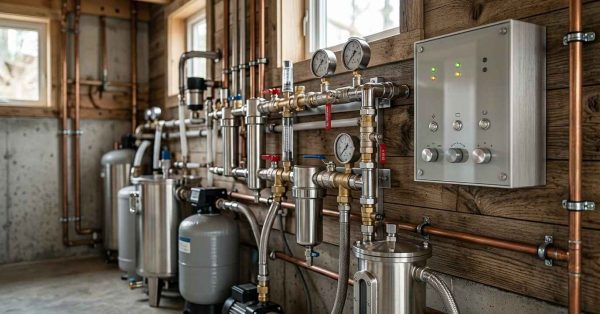
Every functional off-grid water system includes four essential components working together. The source provides raw water — whether from rain, a well, a spring, or a surface body. The storage system holds collected water in tanks or cisterns sized to meet daily household demand. The filtration and purification system removes sediment, bacteria, and chemical contaminants to make water safe for use. The delivery system — either gravity-fed or pump-driven — moves water from storage to every tap, fixture, and appliance on the property.
Types of Off-Grid Water Sources
Choosing the right water source is the most important decision in designing an off-grid water system. The source determines collection method, storage requirements, filtration needs, and long-term reliability. The three most common sources for residential off-grid properties in the USA are rainwater harvesting, well water, and spring or surface water collection.
Rainwater Harvesting Systems
Rainwater harvesting captures precipitation from rooftops and directs it through gutters, downspouts, and first-flush diverters into storage tanks. Systems range from simple 500-gallon polyethylene tanks to large underground cisterns holding tens of thousands of gallons. Effectiveness depends on local rainfall patterns, roof surface area, and storage capacity. Many states regulate rainwater collection, so verifying local laws before installation is essential.
A complete rainwater harvesting system for a family home typically includes a catchment surface, gutters, a first-flush diverter to discard the initial contaminated runoff, a storage tank, a sediment pre-filter, and a purification stage before the water enters the home’s distribution lines. For a dedicated breakdown of system sizing and installation requirements, see our guide on rainwater harvesting systems
Well Water Systems
Drilled or dug wells access groundwater from underground aquifers and represent the most reliable long-term off-grid water source for most USA properties. A drilled well typically reaches depths of 100 to 400 feet, depending on local geology, and requires a submersible pump, pressure tank, and electrical connection to deliver water to the home. Water quality varies significantly by region and aquifer type, making annual testing for bacteria, nitrates, and minerals a standard maintenance requirement.
Well water systems require professional drilling, casing installation, and pump sizing to perform correctly. Our full resource on residential well water systems covers drilling depth, pump selection, pressure tank sizing, and water quality testing in detail.
Spring and Surface Water Collection
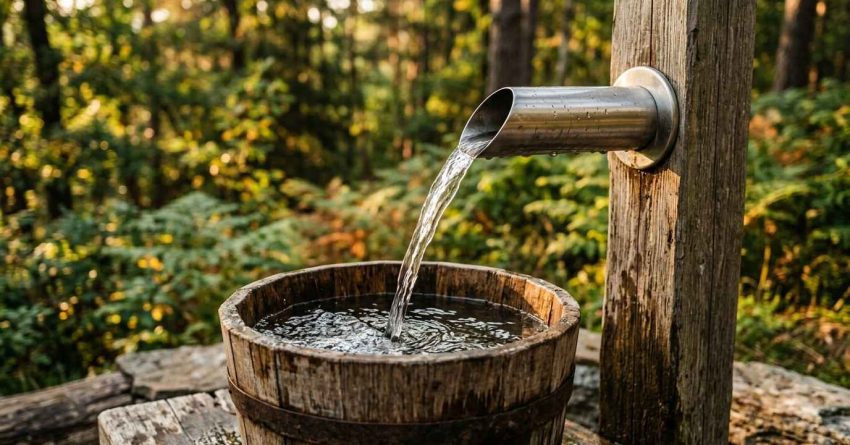
Natural springs and surface water sources such as streams or ponds can supply off-grid properties where groundwater access is limited. Spring collection typically involves a spring box — a concrete or stone structure that captures water at the source — connected to a gravity-fed or pumped distribution line. Surface water collection requires more intensive filtration due to higher contamination risk from runoff, wildlife, and seasonal variation.
Improper collection or storage of off-grid water can lead to moisture intrusion and structural issues — learning about water damage prevention ensures your property stays protected from the risks associated with unmanaged water sources.
Water Storage Solutions for Off-Grid Properties
Water storage bridges the gap between collection and daily use, ensuring a consistent supply even during dry periods, pump failures, or high-demand days. Storage capacity is calculated based on daily household consumption — typically 50 to 100 gallons per person per day — multiplied by the number of days of reserve supply the homeowner wants to maintain.
Common storage options include polyethylene tanks, fiberglass cisterns, concrete underground tanks, and stainless steel tanks. Each material has different cost, durability, UV resistance, and installation requirements. Tanks are installed above ground, partially buried, or fully underground depending on climate, space, and aesthetic preferences.
Connecting storage tanks to your home’s distribution lines often requires skilled labor, and our tank installation support team can handle fittings, brackets, overflow routing, and pressure connections efficiently.
Sizing Your Water Storage Tank
A household of four people consuming 75 gallons per person per day requires 300 gallons of daily supply. Maintaining a 10-day reserve — a common standard for off-grid properties — means a minimum storage capacity of 3,000 gallons. Properties in areas with seasonal drought, limited rainfall, or unreliable well yield should target 20 to 30 days of reserve capacity. Tank sizing should also account for irrigation, livestock, and fire suppression needs where applicable.
For a detailed guide covering tank materials, installation methods, and capacity calculations, see our dedicated resource on off-grid water storage tanks
Off-Grid Water Filtration and Purification
Raw water from any off-grid source — rain, well, or spring — requires treatment before it is safe for drinking, cooking, or bathing. Filtration removes physical particles such as sediment, sand, and organic matter. Purification eliminates biological and chemical contaminants including bacteria, viruses, heavy metals, and pesticides.
A complete off-grid treatment train typically includes a sediment pre-filter, an activated carbon filter for taste and odor, a UV purification stage for biological contaminants, and in some cases a reverse osmosis unit for chemical removal. The specific combination depends on source water quality, which should be tested annually by a certified laboratory.
Installing sediment filters, UV purifiers, and reverse osmosis units requires precise plumbing connections — our water filtration installation professionals ensure every system is correctly fitted, sealed, and tested before use.
Filtration Methods Compared
| Method | Removes | Best For | Maintenance |
| Sediment filter | Particles, sand, silt | All source types — first stage | Replace cartridge every 3–6 months |
| Activated carbon | Chlorine, VOCs, odor | Rainwater, treated well water | Replace every 6–12 months |
| UV purification | Bacteria, viruses, protozoa | All biological contamination | Replace UV lamp annually |
| Reverse osmosis | Heavy metals, nitrates, fluoride | Well water with chemical contamination | Replace membranes every 2–3 years |
| Ceramic filter | Bacteria, protozoa, sediment | Low-tech or backup systems | Clean and inspect monthly |
Off-Grid Water Pumping and Pressure Systems
Water stored in a tank at ground level will not flow to upper floors or reach adequate pressure for showers, appliances, and irrigation without a delivery system. Off-grid properties use either gravity-fed distribution or pump-driven pressure systems to move water from storage to point of use.
Gravity-Fed vs. Pump-Driven Systems
A gravity-fed system positions the storage tank at an elevation above the property — typically on a hillside or elevated platform — and uses natural water pressure created by the height difference to deliver water without electricity. A 10-foot elevation difference generates approximately 4.3 PSI of pressure, meaning a tank elevated 23 feet above the home produces roughly 10 PSI — adequate for basic use but below the 40–60 PSI standard for modern plumbing fixtures.
Pump-driven systems use submersible, jet, or booster pumps combined with a pressure tank to maintain consistent pressure throughout the home. These systems require an electrical power source — grid, solar, or generator — and a pressure switch that activates the pump when tank pressure drops below a set threshold.
Electric pump systems require dedicated circuits and weatherproof wiring, and our pump wiring and power specialists ensure every pump installation meets safety codes and performs reliably year-round.
For properties exploring solar-powered pump options, our resource on solar-powered water pumps covers panel sizing, battery storage, and pump compatibility in detail.
Maintenance Requirements for Off-Grid Water Systems
An off-grid water system requires consistent maintenance to remain safe, efficient, and reliable. Unlike municipal water, where treatment and infrastructure management are handled externally, off-grid homeowners are responsible for every component — from the source to the tap.
Keeping an off-grid water system in peak condition requires periodic professional inspection, and our off-grid plumbing maintenance team provides comprehensive service visits covering all components from source to tap.
Seasonal Maintenance Checklist
Routine maintenance tasks vary by season and system type, but a standard annual schedule includes the following:
Spring: Test water quality through a certified lab. Inspect storage tanks for algae, sediment buildup, and cracks. Clean first-flush diverters and gutter screens. Check pump operation and pressure tank pre-charge.
Summer: Monitor storage levels during peak demand. Inspect UV lamp output and replace if output has declined. Check all pipe connections and fittings for leaks.
Fall: Insulate exposed pipes and tanks before freezing temperatures arrive. Drain and winterize any above-ground components in cold climates. Replace sediment filter cartridges before winter.
Winter: Monitor system pressure and pump cycling frequency. Check for frozen pipes or reduced flow. Verify backup water supply is accessible in case of pump failure.
Many routine off-grid water maintenance tasks — including pipe insulation, valve checks, and tank cleaning — fall within the scope of seasonal property upkeep that our skilled handyman professionals handle efficiently.
For a complete safety and testing protocol, our guide on off-grid water quality testing walks through every test type, frequency, and what results mean for your system.
Conclusion
Off-grid water systems bring together source collection, storage, filtration, and pressure delivery into one self-sufficient infrastructure that keeps properties supplied with clean water year-round. Each component plays a specific role, and the right combination depends on property location, household demand, and local water quality.
Designing and maintaining these systems correctly protects both property value and occupant health — two priorities that every homeowner and property manager share regardless of location or system size.
At Mr. Local Services, our plumbing, handyman, and electrical professionals are equipped to install, service, and maintain every component of your off-grid water system — contact us today to schedule an assessment and keep your water supply running reliably.
Frequently Asked Questions
What is the most reliable off-grid water source for a residential property?
Drilled well water is generally the most reliable off-grid source for residential properties in the USA. Wells access groundwater from stable underground aquifers, providing consistent supply regardless of seasonal rainfall or surface conditions.
How much water storage capacity does an off-grid home need?
Most off-grid homes need a minimum of 3,000 to 5,000 gallons of storage capacity, based on 75 gallons per person per day and a 10-day reserve. Properties in drought-prone areas or with unreliable sources should target 20 to 30 days of reserve.
Do off-grid water systems require permits or inspections?
Yes, most states and counties require permits for well drilling, rainwater harvesting above certain volumes, and water system installations. Requirements vary significantly by location, so checking with your local building department before installation is essential.
How often should off-grid water be tested for safety?
Off-grid water should be tested at least once per year by a certified laboratory. Testing should cover bacteria, nitrates, pH, hardness, and any contaminants specific to your region or source type. Additional testing is recommended after flooding, nearby agricultural activity, or any change in water taste or appearance.
Can a gravity-fed system provide enough pressure for a modern home?
A gravity-fed system can supply adequate pressure for basic fixtures if the storage tank is elevated at least 50 to 60 feet above the home, generating 22 to 26 PSI. For modern showers, appliances, and irrigation, a pump-driven pressure system delivering 40 to 60 PSI is the more practical solution.
What filtration system is best for off-grid well water?
A multi-stage system combining a sediment pre-filter, activated carbon filter, and UV purification unit covers the most common well water contaminants. Properties with known chemical contamination — such as high nitrates or heavy metals — should add a reverse osmosis stage. Annual water testing determines which stages are necessary.
How long do off-grid water system components typically last?
Storage tanks last 20 to 30 years with proper maintenance. Submersible well pumps typically last 10 to 15 years. UV lamps require annual replacement. Sediment and carbon filter cartridges need replacement every 3 to 12 months depending on water quality and usage volume.