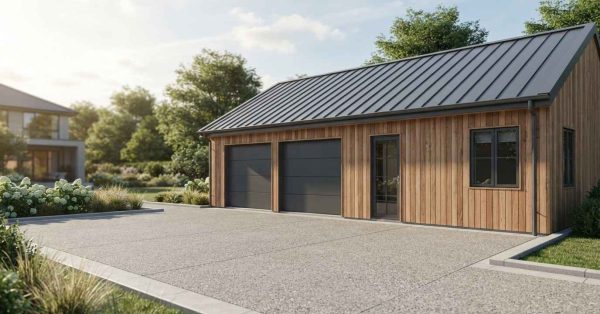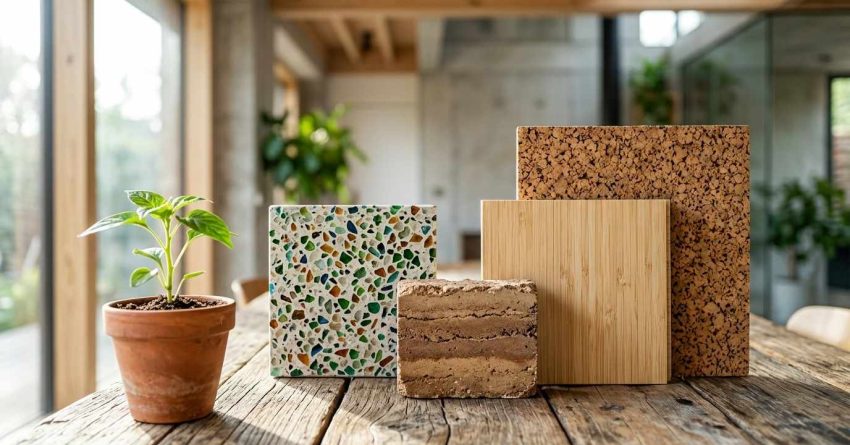
Sustainable building materials are construction products that reduce environmental impact, improve energy efficiency, and support long-term property performance — covering everything from reclaimed wood flooring and recycled metal roofing to natural insulation and high-performance windows. Homeowners, landlords, and property managers across the USA are increasingly choosing these materials to lower utility costs, meet green building standards, and increase property value.
Choosing the wrong materials can mean higher energy bills, faster deterioration, and costly replacements — understanding your options now protects your investment for decades.
This guide covers every major category of sustainable building material, explains what each option includes, and helps you make confident decisions for your next maintenance, repair, or renovation project.
What Are Sustainable Building Materials?
Sustainable building materials are products sourced, manufactured, or recycled in ways that minimize harm to the environment while delivering strong performance over the life of a building. They differ from conventional materials in three key ways: their environmental footprint during production, their energy performance during use, and their end-of-life recyclability or biodegradability.
A material qualifies as sustainable when it meets one or more of these criteria: it is made from rapidly renewable resources, contains significant recycled content, reduces energy consumption during building operation, or can be safely returned to the environment at the end of its useful life. Many sustainable materials also carry third-party certifications that verify these claims independently.
How Sustainable Materials Differ From Conventional Options
Conventional building materials — standard concrete, virgin timber, petroleum-based insulation — are produced through resource-intensive processes that generate significant carbon emissions and waste. Sustainable alternatives address these problems at the source. Recycled steel, for example, requires roughly 75% less energy to produce than virgin steel, according to the American Iron and Steel Institute. Reclaimed wood eliminates the need for new timber harvesting entirely while delivering the same structural performance.
The practical difference for homeowners and property managers is not just environmental. Sustainable materials frequently outperform conventional options on durability, thermal performance, and maintenance requirements — meaning lower long-term costs alongside a reduced environmental footprint.
Key Certification Standards to Know (LEED, GreenGuard, FSC)
Three certification systems dominate the sustainable building materials market in the USA. LEED (Leadership in Energy and Environmental Design), administered by the U.S. Green Building Council, is the most widely recognized green building rating system globally and awards points for sustainable material choices. GreenGuard certification, managed by UL, verifies that products meet strict chemical emission standards — critical for indoor air quality in residential properties. FSC (Forest Stewardship Council) certification confirms that wood products come from responsibly managed forests.
Understanding what these certifications mean helps homeowners and property managers evaluate product claims accurately and avoid greenwashing. A product carrying all three certifications has been independently verified for environmental sourcing, manufacturing safety, and building performance — providing a reliable baseline for purchasing decisions.
For a deeper look at how these certifications apply during full-scale renovation projects, our remodeling services guide explains how sustainable materials are selected and integrated across residential improvement projects of every scale.
Types of Sustainable Building Materials for Homes
Sustainable building materials fall into three broad categories based on their origin and production method. Understanding these categories helps homeowners and property managers match the right material to the right application — whether that is structural framing, interior finishing, or exterior cladding.
Reclaimed and Recycled Materials
Reclaimed materials are salvaged from existing structures and repurposed for new construction or renovation. Reclaimed wood, brick, stone, and steel are the most common examples. These materials carry embodied energy from their original production — meaning no additional manufacturing energy is required — and they often bring aesthetic character that new materials cannot replicate.
Recycled-content materials are manufactured using post-consumer or post-industrial waste. Recycled glass countertops, recycled rubber flooring, and steel with high recycled content all fall into this category. The Environmental Protection Agency estimates that construction and demolition debris accounts for more than 600 million tons of waste generated in the USA annually — making recycled-content materials a critical part of reducing that figure.
Natural and Bio-Based Materials
Natural materials are derived directly from biological sources with minimal processing. Bamboo, cork, hemp, sheep wool, straw bale, and rammed earth are all examples. These materials are typically carbon-sequestering during growth, biodegradable at end of life, and free from the synthetic chemicals found in many conventional building products.
Bio-based materials are particularly well suited to insulation, flooring, and interior finishing applications where thermal performance, acoustic comfort, and indoor air quality are priorities. Their performance characteristics vary significantly by climate and application, so professional guidance is important when selecting them for specific building conditions.
High-Performance Engineered Materials
Engineered sustainable materials combine recycled or renewable inputs with advanced manufacturing to deliver performance that exceeds conventional alternatives. Cross-laminated timber (CLT), structural insulated panels (SIPs), and fiber-cement siding are examples. These products are designed for precision, consistency, and long service life — making them appropriate for structural applications where natural materials may not meet load or moisture requirements.
From bamboo to reclaimed hardwood, the range of eco-friendly flooring choices is broad — our sustainable flooring options covers every material type, installation method, and performance consideration for residential and commercial properties.
Sustainable Flooring Options for Residential Properties
Flooring is one of the most visible and frequently replaced elements in any home or commercial property. Choosing sustainable flooring materials reduces the environmental impact of renovation while delivering surfaces that are durable, healthy, and easy to maintain.
Bamboo and Cork Flooring
Bamboo is one of the fastest-growing plants on earth, reaching harvestable maturity in three to five years compared to decades for hardwood trees. Strand-woven bamboo flooring is harder than most traditional hardwoods, making it well suited to high-traffic areas in residential and commercial properties. It is available in a wide range of finishes and profiles that match conventional hardwood aesthetics.
Cork flooring is harvested from the bark of cork oak trees without cutting the tree down — the bark regenerates fully within nine years. Cork provides natural thermal and acoustic insulation, is naturally resistant to mold and mildew, and offers a cushioned surface that reduces fatigue in kitchens and standing workspaces. Both bamboo and cork are available with low-VOC finishes that support healthy indoor air quality.
Recycled Hardwood and Reclaimed Tile
Recycled hardwood flooring uses wood salvaged from demolished buildings, old barns, factories, and warehouses. This material carries the character of its previous life — nail holes, saw marks, and natural aging — while performing identically to new hardwood once properly milled and finished. Reclaimed hardwood is typically available in wider planks than new-growth timber, which many homeowners prefer aesthetically.
Reclaimed tile and recycled glass tile offer sustainable options for kitchens, bathrooms, and entryways. Recycled glass tile is manufactured from post-consumer glass — including wine bottles and windows — and carries no additional raw material extraction cost. Both options are durable, moisture-resistant, and available in a wide range of colors and formats.
Choosing the right eco-friendly floor requires professional installation to perform as intended — our flooring installation services walks through every option available for residential and commercial properties, including installation timelines and maintenance requirements.
Eco-Friendly Roofing Materials That Last
The roof is a property’s primary defense against weather, moisture, and heat gain. Sustainable roofing materials extend service life, reduce urban heat island effects, and lower cooling costs — making them a high-impact investment for homeowners and property managers.
Metal Roofing and Recycled Shingles
Metal roofing is one of the most durable and sustainable roofing options available. Steel and aluminum roofing products contain significant recycled content — often 25–95% depending on the product — and are fully recyclable at end of life. Metal roofs reflect solar radiation, reducing cooling loads in warm climates, and carry service lives of 40–70 years compared to 15–30 years for conventional asphalt shingles.
Recycled-content asphalt shingles incorporate post-consumer rubber, plastic, and wood fiber into their composition, reducing landfill waste while maintaining the familiar appearance of traditional shingles. Some manufacturers now produce shingles made entirely from recycled materials, including reclaimed rubber from tires and post-industrial plastic waste.
Cool Roofs and Green Roof Systems
Cool roofs are designed to reflect more sunlight and absorb less heat than standard roofing materials. The U.S. Department of Energy notes that cool roofs can reduce roof surface temperatures by up to 50°F compared to conventional dark roofing — directly reducing air conditioning demand and energy costs during summer months.
Green roof systems — also called living roofs — incorporate a layer of growing medium and vegetation over a waterproof membrane. They provide insulation, manage stormwater runoff, reduce urban heat island effects, and extend the life of the underlying roof membrane by protecting it from UV exposure and temperature fluctuation. Green roofs are particularly effective in urban properties where stormwater management and building energy performance are priorities.
Selecting a sustainable roof is only part of the equation — our roofing material options covers installation, lifespan expectations, and how to match the right system to your property’s needs and local climate conditions.
Sustainable Insulation and Energy Efficiency
Insulation is the single most impactful building component for long-term energy performance. Sustainable insulation options deliver equivalent or superior thermal resistance compared to conventional fiberglass batts while eliminating the synthetic chemicals and non-renewable inputs associated with standard products.
Natural Insulation Options (Sheep Wool, Cellulose, Hemp)
Sheep wool insulation is a natural, renewable product that regulates moisture naturally — absorbing and releasing humidity without losing thermal performance. It is naturally fire-resistant, does not require chemical flame retardants, and is fully biodegradable at end of life. Wool insulation is particularly effective in climates with significant humidity variation.
Cellulose insulation is manufactured from recycled paper — primarily post-consumer newsprint — and treated with borate for fire and pest resistance. It is one of the most widely available and cost-effective sustainable insulation options in the USA, with recycled content typically exceeding 80%. Cellulose performs well in both new construction and retrofit applications, including dense-pack installation in existing wall cavities.
Hemp insulation combines thermal performance with natural moisture management and is free from synthetic additives. It is gaining adoption in the USA as domestic hemp cultivation expands following the 2018 Farm Bill, which legalized industrial hemp production nationally.
How Insulation Choices Affect Long-Term Energy Costs
The relationship between insulation quality and energy costs is direct and measurable. The U.S. Department of Energy estimates that homeowners can save 15% on heating and cooling costs — or up to 11% on total energy costs — by properly air sealing and insulating their homes. Sustainable insulation materials achieve these savings while avoiding the health and environmental concerns associated with conventional alternatives.
Insulation and HVAC systems work together to control energy use — our HVAC efficiency guide explains how upgrading both at the same time delivers the greatest long-term savings for homeowners and property managers, including guidance on system sizing and ventilation requirements.
Green Windows and Doors for Better Performance
Windows and doors account for a significant share of a building’s heat loss and heat gain. Upgrading to sustainable, high-performance options reduces energy consumption, improves indoor comfort, and extends the service life of the building envelope.
Energy-Efficient Glazing and Frame Materials
Double-pane and triple-pane glazing with low-emissivity (low-E) coatings are the standard for energy-efficient windows in the USA. Low-E coatings reflect infrared heat while allowing visible light to pass through — keeping heat inside during winter and outside during summer. The ENERGY STAR program certifies windows that meet regional performance standards, providing homeowners with a reliable benchmark for comparison.
Frame materials matter as much as glazing. Fiberglass frames offer the best combination of thermal performance, durability, and dimensional stability — they do not expand and contract with temperature changes the way vinyl and aluminum frames do. Sustainably sourced wood frames with exterior cladding provide excellent insulation and are appropriate for historic properties where aesthetics are a priority.
Replacing windows with high-performance glazing is one of the most impactful upgrades a homeowner can make — our energy-efficient window guide covers frame materials, glazing types, and installation best practices for every property type and climate zone.
Sustainable Door Materials and Weather Sealing
Fiberglass and steel doors with polyurethane foam cores deliver superior insulation compared to hollow-core wood doors. Fiberglass doors resist warping, cracking, and moisture absorption — common failure modes for wood doors in humid climates — while requiring minimal maintenance over their service life. Steel doors provide additional security alongside thermal performance.
Weather sealing is as important as door material selection. Compression seals, door sweeps, and threshold gaskets prevent air infiltration at the perimeter — a critical detail that determines whether a high-performance door actually delivers its rated energy savings in practice.
Doors contribute significantly to a building’s thermal envelope — our sustainable door options details material choices, insulation ratings, and weather-sealing solutions for every property type and climate condition.
Sustainable Decking and Outdoor Building Materials
Outdoor building materials face the most demanding performance conditions of any building component — continuous exposure to UV radiation, moisture, freeze-thaw cycles, and biological activity. Sustainable options in this category are designed to meet these demands while reducing the environmental impact of conventional pressure-treated lumber and petroleum-based products.
Composite Decking vs. FSC-Certified Wood
Composite decking is manufactured from a blend of recycled wood fiber and recycled plastic — typically post-consumer polyethylene from plastic bags and bottles. It requires no sealing, staining, or painting, resists moisture and insect damage, and carries service lives of 25–30 years with minimal maintenance. The recycled content in composite decking diverts significant volumes of plastic and wood waste from landfills.
FSC-certified wood decking comes from forests managed to standards set by the Forest Stewardship Council, ensuring responsible harvesting practices, biodiversity protection, and community benefit. Species such as ipe, teak, and thermally modified pine are available with FSC certification and deliver exceptional natural durability without chemical treatment.
Choosing between composite and FSC-certified wood requires understanding long-term maintenance and environmental trade-offs — our composite decking guide covers every material option, cost range, and installation consideration for outdoor living spaces.
Permeable Paving and Eco-Friendly Hardscaping
Permeable paving systems allow rainwater to pass through the surface and infiltrate the soil below — reducing stormwater runoff, recharging groundwater, and preventing the flooding and erosion associated with conventional impermeable hardscaping. Options include permeable concrete, permeable asphalt, interlocking permeable pavers, and gravel systems stabilized with recycled plastic grids.
Recycled rubber pavers — manufactured from reclaimed tire rubber — provide a durable, slip-resistant surface for patios, walkways, and pool surrounds. They are available in a range of colors and profiles, require no sealing, and are fully recyclable at end of life.
For homeowners who want to incorporate reclaimed wood or custom-built elements into their sustainable renovation, our custom carpentry services explains how skilled craftspeople work with eco-friendly materials to deliver precise, lasting results across a wide range of outdoor and interior applications.
How to Choose the Right Sustainable Materials for Your Project
Selecting sustainable building materials requires balancing three factors: environmental performance, practical durability, and project budget. No single material excels in every dimension — the right choice depends on the specific application, local climate, and long-term ownership goals.
Evaluating Cost, Durability, and Environmental Impact
Sustainable materials often carry higher upfront costs than conventional alternatives, but this comparison is incomplete without accounting for lifecycle costs. A metal roof that lasts 50 years and requires no maintenance costs significantly less over its service life than three cycles of conventional asphalt shingles. Composite decking that requires no annual sealing or staining saves both time and money compared to pressure-treated wood over a 25-year period.
Environmental impact assessment should consider the full lifecycle of a material — from raw material extraction through manufacturing, transportation, installation, use, and end-of-life disposal or recycling. Embodied carbon — the carbon emitted during production and transportation — is increasingly recognized as a critical factor alongside operational energy performance. Materials with low embodied carbon and high operational efficiency deliver the greatest combined environmental benefit.
Working With Contractors Who Specialize in Green Building
Sustainable materials perform best when installed by professionals who understand their specific requirements. Natural insulation materials require different installation techniques than fiberglass batts. Bamboo flooring has specific acclimation and adhesive requirements. Green roof systems require waterproofing expertise that goes beyond standard roofing installation.
Selecting a contractor with documented experience in sustainable building practices protects the investment in premium materials and ensures that performance certifications are maintained. Ask contractors about their experience with specific materials, request references from comparable projects, and verify that they understand the manufacturer’s installation requirements for any certified product.
Working with experienced professionals makes material selection far more straightforward — our green remodeling services connects homeowners and property managers with contractors who specialize in sustainable building practices across every major material category.
Sustainable Building Materials and Property Value
Sustainable building improvements consistently deliver measurable returns on investment for homeowners and property managers. Energy-efficient upgrades reduce operating costs — a direct financial benefit that translates into higher property valuations and stronger rental income potential.
The National Association of Realtors reports that 61% of realtors found that energy efficiency promotion was valuable in their markets, and that sustainable features were increasingly cited by buyers as important purchasing criteria. Properties with green certifications and documented energy performance data sell faster and at higher prices in most USA markets.
Beyond resale value, sustainable materials reduce the frequency and cost of maintenance and replacement cycles. A fiberglass door that does not warp or rot eliminates the repainting and resealing costs associated with wood doors. Composite decking that does not require annual treatment saves property managers significant recurring maintenance expense. These savings compound over the ownership period, making sustainable material choices financially advantageous even when upfront costs are higher.
Eco-friendly improvements extend beyond the structure itself — our sustainable landscaping options covers permeable paving, native planting, and outdoor upgrades that complement green building choices and add measurable property value to residential and commercial properties.
Conclusion
Sustainable building materials span every component of a property — from foundation to roof, interior to exterior — and each category offers options that reduce environmental impact while delivering strong performance and long-term value. Understanding the differences between reclaimed, natural, and engineered materials helps homeowners and property managers make choices that align with their project goals, budget, and climate conditions.
The financial case for sustainable materials strengthens every year as energy costs rise, green building standards expand, and buyer preferences shift toward documented environmental performance. Properties upgraded with certified, high-performance materials consistently outperform conventional alternatives on durability, operating cost, and resale value.
At Mr. Local Services, we connect homeowners and property managers with skilled professionals who understand sustainable building materials and know how to install them correctly — contact us today to discuss your next maintenance, repair, or renovation project and get matched with the right expert for the job.
Frequently Asked Questions
What makes a building material sustainable?
A building material is sustainable when it is sourced, manufactured, or recycled in ways that minimize environmental harm, reduce energy consumption during building operation, and can be safely disposed of or recycled at end of life. Third-party certifications like LEED, GreenGuard, and FSC provide independent verification of these claims.
Are sustainable building materials more expensive than conventional options?
Sustainable materials often cost more upfront but deliver lower lifecycle costs through reduced maintenance, longer service life, and lower energy bills. Metal roofing, composite decking, and natural insulation all cost more initially but outperform conventional alternatives over a 20–50 year ownership period.
Which sustainable flooring option is best for high-traffic areas?
Strand-woven bamboo and reclaimed hardwood are the strongest sustainable flooring options for high-traffic residential and commercial spaces. Both deliver hardness ratings comparable to or exceeding traditional hardwoods while using renewable or salvaged materials.
Can sustainable building materials be used in older homes?
Yes. Most sustainable materials are available in retrofit-compatible formats. Cellulose insulation can be dense-packed into existing wall cavities, reclaimed wood flooring installs over existing subfloors, and energy-efficient windows replace standard frames without structural modification in most cases.
How do I verify that a building material is genuinely sustainable?
Look for third-party certifications from recognized bodies — FSC for wood products, GreenGuard for chemical emissions, ENERGY STAR for windows and doors, and LEED compliance documentation for broader building systems. Manufacturer claims without independent certification should be verified before purchase.
Do sustainable building materials require special installation?
Many sustainable materials have specific installation requirements that differ from conventional alternatives. Bamboo flooring requires acclimation before installation, natural insulation materials require different air-sealing techniques, and green roof systems require waterproofing expertise. Working with contractors experienced in sustainable building practices ensures correct installation and maintains product warranties.
How do sustainable building materials affect home insurance?
Some insurers offer premium discounts for properties with green building certifications or specific sustainable features such as impact-resistant metal roofing. Homeowners should contact their insurer directly to ask about available discounts and documentation requirements for sustainable upgrades.
What is the most impactful sustainable upgrade for energy savings?
Insulation and air sealing consistently deliver the highest return on investment for energy savings, followed by window replacement and HVAC system upgrades. The U.S. Department of Energy estimates that proper insulation and air sealing can reduce heating and cooling costs by up to 15%, making it the highest-priority upgrade for most residential properties.