Shear walls are structural panels built into your home’s framing that resist the sideways forces caused by wind, earthquakes, and soil movement — and without them, a house can rack, shift, or collapse under lateral pressure. Most homeowners never think about shear walls until a renovation, inspection, or storm damage brings them into the conversation. Understanding what they are and how they work helps you make smarter decisions about your home’s safety and structural integrity.
Knowing when shear walls matter — and when to call a professional — can protect your property and prevent costly structural failures down the road.
This guide explains what shear walls are, the types used in homes, warning signs of problems, and when professional inspection or repair is the right move.
What Is a Shear Wall and What Does It Do?
A shear wall is a structural element built into the walls of a home to resist lateral (sideways) forces. These forces come from wind pushing against the exterior, seismic activity shifting the ground beneath the foundation, or uneven soil pressure acting on the structure. Without shear walls, a building’s frame can deform in a motion called “racking” — where the walls lean or twist out of square under pressure.
Shear walls work by transferring lateral loads from the roof and upper floors down through the wall framing and into the foundation. They act as a rigid panel within the wall assembly, distributing force across a wide area rather than concentrating it at a single point. This load path is what keeps the structure stable during high-wind events or ground movement.
How Shear Walls Resist Lateral Forces
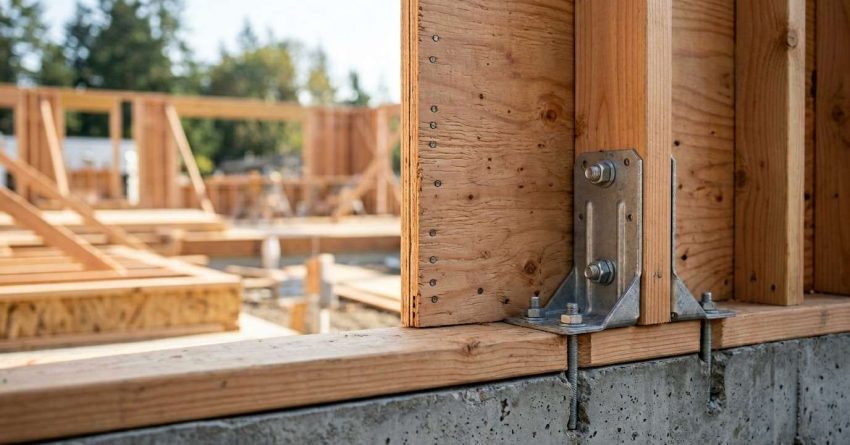
Shear walls resist lateral forces through a combination of structural panels, framing members, and mechanical fasteners. The panel — typically plywood or oriented strand board (OSB) — is nailed to the wall studs, top plate, and bottom plate at specific intervals. The nailing pattern is not random; it is engineered to match the expected load. Hold-down hardware anchors the wall to the foundation, preventing the wall from lifting or overturning when lateral force is applied.
The entire system — panel, fasteners, framing, and anchors — must work together. A missing hold-down or an incorrect nailing pattern can reduce the wall’s capacity significantly, even if the panel itself looks intact.
Where Shear Walls Are Typically Located
Shear walls are placed at specific locations around the perimeter and interior of a home based on structural engineering calculations. Common locations include exterior walls along the front and rear of the house, walls flanking garage openings, and interior walls that run perpendicular to the roof ridge. In multi-story homes, shear walls are often stacked vertically so loads transfer continuously from the top floor to the foundation.
Shear walls are a critical structural component addressed during major renovations — our remodeling services guide covers how structural modifications are planned, permitted, and completed to keep your home safe and code-compliant.
Types of Shear Walls Used in Residential Construction
Residential shear walls are built from several different materials, each suited to specific structural demands, building types, and regional code requirements. The material used affects the wall’s strength, installation method, and cost.
Wood Structural Panel Shear Walls
Wood structural panel shear walls are the most common type in residential construction across the United States. They use plywood or OSB panels fastened to a wood stud frame. The panels are rated by thickness and span, and the nailing schedule — the size, spacing, and pattern of nails — determines the wall’s shear capacity. These walls are cost-effective, widely understood by contractors, and compatible with standard residential framing.
Wood shear wall construction depends on precision framing and fastening — learn how our carpentry and framing work supports structural builds and repairs across residential properties.
Steel Shear Walls
Steel shear walls use thin steel plates or strap systems within the wall framing to resist lateral loads. They are more common in commercial construction but appear in residential applications where high shear capacity is needed in a narrow wall space — such as beside a wide garage door opening. Steel systems can carry significantly more load per linear foot than wood panels, making them useful when architectural constraints limit the number or width of shear walls.
Concrete and Masonry Shear Walls
Concrete and masonry shear walls are used in homes built with concrete block, poured concrete, or brick construction. These walls are inherently rigid and carry very high lateral loads. They are common in regions with high seismic risk and in below-grade construction such as basements and retaining walls. Repair and modification of concrete or masonry shear walls requires specialized contractors and engineering review.
Signs Your Home May Have Shear Wall Issues
Shear wall problems are not always visible from the outside, but several warning signs can indicate that the lateral load system in your home has been compromised. Catching these signs early reduces the risk of progressive structural damage.
Diagonal cracking in drywall — particularly at the corners of windows and doors — is one of the most common indicators of lateral movement in the wall framing. This cracking pattern follows the direction of racking stress and differs from the vertical or horizontal cracks caused by settling or moisture.
Doors and windows that stick, bind, or no longer close squarely can signal that the wall framing has shifted out of plumb. When a shear wall is damaged or missing, the frame can rack enough to distort door and window openings.
Visible gaps between the wall framing and the foundation, or between the wall and the roof structure, suggest that hold-down hardware has failed or was never installed. These gaps are serious and require immediate professional evaluation.
Shear wall damage often shows up first as cracking or buckling in interior wall surfaces — our drywall and ceiling repairs explains how these symptoms are assessed and restored after structural issues are addressed.
When Do Homeowners Need to Think About Shear Walls?
Most homeowners do not need to think about shear walls during routine maintenance. Shear walls become a priority in specific situations: when a home is being remodeled, when a structural inspection reveals concerns, when the home is located in a high-wind or seismic zone, or when damage from a storm or earthquake is being assessed.
Remodeling, Additions, and Permit Requirements
Removing or relocating walls during a remodel is one of the most common ways shear wall systems are accidentally compromised. When a wall is removed without engineering review, the lateral load path it carried must be redistributed to other walls. If this redistribution is not engineered correctly, the home’s lateral resistance is reduced — sometimes significantly.
Any structural change to your home — including wall removals or room additions — requires shear wall evaluation as part of the permitting process, which is why home remodeling projects always begin with a structural assessment.
Building permits for structural work require a licensed engineer or architect to review and approve the shear wall design. This is not optional — it is a code requirement in all U.S. jurisdictions. Unpermitted structural work that affects shear walls can create liability issues when the home is sold and may require costly remediation to bring the structure into compliance.
If you are planning a room addition, garage conversion, or any project that involves opening or removing walls, a structural engineer should evaluate the shear wall system before work begins. This evaluation is far less expensive than correcting a structural deficiency after the fact. For a dedicated breakdown of what this process involves, our home structural inspection resource walks through what engineers assess and what homeowners should expect.
How Shear Walls Are Inspected and Repaired
Shear wall inspection is performed by a licensed structural engineer or a qualified building inspector. The inspection involves reviewing the wall’s panel type, nailing pattern, hold-down hardware, and connection to the foundation. In existing homes, this often requires opening wall cavities to access the framing — a process that involves removing and replacing drywall or exterior cladding.
Common repair scenarios include adding or replacing hold-down anchors, increasing the nailing density on existing panels, replacing damaged or deteriorated panels, and installing new shear walls where the existing system is insufficient. In seismic retrofitting projects, shear walls are often added to older homes that were built before modern lateral force requirements were adopted.
For minor shear wall-related repairs and pre-inspection preparation, our handyman inspection services connect you with skilled professionals who can assess visible damage and coordinate with licensed contractors for structural work.
Repair costs vary based on the extent of the work, the accessibility of the wall framing, and whether engineering drawings are required. A straightforward hold-down anchor replacement is far less expensive than a full shear wall addition requiring new panels, framing modifications, and permit approval. For a detailed look at what structural repairs typically cost, our structural home repair costs provides a practical breakdown by repair type.
Shear Walls and Home Safety: What Homeowners Should Know
Shear walls are a foundational element of residential structural safety. Homes built to modern building codes in the United States are required to have engineered lateral force-resisting systems — and shear walls are the primary method used in wood-frame construction. The International Residential Code (IRC), adopted in some form by all 50 states, includes specific requirements for shear wall design, materials, and installation.
Older homes — particularly those built before the 1990s — may not meet current shear wall standards. This does not mean they are immediately unsafe, but it does mean they carry greater risk during high-wind events or earthquakes. Homeowners in seismic zones or hurricane-prone areas should consider having a structural engineer evaluate the lateral force-resisting system as part of a broader home safety review.
Structural changes near windows and exterior walls often intersect with shear wall placement — our window and wall openings resource explains how window installations are coordinated with structural requirements during renovations.
Shear walls are one layer of a broader structural safety strategy — our home safety improvements outlines additional upgrades that protect your household and increase long-term property resilience.
Conclusion
Shear walls are a critical part of how your home resists wind, earthquakes, and lateral forces that can cause structural racking and long-term damage. Understanding their function, location, and warning signs puts you in a stronger position to protect your property and make informed decisions during renovations or inspections.
Whether you are planning a remodel, responding to storm damage, or simply want to understand your home’s structural systems better, the right professional guidance makes all the difference.
Mr. Local Services connects homeowners with trusted structural and remodeling professionals who can assess, repair, and upgrade your home’s lateral force-resisting systems — contact us today to get started.
Frequently Asked Questions
What is the purpose of a shear wall in a house?
A shear wall resists the sideways (lateral) forces that wind, earthquakes, and soil movement place on a home’s structure. It transfers those forces from the roof and upper floors down through the framing and into the foundation, preventing the walls from racking or collapsing.
How do I know if my home has shear walls?
Most homes built after the 1990s in the United States have engineered shear walls as part of their framing. Older homes may have limited or no formal shear wall system. A licensed structural engineer can review your home’s framing plans or inspect the wall assembly to confirm what lateral resistance is in place.
Can a shear wall be removed during a remodel?
A shear wall should never be removed without a structural engineer’s review and a building permit. Removing a shear wall without redistributing its load to other walls reduces your home’s lateral resistance and can create a serious safety hazard. Engineering review is required before any structural wall is modified.
What are the signs of shear wall damage?
Common signs include diagonal cracking at window and door corners, doors or windows that stick or no longer close squarely, visible gaps between the wall framing and the foundation, and exterior walls that appear to lean or bow. These symptoms warrant a professional structural inspection.
How much does shear wall repair cost?
Repair costs depend on the scope of work. Replacing a hold-down anchor is relatively inexpensive, while adding a new shear wall with engineering drawings and permits can cost several thousand dollars. A structural engineer’s assessment will clarify what repairs are needed and what they are likely to cost.
Are shear walls required by building code?
Yes. The International Residential Code (IRC), adopted in all 50 U.S. states in some form, requires wood-frame homes to have an engineered lateral force-resisting system. Shear walls are the primary method used to meet this requirement in residential construction.
Do older homes need shear wall upgrades?
Homes built before modern seismic and wind codes — generally pre-1990s — may not meet current shear wall standards. Homeowners in high-risk areas such as seismic zones or hurricane corridors should have a structural engineer evaluate the lateral system and recommend upgrades if needed.