Smart appliances deliver real convenience and long-term energy savings, but the ones that matter most require infrastructure work before a single device ships to your door. Skipping that preparation leads to delayed installations, unexpected contractor costs, and appliances that underperform from day one. Knowing which upgrades need advance planning puts you in control of the timeline and the budget.
Planning ahead protects your investment and prevents the frustration of a delivery day that turns into a multi-week project.
This guide covers seven smart appliances that consistently require pre-installation work, what that work involves, and how to get it done right.
1. Smart Thermostats: Plan for Wiring and Compatibility First
Smart thermostats are one of the most popular home upgrades in the USA, but many older homes lack the C-wire — or common wire — that these devices need to maintain a continuous power supply. Without it, a smart thermostat either will not function or will drain batteries at an accelerated rate, triggering constant resets and unreliable scheduling.
Before purchasing any smart thermostat, a technician should inspect your existing HVAC wiring to confirm whether a C-wire is present and whether your system voltage is compatible. Homes with older two-wire heating systems, multi-stage HVAC equipment, or proprietary control boards often require additional wiring runs or an adapter kit installed at the air handler.
The electrical panel also matters. If your home runs on an older 60-amp or 100-amp service, adding smart devices across multiple systems can push load limits. Smart thermostat installation often requires a dedicated C-wire or panel upgrade — our electrical wiring services cover compatibility assessments, wiring runs, and panel evaluations before any device goes in.
Pre-planning timeline: schedule a wiring inspection 2–4 weeks before your planned thermostat purchase.
2. Smart Water Heaters: Infrastructure Upgrades Come Before Installation
Smart water heaters — including heat pump models and connected tankless units — offer significant energy savings, but they impose infrastructure demands that standard tank heaters do not. Heat pump water heaters require dedicated 240-volt circuits and adequate clearance for air intake and exhaust. Tankless models need either a high-capacity gas line or a substantial electrical upgrade depending on the fuel type.
For gas-powered smart water heaters, the existing gas line may need to be upsized to deliver the flow rate a high-efficiency unit demands. For electric models, a new 240-volt dedicated circuit is almost always required, along with a breaker slot in the panel. Neither of these is a same-day fix.
Water supply connections also need evaluation. Older copper or galvanized pipes may require partial replacement to meet the pressure and flow specifications of a smart unit. Switching to a smart water heater frequently involves gas line rerouting or new water supply connections — our plumbing upgrade services ensure every connection is code-compliant and ready before installation day.
Pre-planning timeline: allow 3–6 weeks for permit applications, pipe work, and electrical upgrades before the unit arrives.
3. Smart Kitchen Appliances: Outlet Placement and Circuit Capacity Matter
Smart refrigerators, ovens, dishwashers, and range hoods are increasingly common in renovated kitchens, but they arrive with power requirements that most existing kitchen circuits were never designed to handle. A smart double oven, for example, typically requires a dedicated 240-volt, 50-amp circuit. A smart refrigerator with a built-in screen and Wi-Fi module draws more power than its analog predecessor and needs a properly grounded outlet within a specific distance of the unit.
Older kitchens often share circuits across multiple appliances, which creates tripping hazards and can damage sensitive electronics inside smart devices. The fix is not complicated, but it requires a licensed electrician to run new circuits, install the correct outlets, and verify that the panel has available capacity.
Outlet placement is equally important. Smart appliances with rear-mounted power cords need recessed outlets to sit flush against the wall. Standard outlets positioned incorrectly force the appliance to sit several inches out from the cabinetry, creating both aesthetic and safety problems. Smart refrigerators, ovens, and dishwashers often demand dedicated circuits that older kitchens simply do not have — dedicated circuit installation resolves capacity issues before appliance delivery.
Pre-planning timeline: schedule an electrical assessment 4–6 weeks before kitchen appliance delivery.
4. Smart Washers and Dryers: Ventilation and Utility Connections Need Attention
Smart washers and dryers bring features like remote cycle monitoring, automatic detergent dispensing, and moisture-sensing drying — but those sensors only work correctly when the underlying utility connections and ventilation are in good condition.
Smart dryers with moisture sensors measure humidity inside the drum to determine when clothes are actually dry, rather than running on a fixed timer. If the dryer vent is partially blocked with lint buildup, airflow restriction causes the sensor to misread humidity levels, resulting in either damp clothes or over-dried fabrics. The sensor cannot compensate for a compromised vent.
Smart washers require hot and cold water supply valves that shut off completely and drain connections that handle high-flow discharge without backing up. Older supply valves that have not been exercised in years frequently fail to close fully, which creates a flood risk when the washer’s automated fill cycles run unattended.
Smart dryers with moisture sensors perform best when airflow is unrestricted — scheduling dryer vent cleaning before installation removes blockages that would immediately compromise sensor accuracy and efficiency.
Pre-planning timeline: inspect and clean dryer vents and test supply valves 1–2 weeks before delivery.
5. Smart Security Systems: Wiring, Power, and Network Planning Are Essential
Hardwired smart security systems — including cameras, motion sensors, door and window contacts, and video doorbells — require low-voltage wiring runs throughout the home. While wireless systems avoid some of this complexity, hardwired systems offer superior reliability, eliminate battery replacement cycles, and maintain function during Wi-Fi disruptions.
Planning the wiring routes before walls are closed is the most cost-effective approach. Retrofitting low-voltage cable through finished walls requires drilling through framing, fishing wire through insulation, and patching drywall afterward. In a home that is already fully finished, this work adds significant labor time and cost compared to running cable during a renovation or new construction phase.
Power planning matters too. Video doorbells require either a compatible existing doorbell transformer or a new transformer installation. Outdoor cameras need weatherproof junction boxes and either wired power or solar panel mounts positioned for adequate sun exposure.
Smart security cameras and doorbell systems rely on stable low-voltage power runs throughout the home — low-voltage wiring planned before drywall goes up saves significant retrofit costs later.
Pre-planning timeline: map camera and sensor locations and schedule wiring work before any planned renovation closes walls.
6. Smart Lighting Systems: Electrical Panel and Switch Compatibility Drive Success
Smart lighting systems that control individual bulbs, fixtures, or entire zones of a home offer convenience and energy savings, but they require electrical infrastructure that many homes do not currently have. Standard toggle switches are not compatible with smart dimmers and smart switches without a neutral wire present in the switch box. Many homes built before the 1990s lack neutral wires at switch locations, which means rewiring is required before smart switches can be installed.
Whole-home smart lighting systems that control dozens of fixtures simultaneously can also strain an older electrical panel. Each smart switch draws a small amount of standby power, and when multiplied across 20 or 30 switches, that cumulative load adds up. A panel upgrade assessment identifies load limits before you commit to a full smart lighting rollout — a panel upgrade assessment prevents nuisance tripping and ensures the system operates safely at full capacity.
Dimmer compatibility is another pre-planning consideration. LED bulbs and smart dimmers must be matched carefully. Mismatched combinations cause flickering, buzzing, and shortened bulb life. Confirming compatibility before purchasing fixtures saves significant replacement costs.
Pre-planning timeline: schedule a switch box and panel inspection 2–4 weeks before purchasing smart lighting hardware.
7. Smart HVAC Systems: Ductwork, Zoning, and Electrical Load Planning
A smart HVAC system goes well beyond a connected thermostat. True smart HVAC involves zoning — dividing the home into independently controlled areas, each with its own temperature sensor and damper. This allows different rooms to maintain different temperatures simultaneously, reducing energy waste in unoccupied spaces.
Zoning requires physical modifications to the ductwork. Motorized dampers must be installed at branch points in the duct system, and a zone controller must be wired to each damper and each thermostat. In homes with older ductwork, leaks and undersized ducts must be addressed before zoning is added, because a zoned system amplifies existing airflow problems rather than correcting them.
Electrical load is also a planning factor. Smart HVAC systems with variable-speed compressors and multi-stage air handlers draw different power profiles than single-stage systems. The electrical service and panel must be evaluated to confirm adequate capacity.
Smart HVAC systems that divide a home into independently controlled zones require ductwork modifications and load calculations that go well beyond a standard thermostat swap — our HVAC zoning installation team handles every step of that infrastructure work.
Pre-planning timeline: schedule a ductwork inspection and load calculation 6–8 weeks before smart HVAC installation.
Which Smart Appliances Should You Prioritize?
Not every homeowner needs to tackle all seven categories at once. The right starting point depends on your property type, your current infrastructure condition, and your primary goals — whether that is energy savings, security, convenience, or resale value.
Matching Smart Appliances to Your Property Type and Goals
Homeowners focused on energy savings typically see the fastest return from smart thermostats and smart water heaters, since heating and water heating account for the largest share of residential energy costs. Landlords and property managers often prioritize smart security systems and smart locks for remote access control and reduced maintenance calls. Homeowners planning a broader renovation have the best opportunity to integrate smart appliances from the start — home remodeling planning allows electrical, plumbing, and network infrastructure to be built in rather than retrofitted.
Properties with aging electrical panels or outdated plumbing should address those systems first, regardless of which smart appliances are on the list. Upgrading infrastructure before purchasing devices prevents the scenario where a new appliance sits in a box waiting for prerequisite work to be completed.
How a Home Services Professional Helps You Pre-Plan Smart Appliances
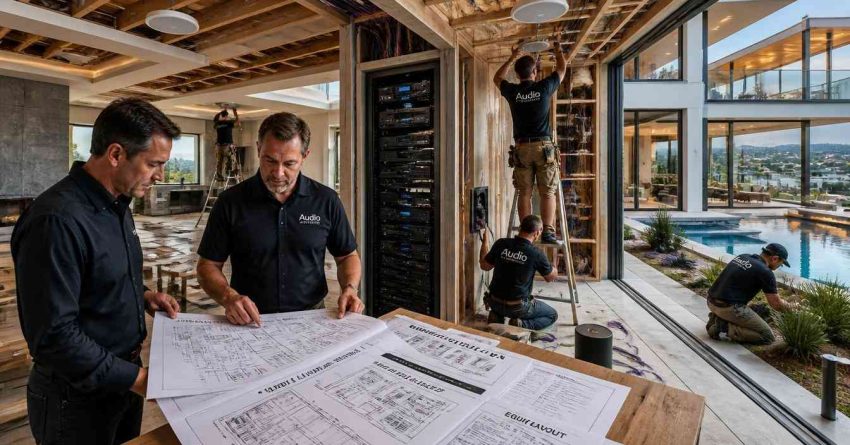
Coordinating electrical, plumbing, HVAC, and ventilation work across multiple smart appliance upgrades is complex. Each trade has its own scheduling requirements, permit timelines, and inspection steps. Attempting to sequence this independently often results in delays, redundant service calls, and appliances installed before the infrastructure is actually ready.
A professional home services team evaluates your entire property in a single assessment — identifying which systems need upgrading, in what order, and what permits are required. This prevents the common problem of scheduling an appliance installation only to discover on delivery day that the circuit, the gas line, or the vent run is not ready.
From compatibility checks to final hookups, coordinating multiple smart appliance upgrades across a single property is a job that benefits from professional oversight — our appliance installation planning service maps every dependency before a single device is ordered. Smaller preparatory tasks — mounting brackets, patching access holes, or securing conduit runs — are handled efficiently through handyman pre-installation help so your licensed specialists can focus on the technical work.
Conclusion
Smart appliances deliver the most value when the infrastructure behind them is ready from day one. Thermostats, water heaters, kitchen appliances, washers and dryers, security systems, lighting, and HVAC systems each carry specific pre-installation requirements that determine whether the upgrade succeeds or stalls.
Addressing wiring, plumbing, ventilation, and panel capacity before devices arrive eliminates delays and protects the investment in every smart upgrade you make.
Mr. Local Services connects homeowners and property managers with the skilled professionals needed to prepare every system correctly — contact us today to schedule a pre-installation assessment and get your smart appliance upgrades done right.
Frequently Asked Questions
Do smart thermostats work without a C-wire?
Some smart thermostats include a power adapter that eliminates the need for a C-wire, but performance is often reduced. A proper C-wire installation ensures consistent power delivery and full feature availability without battery drain or connectivity issues.
How much electrical work is typically needed before installing smart kitchen appliances?
Most smart kitchen appliance installations require at least one new dedicated circuit. Older kitchens with shared circuits across multiple appliances almost always need panel evaluation and new wiring runs before smart appliances can be safely connected.
Can I install a smart security system without running new wires?
Wireless smart security systems avoid most wiring requirements, but hardwired systems offer greater reliability and are worth the upfront infrastructure investment for homeowners who want a system that functions independently of Wi-Fi and battery life.
Why does dryer vent condition matter for a smart dryer?
Smart dryers use moisture sensors to detect when clothes are dry. A blocked or restricted vent reduces airflow inside the drum, causing the sensor to misread humidity levels. Cleaning the vent before installation ensures the sensor operates accurately from the first cycle.
How far in advance should I schedule pre-installation work for smart appliances?
The timeline varies by appliance. Smart thermostats typically need 2–4 weeks of lead time for wiring work. Smart water heaters and HVAC systems often require 4–8 weeks to account for permits, inspections, and infrastructure upgrades before the unit can be installed.