Building a home from the ground up takes an average of 7 to 12 months for a custom single-family home in the USA, with each phase following a specific sequence that cannot be skipped or reordered. Understanding exactly what happens at each stage helps homeowners, landlords, and property managers set realistic expectations, coordinate contractors, and avoid the costly delays that derail most builds.
Knowing the timeline before breaking ground puts you in control of every decision that follows. This guide walks through every phase of the home build process in order.
You will find each construction phase explained clearly — what work happens, how long it takes, and what must be completed before the next phase can begin.
What Is the Average Home Build Timeline?
The average home build timeline in the USA runs between 7 and 12 months from permit approval to certificate of occupancy. Production homes built by large developers can be completed in as few as 4 to 6 months. Custom homes on unique lots with complex designs routinely take 12 to 18 months or longer.
The U.S. Census Bureau’s Survey of Construction consistently tracks new single-family home completion times, providing the most reliable national benchmark for build duration across regions and home types.
The timeline is not a single continuous flow. It is a sequence of dependent phases — each one unlocking the next. A delay in one phase pushes every phase that follows.
Key Factors That Affect Build Duration
Several variables determine where your build falls within the average range. Lot conditions, local permit office processing times, contractor availability, weather, and material lead times all compress or extend the schedule. Custom design complexity, the number of change orders issued during construction, and the responsiveness of your general contractor to inspection scheduling also play significant roles. Understanding these variables before you start helps you build a realistic schedule rather than an optimistic one.
Phase 1: Pre-Construction and Planning (Weeks 1–8)
Pre-construction is the longest administrative phase of any build. No physical work happens on the lot during this period, but every decision made here determines the cost, timeline, and quality of everything that follows.
Site Selection, Surveys, and Soil Testing
Before a permit application can be filed, the lot must be surveyed to establish legal boundaries, easements, and setbacks. A soil test — also called a geotechnical investigation — determines the bearing capacity of the ground and informs foundation design. Sites with poor soil conditions, high water tables, or significant slope require additional engineering work that adds time and cost before construction can begin.
Permits, Approvals, and Design Finalization
Permit processing is the most unpredictable part of the pre-construction phase. Simple permits in rural jurisdictions may be approved in two to three weeks. Complex custom builds in urban areas with design review boards can take eight to twelve weeks or longer. Architectural drawings, structural engineering plans, energy compliance documentation, and site plans must all be submitted and approved before any ground is broken.
The pre-construction phase is the foundation of every successful build — our complete home construction process guide covers every decision point from lot selection through move-in, helping you understand how each phase connects to the next.
Phase 2: Site Preparation and Foundation (Weeks 9–14)
Once permits are in hand, physical construction begins. Site preparation and foundation work are the first visible signs of progress on any build.
Land Clearing and Grading
The lot is cleared of trees, brush, and debris. Topsoil is stripped and stockpiled for later use in landscaping. The site is then graded — shaped and leveled — to direct water away from the future structure and to establish the correct elevation for the foundation. Grading must be completed and inspected before excavation begins.
Foundation Types and Pour Timeline
The three most common foundation types in the USA are slab-on-grade, crawl space, and full basement. Slab foundations are the fastest — excavation, form setting, rebar placement, and concrete pour can be completed in one to two weeks in favorable conditions. Crawl space and basement foundations require deeper excavation, waterproofing, drainage installation, and longer cure times, typically adding two to four weeks to this phase. Concrete requires a minimum cure period before framing can begin — typically seven days for standard mixes, though full structural strength develops over 28 days.
Phase 3: Framing and Structural Work (Weeks 15–20)
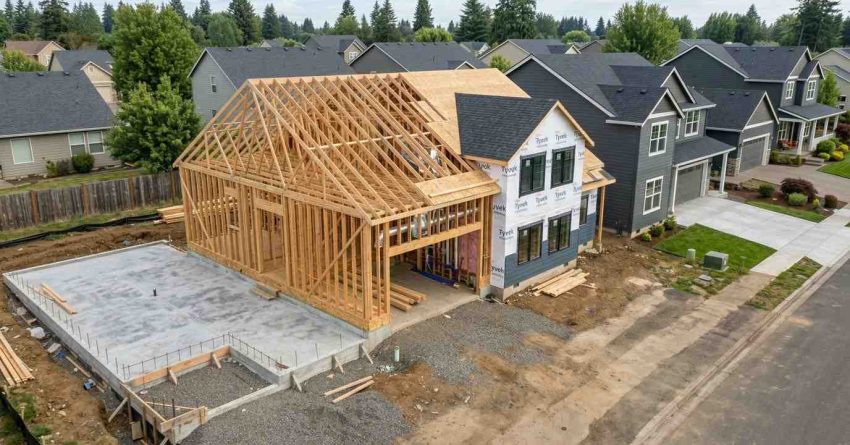
Framing is the phase where the home takes its recognizable shape. It is also one of the fastest phases when weather cooperates and materials are on-site.
Wall Framing, Roof Trusses, and Sheathing
Floor systems, exterior walls, interior load-bearing walls, and roof trusses are assembled in sequence. Exterior sheathing — typically oriented strand board (OSB) or plywood — is applied to walls and the roof deck to provide structural rigidity and a nailing surface for cladding and roofing materials. A well-organized framing crew can frame a standard single-family home in two to four weeks.
Windows and Exterior Doors Rough-In
Window and exterior door openings are framed during wall construction. In many cases, windows and exterior doors are set immediately after framing to weatherproof the structure before mechanical rough-ins begin. Our window installation professionals ensure every unit is properly flashed, sealed, and operating correctly before final inspection. Our exterior door installation team handles pre-hung units, hardware, weatherstripping, and threshold sealing to meet both code and energy efficiency standards.
Phase 4: Mechanical Rough-Ins (Weeks 21–28)
Mechanical rough-ins are the most inspection-intensive phase of the build. Plumbing, electrical, and HVAC systems are installed inside the wall cavities and floor systems before drywall closes everything in. Each trade must pass its own rough-in inspection before the next phase can proceed.
Plumbing Rough-In
Supply lines, drain lines, vent stacks, and waste pipes are run through the framed structure. Fixture locations — sinks, toilets, showers, tubs, dishwashers, and hose bibs — are stubbed out at the correct heights and positions. Rough-in plumbing sets the hidden infrastructure your home depends on for decades — if you need a professional to handle plumbing rough-in work or inspect existing systems, our licensed plumbers are equipped to manage every stage of the installation.
Electrical Rough-In
Electrical panels are set, circuits are run, and outlet, switch, and fixture boxes are positioned throughout the structure. Electrical rough-in work must meet local code requirements before walls are closed — our team provides residential electrical rough-in services and inspections to ensure every circuit, panel, and outlet placement is safe, compliant, and ready for finish work.
HVAC Installation and Ductwork
Supply and return ductwork is run through the framed cavities. Air handler units, furnaces, and condensing units are positioned and connected. Ductwork and HVAC equipment installed during rough-in determines your home’s comfort and energy efficiency for years to come — explore our HVAC installation services to understand what a properly sized and installed system looks like at this stage.
Phase 5: Insulation, Drywall, and Interior Work (Weeks 29–38)
After all rough-in inspections pass, the walls are ready to be closed. This phase transforms the framed shell into a finished interior.
Insulation and Vapor Barriers
Batt insulation, blown-in insulation, or spray foam is installed in exterior walls, ceilings, and floors depending on the climate zone and energy code requirements. Vapor barriers are installed where required by local code. Insulation must pass inspection before drywall can be hung.
Drywall Hanging, Taping, and Finishing
Drywall panels are hung, screwed, and taped. Joint compound is applied in multiple coats — typically three — with sanding between each coat. Once insulation passes inspection, drywall transforms the framed shell into finished living spaces — our drywall and ceiling work professionals handle hanging, taping, mudding, and texturing to deliver smooth, inspection-ready walls throughout your home. Drywall finishing is one of the most time-sensitive phases because each compound coat requires drying time before the next can be applied.
Phase 6: Finishes, Fixtures, and Final Systems (Weeks 39–48)
The finish phase is where the home begins to look and feel like a livable space. It is also the phase with the most concurrent trades working simultaneously, which requires careful scheduling to avoid conflicts.
Flooring, Painting, and Trim Carpentry
Interior painting follows drywall finishing and precedes trim and fixture installation — our interior painting services team works within new construction schedules to deliver clean, consistent coverage on every wall and ceiling surface. Flooring is one of the last major installations before move-in and one of the most visible — our flooring installation services cover hardwood, tile, vinyl plank, and carpet to match every design preference and budget. Trim carpentry and built-in cabinetry are among the final structural elements installed before fixtures and appliances — our trim carpentry and cabinetry specialists bring precision craftsmanship to baseboards, crown molding, and custom millwork.
Cabinetry, Countertops, and Appliances
Kitchen and bathroom cabinetry is installed after flooring in most sequences. Countertops — stone, quartz, laminate, or solid surface — are templated after cabinets are set and typically require a one to two week fabrication lead time. Appliances are delivered and set in position but are not connected until plumbing and electrical finish work is complete.
Electrical Fixtures, Plumbing Fixtures, and HVAC Commissioning
Finish electrical work includes installing light fixtures, outlets, switches, and the main panel cover. Finish plumbing includes setting toilets, sinks, faucets, and shower fixtures. HVAC commissioning involves starting the system, balancing airflow, and verifying that all zones heat and cool to specification. Each trade returns for a final inspection at this stage.
Phase 7: Exterior Work, Landscaping, and Final Inspections (Weeks 49–52+)
Exterior work often runs concurrently with interior finish phases, but final grading, landscaping, and site cleanup are typically the last items completed before the certificate of occupancy is issued.
Roofing, Siding, and Exterior Finishing
Roofing is typically completed during the exterior phase after framing and sheathing are done — our roofing installation team installs shingles, flashing, and underlayment to manufacturer specifications and local building code. Siding, stucco, brick, or stone veneer is applied to exterior walls. Gutters, downspouts, and exterior trim complete the building envelope.
Final Walkthrough, Punch List, and Certificate of Occupancy
The final walkthrough is a systematic inspection of every system and finish in the home. Items that do not meet specification are documented on a punch list and corrected before the certificate of occupancy is issued. The certificate of occupancy is the legal document confirming the home meets all applicable building codes and is safe for habitation. No one can legally occupy the home until this document is issued.
Common Delays and How to Avoid Them
The most common sources of delay in residential construction are permit processing backlogs, material delivery lead times, subcontractor scheduling conflicts, failed inspections, and weather. Change orders — modifications to the original design made after construction begins — are the single most controllable source of delay and cost overrun. Finalizing all design decisions before breaking ground eliminates the majority of change order risk.
Punch list items and minor repairs discovered during the final walkthrough are common sources of closing delays — our handyman repair services team resolves these quickly so your certificate of occupancy stays on schedule. Final grading and landscaping are frequently the last items completed before occupancy approval — our landscaping and grading professionals handle drainage correction, lawn installation, and site cleanup to satisfy final inspection requirements.
If you need a dedicated covering the full permit process, our new home construction permit process resource will walk through every document, timeline, and jurisdiction-specific requirement you need to know before filing. For a detailed breakdown of what each phase costs, our home building cost breakdown by phase guide provides current estimates across all seven construction phases.
Home Build Timeline at a Glance
| Phase | Description | Typical Duration |
| Phase 1 | Pre-Construction and Planning | Weeks 1–8 |
| Phase 2 | Site Preparation and Foundation | Weeks 9–14 |
| Phase 3 | Framing and Structural Work | Weeks 15–20 |
| Phase 4 | Mechanical Rough-Ins | Weeks 21–28 |
| Phase 5 | Insulation, Drywall, and Interior Work | Weeks 29–38 |
| Phase 6 | Finishes, Fixtures, and Final Systems | Weeks 39–48 |
| Phase 7 | Exterior Work, Landscaping, and Final Inspections | Weeks 49–52+ |
| Total | Average Custom Home Build | 7–12 months |
Conclusion
Building a home phase-by-phase follows a fixed sequence — each stage depends on the one before it, and understanding that sequence is what separates a smooth build from a costly one.
Every phase from foundation to final inspection involves licensed trades, code-required inspections, and precise scheduling that determines whether your move-in date holds or slips.
At Mr. Local Services, our professionals cover every phase of the build — from rough-in plumbing and electrical to drywall, flooring, and final exterior work — so your project stays on schedule from start to finish.
Frequently Asked Questions
How long does it take to build a house from start to finish?
The average custom single-family home in the USA takes 7 to 12 months to build from permit approval to certificate of occupancy. Production homes built by large developers can be completed in 4 to 6 months, while complex custom builds may take 12 to 18 months or longer depending on design, site conditions, and local permit timelines.
What is the most time-consuming phase of building a house?
The finish phase — covering flooring, painting, trim carpentry, cabinetry, and fixture installation — is typically the longest phase because it involves the most concurrent trades working simultaneously. The pre-construction and permitting phase is the most unpredictable because processing times vary significantly by jurisdiction.
Can construction phases overlap?
Yes. Exterior work such as roofing and siding often runs concurrently with interior finish phases. However, mechanical rough-ins — plumbing, electrical, and HVAC — must be completed and inspected before insulation and drywall can begin. The sequence of inspections is fixed by building code and cannot be reordered.
What causes the most delays in new home construction?
The most common causes of delay are permit processing backlogs, material delivery lead times, subcontractor scheduling conflicts, failed inspections, and weather. Change orders — design modifications made after construction begins — are the most controllable source of delay and are best avoided by finalizing all design decisions before breaking ground.
How long does the foundation phase take?
A slab-on-grade foundation typically takes one to two weeks to excavate, form, pour, and cure sufficiently for framing to begin. Crawl space and full basement foundations require deeper excavation, waterproofing, and drainage work, adding two to four weeks. Concrete reaches full structural strength over 28 days, though framing typically begins after a minimum seven-day cure period.
What happens during mechanical rough-ins?
Mechanical rough-ins involve installing plumbing supply and drain lines, electrical circuits and wiring, and HVAC ductwork and equipment inside the wall cavities and floor systems before drywall is applied. Each trade — plumbing, electrical, and HVAC — must pass a separate rough-in inspection before the next phase can proceed.
What is a punch list in new construction?
A punch list is a documented list of items identified during the final walkthrough that do not meet the agreed specification or quality standard. Contractors are required to correct all punch list items before the certificate of occupancy is issued and before the homeowner takes possession of the property.