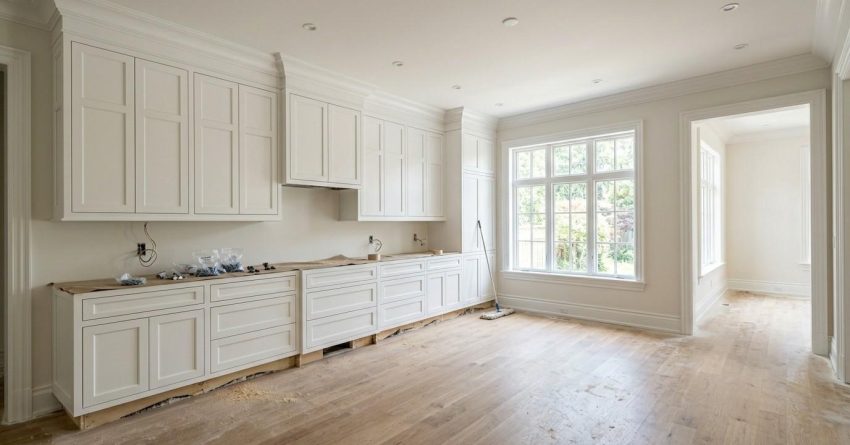
The cabinetry and trim phase is the stage of a home improvement or remodeling project where cabinets are installed, replaced, or refinished, and all interior trim work — including baseboards, crown molding, and door and window casing — is measured, cut, and secured. This phase transforms a structurally complete space into a finished, polished interior that looks intentional and functions reliably for daily use.
Skipping or rushing this phase leaves walls bare, transitions unfinished, and storage incomplete — problems that affect both livability and resale value.
This guide explains what the cabinetry and trim phase includes, when to schedule it, what materials and finishes are available, and what to expect when working with a professional service.
What the Cabinetry and Trim Phase Covers
The cabinetry and trim phase encompasses two distinct but closely related scopes of work: cabinet installation and trim carpentry. Both happen near the end of a construction or remodeling project, after drywall is finished and before final painting begins.
Cabinet work includes installing upper and lower cabinets in kitchens, bathrooms, laundry rooms, and utility spaces. It also includes replacing outdated cabinet boxes, refacing existing cabinet fronts, and installing new doors, drawer fronts, and hardware. Trim work covers every piece of finish material that covers gaps, frames openings, and creates visual transitions between walls, floors, ceilings, and fixtures.
Cabinetry and trim work is one of the most detail-driven phases within the broader scope of carpentry services, which covers the full range of structural and finish woodwork that keeps residential and commercial properties functional and well-crafted. Getting this phase right requires precise measurements, clean cuts, and careful sequencing — because errors in trim are visible and difficult to hide once paint goes on.
Cabinet Installation and Replacement
Cabinet installation begins with a layout plan that accounts for plumbing rough-ins, electrical outlets, appliance clearances, and ceiling height. Upper cabinets are typically hung first, followed by base cabinets, which are leveled and shimmed to account for uneven floors. Once boxes are secured, doors, drawer fronts, and hardware are installed and adjusted for alignment.
Cabinet replacement follows the same sequence but adds a demolition step. Old cabinets are removed carefully to avoid damaging walls, plumbing, or electrical components behind them. In many cases, homeowners choose to reface rather than replace — keeping the existing cabinet boxes and installing new doors, drawer fronts, and veneer over the exposed surfaces. This approach costs significantly less than full replacement and produces a comparable visual result when the existing boxes are structurally sound.
Trim and Molding Installation
Trim installation begins after cabinets are set and walls are ready. Each piece of trim is measured individually, cut at precise angles using a miter saw, and secured with finish nails or adhesive. Gaps between trim and wall surfaces are filled with caulk before painting to create a seamless appearance.
The most common trim types installed during this phase include baseboards along the floor-wall junction, crown molding at the ceiling-wall junction, door casing around interior door frames, window casing around window openings, and chair rail or wainscoting on accent walls. Each type requires a different installation technique and serves a different functional and aesthetic purpose.
When to Schedule Cabinetry and Trim Work
Timing the cabinetry and trim phase correctly prevents rework and keeps a project on schedule. This phase always follows drywall finishing and priming but precedes final painting. Installing trim before walls are primed leads to adhesion problems at caulk lines. Installing trim after final paint creates touch-up work that rarely matches perfectly.
New Construction and Remodeling Timelines
In new construction, the cabinetry and trim phase typically begins four to six weeks before a project’s completion date. Cabinets are delivered and staged on-site before installation begins, and trim materials are acclimated to the home’s interior humidity for at least 48 hours before cutting to prevent warping after installation.
In remodeling projects, the timeline depends on the scope. A kitchen remodel that includes new cabinets, countertops, and appliances requires careful coordination between the cabinet installer, countertop fabricator, and plumber. Trim work in a remodel is usually the last carpentry task before the painter returns for final coats.
Repair and Refresh Scenarios
Not every cabinetry and trim project is part of a full remodel. Homeowners frequently schedule this work as a standalone service to address specific problems: a cabinet door that no longer closes properly, baseboards damaged by water or impact, trim that has separated from the wall, or crown molding that was never installed in an older home.
Refresh projects — where existing trim is repaired, re-caulked, and repainted without replacement — are a cost-effective way to improve the appearance of a space without a full renovation. These projects are typically completed in one to two days and require minimal disruption to the household.
Types of Trim Work Included in This Phase
Trim is a broad category that includes any finish material applied to cover structural gaps, frame openings, or add decorative detail to a room. Understanding the specific types helps homeowners and property managers identify exactly what their space needs and communicate that clearly to a service provider.
Baseboards, Crown Molding, and Casing
Baseboards run along the bottom of every interior wall, covering the gap between the finished floor and the drywall. They protect walls from scuffs and vacuum damage and give rooms a clean, finished appearance. Standard baseboard heights range from 3 to 5.5 inches, with taller profiles used in rooms with higher ceilings.
Crown molding runs along the top of walls where they meet the ceiling. It adds architectural character to a room and is particularly common in living rooms, dining rooms, master bedrooms, and formal spaces. Crown molding installation is more technically demanding than baseboard work because it requires compound miter cuts that account for both the wall angle and the ceiling angle simultaneously.
Door casing frames the interior side of every door opening. It covers the gap between the door frame and the surrounding drywall and is one of the most visible trim elements in any room. Window casing serves the same function around window openings and is typically installed as a set of four pieces — two side casings, a head casing across the top, and a stool and apron assembly at the bottom.
Properly fitted casing around window frames is both a functional and aesthetic requirement — if your windows need frame repair or replacement alongside trim work, our window trim installation explains how both services work together for a seamless finish.
Door and Window Trim Finishing
Door and window trim finishing is the final step that makes an opening look intentional rather than structural. Trim pieces are cut to fit the exact dimensions of each opening, mitered at the corners, secured with finish nails, and caulked at every seam. The quality of this work is immediately visible — gaps, uneven reveals, or poorly mitered corners are difficult to overlook once a room is painted.
Trim installation around door frames connects directly to the final appearance and weatherproofing of your entryways — our door finishing services cover the complete scope of door hardware, frame repair, and threshold work that complements a professional trim installation.
Cabinet Materials and Finish Options
Cabinet selection involves choosing a box construction material, a door style, and a surface finish. Each choice affects durability, appearance, and cost, and the right combination depends on the room’s function, moisture exposure, and the homeowner’s budget.
Wood, MDF, and Painted Finishes
Solid wood cabinets offer the highest durability and the most natural appearance. Species commonly used for cabinetry include maple, oak, cherry, and birch. Solid wood accepts stain well, which makes it the preferred choice when a natural wood grain appearance is the goal. It is also the most expensive option and is more susceptible to expansion and contraction in high-humidity environments like bathrooms.
Medium-density fiberboard, or MDF, is an engineered wood product made from compressed wood fibers and resin. It is dimensionally stable, meaning it does not expand or contract with humidity changes the way solid wood does. MDF is the preferred substrate for painted cabinet finishes because it produces a smoother, more uniform surface than solid wood. It is also less expensive than solid wood and is widely used in production cabinetry.
Plywood cabinet boxes offer a middle ground — more moisture-resistant than MDF, more stable than solid wood, and strong enough to hold heavy loads without sagging over time. Most quality cabinet lines use plywood boxes with solid wood or MDF door fronts.
Once cabinets are installed or refinished, the final painted or stained finish determines the long-term durability and appearance of the space — our cabinet painting services outlines the preparation, primer, and topcoat process that protects cabinetry for years.
How the Cabinetry and Trim Phase Adds Property Value
Cabinetry and trim work is consistently cited by real estate professionals as one of the highest-return interior improvements a homeowner can make before listing a property. Updated kitchen cabinets, in particular, have a direct impact on buyer perception and offer price. Trim work — especially in older homes where baseboards are damaged, missing, or outdated — signals to buyers that a property has been well maintained.
Beyond resale value, cabinetry and trim improvements affect daily functionality. Well-organized cabinet storage reduces clutter, improves workflow in kitchens and bathrooms, and makes spaces easier to clean and maintain. Trim work that is properly installed and sealed also reduces drafts, prevents moisture infiltration at wall-floor junctions, and protects drywall edges from damage.
Cabinetry and trim upgrades deliver the highest return when they are part of a coordinated renovation plan — our home remodeling services covers how kitchen, bathroom, and living space projects are scoped, sequenced, and completed to maximize property value.
What to Expect from a Professional Cabinetry and Trim Service
Working with a professional service for cabinetry and trim installation means receiving a scoped estimate, a clear timeline, and workmanship that meets finish carpentry standards. A professional installer will assess the existing conditions of the space before beginning work, identify any issues — such as out-of-level floors, damaged wall surfaces, or plumbing conflicts — and address them before installation begins.
Scope, Timeline, and Outcomes
A typical cabinet installation project for a standard kitchen takes two to four days, depending on the number of cabinets, the complexity of the layout, and whether countertop installation is included in the same scope. Trim installation for a single room typically takes four to eight hours. Whole-house trim installation — covering all baseboards, door casings, and window casings — generally takes two to four days for an average-sized home.
Outcomes from a professional installation include cabinets that are level, plumb, and securely anchored to wall studs; doors and drawers that open and close smoothly; trim that is tightly fitted, properly caulked, and ready for paint; and a finished space that looks clean, intentional, and well-crafted.
For smaller trim repairs, touch-ups, or single-cabinet fixes that do not require a full installation project, our handyman repair services explains the types of tasks a skilled handyman can handle quickly and affordably.
Trim installation often follows drywall finishing — if your project involves patching walls or repairing ceilings before trim goes up, our drywall and ceiling work covers the preparation steps that ensure a clean, level surface for every trim piece.
If you are planning a cabinet refacing vs. replacement decision and need guidance on which approach fits your budget and goals, a dedicated resource covering both options in full detail will help you make the right call before committing to a scope of work.
Conclusion
The cabinetry and trim phase brings a property’s interior to its finished state — covering structural gaps, organizing storage, and adding the architectural detail that makes a space feel complete. From cabinet selection and installation to baseboard, crown molding, and door casing work, every element in this phase contributes to both the function and the long-term value of the property.
Getting this phase right requires precise sequencing, skilled installation, and the right materials for each application — decisions that affect how a space looks, performs, and holds up over time.
At Mr. Local Services, our skilled professionals handle every aspect of the cabinetry and trim phase with the workmanship and attention to detail your property deserves — contact us today to schedule an assessment and get your project moving.
Frequently Asked Questions
What is included in the cabinetry and trim phase?
The cabinetry and trim phase includes cabinet installation or replacement, baseboard installation, crown molding, door casing, and window casing. It covers all finish carpentry work that completes a room’s interior after drywall and before final painting.
How long does the cabinetry and trim phase take?
A standard kitchen cabinet installation takes two to four days. Trim installation for a single room takes four to eight hours. Whole-house trim work for an average-sized home typically takes two to four days depending on the number of rooms and openings.
Can trim work be done without a full remodel?
Yes. Trim repair, replacement, and installation are commonly scheduled as standalone services. Damaged baseboards, missing door casing, or uninstalled crown molding can all be addressed independently without requiring a full renovation project.
What type of trim is best for kitchens and bathrooms?
Moisture-resistant materials such as MDF with a sealed paint finish or PVC trim are recommended for kitchens and bathrooms. These materials resist swelling and warping in high-humidity environments better than untreated solid wood profiles.
How do I know if my cabinets need replacement or repair?
Cabinets that have structurally sound boxes but outdated or damaged doors are good candidates for refacing or door replacement. Cabinets with water-damaged boxes, failing joints, or significant structural deterioration typically require full replacement to restore function and appearance.
Does cabinetry installation require permits?
Most standard cabinet installations do not require permits because they do not involve structural changes, plumbing, or electrical work. However, if a cabinet project includes moving plumbing lines or adding electrical outlets, those components will require permits in most jurisdictions.
How does trim work affect home resale value?
Updated, well-installed trim signals to buyers that a home has been properly maintained and finished. Real estate professionals consistently identify trim condition as a factor in buyer perception, particularly in older homes where trim is damaged, missing, or visually outdated.