Park model homes in desert climates face some of the most demanding heat conditions of any residential property type — with summer temperatures regularly exceeding 110°F and direct sun exposure that can push interior temperatures dangerously high without proper cooling and shade systems in place.
Managing heat in a compact structure requires a layered approach. Without the right AC unit, adequate shade, and supporting insulation, even a well-built park model becomes uncomfortable and costly to maintain during peak desert months.
This guide covers every key strategy for keeping a desert park model cool — from selecting the right AC system and maintaining it properly, to shade structures, window upgrades, and energy efficiency improvements that reduce strain on your cooling equipment.
How Desert Heat Affects a Park Model Home
Desert climates create a specific set of challenges for park model homes that differ significantly from what owners in temperate regions experience. The combination of extreme ambient temperatures, intense solar radiation, and low humidity accelerates wear on both structural components and mechanical systems.
Temperature Extremes and Structural Stress
When outdoor temperatures climb above 100°F for extended periods, the thermal mass of a park model’s walls, roof, and floor absorbs and retains heat throughout the day. Unlike larger homes with more interior volume to buffer temperature swings, a park model’s compact footprint means interior temperatures can rise rapidly when cooling systems are undersized or poorly maintained. Metal roofing and siding — common in park model construction — conduct heat efficiently, which compounds the problem during peak afternoon hours.
How Sun Exposure Degrades Materials Over Time
Prolonged UV exposure in desert environments breaks down exterior sealants, caulking, roofing membranes, and window glazing faster than in cooler climates. Fading, cracking, and delamination of exterior surfaces are common within just a few seasons without protective measures. This degradation is not only cosmetic — compromised seals allow heat infiltration that directly increases the load on your AC system. Understanding how desert heat stresses a park model is the first step toward choosing the right solution — our HVAC service options covers the full range of cooling and ventilation services available for residential properties of every size.
Choosing the Right AC System for a Desert Park Model
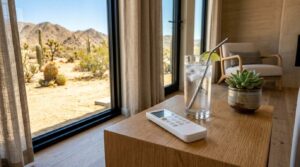
Selecting an appropriately sized and configured air conditioning system is the single most important decision a desert park model owner makes for long-term comfort and energy cost management. The wrong system — whether undersized, oversized, or poorly matched to the structure — will struggle to maintain comfortable temperatures and will fail prematurely under desert operating conditions.
Mini-Split vs. Central Air for Small Footprints
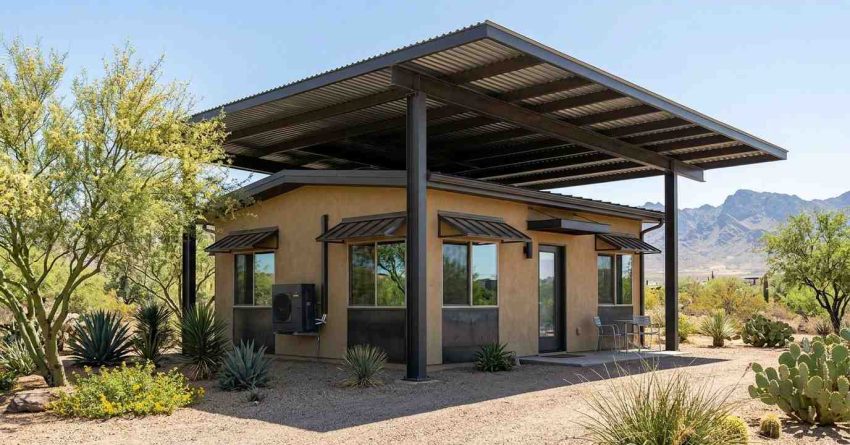
Mini-split systems have become the preferred cooling solution for park model homes in desert climates for several practical reasons. They require no ductwork, which eliminates the significant energy losses that occur when conditioned air travels through ducts exposed to extreme attic or crawlspace temperatures. A single-zone mini-split can cool a standard park model efficiently, while multi-zone configurations allow owners to manage temperature independently in sleeping and living areas. Central air systems, while familiar to many homeowners, are rarely cost-effective in park models due to the difficulty of routing and insulating ductwork within a compact structure. Park models share many of the same space constraints and efficiency challenges as other compact dwellings, and our guide to tiny home cooling systems explores how these principles apply across small-footprint properties.
Sizing Your AC Unit for Desert Conditions
Standard AC sizing calculations — typically based on square footage — underestimate the cooling load in desert climates. Factors including roof pitch and material, window area and orientation, insulation quality, and local design temperature must all be factored into a proper Manual J load calculation. A unit sized for a moderate climate will run continuously and still fail to maintain target temperatures during peak desert heat. Most park models in desert regions require between 9,000 and 18,000 BTUs of cooling capacity, but the correct figure depends on the specific structure and site conditions. Always have a qualified HVAC technician perform a load calculation before purchasing or replacing a system.
AC Maintenance Essentials in a Hot Climate
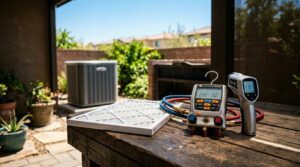
An air conditioning system working in a desert climate operates under far greater stress than the same system in a milder region. Higher ambient temperatures force the compressor to work harder, condenser coils accumulate dust and debris more quickly, and filters clog faster due to the fine particulate matter common in arid environments. A maintenance schedule appropriate for a desert climate is more frequent than standard manufacturer recommendations.
Filter Changes and Coil Cleaning Schedules
In a desert climate, AC filters should be inspected monthly and replaced every four to six weeks during peak cooling season — significantly more often than the standard 90-day recommendation. Clogged filters restrict airflow, reduce system efficiency, and force the compressor to work harder, shortening its service life. Condenser coils on the outdoor unit accumulate dust, pollen, and desert debris that reduce heat transfer efficiency. Cleaning the condenser coils at the start of the cooling season and again mid-season is standard practice for desert installations. Evaporator coils inside the unit should be inspected annually for dust buildup and microbial growth, which is less common in low-humidity desert environments but still possible.
When to Call a Professional for AC Service
Certain maintenance tasks require professional equipment and expertise. Refrigerant level checks and recharging, electrical connection inspections, compressor diagnostics, and full system performance testing should be performed by a licensed HVAC technician at least once per year — ideally before the cooling season begins. Signs that immediate professional service is needed include reduced airflow from vents, ice formation on the indoor unit, unusual noises during operation, or a system that runs continuously without reaching the set temperature. Keeping your system running efficiently through a desert summer requires consistent professional attention — our AC maintenance services connect you with skilled technicians who handle filter replacements, coil cleaning, and full system inspections.
Shade Solutions That Actually Work in the Desert
Shade is not a luxury in a desert park model environment — it is a functional component of your cooling strategy. Every degree of reduction in the temperature of surfaces exposed to direct sun translates directly into reduced AC load and lower energy costs. The most effective shade strategies address the roof, west and south-facing walls, windows, and the outdoor condenser unit.
Awnings, Carports, and Shade Structures
Retractable or fixed awnings over south and west-facing windows can reduce solar heat gain through glass by a significant margin during peak afternoon hours. Carport structures that shade the roof of the park model itself provide the greatest overall benefit, since the roof receives the most direct solar radiation throughout the day. Shade sails and pergola structures are popular in desert park model communities because they are cost-effective, relatively easy to install, and can be positioned to shade multiple surfaces simultaneously. When selecting shade structure materials, choose fabrics and coatings rated for UV resistance in high-exposure environments — standard materials degrade quickly under intense desert sun.
For owners considering new shade structure installation, a desert shade structures guide covering awning types, carport configurations, and material selection for high-UV environments would provide the detailed comparison needed to make the right choice.
Landscaping and Natural Shade Strategies
Mature desert-adapted trees and large shrubs positioned on the west and south sides of a park model can provide meaningful shade while requiring minimal water once established. Species such as palo verde, desert willow, and mesquite grow to heights that shade walls and windows without the maintenance demands of non-native trees. Gravel and decomposed granite ground cover around the perimeter of the home reduces reflected heat from the ground surface, which contributes to overall thermal load. Strategic planting is one of the most effective long-term shade strategies available to park model owners, and our desert landscaping solutions outlines how professional landscape services can reduce heat exposure around your property.
Insulation and Ventilation: Supporting Your AC System
Even the most capable AC system will underperform if the park model’s thermal envelope is compromised. Insulation and ventilation work together to reduce the rate at which heat enters the living space and to remove accumulated heat before it can be absorbed into interior surfaces.
Roof Vents, Radiant Barriers, and Skirting
Roof ventilation is critical in desert climates because attic and roof cavity temperatures can reach 150°F or higher on peak summer days. Ridge vents, soffit vents, and powered attic fans work together to exhaust this superheated air before it conducts through the ceiling into the living space. Radiant barriers — reflective foil materials installed on the underside of roof decking or rafters — reflect radiant heat rather than absorbing it, reducing the temperature differential between the roof cavity and the living space by a measurable amount. Skirting around the base of the park model serves a dual purpose: it blocks hot air from circulating under the floor and provides a barrier against pests and debris. Properly installed and sealed skirting with ventilation panels maintains airflow while preventing heat accumulation under the floor. Installing radiant barriers, roof vents, and skirting often requires precise fitting work in tight spaces — our handyman installation help connects you with experienced professionals who handle these upgrades efficiently and correctly.
For owners who want a comprehensive resource on this topic, a dedicated park model insulation guide covering material selection, installation methods, and R-value requirements for desert climates would address the full depth of this subject.
Window and Door Upgrades to Reduce Heat Gain
Windows and doors are the primary points of solar heat gain in any structure, and park models — with their relatively high window-to-wall ratio — are particularly vulnerable. Upgrading these components is one of the most cost-effective improvements a desert park model owner can make for long-term comfort.
Low-E Glass, Reflective Film, and Weatherstripping
Low-emissivity (Low-E) glass coatings reflect a significant portion of infrared radiation while allowing visible light to pass through, reducing solar heat gain without darkening the interior. For owners who cannot replace windows immediately, high-quality reflective window film applied to existing glass provides a meaningful reduction in heat gain at a fraction of the replacement cost. Weatherstripping on windows and doors is often overlooked but plays a critical role — gaps and worn seals allow hot exterior air to infiltrate directly into the conditioned space, forcing the AC system to work harder. Replacing or upgrading windows is one of the highest-impact changes a park model owner can make for heat control, and our window upgrade options details the full range of window services available for residential properties. Properly sealed doors are just as important as windows for blocking heat transfer, and our door weatherproofing services covers installation, sealing, and replacement options that improve both comfort and energy efficiency.
Improving comfort in a desert park model is directly connected to long-term property value. Owners who invest in efficient cooling systems, quality shade structures, and upgraded windows and doors protect their investment while reducing ongoing operating costs — making the property more livable and more attractive to future buyers or renters.
Energy Efficiency Tips for Desert Park Model Owners
Beyond the major system and structural upgrades, a set of consistent operational practices can meaningfully reduce energy consumption and extend the life of your AC system during desert summers.
Running ceiling fans in conjunction with the AC system allows the thermostat to be set two to three degrees higher without a reduction in perceived comfort, reducing compressor run time. Programmable or smart thermostats allow owners to pre-cool the home during cooler morning hours and reduce cooling demand during peak afternoon electricity pricing periods. Closing window coverings on south and west-facing windows during peak sun hours — typically between 10 a.m. and 4 p.m. — reduces solar heat gain without any equipment investment. Sealing gaps around plumbing penetrations, electrical outlets on exterior walls, and HVAC connections prevents conditioned air from escaping and hot air from infiltrating. For owners ready to make structural improvements that deliver lasting energy savings, our park model remodeling options outlines how professional remodeling services can transform comfort and efficiency in compact homes.
Conclusion
Managing heat in a desert park model requires a coordinated approach — the right AC system, consistent maintenance, effective shade, and a well-sealed thermal envelope all work together to keep the home comfortable and energy costs manageable. No single upgrade delivers the full benefit without the others in place.
Owners who address cooling, shade, and insulation as a connected system rather than isolated problems see the greatest improvement in comfort and the most significant reduction in long-term operating costs. The desert environment is demanding, but a well-maintained park model can remain a comfortable, efficient, and durable home year-round.
At Mr. Local Services, our team connects park model owners with skilled professionals across HVAC, window, door, landscaping, and handyman services — giving you one reliable source for every upgrade your desert property needs.
Frequently Asked Questions
What size AC unit does a park model home need?
Most park model homes in desert climates require between 9,000 and 18,000 BTUs of cooling capacity, but the correct size depends on the specific structure, insulation quality, window area, and local design temperatures. Always have a licensed HVAC technician perform a Manual J load calculation before purchasing a unit.
How often should I service my AC in a desert climate?
In a desert climate, AC systems should be professionally serviced at least once per year before the cooling season begins, with filter inspections monthly and replacements every four to six weeks during peak summer use. More frequent service may be needed if the system runs continuously or shows reduced performance.
What is the best shade structure for a desert park model?
Carport structures that shade the roof provide the greatest overall benefit, since the roof receives the most direct solar radiation. Awnings over south and west-facing windows are the next most effective option, and shade sails offer a flexible, cost-effective solution for shading multiple surfaces simultaneously.
Does insulation really help reduce AC costs in the desert?
Yes. Proper insulation, combined with radiant barriers and roof ventilation, significantly reduces the rate at which heat enters the living space, allowing the AC system to maintain target temperatures with less run time. Reduced run time directly lowers energy consumption and extends compressor life.
Can I add a mini-split to an existing park model home?
Yes. Mini-split systems are well-suited to existing park model homes because they require no ductwork — only a small penetration through an exterior wall for the refrigerant line and electrical connections. A qualified HVAC technician can assess the structure and recommend the appropriate unit size and configuration. For detailed guidance, a dedicated mini-split installation guide covers the full process for park model properties.
What window treatments block the most heat?
Reflective window film applied to existing glass is the most cost-effective option for reducing solar heat gain. For maximum performance, Low-E replacement glass combined with exterior shading — such as awnings or shade screens — provides the greatest reduction in heat entering through windows.
How do I protect my park model roof from desert sun damage?
Apply a reflective roof coating rated for high-UV environments every three to five years to protect roofing membranes from UV degradation. Inspect sealants around vents, skylights, and seams annually and reapply as needed. Installing a radiant barrier beneath the roof decking also reduces the thermal stress on roofing materials by lowering peak temperatures in the roof cavity.