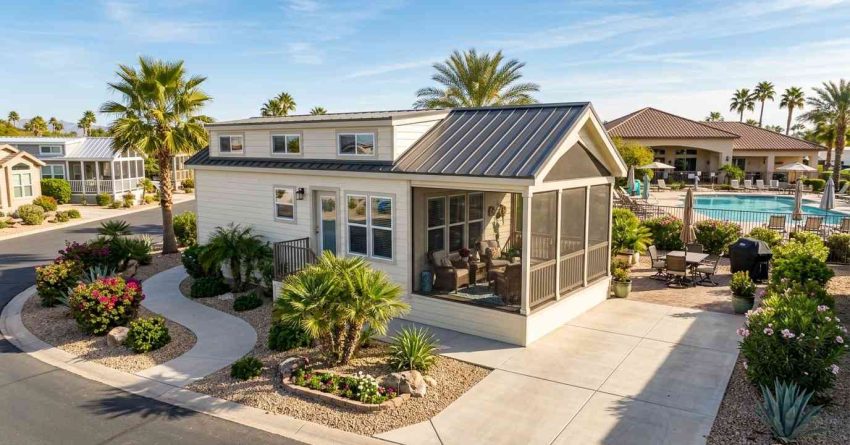
A park model for snowbirds is a compact, semi-permanent recreational home — typically 400 square feet or less — designed for seasonal use in warm-weather destinations across the USA. These homes give retirees and seasonal travelers a cost-effective alternative to renting or owning a full-size second home, with the comfort of a fixed address and the flexibility of a smaller footprint.
Millions of Americans head south each winter to escape cold climates, and park models have become one of the most practical ways to do it affordably.
This guide covers what park models offer snowbirds, where to place them, how to set them up, what maintenance they need, and which home services keep them in top shape season after season.
What Makes a Park Model Ideal for Snowbird Living?
Park models sit in a practical middle ground between a travel trailer and a permanent home. They are built on a chassis with a single axle, which means they can be transported but are not designed for frequent moving. Once placed at a resort or community, they function as a fixed seasonal residence.
For snowbirds, this setup offers real advantages. The cost of purchasing a park model is significantly lower than buying a second home — units typically range from $30,000 to $150,000 depending on size, features, and location, compared to median second-home prices that often exceed $300,000 in popular Sun Belt markets.
Size, Layout, and Seasonal Comfort Features
Most park models range from 320 to 400 square feet of interior living space, with optional loft areas, screened porches, and slide-out sections that expand usable room. Standard features in modern units include full kitchens, full bathrooms, climate control systems, and sleeping areas designed for two adults.
Manufacturers build park models specifically for seasonal comfort — insulation ratings, window placement, and ventilation systems are optimized for warm climates. Many units include covered outdoor living areas, which are central to the snowbird lifestyle in states like Florida, Arizona, and Texas.
Cost Advantages Over Traditional Seasonal Housing
Beyond the purchase price, park models carry lower ongoing costs than traditional second homes. Property taxes are typically assessed at personal property rates rather than real estate rates. Monthly lot rent at an RV resort or land-lease community generally runs between $400 and $1,200 depending on location and amenities — a fraction of what mortgage payments, HOA fees, and maintenance costs on a second home would total.
Utility costs are also lower due to the smaller footprint. Heating and cooling a 400-square-foot space costs considerably less than conditioning a full-size home, which matters for snowbirds on fixed incomes managing seasonal budgets carefully.
Where Snowbirds Park Their Models — Top Destinations in the USA
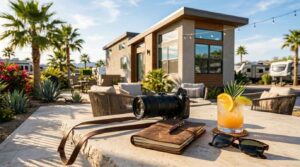
The majority of snowbird park model communities are concentrated in states with mild winters and established retirement infrastructure. Florida, Arizona, Texas, and California account for the largest share of seasonal park model placements, with communities ranging from small private parks to large resort-style developments with hundreds of units.
Sun Belt States and RV Resort Communities
Florida leads in total snowbird volume, with major concentrations in the Gulf Coast region, the Space Coast, and the central lake districts. Arizona draws large numbers to the Phoenix metro area, Tucson, and the Yuma region near the California border. Texas communities cluster around the Rio Grande Valley, particularly in cities like McAllen, Harlingen, and Mission — an area known locally as the “Winter Texan” corridor.
RV resorts that accommodate park models typically offer paved sites with full utility hookups, concrete pads, and landscaped common areas. Many operate as age-restricted communities (55+), which aligns with the primary snowbird demographic.
Amenities and Community Features That Matter
The quality of community amenities directly affects the snowbird experience. Top-rated park model resorts typically offer heated pools, fitness centers, clubhouses, organized social activities, on-site laundry, and gated security. Some larger communities include golf courses, pickleball courts, and on-site dining.
Proximity to medical facilities, grocery stores, and airports also ranks high among snowbird priorities — particularly for those managing ongoing health needs or traveling back and forth multiple times per season.
Setting Up a Park Model Home for the Season
Arriving at your park model after months away requires more than unlocking the door. Proper setup at the start of each season protects the home, ensures safety, and makes the space livable from day one.
Park models belong to the broader world of tiny home living — our complete guide to tiny home living covers everything from zoning laws and financing to the full range of compact housing options available across the USA.
Utility Hookups, Permits, and Site Preparation
Park models connect to resort or community utility systems through standard hookups — 30- or 50-amp electrical service, water supply lines, and sewer connections. Most established communities handle the infrastructure, but owners are responsible for ensuring their unit’s connections are in good working order at the start of each season.
Permits vary by state and community. Some jurisdictions classify park models as recreational vehicles, while others treat them as manufactured housing — a distinction that affects what permits are required for additions like decks, awnings, or enclosed porches. Checking local requirements before making any structural additions prevents costly compliance issues.
Interior Customization and Comfort Upgrades
Many snowbirds personalize their park models over time to improve comfort and functionality. Common upgrades include replacing standard mattresses with higher-quality options, adding ceiling fans, upgrading kitchen appliances to full-size units where space allows, and installing additional storage solutions.
Window treatments, area rugs, and outdoor furniture complete the seasonal home feel. Some owners invest in smart home devices — programmable thermostats, remote-access security cameras, and leak detection sensors — that allow them to monitor the property remotely during the off-season.
Maintaining a Park Model Home Year-Round
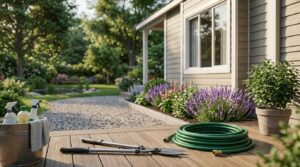
A park model left unattended for six or more months faces real risks — moisture intrusion, pest activity, mechanical failures, and weather damage can all occur while owners are away. A structured maintenance approach protects the investment and ensures the home is ready when the season begins.
Keeping a park model in top condition between seasons often requires reliable handyman services — from fixing minor structural issues to replacing worn fixtures before your next arrival.
Seasonal Maintenance Checklist Before Arrival
Before settling in for the season, a thorough inspection covers the following areas: roof condition and sealant integrity, window and door seals, HVAC filter replacement and system testing, water heater function, plumbing line integrity, electrical panel and outlet testing, and pest evidence checks throughout the interior and crawl space.
Many snowbirds hire local service providers to perform a pre-arrival inspection so the home is ready before they land. This approach eliminates the frustration of arriving to a problem that takes days to resolve.
Repairs and Upkeep While You’re Away
The off-season is when deferred maintenance catches up with park model owners. Roof sealants degrade, caulking around windows and doors shrinks, and mechanical systems that sit idle can develop issues. Scheduling a mid-season or end-of-season inspection — even remotely through a trusted local provider — catches small problems before they become expensive repairs.
Some resort communities offer property watch services, but these typically cover only exterior checks. For interior systems, a dedicated home services provider familiar with park model construction is the more reliable option.
Home Services Snowbirds Need for Their Park Model
Park models require the same core home services as any residential property, but the seasonal nature of occupancy and the compact construction create specific service needs that differ from a standard home.
HVAC, Plumbing, and Electrical Services
Compact spaces are especially sensitive to temperature regulation, making routine HVAC maintenance a critical part of seasonal preparation and year-round comfort. Mini-split systems and window units common in park models require filter cleaning, refrigerant checks, and coil inspections before each season begins.
A professional plumbing inspection before each season helps prevent leaks, pipe damage, and water pressure issues that are common in homes left unoccupied for months at a time. Shutoff valves, supply lines, and drain traps all warrant inspection after extended vacancy.
An electrical safety check ensures that wiring, outlets, and breaker panels in your park model meet current safety standards — especially important after extended periods without use. Rodent activity during vacancy can damage wiring insulation, making this inspection a safety priority rather than a routine formality.
Cleaning, Pest Control, and Landscaping
Arriving to a fresh, ready-to-use space starts with professional cleaning services that handle deep cleaning, sanitizing, and seasonal preparation so your park model feels like home from day one. Dust accumulation, mildew in humid climates, and general off-season buildup require more than a quick wipe-down.
Park models left vacant during off-season months are vulnerable to insect and rodent intrusion, making a scheduled pest control treatment an essential part of any snowbird’s return checklist. Ants, cockroaches, and rodents are common in warm-climate communities, and prevention is far less costly than remediation.
Maintaining curb appeal and preventing overgrowth while you’re away is easier with scheduled landscape upkeep services that keep your site tidy and compliant with community standards. Many resort communities enforce appearance standards, and an overgrown lot can result in fees or notices.
Handyman and Appliance Services On-Site
When compact appliances in a park model malfunction — whether it’s a mini-fridge, washer unit, or built-in range — fast appliance repair services restore functionality without the need for costly replacements. Park model appliances are often compact or combination units that require technicians familiar with smaller-format equipment.
General wear and tear accumulates over multiple seasons. Loose cabinet hinges, damaged screen doors, worn weatherstripping, and minor plumbing drips are all tasks that a skilled handyman can address in a single visit, keeping the home functional and comfortable throughout the season.
Finding a trusted service provider who understands the unique needs of park model homes makes seasonal transitions smoother — Mr. Local Services connects snowbirds with skilled professionals across every home service category they need, from pre-arrival inspections to end-of-season closeouts.
Buying vs. Renting a Park Model for Snowbirds
Snowbirds new to park model living often weigh whether to purchase a unit outright or rent one through a resort or private owner. Both options have merit depending on how many seasons per year the individual plans to use the space and how much flexibility they want.
Renting offers lower upfront commitment and no maintenance responsibility — ideal for first-time snowbirds testing a location or lifestyle. Purchasing builds equity, allows full personalization, and typically costs less per season over a five-to-ten-year horizon compared to annual rental rates in desirable markets.
What to Look for When Purchasing a Park Model
Inspecting a used park model before purchase requires attention to several key areas. Roof condition is the most critical — sealant failures and delamination are expensive to repair and often indicate broader moisture issues. Subfloor integrity, wall panel condition, and the age and condition of mechanical systems all factor into the true cost of ownership.
Before purchasing a park model, a thorough window inspection can reveal seal failures, drafts, and frame damage that affect both energy efficiency and long-term comfort in a compact living space. Evaluating the flooring condition of a used park model is a key step in the buying process — worn, warped, or damaged floors are one of the most common and costly issues found in pre-owned units.
Lot lease terms at the community where the unit is placed also require careful review. Month-to-month leases offer flexibility but no long-term price protection. Multi-year agreements lock in rates but may restrict resale options or require community approval for transfers.
Conclusion
Park models give snowbirds a practical, affordable path to seasonal living in warm-weather destinations — combining the comfort of a fixed home with costs well below traditional second-home ownership.
Maintaining that investment across seasons requires consistent attention to mechanical systems, structural integrity, and the specific service needs that come with compact, seasonally occupied housing.
Mr. Local Services connects park model owners with skilled professionals across every service category — from pre-season inspections and HVAC maintenance to pest control, cleaning, and appliance repair — so every season starts and ends without surprises.
Frequently Asked Questions
What is a park model home used for by snowbirds?
A park model home is a compact recreational dwelling — typically under 400 square feet — that snowbirds use as a seasonal residence in warm-weather states. It provides a fixed, comfortable base during winter months without the cost or commitment of a full-size second home.
How much does a park model cost for snowbirds?
Park model prices typically range from $30,000 to $150,000 depending on size, features, and manufacturer. Monthly lot rent at a resort community adds $400 to $1,200 per month, making total seasonal costs significantly lower than owning or renting a traditional second home in the same markets.
Do you need a permit to place a park model in an RV resort?
Permit requirements vary by state and community. Some jurisdictions classify park models as recreational vehicles, while others treat them as manufactured housing. Most established RV resorts handle site permits, but owners are responsible for permits related to additions like decks, awnings, or enclosed porches.
What maintenance does a park model need between seasons?
Key off-season maintenance includes roof sealant inspection, window and door seal checks, HVAC servicing, plumbing line inspection, electrical system testing, and pest prevention. Many snowbirds hire a local home services provider to perform a pre-arrival inspection so the home is ready before they return.
What home services do park model owners need most?
The most commonly needed services for park models include HVAC maintenance, plumbing inspections, electrical safety checks, deep cleaning, pest control, and landscaping. Appliance repair and handyman services for general wear and tear are also frequently needed across multiple seasons.
Is it better to buy or rent a park model as a snowbird?
Renting suits first-time snowbirds testing a location with no long-term commitment. Purchasing makes financial sense for those planning five or more seasons in the same community — ownership typically costs less per season over time and allows full personalization of the space.
How do snowbirds protect their park model during the off-season?
Effective off-season protection includes shutting off water supply lines, setting a minimum thermostat temperature to prevent humidity damage, scheduling pest control treatments, arranging landscape maintenance, and using remote monitoring devices like leak sensors and security cameras to catch problems early.