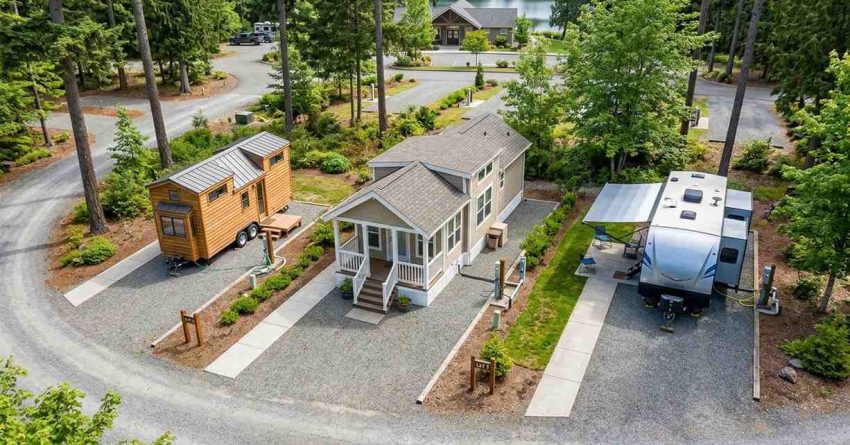
Choosing between a tiny house on wheels, a park model home, and an RV comes down to four factors: how you plan to live, where you want to be, what you can spend, and how much you want to move. Each option offers a distinct approach to simplified, flexible living — and each comes with trade-offs that matter enormously once you are actually living in the space.
This comparison matters because the wrong choice can mean zoning violations, unexpected costs, or a living situation that does not match your daily needs.
This guide breaks down all three options across size, cost, mobility, zoning, utilities, and long-term livability so you can make a clear, confident decision.
What Is a THOW, Park Model, or RV?
Before comparing them, it helps to understand exactly what each one is — because the terms are often used interchangeably, and they are not the same thing.
Tiny House on Wheels (THOW) Defined
A tiny house on wheels is a residential dwelling built on a trailer chassis, typically ranging from 100 to 400 square feet. THOWs are constructed to residential building standards, not vehicle standards, which means they are built with insulation, framing, and finishes comparable to a traditional home. They are designed for long-term or permanent living, not travel. Understanding what sets a THOW apart from other small dwellings is easier when you explore the full range of tiny home options available today — our complete tiny homes guide covers every type, from park models to custom builds, so you can compare them side by side.
Park Model Home Defined
A park model home is a factory-built unit regulated under HUD’s recreational vehicle standard (ANSI A119.5), with a maximum size of 400 square feet. Despite the “recreational vehicle” classification in federal code, park models are designed as semi-permanent or seasonal residences. They are placed on a foundation or piers, connected to utilities, and rarely moved once installed. They look and function much more like a small manufactured home than a vehicle.
Recreational Vehicle (RV) Defined
An RV is a motorized or towable vehicle built for travel and temporary accommodation. RVs are regulated as vehicles, registered with the DMV, and built to RVIA (Recreational Vehicle Industry Association) standards — which are lower than residential construction standards. Class A, B, and C motorhomes, fifth wheels, and travel trailers all fall under this category. RVs are designed for mobility first and comfort second.
Key Differences at a Glance
| Feature | THOW | Park Model | RV |
| Typical Size | 100–400 sq ft | Up to 400 sq ft | 100–450 sq ft |
| Built Standard | Residential | HUD/ANSI A119.5 | RVIA (vehicle) |
| Mobility | Towable, limited | Rarely moved | High mobility |
| Zoning | Complex, varies by state | Campgrounds, RV parks | Campgrounds, RV parks |
| Avg. Purchase Cost | $30,000–$150,000+ | $30,000–$100,000+ | $10,000–$300,000+ |
| Best For | Full-time living | Seasonal/semi-permanent | Travel and recreation |
| Financing | Personal loan, builder financing | Chattel loan, RV loan | RV loan, personal loan |
Size and Layout Comparison
THOW Size and Interior Design
Most THOWs range from 150 to 300 square feet of living space, though custom builds can reach 400 square feet. Builders design them with residential-grade features: real wood framing, spray foam insulation, full-size appliances, and lofted sleeping areas. The layout prioritizes livability over travel convenience — storage is built in, ceilings are higher than in RVs, and the overall feel is closer to a small apartment than a vehicle.
Park Model Size and Floor Plans
Park models max out at 400 square feet under federal classification, but many states allow “park model cabins” or “destination trailers” up to 500 square feet under separate state codes. Floor plans typically include a full bedroom (not a loft), a full bathroom, a kitchen, and a living area. The layouts are more conventional than THOWs and feel more like a small manufactured home — which is exactly what most buyers are looking for.
RV Size and Living Space
RV living space varies widely. A Class B camper van offers 60–80 square feet. A large Class A motorhome or fifth wheel can reach 400–450 square feet. However, RV interiors are built for travel efficiency, not residential comfort. Walls are thinner, insulation is minimal, and furniture is designed to fold or convert. Full-time RV living is possible, but the space requires more adaptation than either a THOW or park model.

Cost Comparison: Purchase, Setup, and Ongoing Expenses
THOW Costs
A custom-built THOW typically costs between $50,000 and $150,000, depending on size, materials, and builder. DIY builds can come in under $30,000, but require significant time and skill. Setup costs include trailer rental or purchase, utility hookups, and land access fees. Ongoing costs include lot rent (typically $300–$800 per month), insurance, and maintenance. THOWs depreciate more slowly than RVs and hold value better when built to residential standards.
Park Model Costs
New park models range from $30,000 to $100,000 for the unit itself. Delivery, installation, skirting, and utility connections add $5,000–$20,000 to the total. Lot rent in a park model community typically runs $400–$900 per month. Because park models are semi-permanent, setup costs are higher than for RVs but lower than for site-built homes. Financing is available through chattel loans and some RV lenders.
RV Costs
RV purchase prices span the widest range of the three options — from $10,000 for a used travel trailer to $300,000 or more for a luxury Class A motorhome. Campground fees for full-time RV living average $600–$1,200 per month depending on location and amenities. Fuel, maintenance, insurance, and storage add significant ongoing costs. RVs depreciate faster than either THOWs or park models, which affects long-term financial planning.
Mobility and Placement Options
How Mobile Is a THOW?
THOWs are towable but not designed for frequent moves. Most require a heavy-duty truck (minimum 1-ton rated) and careful route planning due to height and width restrictions. Moving a THOW more than once or twice a year is uncommon and costly. Most THOW owners find a long-term lot and stay put. The “wheels” in THOW are more about legal classification and zoning flexibility than actual travel.
Where Can You Place a Park Model?
Park models are placed in RV parks, manufactured home communities, campgrounds, and private land (where zoning permits). Once installed, they are rarely moved — the process requires a professional transport company and costs $3,000–$10,000 or more. Some states allow park models on private residential lots under specific zoning variances. Placement options are more limited than for RVs but more stable than for THOWs in many markets.
RV Travel and Campground Access
RVs offer the most mobility of the three options. Class A and Class C motorhomes can be driven daily. Travel trailers and fifth wheels require a tow vehicle but can be moved quickly. Full-time RVers have access to thousands of campgrounds, RV parks, and boondocking sites across the US. This flexibility comes at the cost of residential comfort and long-term stability.

Zoning, Legal Status, and Permitting
THOW Zoning and Legal Considerations
THOWs occupy a legal gray area in most US states. They are classified as vehicles (registered with the DMV) but used as residences. Zoning laws vary dramatically by county and municipality. Some areas allow THOWs on agricultural land, in RV parks, or as accessory dwelling units (ADUs). Others prohibit them entirely. Before purchasing a THOW, verifying local zoning rules is essential — this is the single most common mistake first-time THOW buyers make.
Park Model Regulations and HUD Standards
Park models are regulated under HUD’s ANSI A119.5 standard, which governs construction, safety, and labeling. They must display a certification label confirming compliance. Placement is generally permitted in licensed RV parks and manufactured home communities. Some states have created separate “park model” or “destination resort cabin” classifications that allow placement on private land. Always verify state and county rules before purchase.
RV Zoning and Registration Requirements
RVs are registered as vehicles in every US state and are subject to DMV regulations, not building codes. They can be parked in campgrounds, RV parks, and on private land where local ordinances permit. Long-term or permanent RV living is restricted in many municipalities. Some counties allow RVs as temporary housing during construction but prohibit permanent occupancy. Full-time RV residents often use mail forwarding services and establish legal domicile in RV-friendly states like South Dakota, Texas, or Florida.
Utilities, Infrastructure, and Maintenance
THOW Utility Hookups and Off-Grid Options
THOWs can connect to standard residential utilities (water, sewer, electric) or operate fully off-grid with solar panels, composting toilets, and rainwater collection systems. The off-grid capability is one of the most appealing features for buyers seeking energy independence. Keeping a THOW running efficiently involves the same core systems as any residential property — our tiny home maintenance resource explains what routine upkeep looks like for each utility type, including water, electrical, and waste systems.
Park Model Utility Connections
Park models connect to campground or community utility pedestals for water, sewer, and electric. Most are not designed for off-grid use. Utility costs are typically lower than a full-size home but higher than an RV due to the larger, better-insulated space. Maintenance needs are similar to a manufactured home: HVAC servicing, roof inspections, plumbing checks, and exterior upkeep.
RV Utility Systems and Maintenance Demands
RVs use a combination of shore power (campground electric hookup), propane, and freshwater/gray water/black water tank systems. Maintenance is more frequent and more complex than for either THOWs or park models. Engine maintenance (for motorhomes), slide-out mechanisms, roof seals, and holding tank systems all require regular attention. The RV maintenance checklist covers every system owners need to inspect on a seasonal basis to avoid costly breakdowns.
Comfort, Amenities, and Long-Term Livability
Living Full-Time in a THOW
Full-time THOW living is the most residential experience of the three options. High-quality builds include full kitchens, full bathrooms, dedicated sleeping areas, and climate control systems comparable to a small apartment. The biggest challenges are space management, finding legal placement, and social acceptance in traditional neighborhoods. Most full-time THOW residents report high satisfaction once placement and zoning issues are resolved.
Park Model as a Primary or Seasonal Residence
Park models are well-suited for seasonal use — as a vacation cabin, a snowbird retreat, or a semi-permanent second home. They offer more conventional comfort than a THOW or RV, with separate rooms, full-size appliances, and a more traditional floor plan. Using a park model as a primary full-time residence is possible but depends heavily on the community’s rules and local zoning.
Full-Time RV Living Realities
Full-time RV living requires a significant lifestyle adjustment. Temperature regulation is a challenge in extreme climates, storage is limited, and the constant need for campground reservations adds logistical complexity. That said, full-time RVers often cite freedom, low overhead, and community as major benefits. The lifestyle works best for people who genuinely want to travel and are comfortable with a mobile, minimalist existence.

Financing and Insurance Options
How to Finance a THOW
THOWs are difficult to finance through traditional mortgage lenders because they are classified as vehicles, not real property. Common financing options include personal loans, builder financing programs, and RV loans (if the THOW is RVIA-certified). Interest rates are typically higher than mortgage rates. Some credit unions offer specialty tiny home loans. A dedicated on how to finance a tiny house on wheels covers every loan type, lender requirement, and credit consideration in full detail.
Park Model Financing and Loan Types
Park models are most commonly financed through chattel loans (personal property loans) or RV loans. Chattel loan terms typically run 15–20 years with interest rates between 6% and 10%. Some buyers use personal loans for lower-cost units. Because park models are not classified as real property, traditional mortgage financing is generally not available unless the unit is permanently affixed to land the buyer owns.
RV Loans and Insurance Coverage
RV loans are widely available through banks, credit unions, and specialty RV lenders. Terms range from 5 to 20 years depending on loan amount. Interest rates vary based on credit score and loan term. RV insurance is required in most states and covers collision, liability, and personal property. Full-time RV insurance policies are available for those living in their RV year-round and typically cost more than standard RV policies.
Which Option Is Right for You?
The right choice depends on three things: how you want to live, where you want to be, and what you can realistically afford and maintain.
Choose a THOW if you want a residential-quality home with flexibility to relocate occasionally, you are comfortable navigating zoning rules, and you want the option to go off-grid.
Choose a park model if you want a comfortable, semi-permanent space that feels like a real home, you plan to stay in one location most of the year, and you want straightforward utility connections without the complexity of off-grid systems.
Choose an RV if travel and mobility are your primary goals, you are comfortable with a more vehicle-like living environment, and you want access to the widest range of campgrounds and destinations across the US.
If you are still weighing your options after this comparison, our tiny home living guide walks through every lifestyle factor — from zoning flexibility to long-term cost — to help you make a confident, well-informed decision.
Conclusion
THOWs, park models, and RVs each serve a different version of simplified living — one built around residential quality, one around semi-permanent comfort, and one around travel freedom.
The decision comes down to how permanently you want to settle, how much mobility you need, and how much residential comfort you are unwilling to compromise on.
At Mr. Local Services, we help tiny home and alternative housing owners maintain, repair, and improve their spaces — contact us today to connect with skilled professionals who understand the unique needs of non-traditional dwellings.
Frequently Asked Questions
Can you live in a THOW permanently?
Yes, but it depends on local zoning laws. Some counties allow permanent THOW occupancy in RV parks, on agricultural land, or as ADUs. Others prohibit it. Always verify local regulations before committing to a THOW as a full-time residence.
Is a park model considered a manufactured home?
No. Park models are regulated under ANSI A119.5 as recreational vehicles, not under HUD’s manufactured housing standard. They are built differently, classified differently, and financed differently than manufactured homes, even though they look similar.
What is the average lifespan of a THOW compared to an RV?
A well-built THOW constructed to residential standards can last 30–50 years with proper maintenance. A quality RV typically lasts 10–20 years before major systems require replacement. Park models fall in between, with lifespans of 20–30 years depending on build quality and maintenance.
Can you get a mortgage on a park model home?
Traditional mortgages are generally not available for park models because they are classified as personal property, not real estate. Most buyers use chattel loans or RV loans. If the park model is permanently affixed to land you own, some lenders may offer real property financing.
Which option has the lowest total cost of ownership over 10 years?
A THOW typically offers the lowest total cost of ownership over 10 years for full-time residents, assuming the owner secures affordable lot rent and builds or buys a quality unit. RVs have higher maintenance and depreciation costs. Park models have higher setup costs but lower ongoing maintenance than RVs.