Prefab homes can cost $50,000 to $150,000 more than their advertised base price once land development, delivery, finishing, and long-term maintenance expenses are factored in. Most buyers focus on the module price and miss the dozens of additional line items that accumulate before and after move-in day.
Understanding these costs now protects your budget and prevents the financial surprises that derail prefab projects every year across the USA.
This guide breaks down every major hidden cost category in a prefab home build, from site preparation through ongoing upkeep, so you can plan accurately and move forward with confidence.
What Is a Prefab Home Build?
A prefab home is a residential structure built primarily off-site in a factory setting, then transported to a prepared lot and assembled. The term covers modular homes, manufactured homes, and panelized systems — each with different construction methods, cost structures, and regulatory requirements.
How Prefab Differs From Traditional Construction
Stick-built homes are constructed entirely on-site, which means labor, materials, and overhead are bundled into a single contractor relationship. Prefab separates the factory build from the site work, creating two distinct cost centers that buyers must manage independently. The factory price is visible and easy to compare. The site costs are not — and that is where most budget overruns begin.
Site Preparation and Land Development Costs
Before a prefab module can be delivered, the land must be ready to receive it. Site preparation is one of the most variable and most underestimated cost categories in a prefab project.
Expenses in this phase typically include land clearing, tree removal, grading, soil testing, and erosion control. Depending on the lot’s condition, these costs can range from a few thousand dollars on a flat, cleared parcel to $30,000 or more on a wooded or sloped site. Site grading and land clearing are often the first unexpected costs prefab buyers encounter after purchasing their lot — our overview of land preparation services explains what site work typically involves and how it affects your overall project budget.
Utility Hookups, Permits, and Grading Fees
Connecting a prefab home to municipal water, sewer, electricity, and gas is a separate expense from both the module price and the site grading work. Utility hookup costs vary significantly by location and distance from existing infrastructure, but $10,000 to $30,000 is a realistic range for a standard residential lot.
Building permits, zoning compliance reviews, and inspection fees add another layer of cost that many buyers overlook during initial budgeting. Permit fees alone can run $1,500 to $8,000 depending on the municipality, and some jurisdictions require multiple inspections at different construction phases, each carrying its own fee.
Foundation and Delivery Expenses
A prefab home requires a permanent foundation — slab, crawl space, or full basement — that must be completed before the modules arrive. Foundation costs depend on soil conditions, local frost depth requirements, and the size of the home, but $8,000 to $25,000 is a common range for a standard slab or crawl space foundation.
Transportation, Crane Rental, and Installation Fees
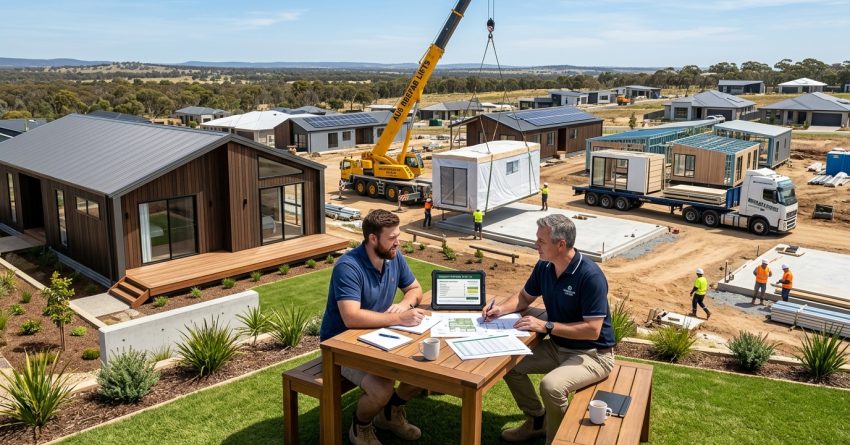
Delivering prefab modules from the factory to the site involves wide-load transportation permits, specialized trucking, and in many cases crane rental to lift modules into position. These costs are rarely included in the base module price and can add $5,000 to $15,000 or more depending on the distance from the factory and the complexity of the installation site.
The installation crew — the set team that connects modules, seals joints, and completes the structural assembly — is an additional labor cost that must be contracted separately from the factory purchase. Buyers who do not account for these expenses during initial planning frequently face budget shortfalls on delivery day.
Interior Finishing and Customization Costs
Most prefab homes are sold at a base finish level, which means the interior arrives with standard or minimal finishes that many buyers choose to upgrade. These upgrades are where the gap between the advertised price and the actual move-in cost becomes most visible.
Flooring is one of the most variable upgrade expenses in a prefab build, and understanding what professional installation involves can help you compare quotes accurately — our overview of flooring installation costs explains what the service includes and what drives pricing differences.
Flooring, Drywall, Painting, and Fixture Upgrades
Many prefab homes arrive with unfinished or partially finished interior walls, making professional drywall work a common post-delivery expense — our guide to drywall finishing services explains what the process involves and when professional help is the right call.
Interior painting is rarely included in a base prefab package, and the cost varies significantly based on square footage and finish quality — our breakdown of interior painting services helps you understand what to expect before requesting quotes.
Kitchen and bathroom fixture upgrades, cabinetry, countertops, and lighting packages are additional line items that accumulate quickly. Buyers who select mid-range upgrades across all interior categories frequently add $20,000 to $50,000 to their total project cost beyond the base module price.
Ongoing Maintenance and Repair Costs
The hidden costs of a prefab home do not end at move-in. Like any residential property, a prefab home requires routine maintenance across all major systems — and some prefab-specific construction details create maintenance needs that buyers should understand before purchasing.
HVAC, Plumbing, Roofing, and Electrical Upkeep
Heating and cooling systems in prefab homes require the same routine service intervals as any residential property, and skipping them leads to costly repairs — our resource on HVAC maintenance costs outlines what regular service includes and how to stay ahead of system failures.
Prefab plumbing connections made at the installation site are a common source of leaks and pressure issues over time, making routine inspection essential — our overview of plumbing repair services explains what to watch for and when to call a professional.
Prefab roofs are subject to the same weather-related wear as any home, and annual inspections are the most cost-effective way to prevent major damage — our guide to roof inspection services covers what a professional assessment includes and what warning signs to look for.
Electrical connections completed during prefab installation should be inspected periodically to ensure code compliance and safety — our resource on electrical inspection services explains what a professional review covers and how often it should be scheduled.
Ongoing maintenance is one of the most underestimated long-term expenses in prefab ownership — our prefab home guide covers the full lifecycle of costs from build to upkeep, helping you plan for every stage of ownership.
Insurance, Financing, and Resale Considerations
Financing a prefab home is more complex than financing a traditional stick-built property. Manufactured homes that do not meet HUD standards for permanent foundation placement may qualify only for chattel loans rather than conventional mortgages, which typically carry higher interest rates and shorter terms. This distinction affects both the monthly cost of ownership and the long-term resale value of the property.
Homeowners insurance for prefab homes can also differ from standard residential policies. Some insurers classify manufactured homes separately and apply different coverage terms, premium structures, or exclusions. Buyers should obtain insurance quotes before finalizing their purchase to avoid surprises at closing.
Resale value is a consideration that many prefab buyers underestimate. Manufactured homes have historically depreciated faster than site-built homes in some markets, though modular homes built to local building codes tend to hold value more comparably to traditional construction. Understanding how your specific prefab type is classified in your local market affects long-term financial planning.
How to Budget Accurately for a Prefab Home
Accurate budgeting for a prefab home requires treating the module price as a starting point, not a total. A realistic budget should include land acquisition, site preparation, foundation, utility hookups, delivery and installation, interior finishing, landscaping, permits, and a contingency reserve of at least 10 to 15 percent of the total project cost.
Accurate budgeting requires more than a base price estimate — a dedicated prefab cost planning resource can walk you through every line item, from land acquisition to final inspection, so no expense catches you off guard.
Getting itemized quotes from site contractors, utility providers, and finishing crews before committing to a module purchase gives you the clearest picture of total project cost. Buyers who complete this research before signing a factory contract are far better positioned to stay within budget and avoid the financial stress that derails many prefab projects.
Conclusion
Prefab home builds offer real advantages in speed and cost efficiency, but the base module price represents only a portion of the total investment. Site preparation, foundation work, delivery, interior finishing, and ongoing maintenance all contribute to a final cost that frequently exceeds initial expectations.
Planning for these expenses before signing a purchase agreement is the most effective way to protect your budget and ensure your prefab project delivers the value you expect.
At Mr. Local Services, our network of skilled professionals handles the maintenance, repair, and finishing work that keeps prefab homes safe, functional, and well-maintained — contact us to connect with trusted local experts across every service category your property needs.
Frequently Asked Questions
How much more does a prefab home cost beyond the base price?
Most prefab buyers spend 30 to 60 percent more than the advertised module price once site preparation, foundation, delivery, utility hookups, and interior finishing are included. A $100,000 module can easily become a $150,000 to $160,000 total project.
Are prefab homes cheaper to maintain than traditional homes?
Prefab homes require the same routine maintenance as site-built homes across HVAC, plumbing, roofing, and electrical systems. Some prefab-specific connection points — particularly at module seams and utility hookups — may require additional monitoring in the first few years after installation.
Do prefab homes qualify for traditional mortgages?
Modular homes built to local building codes and placed on permanent foundations typically qualify for conventional mortgages. Manufactured homes that do not meet permanent foundation requirements may be limited to chattel loans, which carry higher rates and shorter terms than standard home loans.
What permits are required for a prefab home build?
Most jurisdictions require building permits, zoning approval, and multiple inspection sign-offs at different construction phases. Permit requirements vary significantly by state and county, so contacting your local building department before purchasing land or a module is an essential early step.
How long does prefab home site preparation take?
Site preparation timelines depend on lot conditions, permit processing times, and contractor availability. A straightforward lot with minimal clearing and grading can be ready in two to four weeks. Complex sites with significant grading, tree removal, or utility extension work may require two to three months before the foundation can be poured.
Can I negotiate the cost of prefab home delivery and installation?
Delivery and installation costs are sometimes negotiable, particularly when the factory has preferred installer relationships or when the buyer is purchasing during a slower production period. Getting multiple quotes from independent set crews and comparing them against the factory’s preferred installer is the most effective way to manage these costs.