Working remotely from a THOW — a tiny home on wheels — gives you the freedom to work from virtually anywhere while keeping your living and workspace in one compact, mobile unit. With the right setup, a THOW can support a fully functional remote work lifestyle, from reliable internet access to a comfortable, organized office space. The challenge is knowing exactly what that setup requires.
Remote work has changed where people choose to live, and THOWs offer a flexible, low-cost alternative to traditional housing for location-independent professionals.
This guide covers everything you need to know about working remotely from a THOW, including workspace setup, connectivity solutions, climate control, maintenance, and legal considerations.
What Is a THOW and Why Are People Working From One?
A THOW — tiny home on wheels — is a compact, trailer-mounted dwelling that combines the functionality of a home with the mobility of a vehicle. THOWs typically range from 100 to 400 square feet and are built on a trailer chassis, allowing owners to relocate as needed without giving up the comforts of a permanent home.
Remote workers are drawn to THOWs for several practical reasons. The cost of living is significantly lower than renting or owning a traditional home, and the ability to move between locations makes it possible to follow seasonal weather, stay near family, or simply explore new areas without interrupting work.
The Rise of the Mobile Workforce in Tiny Homes
The shift toward remote and hybrid work has made location-independent living more viable than ever. Workers in fields like software development, writing, consulting, design, and customer service are among the most common THOW residents because their jobs require only a laptop and a reliable internet connection.
If you are exploring the broader world of compact living, our guide to tiny home options covers every THOW style, build type, and design consideration to help you choose the right structure for your lifestyle.
Who Is Working Remotely From a THOW?
THOW remote workers range from solo freelancers to full-time employees whose companies have embraced permanent remote arrangements. Couples, digital nomads, and early retirees supplementing income through part-time work also make up a significant portion of the THOW remote work community.
Setting Up a Functional Home Office in a THOW
Creating a productive workspace inside a THOW requires intentional planning. Every square foot matters, and the decisions you make about furniture placement, lighting, and equipment storage will directly affect your ability to focus and work efficiently.
Choosing the Right Workspace Layout
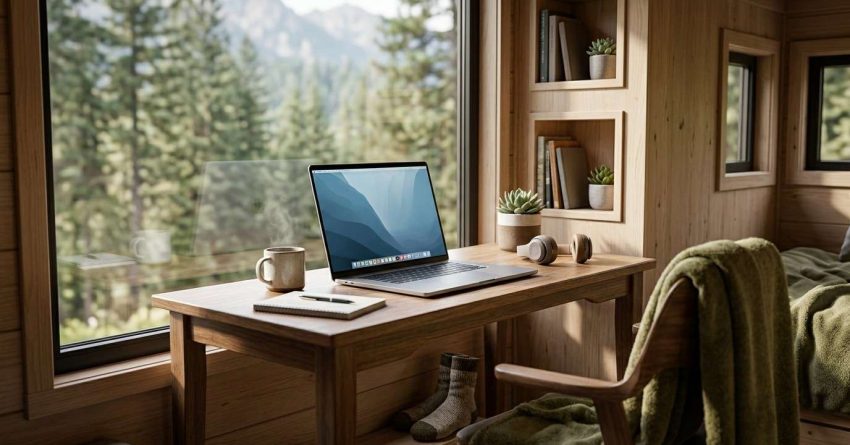
Most THOW remote workers designate a fixed area for work rather than using a shared dining or living space. A fold-down wall desk, a built-in loft workspace, or a compact standing desk positioned near a window are common solutions. Natural light reduces eye strain and improves mood, making window placement a priority when selecting your work area.
Ergonomics matter even in a small space. A proper chair with lumbar support, a monitor at eye level, and a keyboard positioned to keep your wrists neutral will prevent the physical strain that comes from working in improvised setups over long periods.
Power, Connectivity, and Electrical Needs
THOWs are not always wired to handle the power demands of a full remote work setup. Multiple monitors, a laptop, a router, a phone charger, and task lighting can quickly exceed the capacity of a standard THOW electrical system. Shore power hookups, solar panel systems, and battery storage are the three most common solutions for meeting this demand.
A licensed electrician can assess your THOW’s current wiring capacity and recommend upgrades — our electrical service needs explains what a professional inspection covers and when panel or outlet upgrades are necessary.
Internet and Connectivity Solutions for Remote THOW Workers
Reliable internet is the single most critical requirement for working remotely from a THOW. Unlike a traditional home with a fixed broadband connection, THOW workers must build a connectivity strategy that works across multiple locations and conditions.
The four most common options are cellular data plans with a dedicated hotspot device, satellite internet services, campground or RV park Wi-Fi, and a combination of all three as a backup system. Cellular hotspots from major carriers work well in populated areas but can struggle in rural or remote locations. Satellite internet has improved significantly in recent years and now offers speeds sufficient for video calls, file transfers, and cloud-based work in most areas of the United States.
For remote workers who need consistent, high-speed connectivity regardless of location, a multi-carrier approach — using two different cellular networks plus satellite as a failover — provides the most reliable coverage. Signal boosters mounted on the THOW exterior can also improve cellular reception in areas with weak signal.
For a dedicated resource on this topic, our guide to internet options for tiny homes on wheels covers every connectivity solution in detail.
Climate Control and Comfort While Working in a THOW
Maintaining a comfortable working temperature inside a THOW is more challenging than in a traditional home. The small interior volume heats and cools quickly, and the trailer construction — while efficient when properly insulated — is more susceptible to temperature extremes than a site-built structure.
Heating, Cooling, and Ventilation in a Tiny Space
Mini-split heat pump systems are the most popular climate control solution for THOWs because they provide both heating and cooling in a single compact unit without requiring ductwork. Propane heaters, wood stoves, and diesel heaters are common supplemental or primary heating options for off-grid situations. For cooling, roof vents with fans combined with a small portable air conditioner or mini-split handle most summer conditions effectively.
Ventilation is equally important for air quality during long work sessions. A THOW with poor airflow can accumulate carbon dioxide, humidity, and cooking odors that reduce concentration and comfort. Roof vents, cross-ventilation windows, and an ERV (energy recovery ventilator) are practical solutions for maintaining fresh air circulation.
Keeping a tiny space comfortable year-round requires the right equipment and proper installation — our HVAC solutions outlines the heating and cooling options best suited for compact, mobile living environments.
Maintaining Your THOW for a Productive Work Environment
A well-maintained THOW is a functional THOW. Deferred maintenance in a small structure compounds quickly — a small roof leak, a failing water pump, or a deteriorating seal around a window can disrupt your living and working environment within days.
Routine Upkeep That Keeps Your Workspace Functional
Regular maintenance tasks for a THOW include inspecting roof seams and seals every three to six months, checking trailer bearings and tire condition before any move, testing smoke and carbon monoxide detectors monthly, and flushing the freshwater system seasonally. Keeping the interior dry and well-ventilated prevents mold growth, which is a common problem in compact, high-humidity environments.
When to Call a Professional for THOW Repairs
Some repairs require a licensed professional regardless of the size of the structure. THOW plumbing systems require specialized knowledge — our plumbing service options page covers everything from freshwater line maintenance to gray water system inspections for mobile and compact homes.
For minor repairs, fixture adjustments, and general upkeep tasks that fall outside a single trade, our handyman repair help explains the full range of services a skilled handyman can handle in a small-space environment.
Legal and Zoning Considerations for THOW Remote Workers
Where you park your THOW while working is one of the most important and often overlooked aspects of the THOW remote work lifestyle. Zoning laws, HOA rules, and local ordinances vary significantly across states, counties, and municipalities, and parking a THOW in the wrong location — even temporarily — can result in fines or forced relocation.
THOWs are generally classified as recreational vehicles (RVs) in most U.S. jurisdictions, which means they are subject to RV parking regulations rather than residential zoning codes. Long-term parking is permitted in designated RV parks, campgrounds, and some rural properties with the landowner’s permission. Urban and suburban areas are typically more restrictive.
For a complete breakdown of state-by-state rules, our guide to THOW zoning laws and parking regulations covers the legal landscape in detail.
For a complete look at how to set up, maintain, and optimize life in a compact mobile home, our tiny home living guide covers every aspect of THOW ownership from initial setup to long-term upkeep.
Balancing Work-Life Boundaries in a Tiny Home on Wheels
Working and living in the same 200-square-foot space creates boundary challenges that traditional remote workers in larger homes do not face. Without a physical separation between your office and your living area, it is easy for work hours to bleed into personal time and vice versa.
Establishing a consistent daily schedule, using visual cues like a specific lamp or desk configuration to signal “work mode,” and setting a firm end-of-day routine helps create psychological separation even when physical separation is not possible. Taking breaks outside the THOW — a walk, a trip to a nearby coffee shop, or time at a picnic table — also provides the mental reset that a commute or office departure would normally offer.
Maintaining a clean, organized workspace in a small environment directly affects focus and productivity — our cleaning service options outlines professional cleaning solutions designed for compact living spaces.
Conclusion
Working remotely from a THOW combines the flexibility of mobile living with the demands of a professional work environment, requiring intentional decisions about power, connectivity, climate, and maintenance.
The most successful THOW remote workers treat their tiny home as a purpose-built workspace — investing in the right systems, staying ahead of maintenance, and understanding the legal landscape of wherever they park.
At Mr. Local Services, we connect THOW owners with skilled professionals across electrical, HVAC, plumbing, and handyman services — so your mobile workspace stays functional, comfortable, and ready for work wherever the road takes you.
Frequently Asked Questions
Can you run a full-time business from a THOW?
Yes, many people run full-time businesses from a THOW. With a reliable internet connection, sufficient power supply, and a dedicated workspace, a THOW can support most location-independent business types, including freelancing, consulting, and remote employment.
What internet options work best for remote THOW workers?
A combination of a cellular hotspot from a major carrier and a satellite internet service provides the most reliable coverage for THOW remote workers. Using two different networks as primary and backup ensures connectivity in both urban and rural locations across the United States.
How do you stay productive in such a small space?
Productivity in a THOW depends on designating a fixed workspace, maintaining a consistent daily schedule, and keeping the interior organized and clutter-free. Taking regular breaks outside the THOW also helps maintain focus during long work sessions.
What electrical upgrades does a THOW need for remote work?
Most THOWs benefit from a shore power hookup upgrade, additional outlet circuits, and either a solar panel system or a battery storage solution to handle the power demands of a full remote work setup including monitors, a router, and other devices.
Is it legal to park and work from a THOW long-term?
Long-term THOW parking is legal in designated RV parks, campgrounds, and rural properties with landowner permission in most U.S. states. Urban and suburban areas typically have stricter restrictions. Zoning laws vary significantly by state and municipality, so researching local regulations before parking is essential.