Good ADU floor plan design balances livability, legal compliance, and long-term function within a compact footprint — and getting those principles right from the start determines whether your unit works well for years or creates costly problems down the road.
Whether you are adding a rental unit, housing a family member, or building a standalone dwelling, the decisions you make during the design phase shape everything from daily comfort to resale value.
This guide covers the essential principles behind effective ADU floor plans, including space efficiency, room placement, accessibility, layout types, and how to work with the right professionals.
What Is an ADU Floor Plan?
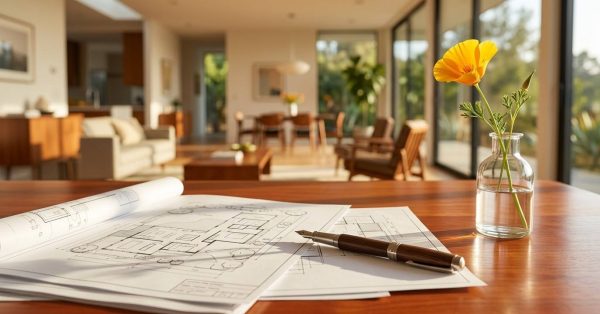
An ADU floor plan is a scaled drawing that shows the layout of an accessory dwelling unit — including room placement, dimensions, entry points, windows, and the relationship between living spaces. It serves as the blueprint for every construction, permitting, and design decision that follows.
Floor plans for ADUs differ from standard home plans in one critical way: they must achieve full residential functionality within a significantly smaller footprint. A well-designed ADU floor plan makes every square foot count without sacrificing comfort, safety, or code compliance.
Key Components of Every ADU Layout
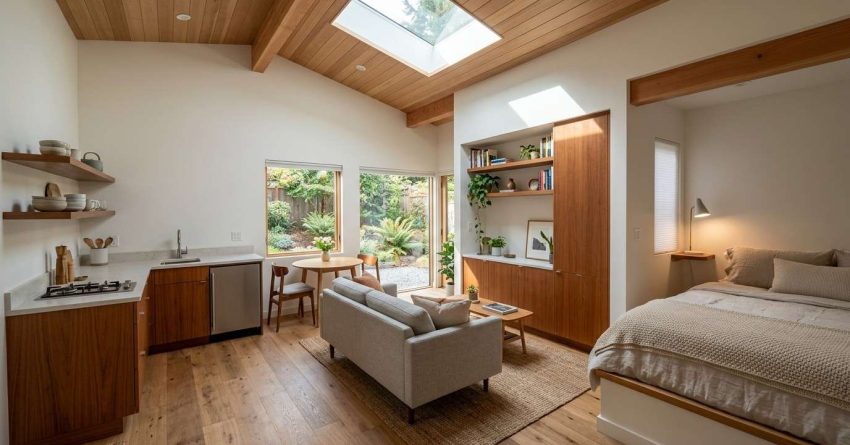
Every ADU floor plan includes the same core elements regardless of size or style. These are the living area, sleeping space, kitchen or kitchenette, bathroom, storage, and entry. How these elements are arranged — and how much space each receives — defines the quality of the finished unit.
Circulation space, the area needed to move between rooms and access doors, is often underestimated in compact designs. Allocating enough room for natural movement without wasting square footage is one of the first tests of a well-executed floor plan.
Understanding what goes into an ADU floor plan is only the first step — our ADU construction services connect you with skilled professionals who handle design, permitting, and build from start to finish.
The Core Design Principles That Shape Every ADU Floor Plan
Effective ADU floor plan design is guided by a set of principles that apply regardless of unit size, style, or intended use. These principles exist to ensure the finished space is livable, legal, and built to last.
Efficient Use of Square Footage
Space efficiency is the defining challenge of ADU design. Most ADUs range from 300 to 1,200 square feet, which means every layout decision has a direct impact on how functional the space feels. The most effective designs use multi-purpose zones, built-in storage, and open sightlines to create a sense of spaciousness that the raw square footage alone would not suggest.
Vertical space is frequently underused. Taller ceilings, lofted sleeping areas, and floor-to-ceiling cabinetry all expand usable capacity without increasing the building footprint. Designers who understand compact living treat walls and height as active design resources, not just boundaries.
Zoning Compliance and Setback Requirements
No floor plan can be finalized without accounting for local zoning rules. Setback requirements — the minimum distances between the ADU and property lines, the primary residence, and neighboring structures — directly constrain where the unit can be placed and how large it can be.
Height limits, lot coverage maximums, and owner-occupancy rules vary significantly by municipality. A floor plan that ignores these constraints will fail at the permitting stage, regardless of how well it is designed. Every design decision must align with local regulations, and our ADU zoning requirements guide walks through the permit process, setback rules, and compliance steps for every major U.S. market.
How Room Placement Affects ADU Livability
Where rooms are positioned within an ADU floor plan has a direct effect on how comfortable, private, and functional the unit feels in daily use. Poor room placement creates noise conflicts, awkward traffic flow, and wasted space. Thoughtful placement solves all three.
Natural Light and Ventilation Strategies
Natural light is one of the most powerful tools available to ADU designers working within a small footprint. Positioning living areas and kitchens on south- or east-facing walls maximizes daylight hours. Placing windows on opposing walls creates cross-ventilation, which reduces reliance on mechanical cooling and improves air quality year-round.
Skylights and clerestory windows are particularly effective in ADUs where exterior wall space is limited. They bring light into interior zones that standard windows cannot reach, making the space feel larger and more open without adding square footage.
Privacy Considerations for Attached vs. Detached ADUs
Privacy needs differ significantly between attached ADUs — those connected to the primary residence — and detached units built separately on the same lot. Attached ADUs require careful sound insulation between shared walls and thoughtful placement of entries so occupants can come and go independently.
Detached ADUs have more flexibility but still require attention to window placement relative to neighboring properties and the primary home. Bedroom windows facing a neighbor’s living area, or a shared outdoor space with no visual separation, reduce the sense of privacy that makes a rental unit or in-law suite genuinely livable.
Room placement directly shapes how comfortable and functional a unit feels day to day — explore our ADU interior layout resource for practical strategies on maximizing livable space in compact floor plans.
Accessibility and Safety in ADU Floor Plan Design
Accessibility is most cost-effective when it is designed in from the beginning. Retrofitting an ADU for mobility needs after construction is significantly more expensive and disruptive than incorporating the right features during the planning phase.
Mobility-Friendly Features to Build In From the Start
The most impactful accessibility features in an ADU floor plan include zero-step entries, wider doorways of at least 36 inches, open floor plans that allow wheelchair navigation, and roll-under clearance beneath kitchen and bathroom counters. Walk-in showers with no curb threshold and grab bar blocking in bathroom walls are standard inclusions in any accessibility-forward design.
These features do not require a larger footprint. They require intentional placement and specification during the design phase. An ADU built with these elements from the start serves a wider range of occupants and retains its value across a longer period of time.
Accessibility features are most cost-effective when built into the original plan, and our safety and mobility upgrades team can assess your ADU design and recommend the right modifications before construction begins.
Common ADU Floor Plan Layouts and When to Use Each
ADU floor plans generally fall into a small number of configurations, each suited to different uses, lot conditions, and occupant needs. Understanding the strengths and limitations of each layout helps owners and designers make the right choice before committing to a plan.
Studio and Open-Plan ADU Designs
Studio ADUs combine the living, sleeping, and kitchen functions into a single open space, with only the bathroom separated by a wall. This configuration works best for single occupants or couples and is the most space-efficient option available. It is also the easiest to permit and build, which makes it a common choice for first-time ADU owners.
The primary design challenge in a studio layout is creating visual separation between zones without using walls. Furniture placement, ceiling height changes, and flooring transitions all serve this purpose effectively when used with intention.
One-Bedroom and Multi-Room ADU Configurations
One-bedroom ADUs separate the sleeping area from the main living space, which significantly improves livability for long-term occupants. This configuration is the most popular choice for rental ADUs because it offers the privacy and function that tenants expect from a standalone unit.
Multi-room configurations — two bedrooms or more — are less common due to size constraints but are achievable on larger lots with generous square footage allowances. These designs require careful attention to circulation, storage, and bathroom placement to avoid the cramped feel that comes from dividing a small footprint into too many rooms.
Choosing the right configuration depends on how the unit will be used and who will live in it — our tiny home layout options covers the most popular ADU formats with real examples and size comparisons.
Working With Contractors and Designers on Your ADU Plan
A floor plan is only as good as the team that executes it. ADU projects involve multiple trades — framing, electrical, plumbing, HVAC, and finish work — and coordinating them effectively requires experience with small-footprint residential construction specifically.
Working with professionals who understand ADU design constraints from the start reduces the risk of costly plan revisions, permitting delays, and construction errors. The design phase is the least expensive time to make changes. Once framing begins, modifications become significantly more disruptive and expensive.
Bringing your ADU floor plan to life requires experienced hands across multiple trades, and our remodeling and renovation experts coordinate every phase of the build so nothing falls through the cracks. Custom built-ins, cabinetry, and structural framing all play a role in making a compact ADU feel complete, and our custom carpentry work team specializes in space-efficient solutions designed for smaller footprints.
Conclusion
ADU floor plan design is a discipline built on the intersection of space efficiency, regulatory compliance, and livability. The principles covered here — from room placement and natural light to accessibility and layout selection — apply to every ADU project regardless of size or style.
Getting these decisions right during the design phase protects your investment, simplifies permitting, and produces a unit that serves its occupants well for years. The earlier these principles are applied, the less expensive and disruptive the process becomes.
At Mr. Local Services, our team connects you with experienced ADU professionals who apply these design principles from day one — reach out today to start planning a unit that works.
Frequently Asked Questions
What is the minimum size for an ADU floor plan?
Most U.S. jurisdictions set a minimum ADU size between 150 and 400 square feet, though requirements vary by city and county. Always verify local minimums before finalizing a floor plan, as building below the threshold will result in a failed permit application.
How do I know if my lot can support an ADU?
Lot eligibility depends on zoning classification, minimum lot size requirements, existing lot coverage, and setback rules. A local permit office or licensed designer can review your parcel and confirm whether an ADU is permitted and what size and placement restrictions apply.
Can I design an ADU floor plan myself?
Homeowners can create preliminary floor plan concepts, but most jurisdictions require stamped drawings from a licensed architect or designer for permit submission. Working with a professional from the start reduces the risk of costly revisions and permitting delays.
What is the most space-efficient ADU layout?
Studio and open-plan configurations are the most space-efficient because they eliminate interior walls and allow flexible use of every square foot. They work best for one to two occupants and are the easiest ADU type to permit and build.
How does an ADU floor plan affect rental income potential?
Layout quality directly influences rental value. Units with separate sleeping areas, adequate storage, private entries, and good natural light command higher rents and attract longer-term tenants. Investing in a well-designed floor plan typically produces a measurable return through rental income.
Do ADU floor plans need to meet accessibility standards?
Most jurisdictions do not require ADUs to meet full ADA standards unless the property is commercial or the unit is being built with public funding. However, incorporating accessibility features voluntarily increases the unit’s usability and long-term value, particularly for aging-in-place applications.
How long does it take to finalize an ADU floor plan?
Design and permitting timelines vary widely. A straightforward studio ADU on a compliant lot may move from initial design to permit approval in 6 to 12 weeks. More complex projects or jurisdictions with high permit volume can take 3 to 6 months or longer before construction can begin.