A custom home for veterans is a purpose-built residential property designed around the specific lifestyle, accessibility, and safety needs of military service members and veterans — often financed through VA loan programs that offer significant cost advantages over conventional construction financing. Veterans who build or adapt a custom home gain a property that works for their daily life, supports mobility needs, and holds long-term value with the right maintenance in place.
This matters because standard homes are rarely built with veteran-specific needs in mind, leaving gaps in accessibility, safety, and functionality that cost more to fix after the fact.
This guide covers everything veteran homeowners need — from VA financing and custom design features to the home services that keep a custom property safe, functional, and well-maintained.
What Is a Custom Home for Veterans?
A custom home for veterans is a residential property built or significantly modified to meet the unique physical, lifestyle, and safety needs of military veterans. Unlike standard production homes, custom veteran homes are designed from the ground up — or adapted through targeted renovations — to accommodate mobility challenges, therapeutic needs, and the practical demands of veteran life.
The distinction matters because veterans often return home with needs that standard floor plans simply do not address. A production home built for the general market may have narrow doorways, multi-level layouts, and bathrooms that create daily obstacles for veterans managing physical disabilities or mobility limitations. A custom home eliminates those obstacles by design.
How Custom Veteran Homes Differ from Standard Construction
Standard residential construction follows a general-market template: average doorway widths, standard bathroom configurations, and layouts optimized for cost efficiency rather than accessibility. Custom veteran homes take a different approach.
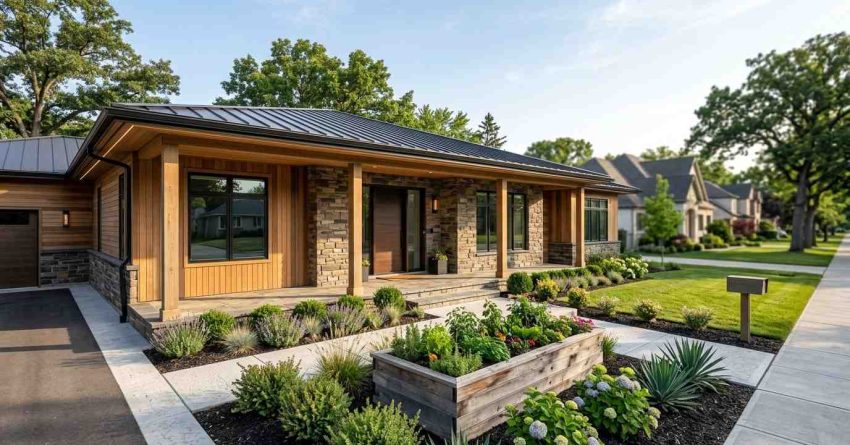
The core differences show up in structural decisions made early in the design process. Doorways are widened to 36 inches or more to accommodate wheelchairs and mobility aids. Entries are built at grade level with zero-step thresholds. Bathrooms include roll-in showers, reinforced walls for grab bar installation, and turning radius space for wheelchair users. Hallways are wider. Flooring materials are chosen for grip and ease of movement rather than aesthetics alone.
These are not cosmetic upgrades. They are structural decisions that must be made during construction — retrofitting them later is significantly more expensive and often structurally limited.
Key Features Designed Around Veteran Needs
The most effective custom veteran homes share a consistent set of features that address the most common veteran-specific needs:
Zero-step entries and ramp access eliminate fall risks and mobility barriers at every exterior door. Roll-in showers and accessible bathroom layouts allow independent use without assistance. Wider doorways and hallways accommodate wheelchairs, walkers, and other mobility aids throughout the home. Non-slip flooring in high-traffic areas reduces fall risk on hard surfaces. Single-story layouts remove the need for stair navigation entirely.
Beyond accessibility, custom veteran homes often incorporate smart home technology for voice-activated lighting, security, and climate control — reducing the physical demands of daily home management. Low-maintenance exterior materials and landscaping reduce the upkeep burden for veterans managing physical limitations or busy schedules.
Understanding the full range of features available in a custom veteran home starts with knowing which home services support those features long-term — our home services overview covers every category of maintenance, repair, and improvement available to veteran homeowners.
VA Home Loan Benefits for Custom Home Builds
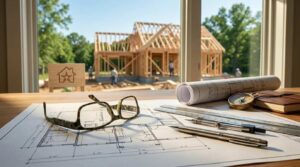
Veterans have access to one of the most powerful home financing tools available in the United States: the VA-backed loan program. For custom home construction, this translates into a VA construction loan — a financing product that covers the cost of building a new home from the ground up, with terms that are significantly more favorable than conventional construction financing.
The core advantage is the no-down-payment benefit. Eligible veterans can finance 100% of the construction cost without putting money down, which removes one of the largest barriers to custom home construction. Combined with competitive interest rates and no private mortgage insurance requirement, the VA construction loan makes custom homeownership accessible to veterans who might not qualify for conventional construction financing.
How the VA Construction Loan Works
A VA construction loan functions as a construction-to-permanent loan. This means a single loan covers both the construction phase and the permanent mortgage — eliminating the need to close twice and reducing total closing costs.
During the construction phase, funds are released to the builder in draws as construction milestones are completed. The veteran typically pays interest only on the drawn amount during this period. Once construction is complete and the home passes VA appraisal, the loan converts automatically to a permanent VA mortgage.
The U.S. Department of Veterans Affairs provides full program details on VA-backed construction loans, including current eligibility rules and approved lender requirements.
Working with a VA-approved lender and a VA-approved builder is required throughout the process. The builder must meet VA certification standards, and the home must meet VA Minimum Property Requirements at appraisal. Veterans planning a custom build should also consider the full range of home improvement services available after construction — from remodeling and electrical work to plumbing and HVAC installation.
Eligibility Requirements and Certificate of Eligibility
VA construction loan eligibility follows the same service requirements as standard VA home loans. Veterans, active-duty service members, National Guard members, Reservists, and surviving spouses of veterans who died in service or from a service-connected disability may qualify.
The Certificate of Eligibility (COE) is the document that confirms VA loan entitlement. Veterans can obtain a COE through the VA’s eBenefits portal, through a VA-approved lender, or by submitting VA Form 26-1880 directly to the VA. The COE confirms service history, discharge status, and available entitlement — all of which the lender needs before approving a construction loan.
Minimum service requirements vary by service type and era. Most veterans who served at least 90 consecutive days during wartime or 181 days during peacetime qualify. National Guard and Reserve members generally need at least six years of service unless they were called to active duty.
Designing a Custom Home Around Veteran Lifestyle and Needs
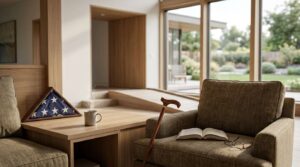
The design phase is where a custom veteran home becomes genuinely different from any other residential construction project. Effective veteran home design starts with a clear understanding of the veteran’s current and anticipated future needs — then translates those needs into structural decisions, material choices, and technology integrations that make daily life easier, safer, and more comfortable.
Universal design principles form the foundation of most veteran home design projects. Universal design creates spaces that work for people across a wide range of physical abilities — which means a home designed for a veteran with mobility limitations also works well as those needs change over time.
Accessibility and Mobility Modifications
Accessibility modifications are the most structurally significant decisions in a custom veteran home. They must be planned before construction begins because retrofitting them later requires tearing out walls, rebuilding entries, and replacing flooring — all at significantly higher cost.
The most impactful accessibility features include zero-step entries at all exterior doors, widened interior doorways (minimum 36 inches), roll-in showers with fold-down seating, grab bars in bathrooms and hallways, lever-style door handles throughout, and open floor plans that allow wheelchair turning radius in every room. Kitchens benefit from lowered countertops, pull-out shelving, and knee clearance under work surfaces.
Non-slip flooring throughout the home — particularly in bathrooms, kitchens, and entryways — is one of the most cost-effective safety investments in any veteran home design. Hardwood, tile, and luxury vinyl plank with textured finishes provide grip without sacrificing appearance.
Veterans who need accessibility upgrades after moving in can explore dedicated safety and mobility services that cover grab bar installation, ramp construction, stair lifts, and other adaptive modifications for the home.
Safety Features and Smart Home Integration
Safety technology has advanced significantly in recent years, and custom veteran homes are increasingly incorporating smart home systems that reduce the physical demands of home management while improving security and emergency response capability.
Smart home controls allow veterans to manage lighting, climate, locks, and security cameras through voice commands or smartphone apps — eliminating the need to physically operate switches, thermostats, and locks throughout the home. This is particularly valuable for veterans managing upper-body limitations or chronic pain conditions that make repetitive physical tasks difficult.
Security systems with motion sensors, smart locks, and remote monitoring provide peace of mind and reduce the need for physical security checks. Smoke detectors and carbon monoxide alarms connected to smart home systems can send alerts directly to a smartphone — ensuring veterans who may have hearing impairments receive emergency notifications through multiple channels.
Emergency alert systems integrated into the home’s smart platform allow veterans to summon help quickly without needing to reach a phone. These systems are especially important for veterans living alone or managing conditions that increase fall risk.
Outdoor Living Spaces and Property Functionality
Outdoor spaces are an important part of the custom veteran home experience. A well-designed outdoor area extends the functional living space of the home, provides therapeutic value, and supports the physical and mental health benefits of time spent outdoors.
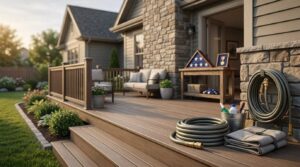
Accessible deck and patio designs use the same zero-step and ramp principles as interior accessibility features. Decks built at grade level or with gentle ramp access allow wheelchair and mobility aid users to move freely between indoor and outdoor spaces. Raised garden beds bring gardening to a comfortable working height for veterans who cannot bend or kneel. Outdoor lighting improves safety and extends usable hours after dark.
Low-maintenance landscaping reduces the physical upkeep burden while keeping the property looking well-maintained. Native plants, mulched beds, and automated irrigation systems minimize the time and effort required for routine yard care.
For veterans who want to extend their living space outdoors, professional deck building services can design and construct accessible, low-maintenance decks and patios that complement the home’s accessibility features.
Home Services Every Veteran Homeowner Needs
A custom home is only as good as the maintenance and services that keep it running. Veteran homeowners — like all homeowners — need a reliable network of home service professionals who can handle everything from routine maintenance to urgent repairs and planned improvements. The difference for veteran homeowners is that many of the home’s most important features, including accessibility modifications and safety systems, require specialized knowledge to maintain and repair correctly.
Understanding which services are needed, what they include, and when to call a professional is the foundation of effective property management for any veteran homeowner.
Maintenance and Repair Services for Long-Term Property Value
Routine maintenance and timely repairs are the most direct way to protect a property’s long-term value. Deferred maintenance — putting off small repairs until they become large problems — is the single most common cause of preventable property damage and value loss.
The most critical maintenance services for veteran homeowners include HVAC system maintenance, plumbing inspection and repair, electrical system checks, roofing inspections, appliance servicing, and water damage prevention. Each of these service categories addresses a system that, if neglected, can cause significant structural damage, safety hazards, or costly emergency repairs.
Plumbing leaks left unaddressed lead to water damage, mold growth, and structural deterioration. Electrical systems that are not inspected regularly can develop fire hazards. Roofs that are not maintained lose their weatherproofing integrity and allow water intrusion that damages insulation, framing, and interior finishes.
Keeping HVAC systems running efficiently is one of the most important maintenance tasks for any homeowner — our HVAC services cover seasonal tune-ups, filter replacements, system inspections, and emergency repairs to maintain year-round comfort.
Remodeling and Improvement Services for Veteran Homes
Home improvement projects allow veteran homeowners to adapt their property as needs change, update aging systems and finishes, and increase property value through targeted upgrades. Remodeling services cover a wide range of project types — from cosmetic updates like painting and flooring to structural improvements like window replacement, door installation, and bathroom renovation.
For veteran homeowners, remodeling projects often serve a dual purpose: improving the home’s appearance and functionality while also enhancing accessibility and safety. A bathroom remodel, for example, can simultaneously update aging fixtures and add roll-in shower access, grab bars, and non-slip flooring. A kitchen remodel can modernize the space while lowering countertops and improving cabinet accessibility.
Flooring replacement is one of the most impactful improvement projects for veteran homes. Replacing worn carpet with hard-surface flooring improves mobility aid movement, reduces allergen accumulation, and makes the home easier to clean and maintain. Drywall repair and interior painting refresh the home’s appearance and protect wall surfaces from moisture and wear.
Veterans looking to update their home’s interior or exterior will find that professional remodeling services cover everything from kitchen and bathroom renovations to flooring, drywall, painting, and window replacement.
Safety, Mobility, and Accessibility Upgrades
As veteran homeowners age or as service-connected conditions progress, the need for additional safety and accessibility modifications often increases. The ability to add these upgrades to an existing home — without a full renovation — is one of the most important capabilities a home services provider can offer.
Grab bar installation in bathrooms, hallways, and stairways is one of the most cost-effective safety upgrades available. Properly installed grab bars provide critical support for veterans managing balance issues, weakness, or mobility limitations. Stair lifts allow veterans to continue using multi-level homes safely when stair navigation becomes difficult or dangerous. Ramp construction at exterior entries provides wheelchair and mobility aid access without requiring structural changes to the home’s foundation.
Non-slip flooring treatments and replacement provide an additional layer of fall prevention in high-risk areas. Locksmith services and security upgrades ensure that smart lock systems and security hardware are properly installed and functioning. Widened doorways and threshold modifications can be added to existing homes when mobility needs change.
Veterans who need to adapt their home for changing mobility needs can rely on specialized safety and mobility upgrades that include grab bar installation, ramp construction, stair lifts, and non-slip flooring solutions.
Choosing the Right Home Service Provider as a Veteran Homeowner
Finding a reliable home service provider is one of the most important decisions a veteran homeowner makes. The quality of the provider directly affects the quality of the work, the safety of the home, and the long-term value of every service investment. For veteran homeowners managing accessibility features and specialized systems, the stakes are higher than for standard residential properties.
The most effective approach is to work with a provider who offers multiple service categories under one roof — reducing the complexity of managing multiple contractors, ensuring consistent quality standards, and simplifying scheduling and communication.
What to Look for in a Reliable Home Services Company
Licensing and insurance are the baseline requirements for any home service provider. A licensed contractor has met the state’s minimum competency standards for their trade. An insured provider protects the homeowner from liability if a worker is injured on the property or if work causes damage. Bonding provides an additional layer of financial protection against incomplete or substandard work.
Beyond licensing and insurance, the most reliable providers demonstrate transparent pricing — providing written estimates before work begins and explaining what is and is not included in the quoted price. Verified customer reviews from independent platforms provide evidence of consistent quality and professionalism. Response time matters for urgent repairs: a provider who cannot respond within a reasonable timeframe is not a reliable partner for emergency situations.
Experience across multiple service categories is particularly valuable for veteran homeowners. A provider who understands accessibility modifications, HVAC systems, plumbing, and electrical work can identify how different systems interact — and catch problems that a single-trade contractor might miss.
Questions to Ask Before Hiring a Contractor
Before committing to any home service provider, veteran homeowners should ask a consistent set of questions that reveal the provider’s professionalism, reliability, and fit for the specific project.
Ask for proof of licensing and insurance before any work begins. Request a written estimate that itemizes labor, materials, and any additional costs — and confirm whether the estimate is binding or subject to change. Ask whether the provider will handle permits for work that requires them, and confirm who is responsible for obtaining those permits. Find out whether the work will be performed by the company’s own employees or subcontracted to third parties, and ask for references from similar projects.
Clarify the payment schedule before signing any agreement. Reputable contractors do not require full payment upfront. A reasonable deposit — typically 10–30% — is standard for larger projects, with the balance due upon satisfactory completion. Ask about the company’s policy on change orders, cleanup responsibility, and warranty coverage for completed work.
Mr. Local Services connects veteran homeowners with trusted, vetted professionals across every home service category — making it easier to find reliable help through a single home services provider rather than managing multiple contractors separately.
Maintaining Your Custom Veteran Home Year-Round
A custom veteran home represents a significant investment — in financing, design, and the specialized features that make it work for veteran life. Protecting that investment requires a consistent, proactive approach to maintenance that addresses both seasonal needs and the ongoing care of the home’s specialized systems.
The most effective maintenance strategy combines a seasonal checklist with a set of preventive services that go beyond routine upkeep. Together, these two approaches catch problems early, extend the life of the home’s systems, and prevent the kind of deferred maintenance that leads to expensive emergency repairs.
Seasonal Maintenance Checklist for Veteran Homeowners
Each season brings a specific set of maintenance priorities that, if addressed on schedule, prevent the most common causes of property damage and system failure.
Spring is the time to inspect the roof for winter damage, clean gutters and downspouts, check exterior drainage, service the air conditioning system before summer demand, inspect window and door seals, and assess the condition of decks, patios, and outdoor accessibility features after winter weather.
Summer maintenance focuses on HVAC filter replacement, exterior painting touch-ups, landscape maintenance, irrigation system checks, and pest control inspections. This is also the best time to schedule power washing for driveways, siding, and decks before fall weather arrives.
Fall preparation is critical for veteran homes in cold climates. Heating system service, weatherization of windows and doors, gutter cleaning after leaf fall, and winterization of outdoor plumbing and irrigation systems are the priority tasks. Checking insulation and sealing air leaks before winter reduces heating costs and prevents moisture intrusion.
Winter maintenance focuses on monitoring for ice dam formation on roofs, checking that heating systems are operating correctly, and inspecting the home’s accessibility features — ramps, grab bars, and exterior lighting — for weather-related wear or damage.
Preventive Services That Protect Property Value
Beyond the seasonal checklist, a set of preventive services addresses the systems and conditions that cause the most significant property damage when neglected.
Pest control inspections and treatments prevent termite damage, rodent intrusion, and insect infestations that can cause structural damage and health hazards. Annual pest control service is one of the most cost-effective preventive investments available to homeowners.
Power washing and pressure washing remove mold, mildew, algae, and dirt buildup from exterior surfaces — protecting siding, decks, driveways, and walkways from the accelerated deterioration that surface contamination causes. Tree services — including trimming, removal of dead branches, and assessment of trees near the home — prevent storm damage from falling limbs and root intrusion into foundation and plumbing systems.
Water damage prevention through regular plumbing inspection, sump pump maintenance, and proper grading around the home’s foundation is one of the highest-value preventive services available. Water damage is consistently among the most expensive categories of home repair, and most of it is preventable with routine inspection and maintenance.
Routine dryer vent cleaning is one of the most overlooked preventive services — our dryer vent cleaning services remove lint buildup that causes fire hazards and reduces appliance efficiency over time.
Conclusion
A custom home for veterans brings together purpose-built design, VA financing advantages, and specialized home services into a complete residential solution that supports veteran life at every stage. The right design decisions, financing tools, and service partnerships make the difference between a home that works and one that creates daily obstacles.
Veteran homeowners who invest in the right accessibility features, maintain their property proactively, and work with reliable service providers protect both their quality of life and the long-term value of their property. The services and strategies covered here provide a practical foundation for every stage of the custom veteran home journey.
Mr. Local Services is here to support veteran homeowners with trusted, all-in-one home service solutions — from accessibility upgrades and remodeling to routine maintenance and emergency repairs, all delivered by vetted professionals who understand what your home needs.
Frequently Asked Questions
What is the difference between a VA purchase loan and a VA construction loan?
A VA purchase loan finances the purchase of an existing home, while a VA construction loan finances the building of a new custom home from the ground up. The construction loan converts to a permanent VA mortgage once construction is complete, functioning as a single-close loan that covers both phases.
Can veterans use VA benefits to add accessibility features to an existing home?
Yes. The VA’s Specially Adapted Housing (SAH) grant and Special Housing Adaptation (SHA) grant programs provide funding for veterans with qualifying service-connected disabilities to add accessibility modifications to an existing home. These grants do not need to be repaid and can cover features like ramp installation, widened doorways, and accessible bathroom modifications.
What home services are most important for veteran homeowners to schedule annually?
The most important annual services for veteran homeowners include HVAC system maintenance, roof inspection, pest control treatment, dryer vent cleaning, plumbing inspection, and gutter cleaning. These services address the systems most likely to cause significant damage or safety hazards when neglected.
How do I find a contractor experienced with veteran home accessibility modifications?
Look for contractors who specifically list accessibility modification experience, hold relevant certifications such as Aging in Place (CAPS) certification, and can provide references from similar projects. Working with an all-in-one home services provider simplifies the process by connecting you with vetted professionals across multiple service categories.
What accessibility features add the most value to a veteran home?
Zero-step entries, roll-in showers, grab bars, widened doorways, and non-slip flooring consistently provide the highest combination of daily functional value and resale value for veteran homes. These features also align with universal design principles, making the home accessible to a wider range of future buyers.
How much does it cost to build a custom home for veterans using a VA construction loan?
Construction costs vary significantly by location, size, and the scope of accessibility features included. The VA construction loan covers the full construction cost for eligible veterans with sufficient entitlement, with no down payment required. Veterans should work with a VA-approved lender to determine their specific entitlement and obtain a construction cost estimate from a VA-approved builder before committing to a project.
What is the VA’s Specially Adapted Housing grant and who qualifies?
The Specially Adapted Housing (SAH) grant is a VA program that provides funding — up to a set annual limit — for veterans with specific service-connected disabilities to build, buy, or modify a home to meet their accessibility needs. Qualifying disabilities include loss of or loss of use of both legs, certain blindness conditions, and other severe mobility-limiting conditions. Veterans can apply through the VA’s eBenefits portal or by contacting their regional VA loan center.