
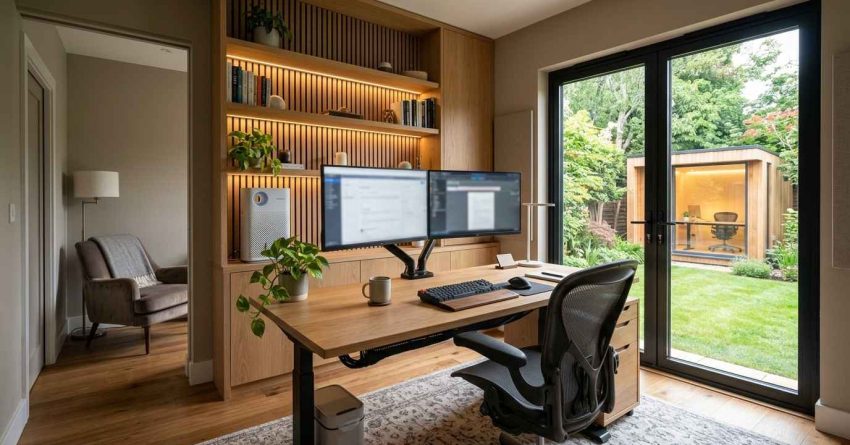
A custom home for remote workers is a property that has been intentionally designed, upgraded, and maintained to support full-time or hybrid work from home — combining a functional workspace with the comfort, technology, and privacy needed to stay productive every day.
Working from home full-time changes what you need from your property. A standard bedroom or kitchen table rarely meets the demands of video calls, focused work, and long hours.
This guide covers every home service that helps remote workers build a better workspace — from structural remodeling and electrical upgrades to soundproofing, HVAC, and outdoor office solutions.
What Makes a Home Truly Work for Remote Workers
A home built for remote work goes beyond a desk and a chair. It requires the right infrastructure, the right environment, and the right support services to function as a professional workspace day after day.
Whether you are starting from scratch or upgrading an existing space, our home services guide covers every professional service available to help you build a functional, comfortable, and productive home environment.
The most effective remote work homes share three core qualities: a dedicated, distraction-free workspace; reliable power and connectivity infrastructure; and environmental controls that support focus and comfort throughout the workday.
Dedicated Workspace Design and Layout
A dedicated workspace means a room or defined area used exclusively for work. This separation — physical and psychological — is one of the strongest predictors of remote work productivity. The layout should support your workflow, minimize interruptions, and allow for professional video call backgrounds.
Connectivity, Power, and Infrastructure Needs
Remote work depends on consistent internet connectivity, sufficient electrical capacity, and reliable device charging. Homes built before widespread remote work often lack the outlet density, circuit capacity, and cable management infrastructure that a full-time home office requires.

Remodeling Services That Transform Any Room Into a Home Office
Not every home has a ready-made office space. Remodeling is often the most direct path to creating one — whether that means converting a spare bedroom, finishing a basement, or reconfiguring an open-plan living area to carve out a private workspace
From converting a spare bedroom to opening up a basement layout, our remodeling services explains every option available for transforming underused rooms into dedicated, professional-grade home office spaces.
Room Conversions and Space Optimization
Room conversions involve repurposing an existing space — a guest room, a formal dining room, a finished attic — into a functional home office. This typically includes new flooring, updated lighting, added outlets, and sometimes structural changes like adding a closet or removing a wall. Space optimization focuses on making the most of smaller areas through smart layout planning and built-in furniture.
Built-In Storage and Custom Carpentry Solutions
Clutter is one of the biggest productivity killers in a home office. Built-in shelving, custom desks, and fitted cabinetry solve this problem permanently. Custom shelving, built-in desks, and fitted cabinetry are all within reach — our carpentry services details how skilled craftspeople design and install workspace storage solutions tailored to your room’s exact dimensions.
Electrical and Technology Upgrades for Remote Work Environments
A home office puts significantly more demand on your electrical system than a standard bedroom or living space. Multiple monitors, a desktop computer, a printer, a router, a video conferencing setup, and task lighting can easily exceed the capacity of a standard circuit — especially in older homes.
Adding dedicated circuits, expanding outlet capacity, and installing smart switches all require a licensed electrician — our electrical services outlines every upgrade available to power a safe, reliable home office setup.
Dedicated Circuits and Outlet Expansion
A dedicated circuit ensures that your office equipment runs on its own electrical line, separate from the rest of the home. This prevents tripped breakers, protects sensitive equipment from power fluctuations, and meets code requirements for high-draw devices. Outlet expansion adds the number and placement of receptacles needed to eliminate extension cords and power strips.
Lighting Upgrades for Productivity and Eye Comfort
Lighting directly affects focus, eye strain, and how you appear on video calls. Overhead fluorescent lighting is rarely adequate for a professional home office. Proper task lighting and ambient light control are critical for long work sessions — see our lighting upgrade options section for a full breakdown of fixture types, dimmer installations, and smart lighting solutions.

HVAC and Air Quality Services for All-Day Home Office Comfort
Temperature and air quality have a measurable effect on cognitive performance. A home office that runs too hot in summer or too cold in winter creates a constant distraction. Poor air circulation leads to stuffiness, fatigue, and reduced concentration — all of which undermine productivity.
Maintaining consistent temperature and clean air throughout your workday is a job for a certified technician — our HVAC services covers everything from system tune-ups and filter replacements to full zoning installations for home offices.
Ventilation, Filtration, and Temperature Control
Zoned HVAC systems allow you to control the temperature in your home office independently from the rest of the house — a significant advantage when you are working while others are home. High-efficiency air filters and standalone air purifiers address particulate matter, allergens, and VOCs that accumulate in enclosed spaces. Regular HVAC maintenance keeps the system running efficiently and prevents unexpected failures during the workday.
Soundproofing, Drywall, and Acoustic Improvements
Sound is one of the most disruptive elements in a home office. Street noise, household activity, and HVAC sounds all compete with your ability to focus and communicate clearly on calls. Acoustic improvements address this at the structural level — not just with soft furnishings, but with purpose-built materials installed by professionals.
Acoustic drywall, resilient channels, and ceiling treatments are the foundation of a quiet home office — our drywall and ceiling services explains the materials, methods, and professional installation process in full detail.
Drywall Upgrades and Noise Reduction Techniques
Standard drywall provides minimal sound isolation. Acoustic drywall — also called soundproof drywall — uses a viscoelastic polymer layer between gypsum panels to dampen sound transmission. Resilient channels decouple the drywall from the wall studs, further reducing the path sound travels through the structure. Combined with acoustic insulation in the wall cavity, these upgrades can reduce noise transmission significantly in a home office.
Flooring, Windows, and Doors That Support a Professional Home Office
The surfaces that surround your workspace affect both acoustics and atmosphere. Hard flooring reflects sound; soft flooring absorbs it. Windows determine how much natural light enters and how much outside noise penetrates. Doors control sound transmission between your office and the rest of the home.
Flooring Options for Comfort and Acoustics
Choosing the right floor material affects both comfort underfoot and sound behavior in your workspace — our flooring services compares carpet, hardwood, luxury vinyl, and cork options with guidance on which performs best in a home office. Carpet and cork absorb sound most effectively. Hardwood and luxury vinyl plank are easier to clean and more durable but reflect more sound. Area rugs over hard flooring offer a practical middle ground.
Window and Door Upgrades for Privacy and Light Control
Upgrading to double-pane glass, adding blackout blinds, or installing privacy film are all professional jobs — our window services covers every option for controlling light, reducing noise, and improving energy efficiency in your home office. A solid-core interior door makes a measurable difference in sound isolation between your office and the rest of the home — our door services details installation options, weatherstripping upgrades, and door replacement for any room configuration.

Cleaning and Maintenance Services That Keep Your Home Office Running
A home office used eight or more hours a day accumulates dust, allergens, and clutter faster than most rooms in the house. Regular professional cleaning is not a luxury in this context — it is a maintenance requirement that protects both your health and your equipment.
Dust, allergens, and clutter accumulate quickly in a home office used daily — our cleaning services outlines professional cleaning schedules, deep-clean options, and specialized treatments that keep your workspace hygienic and distraction-free.
Routine Upkeep and Deep Cleaning for Work-From-Home Spaces
Routine cleaning covers surface dusting, vacuuming, and sanitizing high-touch areas like keyboards, desks, and door handles. Deep cleaning addresses air vents, baseboards, window tracks, and behind equipment — areas that collect particulate matter and affect air quality over time. Blocked dryer vents near living and working areas create both fire risk and air quality problems — our dryer vent cleaning explains how regular professional cleaning protects your home and keeps the air in your workspace clean.
Safety, Security, and Mobility Upgrades for Remote Workers at Home
Working from home full-time means spending significantly more time in your property than a traditional commuter. This increases the importance of home security, fire safety, and — for some remote workers — physical accessibility. These are not afterthoughts; they are foundational to a home that functions as a professional environment.
Upgrading door locks, installing smart entry systems, and rekeying after a move are all tasks handled by a licensed locksmith — our locksmith services covers every security upgrade available to protect your home office and property.
Locksmith, Safety, and Accessibility Improvements
Smart locks, keypad entry, and video doorbells give remote workers control over who enters the property during the workday without interrupting their workflow. Fire safety upgrades — including smoke detector placement, carbon monoxide detectors, and fire extinguisher installation — are especially important in rooms with high electrical loads. For remote workers managing accessibility needs or aging-in-place requirements, our safety and mobility services details grab bar installation, ramp construction, stair lift options, and other modifications that make a home office fully accessible.
Outdoor Spaces and Tiny Home Offices — Expanding Beyond Four Walls
Not every remote work solution fits inside the existing footprint of a home. For workers who need complete separation from household activity, or who simply want more space, outdoor structures and detached studios offer a compelling alternative to interior remodeling.
Deck Builders and Outdoor Work Areas
A covered deck or screened porch can serve as a seasonal outdoor workspace — a place for calls, reading, and focused work in good weather. A professionally built deck can serve as an outdoor meeting area, a break space, or even a semi-enclosed work zone — our deck building services explains design options, materials, permitting, and what to expect from a full deck installation.
Tiny Home Office Structures and Backyard Studios
A detached backyard studio gives remote workers a fully separate, distraction-free workspace without a costly addition — our tiny home office covers prefab and custom-built options, utility connections, permitting requirements, and cost ranges. These structures can be connected to the home’s electrical and internet infrastructure, climate-controlled, and finished to a professional standard. They also add measurable value to the property.
If you are planning a backyard studio or room addition, understanding local permit requirements is an essential first step — our home office permits and zoning guide explains what approvals are typically required for detached structures and structural changes in residential zones across the USA.
How to Choose the Right Home Service Provider for Your Remote Work Upgrade
Every upgrade described in this guide requires a different trade. Electrical work requires a licensed electrician. HVAC work requires a certified technician. Structural remodeling requires a contractor with the appropriate permits and insurance. Choosing the right provider for each job is as important as choosing the right service.
Selecting the right contractor for each upgrade is easier when you understand the full scope of what each trade covers — our full home services gives you a complete overview of every service category, what each includes, and how to evaluate providers.
When evaluating any home service provider, look for licensing and insurance verification, transparent written estimates, clear timelines, and references from comparable projects. A provider who specializes in home office upgrades will understand the specific requirements of a remote work environment — not just the technical standards of the trade.
Mr. Local Services connects homeowners and remote workers with skilled, vetted professionals across every service category covered in this guide. From a single electrical upgrade to a complete home office transformation, our network delivers quality workmanship, transparent pricing, and dependable results.
Conclusion
A custom home for remote workers is built through a series of targeted, professional upgrades — each one addressing a specific need, from workspace design and electrical capacity to acoustics, air quality, and security.
The right combination of services depends on your property, your work style, and your budget. Starting with the highest-impact upgrades — dedicated workspace, reliable power, and sound control — delivers the fastest return on investment.
Contact Mr. Local Services today to connect with skilled professionals who understand what remote workers need and can deliver every upgrade on this list with quality workmanship and transparent pricing.
Frequently Asked Questions
What home upgrades make the biggest difference for remote workers?
The three upgrades with the highest impact are a dedicated workspace with proper electrical capacity, soundproofing or acoustic improvements, and HVAC zoning or air quality control. These address the core productivity barriers — distraction, power reliability, and comfort — that affect remote workers most consistently.
How much does it cost to convert a room into a home office?
Room conversion costs vary widely based on scope. A basic conversion involving paint, flooring, and outlet additions typically ranges from a few hundred to a few thousand dollars. A full remodel with built-in carpentry, acoustic drywall, and new lighting can run significantly higher. Getting a detailed written estimate from a licensed contractor is the most reliable way to understand costs for your specific project.
Do I need a permit to build a backyard home office studio?
In most jurisdictions, a detached structure with electrical connections requires a building permit. Requirements vary by location, structure size, and whether the building is classified as a permanent or temporary structure. Checking with your local building department before construction begins prevents costly corrections later.
What type of flooring is best for a home office?
Carpet and cork absorb sound most effectively and reduce echo during calls. Hardwood and luxury vinyl plank are more durable and easier to clean but reflect more sound. The best choice depends on your priorities — if acoustics matter most, carpet or a hard floor with a large area rug is the practical solution.
How do I soundproof a home office without a full renovation?
Partial soundproofing is possible without a full renovation. Adding a solid-core door, installing weatherstripping, placing acoustic panels on walls, and using heavy curtains all reduce sound transmission meaningfully. For significant noise reduction, professional drywall upgrades with acoustic insulation provide the most effective and permanent solution.
What electrical upgrades does a home office typically need?
Most home offices benefit from at least one dedicated circuit for computer equipment, additional outlets to eliminate extension cords, and upgraded lighting with dimmer controls. Homes built before the 1990s may also need a panel upgrade to support the increased electrical load of a full-time home office setup.
Can a tiny home or backyard studio be used as a permanent home office?
Yes. A properly built backyard studio with electrical service, insulation, climate control, and internet connectivity functions as a permanent, year-round workspace. Prefab and custom-built options are both available, and many can be completed in weeks rather than months. Permitting requirements and utility connection costs are the primary variables that affect timeline and total investment.


