
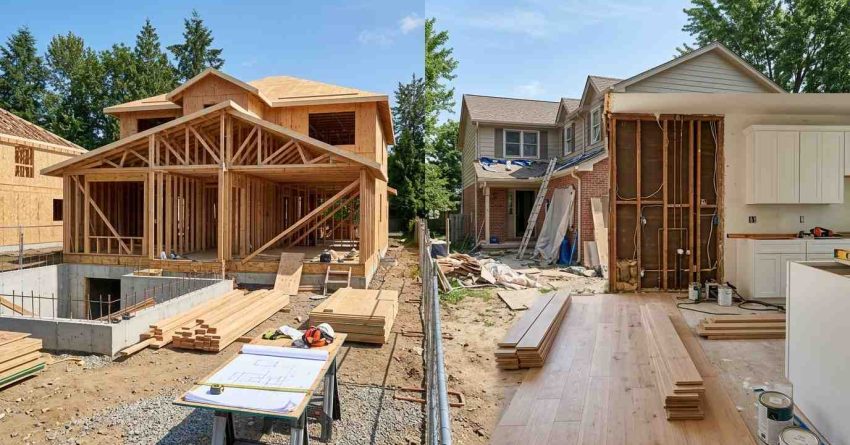
Building a custom home and renovating an existing one are two fundamentally different paths — and choosing the wrong one can cost you years of time and tens of thousands of dollars.
Understanding the difference between these two options matters now more than ever, as construction costs and housing inventory continue to shift across the USA.
This guide breaks down the key differences in cost, timeline, scope, and long-term value so you can make a confident, informed decision for your property.
What Is a Custom Home Build?
A custom home build is the process of constructing a brand-new residential property from the ground up on a purchased or owned lot. Every element — from the foundation and framing to the floor plan, fixtures, and finishes — is designed and built to your exact specifications.
Custom builds give homeowners complete control over layout, materials, energy efficiency systems, and structural design. There are no compromises inherited from a previous owner’s choices, no aging systems to work around, and no hidden structural surprises waiting behind the walls.
Key Advantages of Building Custom
The primary advantage of a custom build is total design freedom. You choose the number of rooms, ceiling heights, window placements, and every finish material. Modern builds also allow you to integrate energy-efficient HVAC systems, smart home wiring, and accessibility features from day one rather than retrofitting them later.
Custom homes also come with new construction warranties on major systems and structural components, reducing maintenance costs in the early years of ownership. Whether you are planning a full build or evaluating your options, understanding your full range of remodeling service options helps you plan the right scope, budget, and timeline from the start.
Common Challenges to Expect
Custom builds require securing land, navigating local zoning and permitting requirements, managing a general contractor, and making hundreds of design decisions before a single wall goes up. The process demands significant upfront planning, and delays in permitting or material supply chains can extend timelines considerably.
If you need a building permit guide for custom homes and renovations, understanding what approvals are required in your area before breaking ground is essential.

What Does Home Renovation Actually Involve?
Home renovation is the process of improving, updating, or restructuring an existing property. Renovations range from cosmetic upgrades like painting and flooring to structural changes like removing load-bearing walls, adding square footage, or fully gutting and rebuilding interior spaces.
Unlike a custom build, renovation works within the constraints of an existing structure. That means you are working with an existing foundation, existing utility lines, and an existing footprint — which can be both an advantage and a limitation depending on the property’s condition.
Types of Renovation Projects
Renovation projects fall into three broad categories. Cosmetic renovations cover surface-level updates: new paint, flooring, fixtures, and cabinetry. Functional renovations address systems and layout: kitchen remodels, bathroom additions, electrical upgrades, and plumbing replacements. Structural renovations involve changes to the building’s bones: foundation repairs, room additions, and load-bearing wall modifications.
Each category carries a different cost range, timeline, and complexity level. The scope you choose should align directly with your property goals and available budget.
When Renovation Makes More Sense
Renovation is typically the smarter choice when the existing structure is sound, the location is desirable, and the changes needed are contained to specific systems or spaces. If you love the neighborhood, the lot size works for your needs, and the foundation is solid, renovating is almost always faster and less expensive than building new.
Renovation also preserves existing equity in the property and avoids the land acquisition costs associated with a custom build.
Cost Comparison — Custom Build vs Renovation
Cost is the most significant factor separating these two paths. According to the U.S. Census Bureau’s Survey of Construction, the average cost per square foot for new single-family home construction in the USA was approximately $153 per square foot in recent reporting periods, though custom builds with premium finishes routinely exceed $300–$500 per square foot depending on location and specification level.
Renovation costs vary even more widely. A basic cosmetic renovation may run $15,000–$50,000, while a full gut renovation of a mid-sized home can reach $150,000–$300,000 or more depending on the scope, materials, and local labor rates.
| Path | Typical Cost Range | Key Cost Drivers |
| Custom Home Build | $200,000–$600,000+ | Land, permits, labor, materials, design fees |
| Full Gut Renovation | $100,000–$300,000+ | Structural repairs, systems replacement, finishes |
| Partial Renovation | $15,000–$100,000 | Scope of work, material grade, contractor rates |
Hidden Costs in Both Paths
Both options carry costs that are easy to underestimate. Custom builds often run over budget due to design change orders, permit delays, and material price fluctuations during the construction period. Renovations frequently uncover hidden structural issues — rotted framing, outdated wiring, or plumbing that does not meet current code — once walls are opened.
Many of these hidden renovation costs come from small structural repairs that surface mid-project. Our handyman repair costs resource breaks down what to budget for unexpected fixes before they stall your timeline.
For a dedicated breakdown of what a new build actually costs per square foot, a custom home build cost guide provides the detailed figures you need before committing to either path.
Timeline Differences You Need to Know
Timeline is where the two paths diverge most sharply. A custom home build in the USA typically takes 12 to 24 months from lot purchase to move-in, depending on permitting speed, contractor availability, and design complexity. High-demand markets and supply chain disruptions can push that timeline even further.
A renovation timeline depends entirely on scope. A bathroom remodel may take 3–6 weeks. A full kitchen renovation typically runs 8–12 weeks. A whole-home gut renovation can take 6–12 months or longer if structural issues are discovered mid-project.
Roof condition is one of the most time-sensitive factors in any renovation plan — understanding the roofing replacement timeline helps you sequence your project correctly and avoid costly delays when a roof replacement is needed before interior work can begin.
For homeowners on a strict move-in deadline, renovation almost always offers a faster path to occupancy than a ground-up custom build.

Which Option Adds More Long-Term Property Value?
Both paths can add significant long-term value, but the return depends heavily on execution quality, location, and market conditions. According to Remodeling Magazine’s Cost vs. Value Report, mid-range kitchen remodels recoup approximately 49% of their cost at resale, while upscale additions recoup closer to 40%.
Custom homes, when built in strong markets with quality materials, tend to hold value well because every system is new and under warranty. However, the land acquisition cost and construction premium mean that custom builds often require a longer hold period before the investment fully appreciates.
Renovation, particularly in established neighborhoods with strong comparable sales, can deliver faster equity gains — especially when the renovation addresses functional deficiencies that were suppressing the property’s market value.
For a full breakdown of which projects deliver the strongest returns, a home renovation ROI guide covers the data by project type and market segment.
How to Choose the Right Path for Your Property
The right choice between building custom and renovating comes down to four factors: your budget, your timeline, the condition of the existing structure, and your long-term goals for the property.
Choose a custom build if you need a specific layout that cannot be achieved through renovation, if you are building on land you already own, or if long-term energy efficiency and low maintenance costs are priorities. Custom builds make the most sense when no existing property in your target area meets your needs.
Choose renovation if the existing structure is sound, the location is right, and the changes you need are achievable within the existing footprint. Renovation is also the better choice when budget constraints make a full build impractical or when your timeline requires faster occupancy.
Flooring is one of the highest-impact upgrades in both new builds and renovations — exploring your flooring upgrade options early helps you align material choices with your overall budget and design plan before committing to a contractor.
When you are ready to move forward, our home remodeling guide covers every major service category, helping you match the right professionals to your specific project goals and get accurate estimates before work begins.
A home renovation planning checklist can also help you organize every decision point before you commit to a contractor or break ground.
Conclusion
Custom builds and renovations each offer a clear path to the property you want — the right choice depends on your budget, timeline, and what the existing structure can realistically support.
Both paths require careful planning, accurate cost estimates, and skilled professionals who understand the full scope of residential construction and improvement work.
At Mr. Local Services, we connect homeowners and property managers with trusted professionals across every service category — from remodeling and structural repairs to finishing work — so you can move forward with confidence and get the results your property deserves.
Frequently Asked Questions
Is it cheaper to build a custom home or renovate an existing one?
In most cases, renovating an existing home costs less than building custom from the ground up. Custom builds carry land, permitting, and full construction costs, while renovation works within an existing structure. However, extensive gut renovations on older homes can approach or exceed new build costs depending on the scope and condition of the property.
How long does it take to build a custom home compared to renovating?
A custom home build typically takes 12 to 24 months from lot purchase to move-in. A renovation timeline ranges from a few weeks for cosmetic updates to 6 to 12 months for a full gut renovation. Renovation almost always offers a faster path to occupancy than a ground-up custom build.
Does building a custom home add more value than renovating?
Not necessarily. Value depends on location, execution quality, and market conditions. Renovation in a strong neighborhood can deliver faster equity gains by addressing functional deficiencies. Custom builds tend to hold value well long-term but require a longer hold period to fully recover the construction premium.
What are the biggest hidden costs in a home renovation?
The most common hidden renovation costs include structural repairs discovered once walls are opened, outdated electrical or plumbing that must be brought to current code, permit fees, and contractor change orders. Budgeting a contingency of 15 to 20 percent above your initial estimate is standard practice for any renovation project.
Can I renovate a home to feel like a custom build?
Yes, in many cases. A full gut renovation that replaces all major systems, reconfigures the floor plan, and installs new finishes can produce a result that closely resembles a custom build. The key limitation is the existing footprint and structural constraints, which may prevent certain layout changes that would be possible in a ground-up build.
When does building custom make more financial sense than renovating?
Building custom makes more financial sense when the cost of renovating an existing property to meet your needs approaches or exceeds the cost of new construction, when the existing structure has significant deferred maintenance, or when you own land in a desirable location and need a layout that no existing property can provide.
What professionals do I need for a custom build vs a renovation?
A custom build requires an architect or designer, a general contractor, and subcontractors for each trade including framing, electrical, plumbing, HVAC, and finishing work. A renovation may require a subset of these depending on scope. Both paths benefit from a project manager who coordinates timelines, permits, and contractor schedules.


