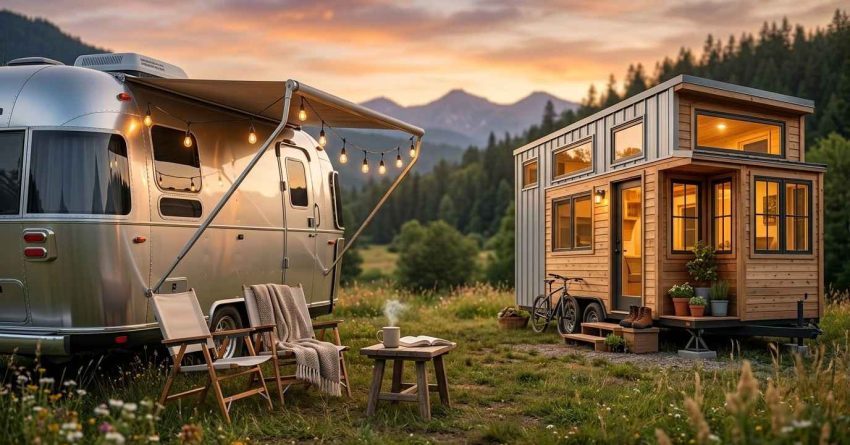
Living in an RV is usually cheaper than living in a tiny home in the short term, but a tiny home often costs less over many years. RVs have lower purchase prices and easy mobility, while tiny homes offer stronger durability, better insulation, and slower depreciation. The right choice depends on your budget, lifestyle, and how long you plan to stay in one place.
The Direct Cost Comparison: RV vs. Tiny Home
A used RV typically costs $10,000 to $50,000, while a new tiny home ranges from $30,000 to $80,000. RVs win on upfront affordability and flexibility. Tiny homes win on long-term value, energy efficiency, and lower repair frequency. For short-term living, RVs are cheaper. For permanent housing, tiny homes deliver better cost-per-year results.
Upfront Purchase Costs
RVs offer the lowest entry point. A reliable used travel trailer or motorhome can be purchased for under $20,000, and basic camper vans start even lower. Tiny homes require a larger initial investment, especially custom builds with quality insulation, plumbing, and electrical systems. DIY tiny homes can reduce costs by 30% to 50%, but they require time, tools, and construction skills. Financing also differs sharply, with RV loans easier to secure than tiny home mortgages, which most lenders still treat as personal property rather than real estate.
Monthly Living Expenses
Monthly costs favor tiny homes once you settle in one place. RV owners pay campground or RV park fees averaging $500 to $1,200 monthly, plus fuel, propane, and dump station charges. Tiny home residents typically pay land rent or lot fees between $300 and $700 monthly, with lower utility costs thanks to better insulation. Tiny homes also use standard residential power, water, and sewer connections, which reduces ongoing service complications. RVs consume more energy per square foot, making summer cooling and winter heating noticeably more expensive.
The cost answer is clear at the surface. The deeper question is what ownership actually demands once you move in, especially around tiny home upkeep and repairs that homeowners rarely budget for upfront.
Hidden Costs That Shift the Equation
Hidden costs change the math for both options. RVs depreciate fast, losing 20% to 30% of value within the first two years, similar to vehicles. Tiny homes hold value better, especially when built on permanent foundations. Insurance, registration, and zoning fees also differ widely by state, with some areas restricting tiny home placement entirely.
Maintenance, Insurance, and Land Fees
RVs need frequent attention. Roof seals, slide-outs, water systems, and engines all require routine service, and professional RV repair and seasonal servicing can run $1,500 to $3,000 annually for older units.
Tiny homes share maintenance needs with traditional houses, including roofing, plumbing, HVAC, and electrical care, but at much smaller scale. Insurance for RVs costs more due to mobility risks, while tiny home insurance varies based on classification. Land ownership or lot rental remains the biggest variable for tiny home dwellers.
Which Option Wins Long-Term?
Tiny homes usually win for stationary, long-term living. They depreciate slower, cost less to maintain per year, and provide a stronger sense of permanent residence. RVs win when mobility matters, when work requires travel, or when housing is temporary. A retiree wanting to explore the country saves more with an RV. A young professional planting roots saves more with a tiny home. Lifestyle drives the math more than the sticker price.
Conclusion
RVs cost less to buy and start using, while tiny homes deliver better long-term value through durability and lower maintenance demands.
For homeowners and property managers weighing alternative housing, the smarter choice depends on mobility needs, land access, and how long you plan to stay put.
We help you maintain, repair, and upgrade both tiny homes and RVs with trusted professionals. Contact Mr. Local Services today to find dependable experts near you.
Frequently Asked Questions
Can you live in an RV full-time legally?
Yes, full-time RV living is legal in most states, but zoning laws, park rules, and residency requirements vary by city and county.
Do tiny homes lose value over time?
Tiny homes on permanent foundations often hold value well, while tiny homes on wheels depreciate similarly to RVs and travel trailers.
Is RV insurance more expensive than tiny home insurance?
Yes, RV insurance usually costs more because of road risks, mobility exposure, and vehicle-related liability that stationary tiny homes avoid.
Can a tiny home be cheaper than renting an apartment?
Yes, a tiny home often costs less than renting once mortgage payments end, especially in high-cost cities with expensive monthly rentals.
What lasts longer, an RV or a tiny home?
Tiny homes generally last longer, often 30 to 50 years, while most RVs reach 15 to 20 years before major structural issues appear.