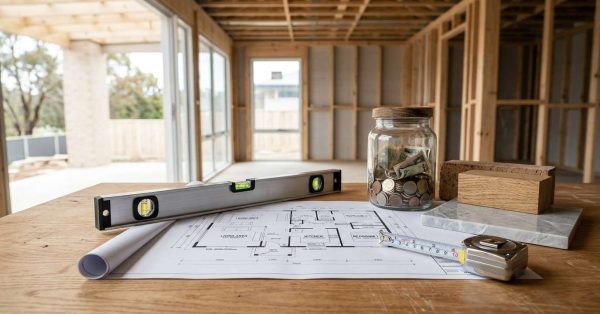
A whole home remodel is a comprehensive renovation that transforms every major living space, system, and finish in a property simultaneously. For homeowners, landlords, and property managers, it represents the most ambitious upgrade path available short of new construction.
Rising material costs, aging housing stock, and shifting family needs make careful timing and detailed planning critical right now, with unprepared projects often spiraling far beyond original budgets and schedules.
This guide covers definitions, timeline planning, cost breakdowns, design choices, structural work, major system upgrades, hiring contractors, permits, daily logistics, specialty scenarios, ROI considerations, and real case studies in depth.
What Is a Whole Home Remodel?
A whole home remodel updates substantially every room and major system in a property within a single coordinated project. It sits between a single-room renovation and a full tear-down rebuild on the scope spectrum, and the decision between them often comes down to structural condition, budget, and how much of the existing home you want to preserve.
There are several scope categories worth understanding before you commit. A cosmetic whole-home refresh focuses on finishes, paint, flooring, and fixtures without moving walls or systems. A pull-and-replace project keeps the layout but installs new kitchens, bathrooms, HVAC, and electrical components. A gut remodel strips the interior back to framing and rebuilds nearly everything, often including new mechanical systems and updated structural elements.
The right scope depends on the home’s age, code compliance, energy efficiency, and how long you plan to stay. Properties built before 1980 frequently hide knob-and-tube wiring, lead paint, asbestos, or galvanized plumbing that effectively force a deeper remodel once discovered.
A whole home remodel differs meaningfully from a renovation or restoration; renovations typically update specific areas, while restorations return a property to a historically accurate state. For a deeper definition and decision framework, our full whole home remodel definition walks through every scope category, real-world examples, and the exact thresholds that distinguish each project type so you can match scope to goals with confidence.
Planning and Sequencing Your Project
Successful whole home remodels follow a defined sequence: pre-construction planning, demolition, rough-in work, inspections, finish work, and a final punch list. Skipping or compressing any of these phases tends to create rework, code violations, or fixture damage that costs far more than the time saved.
Pre-construction often takes longer than homeowners expect. Design development, material selection, permit submission, and contractor scheduling typically run 8 to 16 weeks before a crew sets foot on site. Demolition follows once permits are in hand, then rough framing, plumbing, electrical, and HVAC work happen in parallel during the rough-in phase. Inspections gate progress at multiple stages, and finish trades (drywall, flooring, cabinetry, paint, fixtures) close out the project.
Total duration ranges widely. A 2,000 square foot cosmetic refresh might complete in 8 to 12 weeks, while a gut remodel of the same home often runs 6 to 10 months. Adding structural changes, second-storey work, or significant system upgrades extends timelines further.
Sequencing also affects whether you stay in the home or move out, which trades arrive when, and how change orders ripple through the schedule. For a detailed phase-by-phase plan covering every milestone and realistic duration, our week-by-week remodel timeline breaks down each construction stage, typical inspection points, and the buffer time you should build in for delays from materials, weather, and discovery items.
Cost and Budget Realities
Whole home remodel costs in the United States in 2025 generally fall between $60 and $250 per square foot depending on scope, finish level, and region. A mid-range gut remodel of a 2,000 square foot home commonly lands between $150,000 and $400,000, with luxury builds and major structural changes pushing well past $600,000.
Budget allocation typically distributes across categories in predictable proportions. Kitchens absorb 15 to 20 percent, bathrooms 10 to 15 percent, structural and framing work 8 to 12 percent, MEP systems 15 to 20 percent, finishes and flooring 10 to 15 percent, and soft costs (design, permits, project management) another 10 to 15 percent. The remainder covers demolition, site protection, and contingency reserves.
Hidden costs derail more remodels than any other factor. Asbestos abatement, lead-safe work practices, hidden rot, foundation issues, and code-triggered upgrades can add 10 to 25 percent on top of the base budget. Most experienced contractors recommend a contingency of 15 to 20 percent for any project that involves opening walls.
Financing options include HELOCs, cash-out refinances, construction loans, and renovation mortgages such as Fannie Mae HomeStyle and FHA 203k, each with different rates and disbursement rules. For a complete category-by-category cost analysis with regional adjustments and realistic ranges, our full 2025 cost breakdown shows exactly where the money goes, where to splurge, where to save, and how to build a contingency that actually protects you mid-project.
Design and Layout Decisions
Design choices in a whole home remodel shape both daily livability and long-term resale value. Floor plan optimization, material palette cohesion, lighting strategy, and architectural style all interact, and the decisions made early in design determine what the contractor can deliver later without expensive change orders.
Open concept layouts remain popular for entertaining and natural light, but defined rooms are returning in many markets, especially for home offices, formal dining, and acoustic privacy. The right answer depends on your household, the home’s bones, and your neighborhood comp set. Removing walls almost always requires structural engineering and may trigger additional permits.
Material palettes should be coordinated across the whole home, not selected room by room. Cohesive wood tones, consistent metal finishes, complementary tile families, and unified paint colors create a finished property that feels designed rather than assembled. Lighting deserves the same whole-house treatment, with layered ambient, task, and accent lighting planned during rough electrical.
Smart home pre-wiring, aging-in-place considerations, and future-proofing for technology shifts all cost very little during a gut remodel but become expensive retrofits later. For a complete framework on layout principles, sight lines, circulation, and design decisions that hold value over decades, our whole home floor plan optimization guide details the proven principles that work across home styles, square footages, and household configurations without compromising resale appeal.
Structural Considerations
Structural work is often the most consequential and least visible portion of a whole home remodel. Removing load-bearing walls, modifying roof structures, repairing foundations, or adding a second storey all require structural engineering, careful sequencing, and detailed permit documentation.
Load-bearing walls carry weight from above to the foundation; removing them requires installing beams (typically LVL or steel) and properly sized posts to redirect loads. A structural engineer must stamp the calculations, and the city inspector verifies the work before drywall closes it in. Skipping this step creates sagging floors, cracked drywall, and serious safety hazards.
Foundation issues frequently surface during demolition. Crawl spaces reveal rot, settling, or moisture damage that was invisible from the surface. Slab cracks, basement waterproofing problems, and inadequate footings all become decision points: repair in place, reinforce with helical piers, or replace sections entirely. Each path carries different costs and timelines.
Reframing decisions, ceiling modifications, and floor leveling in older homes also fall under structural scope. Many homeowners want vaulted or cathedral ceilings, which require ridge beams sized for the new load path. Floor leveling in 100-year-old homes can require sistering joists or installing supplemental beams underneath.
For the complete process, costs, and engineering considerations behind one of the most common structural changes, our load-bearing wall removal guide covers identification, beam sizing, permit requirements, contractor selection, and the realistic cost ranges by span length and load conditions.
Major Systems Upgrades
Mechanical, electrical, and plumbing systems often need significant upgrades during a whole home remodel, especially in homes over 30 years old. Doing this work while walls are open saves money compared to retrofitting later and ensures the home meets current code requirements.
Electrical upgrades commonly include moving from a 100-amp to a 200-amp service, replacing aluminum branch wiring, addressing knob-and-tube where it remains, and adding circuits for modern appliances, EV chargers, and dedicated kitchen loads. Smart panels are increasingly worth considering for energy monitoring and load management. Most jurisdictions require GFCI and AFCI protection that older homes lack.
Plumbing decisions center on repipe scope and pipe material. Whole-house repipes in PEX or copper eliminate galvanized and polybutylene risks. Tankless water heaters, recirculation pumps, water softeners, and whole-house filtration are easier to install during a remodel than after. Sewer laterals deserve a camera inspection before finishes go in.
HVAC is often the highest-impact systems upgrade. Right-sizing equipment via Manual J load calculations, adding zoning, upgrading to heat pumps, and improving ductwork all influence comfort and operating costs for decades. Insulation, air sealing, and ventilation work paired with HVAC create lasting performance gains.
For a complete decision framework on HVAC equipment, sizing, ductwork, and zone strategies during a remodel, our whole-house HVAC replacement guide walks through Manual J calculations, system type comparisons, and the cost-versus-comfort tradeoffs that homeowners need to weigh before committing to a system.
Working With Professionals
Selecting and managing the right professionals shapes the success of a whole home remodel more than almost any other factor. The decision between a general contractor and a design-build firm, the bidding process, contract structure, and ongoing project management all influence cost, quality, and stress.
General contractors execute plans designed by separate architects or designers, while design-build firms handle both design and construction under one contract. Design-build typically streamlines communication and reduces finger-pointing when issues arise, though general contractor models can offer more design flexibility and potentially better pricing through competitive bidding.
Vetting contractors requires verifying licensing, insurance, and bonding, checking multiple references, visiting completed projects, and reading reviews critically. Three apples-to-apples bids are the minimum, and the lowest bid is rarely the best value. Red flags include reluctance to pull permits, requests for large upfront deposits, vague scopes of work, and no written contract.
Contract types (fixed price, cost-plus, time and materials) carry different risk allocations between homeowner and contractor. Change orders should follow a defined process with written documentation and pricing. Draw schedules tie payments to completed milestones rather than calendar dates.
For the complete contractor selection process, vetting checklists, interview questions, and contract review framework, our contractor hiring framework details every step from initial referral sourcing through final lien waiver, with specific red flags and the questions that separate qualified contractors from risky ones.
Permits and Code Compliance
Permits and inspections are non-negotiable for any whole home remodel involving structural, electrical, plumbing, or HVAC work. Unpermitted projects create legal liability, complicate resale, void insurance coverage for related claims, and can require expensive remediation when discovered.
The permit process typically starts with plan review by the local building department. Plans must show existing conditions, proposed changes, structural calculations where applicable, and compliance with current building codes including the International Residential Code (IRC), National Electrical Code (NEC), and applicable plumbing codes (UPC or IPC). Energy code compliance under IECC is increasingly enforced.
Inspections occur at multiple stages: footing, framing, rough electrical, rough plumbing, rough HVAC, insulation, and final. Each must pass before the next phase proceeds. Failed inspections create delays, and inspectors look for specific code items like GFCI placement, egress windows, smoke and CO detector locations, ceiling heights, and stair geometry.
Whole home remodels frequently trigger code upgrades through the “50 percent rule” or similar local provisions: when renovation value exceeds half the home’s value, the entire home may need to meet current code. HOA approval, historic district review, and zoning compliance add additional layers for properties in those jurisdictions.
For a complete permit roadmap covering applications, inspection schedules, code triggers, and HOA processes for whole home projects, our permits required guide outlines exactly which permits you need, what plan review expects, and how to navigate code-cascade upgrades without budget surprises.
Living Through the Remodel
Daily logistics during a whole home remodel often matter as much as the construction itself. Whether to move out or stay in, where belongings go, how to manage pets and children, and how to maintain work schedules all shape the project experience and the family’s stress level.
Moving out generally accelerates the project, reduces stress, and allows contractors to work more efficiently. The cost (typically a short-term rental, extended-stay hotel, or family stay for 3 to 8 months) needs to be factored into the total budget. Staying in is possible for cosmetic or pull-and-replace projects, especially when work happens in phases, but gut remodels with no kitchen, bathroom, or HVAC are rarely livable.
For homeowners who stay, a temporary kitchen setup with a microwave, induction burner, mini-fridge, and a dedicated water source can sustain a household for months. Dust containment, daily cleaning, and protecting belongings in storage matter for quality of life and respiratory health. Pets need quiet zones away from construction noise and dust, and the strictly controlled access prevents loose tools or materials from creating safety hazards.
Working from home during a remodel requires planning around construction noise, power outages, and intermittent internet service. Many homeowners shift to coworking spaces or coffee shops during the loudest phases.
For a complete framework on housing decisions, costs, and the strategies that make either path workable for your household, our temporary housing options guide compares rentals, extended-stay hotels, RV options, and live-in strategies with realistic costs and lifestyle tradeoffs.
Specialty Home Scenarios
Whole home remodels carry meaningfully different challenges depending on the home’s age, architectural style, and structural type. Ranch homes, Victorians, mid-century moderns, Craftsman bungalows, split-levels, townhouses, condos, and manufactured homes each present specific issues that affect scope, cost, and design approach.
Ranch homes typically offer straightforward layouts that respond well to open-concept conversion, but their low rooflines limit second-storey additions without significant structural changes. Mid-century modern homes often hide post-and-beam construction with cantilevers that complicate wall removal. Victorian and Craftsman homes contain valuable original millwork, plaster, and detailed trim worth preserving, often qualifying for historic tax credits.
Split-level homes pose flow challenges that creative design can resolve but rarely eliminate. Townhouses and condos carry shared-wall constraints, HOA approvals, and limits on moving plumbing or HVAC. Manufactured and mobile homes have unique structural and zoning considerations that not every contractor handles.
Each scenario carries its own cost premiums and design constraints. Historic homes may add 20 to 40 percent to remodel costs due to specialty labor, code variances, and required materials. Condo remodels often need building approval and may restrict working hours to weekdays, extending timelines.
For style-specific guides covering each home type’s typical issues, opportunities, and realistic project budgets, our style-specific remodel guides cover ranch, Victorian, mid-century, Craftsman, split-level, townhouse, condo, and manufactured home remodels with the specific structural, design, and regulatory considerations that apply to each.
ROI and Resale Value
Return on investment matters when a whole home remodel is part of a resale strategy or an investment property play. National data from the Cost vs. Value Report and similar industry sources shows that whole-home remodels typically recoup 50 to 70 percent of cost at resale, with significant variation by region, market conditions, and project quality.
Specific projects within the remodel carry different ROI profiles. Minor kitchen remodels, garage door replacements, steel entry doors, and manufactured stone veneer consistently rank among the highest-ROI projects nationally. Master suite additions, sunrooms, and luxury kitchen builds often return less than 50 percent of cost, especially in markets where they push the home above neighborhood comps.
Over-improving for the neighborhood is the most common ROI mistake. A $400,000 remodel in a neighborhood where comparable homes sell for $450,000 caps the appraisal regardless of the work’s quality. Appraisers value square footage, bedroom and bathroom counts, and standard quality metrics; bespoke finishes and luxury upgrades rarely earn proportional appraisal credit.
For long-term residents, “use value” (how much you enjoy living in the home) often matters more than resale ROI. Both perspectives are valid; the planning approach simply differs.
For detailed national and regional ROI data by project type, with strategies for resale versus long-term living, our regional ROI data report breaks down the specific projects, finish levels, and market conditions that determine whether your remodel pays back at sale or simply provides decades of enjoyment.
Real Project Examples
Case studies make the abstract concepts in a whole home remodel concrete. Seeing how other homeowners navigated similar properties, budgets, and goals provides realistic benchmarks for your own planning.
Common case study patterns include 1950s ranch homes transformed into modern open-concept layouts, 1920s bungalows restored with period-appropriate details and modern systems, storm-damaged homes rebuilt under insurance scope plus owner upgrades, and multi-generational homes reconfigured for in-law suites or accessible living. Each illustrates different combinations of scope, cost, timeline, and outcome.
The most useful case studies document the starting condition, the planning decisions, the budget breakdown, the actual timeline versus the projected timeline, and the lessons learned. Before-and-after photo galleries help visualize possibility, but the narrative around tradeoffs is what makes them educational. Cost ranges in case studies should always be presented with regional context, since the same scope of work varies 30 to 60 percent in cost between markets.
Photo galleries organized by style (modern, transitional, traditional, farmhouse, mid-century) help homeowners narrow their own aesthetic direction before committing to material selections.
For a detailed walkthrough of a representative project, our 1950s ranch case study documents the full transformation from dated ranch to modern open-concept home, including the budget at each phase, structural challenges discovered during demolition, timeline realities, and the final appraisal outcome that homeowners can use as a benchmark for similar projects.
Conclusion
A whole home remodel unites design, structure, systems, costs, and code into one project that transforms how a property functions for years to come.
Each cluster topic above goes deeper into a single dimension, and together they form a complete resource for serious planners and homeowners considering this undertaking.
Whether you are planning, mid-project, or sourcing the right team, we connect you with vetted professionals through Mr. Local Services for confident, transparent results.
Frequently Asked Questions
How long does a typical whole home remodel take?
Most whole home remodels run 4 to 10 months from demolition through final inspection. Cosmetic refreshes can finish in 8 to 12 weeks, while gut remodels with structural work often extend to a full year.
Can I live in my home during a whole home remodel?
Cosmetic and phased projects are often livable, but gut remodels without kitchen, bath, or HVAC are not. Most homeowners moving out for 3 to 8 months report lower stress and faster project completion.
What percentage of my home’s value should I spend remodeling?
A general guideline is keeping total remodel cost below 50 percent of the home’s after-improved value. Exceeding this often triggers code-cascade upgrades and creates resale ROI problems in most neighborhoods.
Do I need permits for a whole home remodel?
Yes, nearly always. Structural, electrical, plumbing, and HVAC work all require permits. Unpermitted projects create legal, insurance, and resale problems that far exceed the cost and time of proper permitting.
Should I hire a general contractor or a design-build firm?
Design-build firms streamline communication and accountability under one contract. General contractors offer more design flexibility and competitive bidding. Choose based on your project complexity, design clarity, and preferred communication style.
How much contingency budget should I set aside?
Industry standard is 15 to 20 percent of total project cost for contingency, with older homes pushing toward 25 percent. Hidden rot, asbestos, lead paint, and foundation issues commonly emerge during demolition.
Does a whole home remodel increase my property taxes?
Yes, in most jurisdictions. Permitted improvements trigger reassessment, and the tax increase reflects the post-remodel value. Budget for higher annual property taxes starting the year after work is complete.