A pool deck is a raised or at-grade platform constructed around a swimming pool that provides safe footing for swimmers, manages drainage from constant water exposure, enables outdoor entertaining, and satisfies the building code requirements that govern pool enclosures in every US state.
Getting pool deck construction right matters more than with almost any other deck type: poor material choices, inadequate drainage, and code violations create safety hazards that standard decks rarely produce.
This guide covers pool deck fundamentals, material selection and comparison, design principles, the complete construction process, above-ground deck options, safety and code standards, cost benchmarks, contractor hiring, and long-term maintenance.
What Is a Pool Deck?
A pool deck is a platform constructed directly around an in-ground or above-ground swimming pool. It functions as the primary transition zone between the pool water and the surrounding outdoor living space, providing safe footing for wet, bare-foot traffic, accommodating pool equipment access, creating seating and entertaining areas, and managing the drainage that continuous water exposure demands.
Pool decks differ from standard backyard decks in several fundamental ways. Where a standard deck primarily manages weather exposure and structural load requirements, a pool deck must also address continuous moisture contact, slip resistance under bare wet feet, chemical exposure from pool water and treatments, and a specific layer of building codes that govern pool barriers, fencing, gate hardware, and surface standards.
Pool Deck vs. Pool Coping vs. Patio
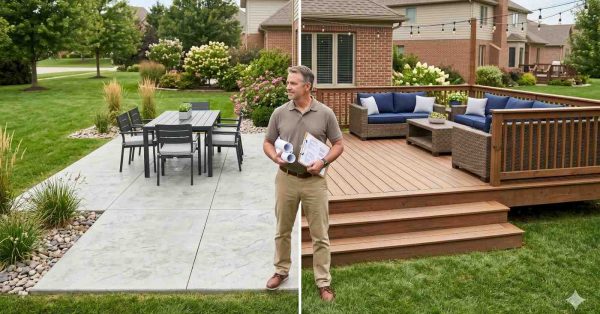
Understanding the terminology helps clarify what you are actually building. Pool coping is the cap material installed directly on the pool wall’s top edge: the immediate border between the pool shell and the surrounding surface. The pool deck is the broader platform surrounding the coping. A patio is a ground-level hardscaped area that may or may not connect to the pool deck. Many pool projects integrate all three, which requires planning around height transitions, material choices, and drainage gradients from the start of design.
In-Ground vs. Above-Ground Pool Deck Basics
In-ground pool decks are typically built at or near grade level, framed around a permanent pool shell, and require permits and engineering review in most US jurisdictions. Above-ground pool decks are constructed as freestanding or attached structures at the height of the pool wall, typically 42 to 54 inches above grade. Each category introduces distinct structural challenges covered in depth later in this guide.
Why Pool Decks Require Specialized Construction
The combination of moisture, chemical exposure, slip-resistance requirements, and pool-specific code compliance makes pool decks one of the more technically demanding residential outdoor construction projects. Contractors who build excellent standard decks but lack pool-specific experience regularly produce drainage failures, hardware corrosion problems, and code violations that cost significantly more to correct than to prevent.
Pool decks combine the structural demands of standard deck construction with unique wet-environment requirements that differ in material selection, drainage engineering, and code compliance; our complete guide to pool deck fundamentals goes deeper into terminology, coping distinctions, and the specific design principles that set pool decks apart from every other deck type.
Choosing Materials for a Pool Deck
Material selection is the most consequential decision in any pool deck project. The material you choose must provide adequate slip resistance for wet bare feet, resist moisture absorption and chemical degradation from pool water and treatments, manage surface temperatures in full sun exposure, and hold up to heavy foot traffic over a 15- to 25-year lifespan. Aesthetic preferences matter, but performance under pool conditions must come first.
Composite Decking for Pool Areas
Capped composite decking has become the dominant material choice for residential pool decks in the USA. Modern capped composite boards resist moisture absorption and chlorine exposure, come with textured surfaces rated for wet slip resistance, and eliminate the need for annual staining or sealing. Premium product lines with cool-touch technology reduce surface temperatures noticeably compared to standard wood or dark-colored composites, which is a critical advantage in climates where summer sun can heat uncapped deck surfaces to temperatures that burn bare feet.
Wood Options: Which Species Perform in Pool Environments
Pressure-treated lumber remains cost-effective for pool deck substructure but performs poorly as a walking surface in pool environments without rigorous annual maintenance. Tropical hardwoods, particularly ipe, cumaru, and teak, are the leading natural wood choices for pool decks. Their density and natural resistance to moisture and insects allow them to hold up near water better than any softwood option. Cedar and redwood are also used but require significantly more protective finish maintenance to remain safe and structurally sound in pool conditions.
Slip Resistance: A Non-Negotiable Priority
The Coefficient of Friction rating of a deck surface measures its resistance to sliding under wet conditions. Pool deck surfaces should meet a minimum wet COF of 0.6, the standard referenced in ANSI A137.1 for tile and applied broadly across pool deck surface materials. Smooth or polished finishes are not appropriate for pool decks regardless of material. Surface slip resistance is measured by the Coefficient of Friction rating, and selecting materials that meet a minimum wet COF of 0.6 for pool deck applications is a non-negotiable safety baseline; our resource on slip-resistant pool deck surfaces explains how different materials are rated, which products consistently meet pool safety standards, and how to verify manufacturer slip resistance claims before purchase.
PVC, Stone, and Concrete Alternatives
Full PVC decking, distinct from composite, offers complete moisture impermeability and is popular in high-end pool deck applications. Natural stone pavers and concrete overlays offer design versatility but require anti-slip surface treatments and can reach extreme temperatures in direct sun without shade mitigation. Lighter colors across all material categories consistently outperform darker colors in managing surface heat.
Key Selection Criteria at a Glance
When evaluating pool deck materials, prioritize slip resistance ratings, surface temperature performance in direct sun, resistance to chlorine and pool chemical exposure, required maintenance intervals, and warranty coverage for pool-adjacent installations. Each material category involves trade-offs between upfront cost and long-term performance that are worth quantifying before a final decision.
Material selection is the single most consequential decision in any pool deck project, directly determining surface temperature, slip resistance, durability in wet conditions, and long-term maintenance burden; our complete breakdown of the best pool deck materials compared covers composite, PVC, tropical hardwood, stone, and pavers side by side so you can match material performance to your climate, budget, and design priorities.
Pool Deck Design: Principles and Ideas
A well-designed pool deck balances three competing priorities: functional safety, which requires enough clear space for safe movement around the pool; entertaining capacity, which means room for furniture, shade structures, and outdoor kitchen features; and visual integration with the home and surrounding landscape. Arriving at the right balance requires deliberate planning before any materials are selected or contractors are approached.
Layout and Space Planning
The International Swimming Pool and Spa Code and most local building departments require a minimum clear deck width around the pool, typically 36 to 48 inches on all sides, for safe egress and rescue access. Beyond code minimums, experienced pool deck designers recommend a deck width of at least 8 to 10 feet on the primary lounging side to accommodate chaise seating with room for foot traffic to pass safely. Insufficient deck width is among the most common regrets homeowners report after a pool deck is completed.
Multi-Level Designs and Level Changes
Multi-level pool deck designs are popular on sloped lots and where homeowners want to create distinct functional zones: a lower level at the pool edge for wet-area lounging and an upper level for dining, cooking, and conversation areas. Each level change requires proper stair construction, railing code compliance at each elevation, and careful drainage planning to prevent water from collecting at level transitions.
Integrating Features: Shade, Kitchen, Bar
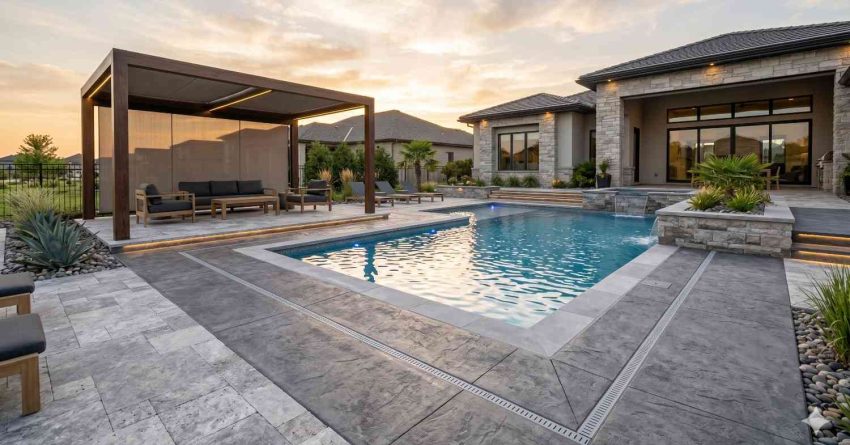
Pool decks are among the most common platforms for integrating outdoor features. Pergolas and sail shades manage sun exposure and dramatically reduce surface temperatures in the shade zone. Outdoor kitchens and bar tops support entertaining adjacent to the water. Fire pits and built-in seating extend the deck’s useful hours into the evening. Every planned feature requires structural consideration during the design phase, not as an afterthought during construction, because adding them retroactively nearly always costs more and produces inferior results.
Translating a pool deck vision into a buildable plan requires understanding how layout, level changes, traffic flow, and feature integration interact in the unique context of a pool environment; our gallery of pool deck design ideas and layouts walks through thirty proven configurations for small yards, large properties, and everything in between, covering multi-level setups, patio integration, and resort-style designs.
The Pool Deck Construction Process
Building a pool deck follows the same general phases as any deck construction: site preparation, footing installation, framing, decking installation, and finish work. Each phase, however, involves pool-specific considerations that change the approach, the materials required, and the code compliance checkpoints involved.
Site Preparation and Utility Locating
Before any ground is broken around a pool, utility locating is critical. Electrical conduits, gas lines, and plumbing for pool equipment can run underground anywhere within the construction zone. Pool equipment pads, including pump, filter, and heater locations, must be accessible from the deck or strategically positioned before framing begins. Soil testing around existing pool shells informs footing depth and placement decisions to avoid disturbing the pool structure.
Framing Around the Pool Shell
Deck framing that surrounds an in-ground pool must maintain a gap between the structural framing members and the pool coping or shell edge, typically 1/4 to 1/2 inch, to allow for independent movement of the two structures and prevent water from being trapped against the pool shell. Beam and joist sizing is governed by the deck’s load calculations, chosen decking material, and required spans.
Drainage Engineering
Drainage is what separates a well-built pool deck from a problem pool deck. All pool deck surfaces must slope away from the pool at a minimum of 1/8 inch per foot, directing water toward the yard and away from the pool shell and subframing. Drainage channels, scupper openings, and sub-deck drainage membranes work together to manage the significant water volume that moves across a pool deck during normal use and rain events. Inadequate drainage leads to standing water, accelerated structural decay, and slip hazards that develop within the first few seasons.
Hardware Selection for Pool Environments
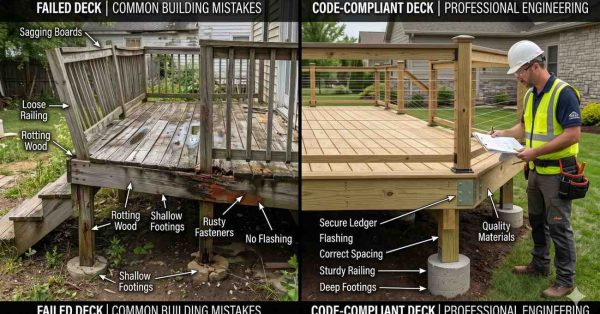
All structural hardware used in pool deck construction, including joist hangers, post bases, lag bolts, and deck screws, must be rated for the chemical and moisture exposure levels that pool environments produce. Standard hot-dipped galvanized hardware is a minimum requirement. All structural hardware used in pool deck construction must be rated for chemical and moisture exposure, with stainless steel 316 grade being the preferred standard for any deck within 10 feet of pool water; our guide to pool environment hardware standards explains hardware grade differences, corrosion timelines in pool settings, and the exact specifications to require in your contractor’s material plan.
Pool Coping Integration
Where the deck surface meets the pool coping, the transition joint must be sealed with a flexible caulk or backer rod system that accommodates independent movement of both structures without creating a water infiltration point. This joint detail is frequently mishandled in residential pool deck construction and is a leading source of long-term moisture damage when left unsealed or sealed with rigid material that cracks under seasonal movement.
From site preparation and framing around the pool shell to hardware selection and coping integration, building a pool deck involves critical sequencing decisions that differ from standard deck construction at every phase; our pool deck construction process guide covers footing requirements, drainage system design, substructure framing, and every verification checkpoint to review with your contractor.
Above-Ground Pool Decks
Above-ground pool decks present a distinct set of challenges requiring a different structural approach than in-ground pool decks. The primary challenge is that the deck must be built at the height of the pool wall, typically 42 to 54 inches above grade, while managing load transfer, safe pool access, and structural independence from the pool itself.
Freestanding vs. Attached Designs
Above-ground pool decks can be designed as freestanding structures that stand on their own footings with no structural connection to the pool wall, or as attached designs that connect to the pool wall’s deck flanges. Freestanding designs are generally preferred by structural engineers because they distribute loads independently and do not stress the pool walls. Attached designs provide a more seamless aesthetic but must stay within the load limits specified by the pool manufacturer. Exceeding those limits voids most pool warranties and can compromise the pool wall itself.
Shape Configurations: Round, Oval, Rectangular
Round above-ground pools can be surrounded by a full wraparound deck, a partial deck on one side, or a connected deck-and-patio combination. Oval pools frequently use side-deck configurations that follow the pool’s long axis. Rectangular above-ground pools are the most straightforward to deck around because the framing geometry aligns with standard deck construction methods. Each shape introduces unique framing considerations for the transition between the deck structure and the pool wall.
Access, Safety Gates, and Code Compliance
Every above-ground pool deck must include code-compliant stair access from grade level. In most US jurisdictions, a self-closing, self-latching gate that restricts access to the pool from the deck structure is also required by pool barrier code. These requirements exist regardless of whether the pool is located in a fenced backyard: the deck itself constitutes a point of pool access and must be controlled accordingly.
Above-ground pool decks introduce distinct structural and design challenges; our resource on above-ground pool deck plans covers freestanding vs. attached configurations, round and oval pool shapes, access and gate code requirements, and cost benchmarks for every project scale.
Pool Deck Safety: Standards and Requirements
Safety is the defining constraint in pool deck design and construction. A deck adjacent to a swimming pool carries specific hazard risks, including drowning, slip-and-fall injuries, and structural failures, that require targeted design responses, appropriate material choices, and compliance with code requirements that go well beyond what applies to standard residential decks.
Slip Resistance Ratings and Surface Selection
The Coefficient of Friction rating of a pool deck surface measures its resistance to sliding under wet conditions. Pool deck surfaces should meet a minimum wet COF of 0.6, which aligns with ANSI A137.1 surface standards for tile and is applied broadly as a benchmark across composite, wood, and other pool deck materials. Smooth or polished finishes are inappropriate for pool deck use regardless of material. Textured composite boards, brushed hardwood, and anti-slip coatings on concrete or stone are the appropriate surface treatments for pool deck applications.
Pool Barrier, Fencing, and Gate Requirements
The International Residential Code and the International Swimming Pool and Spa Code require that pools be surrounded by a barrier of at least 48 inches in height that prevents unauthorized access. Per CDC drowning prevention data, drowning is one of the leading causes of unintentional injury death for children ages 1 to 4 in the USA, which is why pool barrier compliance is treated as a life-safety requirement with legal and insurance implications. The required barrier may be a fence, wall, or railing system, but it must include a self-closing, self-latching gate with the latch positioned at a height of at least 54 inches from the deck surface on the pool side.
ADA Compliance and Railing Code
While the Americans with Disabilities Act applies primarily to commercial pool facilities, many homeowners apply ADA-informed design principles as a matter of accessibility and future resale value: accessible pathways of at least 36 inches in width, slip-resistant surfaces throughout, handrails on all stair sections, and grade-level access alternatives to stairs. Pool decks subject to IRC code require guard railings at deck edges 30 or more inches above grade, with a minimum railing height of 36 inches for residential applications and 42 inches for commercial use.
Pool decks are governed by a second regulatory layer beyond the standard IRC provisions that apply to all decks, including ISPSC pool barrier, gate, and surface standards that exist specifically because of swimmer access and the presence of water; our upcoming resource on pool deck code requirements breaks down which code sections apply specifically to pool decks, how they differ from standard deck requirements, and what to confirm before construction begins.
Every pool deck project in the USA must satisfy a specific set of safety requirements that go beyond standard deck code, including surface slip-resistance thresholds, self-closing gate specifications, barrier height requirements, and ADA accessibility provisions; our dedicated guide to pool deck safety standards explains the full ISPSC and ADA framework that applies to your project, with actionable design decisions that prevent the most common pool deck hazards.
Pool Deck Cost: What to Expect
Pool deck construction costs vary considerably based on pool type, material selection, deck square footage, required drainage infrastructure, and the scope of integrated features. Understanding the cost framework before soliciting contractor quotes helps homeowners evaluate bids accurately and identify omissions before signing a contract.
Average Cost Benchmarks by Material
Pressure-treated wood remains the most affordable pool deck surface option, typically ranging from $15 to $25 per square foot installed. Composite decking ranges from $25 to $55 per square foot depending on product tier. Tropical hardwood, including ipe and cumaru, typically runs $30 to $60 per square foot installed. Full PVC decking falls in the $30 to $50 range, while natural stone pavers or concrete overlays range from $15 to $40 per square foot depending on surface treatment and project complexity. These benchmarks reflect material and installation labor but do not include drainage infrastructure, fencing, or permit costs.
Hidden Costs in Pool Deck Construction
Several cost categories are frequently underestimated or omitted from initial pool deck quotes. Drainage infrastructure, including channels, scuppers, and sub-deck membranes, typically adds $2,000 to $8,000 depending on complexity. Stainless steel 316 hardware upgrades over standard galvanized hardware carry a 10 to 20 percent premium on hardware costs. Pool coping integration and transition sealing typically runs $500 to $2,500. Permit fees range from $300 to $1,500 depending on municipality. Pool barrier fencing and self-closing gate hardware required by code commonly adds $2,000 to $8,000 or more to the total.
In-Ground vs. Above-Ground Cost Comparison
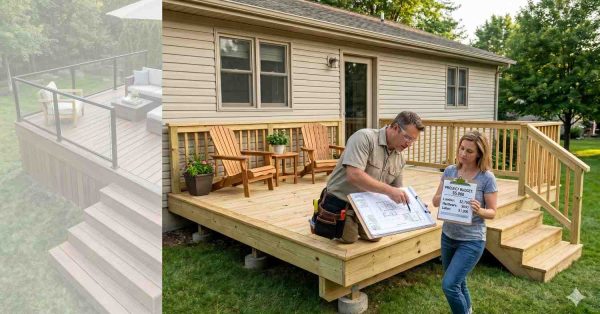
Above-ground pool decks are generally less expensive than in-ground pool decks of equivalent size, primarily because they require less site preparation, typically involve smaller footprints, and are less likely to trigger full engineering review. A modest wraparound above-ground pool deck in composite decking typically ranges from $5,000 to $15,000. A mid-size in-ground pool deck with full perimeter framing and standard composite decking typically runs $20,000 to $50,000 before feature additions.
Cost ranges for pool decks vary significantly based on material, pool type, square footage, drainage requirements, and feature integration; our detailed resource on pool deck cost by material provides current pricing benchmarks for composite, PVC, wood, stone, and concrete options, along with a cost calculator and a full breakdown of line items that first-time quotes frequently omit.
Hiring Pool Deck Contractors
A pool deck is not a standard deck project. It involves pool code compliance, drainage engineering, wet-environment hardware selection, and pool coping integration, areas where general deck contractors without pool-specific experience regularly produce outcomes that require costly correction. Selecting the right contractor is one of the highest-leverage decisions in the entire project.
Pool Deck Specialist vs. General Deck Builder
Not all deck contractors are equally equipped for pool deck work. A qualified pool deck contractor should have verifiable experience with pool barrier code compliance, drainage system design, corrosion-resistant hardware installation, and pool coping transitions. Ask to see specific pool deck projects in their portfolio, not just general deck work. Contractors who have built hundreds of standard decks but have no pool deck references represent a meaningful project risk.
Licensing, Insurance, and Bonding
Pool deck contractors in the USA must hold a valid contractor license appropriate for their scope of work. Depending on the state, this may include both a general contractor license and a specialty pool or spa contractor license. Verify that the contractor carries general liability insurance at a minimum of $1 million per occurrence, workers’ compensation coverage for all on-site personnel, and any bonding required in your state for contractors of this project size.
Questions to Ask and How to Compare Bids
Before committing to a pool deck contractor, confirm their experience with your specific pool type, their hardware specification practices, their drainage design approach, and the warranty terms covering both materials and labor. Obtain at minimum three competing bids and evaluate them against each other for scope consistency, not just price. Bids that omit drainage infrastructure, fencing, or permit costs will appear more affordable but will produce higher total costs and project complications.
Choosing the right contractor for a pool deck project requires evaluating wet-environment construction experience, familiarity with local pool codes, hardware specification practices, and a portfolio that includes your specific material and configuration; our guide to finding qualified pool deck contractors covers the screening questions to ask, red flags to watch for, how to compare bids accurately, and what every pool deck contract should include.
How Pool Decks Differ from Standard Decks
Homeowners who have built or researched standard backyard decks sometimes underestimate the additional complexity of a pool deck project. The two categories share foundational structural skills and construction phases but diverge significantly in regulatory requirements, material specifications, drainage engineering, and safety design obligations.
Regulatory Differences
Standard decks are primarily governed by IRC R507 deck provisions, which cover ledger attachment, footing design, framing spans, and railing requirements. Pool decks must satisfy all of those same requirements and comply with ISPSC pool barrier, gate, and slip resistance standards, effectively adding a second regulatory layer. This dual compliance requirement affects the permit process, the inspection sequence, and the design constraints that govern the entire project.
Material and Hardware Specification Differences
Standard deck projects can use a broad range of hardware grades and decking materials without the performance constraints that pool environments impose. Pool decks demand moisture-resistant surface materials, corrosion-resistant hardware rated for chemical exposure, and surface textures that meet wet-slip standards, requirements that eliminate several low-cost options that work well on standard decks. Specification errors in hardware or surface materials typically produce visible failures within three to five seasons near a pool.
Drainage Engineering Differences
Pool decks require active drainage design as a structural element, not merely as a finishing detail. The volume of water that moves across a pool deck during normal use and rain events requires deliberate engineering to channel water away from the pool structure, the subframe, and the surrounding landscape. Standard decks rarely require drainage engineering at this level.
Homeowners who want a thorough foundation in outdoor deck design principles before finalizing a pool deck layout will find strong grounding in our deck design and planning fundamentals guide, which covers shapes, layouts, style categories, functional zoning, and site-specific design factors that apply across all deck types. Because composite decking dominates the pool deck material market, homeowners comparing product options will also benefit from our composite decking guide for pools, which covers brand comparisons, capped vs. uncapped performance in high-moisture environments, cool-touch product lines, and the specific specifications that matter most when composite is used adjacent to water.
Pool Deck Maintenance and Long-Term Care
A pool deck faces more aggressive wear conditions than almost any other outdoor surface. Constant moisture exposure from splash-out and rainfall, chemical residue from chlorine and pool treatments, intense UV radiation in the typically sun-exposed pool area, and heavy bare-foot traffic combine to accelerate surface degradation faster than a shaded or interior backyard deck would experience. A structured maintenance program is not optional for a pool deck: it is the mechanism that protects a significant investment.
Routine Cleaning by Material Type
Pool decks should be cleaned at minimum twice per year: in spring before the swim season begins and in fall before winterizing. Algae, mold, and mildew growth accelerates rapidly on pool decks due to consistent moisture and warmth. Composite pool decks require soft-bristle brush cleaning with a composite-rated cleaner and a pressure washer set at no more than 1,500 PSI; higher pressure damages capping layers and voids most manufacturer warranties. Wood pool decks may benefit from careful pressure washing followed by an appropriate wood brightener before any staining or sealing application.
Material-Specific Maintenance Intervals
Tropical hardwood pool decks, including ipe and cumaru, require oiling every one to two years with a penetrating hardwood oil appropriate for pool environments to maintain surface integrity and resist checking. Composite decks require no staining but benefit from annual inspection for scratches, UV fading, or capping layer damage. PVC decks are the lowest-maintenance option, requiring only routine cleaning and hardware inspection. Pressure-treated wood surface decking requires restaining or resealing every one to three years depending on sun exposure and climate.
Annual Safety Inspections
Beyond surface maintenance, pool decks require an annual structural inspection with particular attention to hardware corrosion near the water line, post base conditions, gate hardware function, and railing integrity. Hardware corrosion in pool environments progresses rapidly and silently: visible surface corrosion on joist hangers or fasteners often indicates that structural compromise has already begun beneath the surface. Early identification and replacement costs far less than structural remediation.
A pool deck faces accelerated wear from chlorine, constant moisture exposure, UV radiation, and heavy foot traffic, making a structured maintenance routine more critical than for most deck types; our pool deck maintenance and care resource breaks down seasonal cleaning tasks, material-specific maintenance intervals, annual structural inspection protocols, and the warning signs that indicate a pool deck needs professional attention before damage progresses.
Conclusion
Pool deck construction is a specialized discipline combining standard deck building with pool-specific engineering, code compliance, material science, and safety design.
Every element covered here, from material selection to safety compliance to cost planning, has a dedicated resource that goes deeper for every pool deck project.
Ready to build your pool deck right? Mr. Local Services connects you with vetted specialists who know every code, material, and construction requirement.
Frequently Asked Questions
What is the best material for a pool deck?
Capped composite decking is the most widely chosen material for residential pool decks in the USA due to its moisture resistance, textured slip-resistant surfaces, low maintenance requirements, and strong manufacturer warranties. Tropical hardwoods like ipe and cumaru offer premium aesthetics and natural durability but require periodic oiling to maintain performance near water.
How much does a pool deck cost to build?
Pool deck costs range from approximately $15 to $60 per square foot installed, depending on material choice. A mid-size in-ground pool deck typically runs $20,000 to $50,000, while above-ground pool decks generally cost $5,000 to $15,000 for standard configurations before permit, fencing, and drainage infrastructure costs are added.
Do pool decks require a permit?
Yes. In nearly all US jurisdictions, pool deck construction requires a building permit, and pool barrier compliance, including fencing and self-closing gates, is inspected separately by most building departments. A pool deck cannot legally be used without passing the required inspections in most states.
How far should a pool deck extend around the pool?
Most codes require a minimum clear deck width of 36 to 48 inches around all sides of the pool for safe egress and rescue access. Functional design recommends 8 to 10 feet on the primary lounging side to accommodate furniture, foot traffic, and safe pool access simultaneously.
What makes a pool deck different from a regular deck?
Pool decks must comply with pool barrier code requirements, meet wet-surface slip resistance standards, use corrosion-resistant hardware rated for chemical exposure, incorporate active drainage systems, and integrate safely with pool coping. These requirements do not apply to standard backyard decks and add both cost and technical complexity to the project.
How do you keep a pool deck from getting too hot?
Choose light-colored decking materials, which reflect rather than absorb solar radiation. Composite products with cool-touch technology can reduce surface temperatures by 10 to 30 degrees Fahrenheit compared to standard boards under direct sun. Adding a pergola, sail shade, or retractable awning over the primary lounging area also significantly reduces surface temperatures throughout the afternoon.
How often should a pool deck be maintained?
Pool decks should be cleaned and inspected at minimum twice per year, in spring and fall. Wood decks require restaining or resealing every one to three years depending on material and climate. Composite decks require no finish applications but need annual inspection for hardware corrosion, surface capping condition, and safety system functionality including gates and railings.