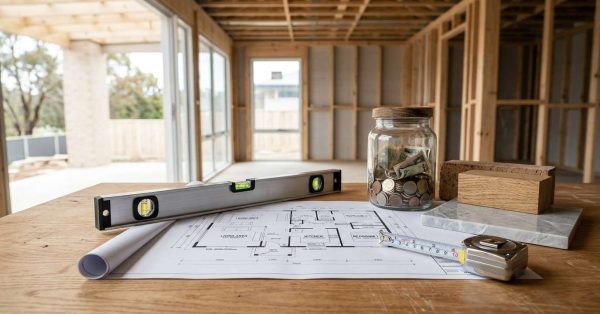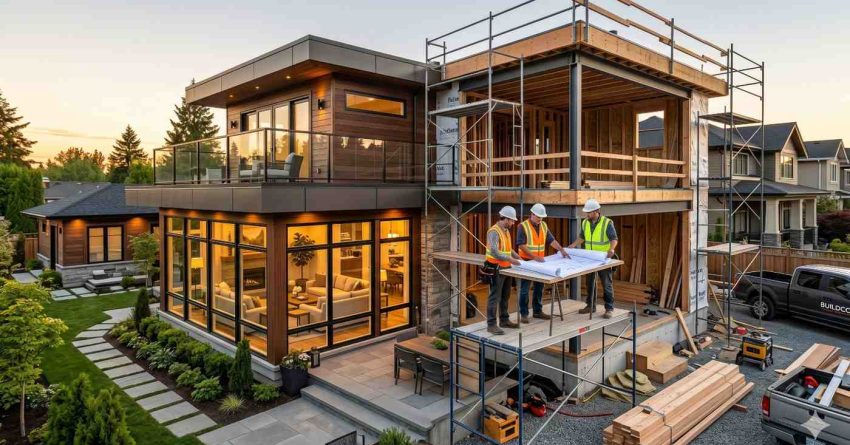
A home addition is a permanent structural expansion of an existing house, adding square footage without the disruption of moving. From modest bump-outs to full second stories, additions are among the most consequential investments a homeowner makes, affecting property value, comfort, and livability.
When space runs short and moving doesn’t make financial sense, a home addition provides more room without forcing you to leave the schools, neighbors, and daily routines that matter most.
This guide covers addition types, feasibility, design, foundation options, costs, financing, the construction process, permits, systems, ROI, and contractor selection — everything you need to start your home addition project right.
What Is a Home Addition? Definitions, Scope and Why It Matters
A home addition is any project that permanently expands the physical footprint or livable volume of an existing residence. That definition covers a wide range of projects, from a 60-square-foot bathroom bump-out to a 1,200-square-foot in-law suite built on a new foundation. What every addition shares is permanence, permitted construction, and a structural connection to the existing home.
Additions differ from remodels in a fundamental way. A remodel reconfigures or upgrades space that already exists. An addition creates space that did not exist before. Some projects combine both: opening the wall between an existing kitchen and a new family room addition requires demolition, structural header installation, and new construction simultaneously. But the defining characteristic of an addition is that it creates net new square footage.
Home Additions vs. Whole Home Remodeling
Homeowners frequently ask whether to build an addition or undertake a broader whole-home transformation. A home addition is the right answer when you specifically need more square footage or a function the home currently lacks. A whole-home remodel improves the quality, flow, and systems of space that already exists.
If your project extends well beyond a single new space and touches every room, system, and surface of the property, our whole home remodeling guide covers the broader scope of full-property transformation, including gut remodels, phased construction strategies, and system-wide upgrades that intersect directly with addition planning.
Why Homeowners Choose to Add On
According to the Joint Center for Housing Studies at Harvard University, homeowner improvement spending has grown consistently, with space expansion among the top project categories driving that investment. Homeowners build additions primarily because their families have grown, a parent or adult child needs to move in, remote work has created the need for a dedicated office, or they want to avoid transaction costs and the disruption of moving to a larger home.
Understanding your primary reason for adding on is the first step to choosing the right addition type. The functional goal determines the scope, which determines the cost and complexity of everything that follows.
Types of Home Additions
Home additions cluster into a handful of recognizable categories based on their relationship to the existing structure and the function they serve. Understanding each type is foundational to matching the right solution to your actual space need.
Bump-Out Additions
A bump-out is a small addition, typically 2 to 15 feet in depth, that extends an existing room outward. Bump-outs are the most affordable addition type because they generally use the existing structure’s framing system and may not require a full independent foundation. They are most commonly used to expand kitchens, dining rooms, bathrooms, or bedrooms. The modest scope makes them attractive for tight lots or limited budgets, though their square footage gains are correspondingly limited.
Room Additions, Wing Additions and Bonus Rooms
A full room addition creates a new room that did not previously exist: a family room, mudroom, playroom, or additional bedroom. Wing additions append an entirely new section of the house, often including multiple rooms and a new roofline, to one side of the existing structure. Bonus room additions above garages convert unused attic space over an existing garage into finished, conditioned living area, often at a lower per-square-foot cost than ground-floor new construction.
Sunrooms and Porch Additions
Sunrooms and enclosed porch additions occupy the territory between indoor and outdoor living. A three-season porch uses lighter construction standards and may not be heated or cooled year-round. A four-season sunroom must meet full residential building code, including insulation values and HVAC, which significantly increases its cost but also its year-round utility. At the high end of this category, conservatories use glass wall systems and specialty glazed roofing materials.
In-Law Suites and Master Suite Additions
In-law suite additions create a semi-independent living area, typically including a bedroom, bathroom, and a small kitchen or kitchenette, attached to or adjacent to the main house. These additions have surged in demand as multi-generational living becomes more common across the United States. Master suite additions add a primary bedroom, full bathroom, and walk-in closet where none previously existed, representing the highest complexity and cost per square foot of any addition type.
Garage Additions and Home Office Additions
Attached and detached garage additions create covered parking and storage while often creating potential for conditioned space above. Detached home office additions have grown significantly in demand since 2020. Depending on size and amenities, detached home offices may cross into accessory dwelling unit territory under local zoning codes, which carries separate permitting implications.
For homeowners specifically considering building upward rather than outward, our second-storey addition guide covers the structural engineering requirements, foundation capacity analysis, cost comparisons, design considerations, and phased construction approaches unique to pop-top and full second-storey projects.
From bump-outs and bonus rooms to in-law suites and master suite expansions, every category of residential addition is defined, compared, and illustrated in our complete guide to types of home additions, which covers scope, typical footprint, zoning considerations, and the key decision factors for choosing between them.
Planning and Feasibility: Is an Addition Right for You?
Before a single drawing is produced, every home addition project should begin with a rigorous feasibility assessment. This is where ambitions meet reality: zoning codes, lot dimensions, budget, and your personal goals all have to align before the project can move forward productively.
Is an Addition the Right Solution?
The foundational question is whether an addition solves the right problem. If you need more space because your family has grown, an addition is typically the correct tool. If you need better space, a more functional layout, or updated finishes, a remodel of existing square footage may serve you better at lower cost. If you are primarily motivated by resale value, the financial return varies significantly by addition type, market, and neighborhood price ceiling.
A realistic self-assessment also requires a candid look at budget. Cutting the scope of an addition to a point where the project no longer truly solves the problem is one of the most common and costly mistakes homeowners make. A half-measure addition that fails to deliver the needed function is a poor investment regardless of its per-square-foot price.
Setbacks, Zoning and Floor Area Ratio
Local zoning codes govern almost every dimension of what you can build and where you can build it. Property line setbacks define the minimum distance between your structure and adjacent lot boundaries. Lot coverage limits cap the total footprint of all structures on a property as a percentage of lot area. Floor Area Ratio (FAR) limits cap total above-grade square footage relative to lot size. These numbers vary significantly by jurisdiction, zoning district, and in some cities, by individual neighborhood overlay.
Checking zoning constraints before investing in design prevents expensive waste. Many homeowners discover that their desired addition exceeds one or more of these thresholds and that a variance application may be required before permits can be issued.
Site Survey, Soil Testing and Easements
A site survey establishes the legal boundaries of your property with precision, which is essential before designing anything that extends near a property line. Soil conditions matter significantly when adding a new foundation, particularly on sloped lots, in areas with expansive clay soils, or on properties with historical fill. Utility easements, which grant rights of way for underground utilities, can make specific areas of a lot impossible to build over regardless of zoning compliance.
The goal-setting, wish-list prioritization, site documentation, and design-phase sequencing that precede any strong addition project are covered in full in our complete guide to remodeling planning and design, which gives homeowners a structured process for defining scope, engaging designers, and reviewing drawings before construction begins.
Whether you are weighing lot constraints, zoning limits, and budget reality against the alternative of moving, our full guide to home addition planning and feasibility walks through every decision variable, including setback rules, FAR calculations, variance applications, soil testing, site survey requirements, and a structured framework for deciding whether an addition is the right solution.
Designing Your Addition: Architecture, Tie-In and Aesthetics
One of the most common failure modes in home additions is poor integration between the new space and the existing house. An addition that looks like it was bolted on, rather than designed as part of the whole, reduces both livability and resale appeal. Good design at the planning stage protects both.
Matching the Existing House
Architectural continuity means the addition’s exterior reads as though it always belonged. That requires matching or harmonizing the roof pitch and overhang depth, siding material and profile, window style and proportion, and exterior trim details. An exact material match is not always achievable, particularly on older homes where original products are no longer manufactured, but a skilled designer will minimize the visual discontinuity between old and new.
Materials do not need to be identical to be cohesive. A fiber cement siding profile that closely approximates the texture and color of the original wood siding, or a new asphalt shingle blend formulated to match the original, are both standard approaches. Where a perfect match is genuinely impossible, a deliberate architectural break, such as a step in the roofline or a change in cladding material at a defined corner, can cleanly separate old from new while still reading as a unified composition.
Roof Tie-In and Exterior Continuity
The roof tie-in is the most technically complex exterior element in almost any addition project. Where the new roof plane meets the existing roof, flashing details must be executed precisely. A failure at this junction typically does not reveal itself until water infiltration has caused damage inside the wall cavity. The type of tie-in required, whether gable-to-gable, hip extension, shed roof abutment, or a full ridgeline continuation, is determined by the existing roof structure and the addition’s position on the lot.
Interior transitions require equal attention. The transition from the existing floor level to the new addition must be handled so that flooring material changes, ceiling height differentials, and doorway thresholds feel deliberate and finished. A step down into a new family room can feel natural or awkward depending entirely on how it is detailed and proportioned.
Single vs. Two-Story and Special Site Conditions
For most lots with adequate footprint, a single-story ground-floor addition is the simpler, faster, and more predictable choice. Two-story additions or additions that partially stack over existing space are more complex but may be the only option when lot coverage limits prevent additional ground-floor area. Cantilevered additions extend the floor system beyond the existing foundation wall, potentially recovering footprint without adding to the lot coverage calculation. Pier-supported additions are used on sloped lots where conventional grading would be prohibitively expensive.
Achieving a seamless visual and structural connection between your new addition and your existing home requires careful choices in rooflines, siding materials, window proportions, floor height matching, and interior transition details, all of which are explored in full in our guide to addition design and architectural tie-in, including treatments for cantilevered additions and challenging sloped-lot conditions.
Foundation Options for Home Additions
Every home addition requires its own foundation system. The right choice depends on climate zone, soil conditions, the type and depth of the existing home’s foundation, and the intended use of the addition. Choosing incorrectly creates long-term settlement and moisture problems that are expensive to correct.
Slab vs. Crawlspace vs. Full Basement
A slab-on-grade foundation is the most cost-effective choice in mild climates with flat, well-drained lots. It eliminates below-grade space and provides a stable, low-maintenance base. A crawlspace foundation, supported by perimeter walls or isolated piers, elevates the floor above grade, improving drainage and providing access to mechanical systems running beneath the floor. A full basement adds substantial construction cost but maximizes usable space and is worth serious consideration for any addition larger than 400-500 square feet in colder climates where excavation is already required to reach frost depth.
Helical Piers, Cold-Climate Footings and Foundation Tie-In
In cold climates, footings must extend below the local frost depth, typically 3 to 5 feet in the northern United States, to prevent heaving caused by soil expansion during freeze-thaw cycles. Helical piers are factory-manufactured steel screw piles installed with rotary equipment, anchoring in stable bearing soil below the frost line. They are an excellent option on constrained sites, near existing utilities, or where soil conditions are variable. The structural connection between the new foundation and the existing foundation is a critical detail that must prevent differential settlement while accommodating normal thermal movement.
From poured concrete slabs and crawlspace foundations to full basements and helical pier systems, every foundation approach available for a home addition, including cold-climate frost footings, tie-in methods for matching the existing structure, and guidance for challenging soil conditions, is covered in detail in our guide to foundation options for additions.
Home Addition Costs and Financing
Understanding what a home addition costs, and how to structure the financing, is among the most important steps a homeowner can take before committing to a project. Cost ranges vary significantly depending on addition type, local labor markets, selected materials, and site complexity.
Cost per Square Foot by Addition Type
According to Remodeling Magazine’s 2024 Cost vs. Value Report, home addition costs in the United States vary considerably by project type and region. Ground-floor room additions typically range from $150 to $350 per square foot for mid-range specifications. Bump-out additions tend to fall toward the lower end of that range given their limited foundation and framing requirements. Master suite additions and in-law suites, which include bathroom rough-in, kitchen plumbing, HVAC zoning, and bedroom-standard finishes, frequently exceed $300 per square foot in high-cost metropolitan markets.
Major cost variables include:
- Foundation type and depth: Full basements add $25,000-$75,000 or more depending on size and soil conditions
- Roof configuration and tie-in complexity: Hipped roofs, dormers, and complex intersections add significant framing labor
- MEP system extensions: Running new HVAC zones, electrical circuits, and plumbing adds $15,000-$50,000 depending on scope
- Permit and design fees: Typically representing 10-15% of total construction cost in most US markets
- Finish specification level: Kitchen and bathroom finishes can double the per-square-foot cost compared to a simple room addition
Hidden Costs That Surprise Homeowners
Many homeowners underestimate the soft costs of an addition project. Structural engineering fees, plan check correction cycles, utility service upgrades triggered by additional load, landscaping restoration after foundation excavation, and temporary weatherproofing during the tie-in phase are frequently overlooked in early budget planning. A contingency fund of 15-20% of total project cost is the professional standard for addition work.
The full spectrum of financing tools for a home addition, including HELOCs, construction loans, cash-out refinances, and renovation mortgages, along with guidance on allowance structures, contingency budgeting, and hard-vs-soft cost separation, is compared and explained in our complete guide to remodeling budgets and financing options.
Financing Options: HELOC, Construction Loan and Cash-Out Refi
Three financing vehicles dominate home addition financing:
Home Equity Line of Credit (HELOC): Uses existing equity as collateral with a variable interest rate. Works well for staged or phased projects where draws can be timed to construction progress rather than taken as a lump sum.
Construction Loan: A short-term loan disbursed in draws as construction progresses, converting to a permanent mortgage at completion. Requires more documentation and underwriting lead time but provides structured disbursement that aligns with contractor payment milestones.
Cash-Out Refinance: Replaces the existing mortgage with a larger one and delivers a lump sum at closing. Works best when current market rates are favorable relative to the existing mortgage rate and when the homeowner holds substantial equity.
For a full financial picture of what each addition type costs in 2025, including cost per square foot by project category, a line-item breakdown of labor, materials, and soft costs, regional price variation data, and a project cost estimator, our detailed guide to home addition cost breakdown gives you the numbers and context needed before approaching a contractor for bids.
The Home Addition Process and Timeline
Understanding the sequence from decision to move-in is one of the most practical things a homeowner can learn before starting an addition. The project follows a defined order that, when understood, allows you to anticipate milestones, manage trade sequencing, and protect your investment at the most critical junctures.
Pre-Construction Steps
Before breaking ground, an addition project moves through design development, structural engineering, and permit acquisition. Schematic design establishes the addition’s footprint, massing, and relationship to the existing house. These sketches evolve into permit-ready construction documents that include stamped structural drawings, foundation plans, and mechanical, electrical, and plumbing rough-in layouts. In most US jurisdictions, building department plan review takes 4 to 12 weeks, and revision cycles requesting additional information are common.
Site preparation follows permit issuance. Underground utilities must be located and marked, any required tree protection must be installed, and staging areas for materials and equipment must be established. Work areas within the existing house are protected with dust containment barriers before demolition begins.
Construction Sequence and Trade Order
The general sequence for a ground-floor addition follows a defined order:
- Foundation excavation, forming, and concrete placement
- Foundation curing and backfill
- Floor system, wall framing, and roof framing
- Rough-in of mechanical, electrical, and plumbing systems
- Insulation and air sealing
- Rough inspections by the building department
- Exterior sheathing, roofing, siding, and windows
- Drywall, taping, and painting
- Finish mechanical, electrical, and plumbing fixtures and trim
- Final inspections, punch list, and certificate of occupancy
Trades must be sequenced carefully. Rough inspections must be scheduled and passed before insulation can be installed. Exterior waterproofing and interior finishing work often proceed concurrently once the roof is dried in and the windows are installed.
Weatherproofing the Tie-In
The intersection where the new addition connects to the existing house, where rooflines meet, where wall framing is sistered to the existing structure, where the foundation abuts the existing footing, is the most technically critical detail of the entire project. Flashing failures at the roof tie-in are the most common source of water intrusion in addition projects, and they typically go undetected until damage has occurred inside the wall cavity. Proper step flashing, ice-and-water shield at all intersections, and thorough caulking of penetrations are non-negotiable details that must be inspected before sheathing covers them.
The realistic construction sequence from design approval through final walk-through, including pre-construction steps, trade scheduling, permit milestone dependencies, tie-in weatherproofing requirements, and what to expect during each phase, is documented week by week in our complete guide to the addition process and timeline.
Systems, Utilities and Code Compliance
Every home addition requires the existing home’s mechanical, electrical, and plumbing systems to be extended into the new space. How those extensions are planned and executed, and what code compliance requires, depends on the size of the addition, its intended function, and the remaining capacity of the existing systems.
Extending HVAC to the New Space
HVAC extension is one of the most variable cost elements in any addition project. If the existing system has adequate remaining capacity and the addition is positioned near existing ductwork, extension may be straightforward and relatively inexpensive. If the existing system is already sized at or near its design load, which is common in older homes, a separate air handler, ductless mini-split, or additional zone controller will be required.
For additions exceeding 400-500 square feet, a formal Manual J load calculation should be performed to determine whether the existing equipment can serve both old and new space without performance compromise. Ductless mini-split systems are increasingly the preferred solution for room additions and master suite additions because they avoid the cost and disruption of running new ductwork through finished ceilings and walls.
Electrical and Plumbing Considerations
New electrical circuits are required for virtually every addition. Bedroom additions require AFCI-protected circuits under current NEC requirements. Bathroom additions require GFCI-protected circuits and a dedicated exhaust fan. If the addition’s load calculations push the existing panel to capacity, a service upgrade or subpanel installation may be triggered, which adds cost and requires a separate electrical permit.
Plumbing extensions depend on the addition’s position relative to existing drain lines. Gravity drainage requires adequate fall, typically a minimum of 1/4 inch per foot, back to the existing drain stack. Additions positioned far from the main stack, or below the existing drain elevation, may require a pump-assisted ejector system.
Egress, Insulation and Safety Requirements
Every bedroom addition must meet minimum egress requirements for window openings: at least 5.7 square feet of net opening area, minimum 24 inches in height and 20 inches in width, with a sill no more than 44 inches above the finished floor. These are the International Residential Code minimums; local amendments may be more stringent.
Insulation standards for new additions are governed by the International Energy Conservation Code (IECC) at the applicable climate zone. New additions must meet current energy code insulation requirements regardless of what the existing home’s walls or attic currently contain. This typically means R-15 to R-21 cavity insulation in walls and R-38 to R-60 in ceilings depending on climate zone.
Extending HVAC, running new electrical circuits from the panel, planning plumbing for a bathroom or kitchenette, and meeting egress, insulation, and smoke detection code requirements in a new addition all require careful coordination of multiple trades, which our guide to addition systems and code compliance addresses in full with system-specific guidance for each element.
Permits and Building Inspections
Every home addition that adds square footage or modifies structural, mechanical, electrical, or plumbing systems requires building permits. Working without permits creates insurance, financing, and resale disclosure risks that far exceed the cost of the permitting process itself.
What Permits Are Required
The permits required for a typical home addition include:
- Building permit: Required for all structural work including foundations, framing, and roofing
- Electrical permit: Required for any new circuits, subpanel installation, or service upgrade
- Plumbing permit: Required if the addition includes bathroom, kitchen, or laundry plumbing
- Mechanical permit: Required for HVAC work including mini-split installation and duct modifications
- Grading permit: Required in many jurisdictions for significant ground disturbance during excavation
In communities with design review requirements, HOA architectural approval processes, or historic district oversight, additional approvals must be obtained before a building permit application can even be submitted.
Working With Plan Review and Inspections
Plan review is the process by which a building department examines permit documents for code compliance before construction may begin. For a typical room addition, plan review takes 4 to 12 weeks in most US jurisdictions, with correction cycles adding additional time. Selecting an experienced designer or architect who routinely submits permits in your specific building department can meaningfully reduce the correction cycle.
Once construction is underway, inspections are required at defined milestones: foundation, rough framing, rough MEP (mechanical, electrical, and plumbing), insulation, and final. Each inspection must be scheduled, passed, and documented before the next phase proceeds. Proceeding past a required inspection without approval can require costly demolition to expose completed work for a retroactive inspection.
For a broader understanding of how building codes, zoning regulations, the inspection cycle, and specialty compliance requirements work across all residential project types, our complete guide to remodeling permits and code compliance is the definitive homeowner reference for navigating the full regulatory environment.
From the building, electrical, plumbing, and mechanical permits required for different addition types to the plan review process, inspection scheduling at each construction milestone, and how to resolve a failed inspection, every step of the permitting cycle is explained in our guide to home addition permits and inspections.
Home Addition ROI and Resale Value
Not all home additions return equally at resale. Understanding which types recover the most of their construction cost, which factors influence that recovery rate, and when an addition can actually hurt a home’s market position is essential information for homeowners making investment decisions.
Which Addition Types Return the Most
According to Remodeling Magazine’s 2024 Cost vs. Value Report, the national average cost recouped for a midrange addition varies significantly by type. Midrange family room additions nationally recoup approximately 55-65% of their construction cost. Master suite additions at the upscale level recoup around 40-55% nationally, with meaningful regional variation. In-law suite additions are increasingly valued in markets experiencing housing supply shortages and rising multi-generational buyer demand, often returning above the national average in high-demand metropolitan areas.
Several factors shape ROI beyond the addition type itself:
- Neighborhood price ceiling: Building an addition that pushes the home’s value above comparable sales limits what the market will support at resale
- Integration quality: Poorly integrated additions that look tacked-on reduce buyer interest even at competitive price points
- Functional gain: Bedroom and bathroom additions tend to recover more because they directly affect the home’s official bedroom and bathroom count, which drives appraisal and comparative value
Homeowners evaluating the financial return of an addition within the broader context of property value strategy will find our complete guide to remodeling for ROI and resale value an essential resource, covering appraisal methodology, buyer behavior data, the cost-vs-value framework, and how to avoid the over-improvement trap.
When an Addition Hurts Resale Value
Some additions reduce a home’s marketability even when they add square footage. An addition that eliminates all usable yard space in a market where buyers strongly value outdoor area may cost more in buyer interest than it gains in interior square footage. An addition that required removing garage parking in a market where buyers consider parking essential carries a similar risk. An over-scaled addition in a neighborhood with a constrained comparable sale ceiling limits the appraisal that can be supported regardless of construction quality.
These trade-offs should be part of every feasibility conversation, not an afterthought discovered at the time of resale.
National and regional data on which addition types recoup the most of their construction cost at resale, from family room additions and bedroom additions to master suites, in-law suites, and sunrooms, along with analysis of when an addition actually reduces buyer appeal, is covered in detail in our guide to home addition ROI by type.
Hiring and Working With Contractors on a Home Addition
A home addition is one of the most complex residential construction projects a homeowner can undertake. The structural, mechanical, and coordination requirements go well beyond those of a typical kitchen or bathroom remodel. Success depends substantially on hiring a contractor with specific, recent experience in addition work.
Choosing the Right Professional for an Addition
Addition work requires a contractor who understands foundation tie-ins, roof penetrations, structural header sizing for new wall openings, and the coordination of multiple trade contractors across a sequenced, interdependent project. When vetting candidates, ask specifically about their addition experience: how many ground-floor additions have they completed in the past two years, can they provide references specifically from addition clients, and have they navigated the permitting process in your jurisdiction?
Vetting a contractor with specific addition experience — foundation tie-ins, roof penetrations, mechanical extensions, and permit coordination in your jurisdiction — requires a more targeted approach than general contractor selection, which our guide to hiring an addition contractor covers through licensing verification, addition-specific reference questions, bid comparison strategy, and contract red flags to watch for during the evaluation process.
The bidding process for an addition typically produces wide price variation between contractors. Getting a minimum of three detailed bids, all based on the same written scope of work, is the professional standard. Without a detailed scope document, you may be comparing bids built on fundamentally different assumptions about the work included.
Contract Types, Change Orders and Managing the Build
Fixed-price contracts provide budget certainty and are the most common structure for residential addition projects. Cost-plus contracts provide transparency into actual costs but transfer budget risk to the homeowner. Most additions use a fixed-price contract with owner-selected allowances for finishes. Understanding how allowances work, and the financial consequences of exceeding them, is essential before signing.
Change orders are the most common source of addition budget overruns. Every change to the project scope after construction begins should be documented in writing, with a price impact and timeline impact both acknowledged by the homeowner and contractor before work proceeds.
For a comprehensive framework covering contractor selection criteria, contract types, change order management, subcontractor coordination, dispute resolution pathways, and how to protect yourself from the most common contractor problems across any remodeling project, our complete guide to hiring and managing remodeling contractors is the definitive resource.
Case Studies, Common Mistakes and the Addition Decision
Understanding how real addition projects unfold, what decisions are required, what challenges arise, and what outcomes are achieved, builds a quality of judgment that no amount of abstract planning guidance can fully replace.
What Real Addition Projects Look Like
A family room addition on a 1960s ranch house requires careful study of the existing crawlspace or slab, the roof structure at the point of tie-in, the position of the electrical panel relative to the new space, and the HVAC system’s capacity for an additional zone. A master suite addition above a two-car garage begins with a structural engineering analysis to determine whether the existing garage walls and roof framing can carry the additional load, what reinforcement is required, and how the new stair will connect the two levels.
Common mistakes across addition projects include underestimating foundation costs on sites with challenging soil or topography, failing to budget for temporary weatherproofing during the tie-in phase, selecting finishes before permits are finalized when scope may still change, and hiring a general contractor whose experience base is weighted toward interior remodeling rather than structural addition work.
Addition vs. Moving: Making the Right Call
The addition-vs-moving decision is simultaneously personal, financial, and practical. The case for adding on strengthens when the homeowner holds significant equity (which reduces financing cost), has strong attachment to the location and community, holds a lot with adequate capacity for the desired addition within zoning limits, and faces a clearly defined space problem that the addition would solve. Moving becomes more attractive when the cost of achieving the desired outcome through an addition approaches or exceeds the cost of purchasing a more suitable home in the target area, when the current lot cannot support the desired scope, or when multiple systemic deficiencies make staying in the home a poor long-term investment.
Real-world examples of addition projects across house types, lot conditions, and budget levels, along with answers to the 50 most commonly asked home addition questions, common mistakes and how to avoid them, and a structured framework for the addition-vs-moving decision, are all organized in our home addition case studies and FAQ resource.
Conclusion
Home additions expand space, add function, and grow property value, one of the most impactful investments a homeowner can make without moving.
Understanding types, costs, design, permits, systems, and ROI before committing to a contractor makes you a more confident, better-protected participant in the build.
When you’re ready to move forward, Mr. Local Services connects homeowners with verified contractors experienced in every type of home addition project.
Frequently Asked Questions
How much does a home addition cost on average in 2025?
Home additions typically cost $150 to $350 per square foot in the United States, depending on addition type, local labor markets, and finish specifications. Master suite additions and in-law suites often exceed $300 per square foot in high-cost metropolitan markets.
Do I need a permit for a home addition?
Yes. Every home addition that adds square footage or changes structural, electrical, or plumbing systems requires a permit. Unpermitted work creates insurance, resale, and legal risks that outweigh permit costs.
How long does a home addition take from design to completion?
A typical ground-floor addition takes 6 to 12 months from initial design through final inspection, including 6 to 12 weeks for permitting and 3 to 5 months of construction. Larger projects run 12 to 18 months.
What is the most cost-effective type of home addition?
Bump-out additions typically offer the lowest per-square-foot cost because they don’t require a full new foundation. However, the most cost-effective addition is the one that directly solves your space problem.
What is the ROI on a home addition?
National data shows most home additions recoup 45 to 65% of their construction cost at resale. Bedroom additions and family room additions tend to return more than sunrooms or luxury suite additions.
Can I live in my home during a home addition?
Most homeowners successfully live through a home addition, though disruption during demo and tie-in phases is significant. Planning for dust containment, temporary access, and protected living zones makes it manageable.
How do I choose the right contractor for a home addition?
Look for contractors with specific addition experience: foundation tie-ins, roof penetrations, and permit coordination. Request addition-specific references, verify licensing and insurance, and collect at least three detailed bids.