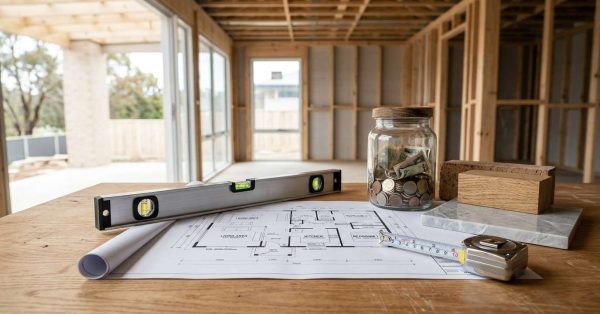
A restoration-driven remodel is a construction project that starts with the need to return a damaged, deteriorated, or historically significant property to sound, functional, and livable condition, not simply updating aesthetics. It combines repair, structural remediation, and systems renewal into a single coordinated project.
When water damage, fire, aging systems, or long-term deterioration forces a major project, getting the restoration process right determines whether your home fully recovers its structural integrity, livability, and value.
This complete guide walks you through what restoration-driven remodels are, the major project types, how to plan and sequence work, structural assessments, materials decisions, permits, hiring specialists, budgeting, and insurance.
What Is a Restoration-Driven Remodel?
A restoration-driven remodel differs from a standard renovation or cosmetic update in one fundamental way: it is forced, not chosen. The trigger is damage, deterioration, or a preservation obligation, not a desire for a fresh look or a new layout. The work restores what existed, or what should have existed, before the damage, decline, or neglect occurred.
This distinction shapes everything: scope, sequencing, contractor selection, insurance coordination, and budget structure. A standard kitchen remodel starts with aesthetic goals. A restoration-driven kitchen project starts with flood-saturated cabinets, compromised subflooring, and active mold risk. Both projects may end with a fully updated kitchen, but the path is completely different, and treating them the same way is a common and costly mistake.
Restoration vs. Renovation vs. Remodel: The Key Distinction
These three terms are often used interchangeably by homeowners and contractors alike, but they represent distinctly different project categories:
Restoration returns a property to its original or pre-damage condition, using materials and methods consistent with the original construction or historical period. The emphasis is on faithfulness to what existed before.
Renovation updates and improves a property while preserving its existing structure and general character. The emphasis is on improvement without fundamental change.
Remodel changes the layout, use, or function of a space, typically involving structural modifications, new systems, and material upgrades. The emphasis is on transformation.
In practice, restoration-driven projects blend all three approaches. They restore what was damaged, renovate systems and finishes that were functional but outdated, and remodel elements that no longer meet code or no longer serve the household’s needs. The restoration imperative drives the project initiation; the renovation and remodel decisions follow once the scope of damage is fully understood.
The Four Primary Drivers of Restoration Projects
Restoration-driven remodels are triggered by four primary forces, each of which shapes the project differently:
Disaster damage covers water, fire, storm, or structural failure events requiring immediate mitigation and systematic rebuild. Timeline pressure, insurance coordination, and uncertainty about hidden damage define these projects.
Long-term deterioration covers accumulated deferred maintenance, systemic failure in aging systems, and structural degradation that has developed over years or decades without a triggering event. There is no insurance claim to file, no emergency response phase, but the scope is often as significant as a disaster-driven project.
Historic preservation obligations arise when a property is listed on a local or national historic register, or sits within a historic district with design review authority. Restoration work must comply with preservation standards in addition to building codes.
Structural or systems failure discovery occurs when an unrelated project, inspection, or routine maintenance reveals a concealed condition that requires restoration. A bathroom remodel uncovers rotted floor framing. A kitchen update exposes knob-and-tube wiring. A roof repair reveals that decades of slow leaks have compromised attic framing. The restoration requirement was always there; the trigger was finding it.
Who Restoration Projects Are For
This guide is written for homeowners, landlords, and property managers who are planning or managing a restoration-driven project, whether they have just experienced a disaster event, are assessing a long-neglected property, own a historic home requiring preservation-compliant work, or have discovered a hidden condition during an unrelated project.
The distinctions between these three project types are worth understanding at depth, and our full breakdown of remodel vs renovation vs restoration covers how scope, intent, and approach differ across all three, with real-world examples homeowners can apply immediately to categorize their own project.
Types of Restoration-Driven Remodels
Restoration-driven remodels fall into four broad categories. Understanding which category applies determines what professionals you need, what sequence to follow, and what funding mechanisms are available.
Disaster-Driven Restoration
Disaster restoration is the most time-sensitive and logistically demanding category. It follows acute events: flooding from a burst pipe, storm surge, or rising water; fire and smoke damage; sewage backup; or wind-driven structural damage. These projects require an emergency response phase before any construction planning can begin.
Key characteristics of disaster-driven restoration projects:
- An emergency mitigation phase precedes all construction work
- Insurance coordination is active from day one and continues throughout the project
- Mold risk is present in virtually all water damage events within 24 to 72 hours of saturation
- Scope uncertainty is high, because damage behind walls, under floors, and above ceilings is typically invisible at initial assessment
- Timeline pressure affects occupancy, temporary housing costs, and carrying costs throughout the project
Water damage is the most common trigger for restoration remodels across the US, and every homeowner should understand exactly what a professional water damage restoration process involves, from emergency extraction and structural drying through mold prevention protocols and full reconstruction.
Age and Long-Term Deterioration Restoration
Properties neglected over years or decades present a fundamentally different restoration challenge. There is no single triggering event to document for an insurance claim. Instead, the scope reveals itself progressively during demolition: rotted sill plates, corroded galvanized piping, knob-and-tube wiring that has been improperly modified, insulation that has settled to near zero R-value, and framing connections that have been weakened by decades of moisture cycling.
These projects are common in properties purchased as fixer-uppers, in inherited homes that went through a period of deferred maintenance, in rental properties where maintenance has been systematically minimized, and in foreclosed properties that sat vacant for extended periods.
The scoping challenge in deterioration restoration is significant. What appears in the listing photos as a cosmetic refresh frequently reveals, within the first week of demolition, conditions that require full-scale restoration before any finish work can be considered.
Historic Preservation Restoration
Historic preservation restoration adds a third layer of requirement beyond construction and building code compliance: adherence to preservation standards and, in many jurisdictions, design review approval before work begins.
The Secretary of the Interior’s Standards for Rehabilitation define how historic properties must be treated when any work is performed. These standards prioritize the retention of original materials, the reversibility of modifications, and the compatibility of any new work with the historic character of the property. Projects that comply with these standards may qualify for federal or state historic tax credits, which can offset a meaningful portion of restoration costs.
Historic preservation restoration requires specialized tradespeople with skills that are less common in general construction: plaster restoration, historic window repair, period millwork reproduction, masonry repointing, and roofing systems that match original materials in appearance and profile.
Structural and Systems Restoration
Some restoration projects are triggered entirely by the failure of building systems or structural components, independent of any visible disaster or obvious deterioration. Foundation settling that has reached a threshold of concern, an electrical system that fails a pre-purchase inspection, a plumbing system that has begun to fail sequentially, or an HVAC system that has passed its useful life can all trigger projects that are effectively restoration-driven remodels even when the property’s finishes appear entirely intact.
For properties affected by fire or smoke, the path from initial damage assessment to completed reconstruction follows a carefully defined sequence, and our guide to fire damage restoration and rebuild explains every phase, from structural evaluation and soot remediation through permit-ready reconstruction planning.
Assessing Your Home Before Restoring
Before any restoration work begins, a systematic and documented assessment is essential. Proceeding on the basis of a visual-only or partial assessment is among the most costly mistakes a property owner can make in a restoration project. Incomplete damage assessment routinely produces mid-project scope changes, budget overruns, failed inspections, and secondary damage events that compound the original problem.
Surface Damage vs. Hidden Damage
The visible damage in any restoration scenario is almost never the complete picture. Water damage that appears confined to surface drywall typically extends into the wall cavity behind it, affecting insulation, framing, and sheathing. Fire damage that manifests as soot on ceiling surfaces may include heat-damaged structural connections and smoke-saturated insulation throughout the attic. Floor damage visible from above frequently extends to the subfloor, the floor joists below, and the ground-level conditions beneath.
Every restoration-driven remodel should operate on the explicit assumption that the damage extends further than what is immediately visible. Scoping to visible damage only results in incomplete remediation and a high probability of secondary damage events. Structural members dried inadequately will continue to promote mold growth after walls are closed. Smoke-contaminated insulation left in place will continue to off-gas odor compounds long after the rebuild is complete.
Which Professionals Assess What
A thorough pre-restoration assessment requires multiple specialists, each addressing a specific dimension of the damage profile:
| Assessment Type | Professional Required | What They Document |
| Structural evaluation | Licensed structural engineer | Foundation conditions, framing integrity, load path compromise, required repairs |
| Mold and IAQ assessment | Certified industrial hygienist | Mold species identification, contamination extent, remediation protocol specification |
| Environmental hazards | Licensed asbestos and lead inspector | Pre-1980 material testing, abatement requirements and costs |
| Electrical systems | Licensed electrician | System integrity, code compliance gaps, scope of required replacement |
| Plumbing systems | Licensed plumber | Pipe condition, fixture rough-in, drain and vent system integrity |
| HVAC systems | Licensed HVAC contractor | Equipment condition, duct system integrity, code compliance |
| General scope coordination | Licensed GC with restoration experience | Overall damage classification, project sequencing, budget framework |
Every restoration project should begin with a documented evaluation of both visible and concealed damage, and our comprehensive pre-restoration assessment guide walks through every professional inspection type, damage classification system, and scope-setting method needed before any construction work begins.
Planning and Sequencing a Restoration Remodel
Once the damage assessment is complete and the scope is documented, planning begins. Restoration-driven remodels follow a specific sequencing logic that differs from standard remodels, and deviating from that logic generates compounding problems and cost escalation.
Setting Clear Restoration Goals
Before sequencing decisions are made, the goals of the project must be explicitly defined. Restoration projects generally fall into three goal categories:
Like-for-like restoration returns the property as closely as possible to its pre-damage condition using equivalent materials and systems. This is typically what insurance covers and what historic preservation standards require. It is the simplest scope to price and document but does not incorporate improvements.
Restoration plus upgrade restores all damaged elements to current code and functional standards while incorporating selected upgrades beyond the pre-damage baseline. This approach is common when the property had outdated systems before the damage event, making like-for-like restoration impractical or code-non-compliant.
Restoration with transformation uses the disruption created by the restoration as an opportunity to reconfigure spaces, update aesthetics significantly, and improve functionality beyond the pre-damage condition. This approach requires clear separation of insurance-covered scope from owner-funded improvements in the contract and budget.
The chosen goal affects material selection, contractor scope, permit requirements, and insurance reimbursement in specific ways. These decisions must be made before contractor bids are solicited, not after.
The Three-Phase Sequence: Mitigation, Remediation, Reconstruction
Restoration projects follow a three-phase sequence that must be executed in order:
Phase 1: Mitigation. Stop the damage from progressing. Extract standing water. Dry structural materials. Board and tarp fire-damaged openings. Stabilize compromised structural elements. This phase is time-critical: in water damage events, mitigation must begin within 24 to 48 hours to prevent mold establishment. Mitigation is typically performed by IICRC-certified restoration contractors, not standard remodeling contractors.
Phase 2: Remediation. Remove damaged and contaminated materials. Dry the structural assembly to below 19% moisture content. Address mold, soot, asbestos, or lead paint according to the industrial hygienist’s protocol. Return the building to a clean, dry, structurally stable, and hazard-free state. This phase requires licensed specialists and must conclude with clearance testing before reconstruction can begin.
Phase 3: Reconstruction. Rebuild the property following standard construction sequencing: structural work first, MEP rough-in second, inspections, insulation, air sealing, drywall, finishes, and fixtures. This phase follows the same trade sequencing as a standard remodel, with the added overlay of documentation requirements for insurance and permitting.
Understanding exactly where mitigation ends and restoration begins, and when reconstruction becomes the necessary next step, is foundational to managing any recovery project successfully, which is why our detailed guide on mitigation vs restoration vs reconstruction maps every decision point and its cost implications across all three project phases.
The planning fundamentals that govern any successful remodel apply equally to restoration projects, and our hub guide on remodeling planning and design covers goal-setting methodology, designer and architect selection, drawing review, sequencing strategy, and decision-locking best practices applicable to any project scope.
Structural Work in Restoration Projects
Restoration projects expose structural conditions that standard remodels rarely encounter. Foundation damage, rotted framing members, compromised shear walls, damaged roof structures, and failed floor systems are common discoveries during the demolition phase of both disaster-driven and deterioration-driven restoration projects.
Foundation and Framing in Restoration
Foundation damage in restoration contexts ranges from minor crack repair to full underpinning with steel piers. Water damage events that saturate the soil around a foundation can trigger differential settlement. Fire damage can compromise the wood connections between the foundation sill and the framing above. In flood-prone areas, hydrostatic pressure during a flood event can cause lateral foundation movement that must be assessed and corrected before reconstruction.
Framing issues require careful evaluation. Wet framing must be dried to below 19% moisture content before it can be covered with insulation and drywall. Framing dried too rapidly can check and crack, reducing structural integrity. Rotted or fire-damaged framing members must be replaced or sistered to restore full structural capacity. Any modification to load-bearing framing in a restoration project triggers permit requirements and structural engineering review in most jurisdictions.
When Structural Damage Triggers a Full Remodel
In some restoration projects, the structural conditions discovered during assessment or demolition are extensive enough that a targeted repair is not economically viable. When the cost of structural remediation alone approaches or exceeds a substantial fraction of the property’s post-restoration value, the scope decision shifts. In these cases, the property owner must weigh targeted restoration against a more comprehensive remodel, or in extreme cases, a tear-down and rebuild.
Restoration projects consistently uncover structural conditions requiring professional engineering solutions, and our complete guide to structural work in remodeling covers every method for repairing foundations, reinforcing framing, replacing damaged beams, and addressing load paths across repair, restoration, and renovation project types.
Restoring Mechanical, Electrical, and Plumbing Systems
Mechanical, electrical, and plumbing systems are among the most frequent targets in restoration remodels. Water damage destroys insulation and causes corrosion in electrical components. Fire heat damages HVAC components and gas line connections. Decades of deferred maintenance cause plumbing and electrical systems to deteriorate to the point where continued operation is unsafe.
Electrical Restoration and Upgrades
In disaster-driven projects, water-damaged electrical systems are typically replaced rather than repaired. Submerged panels, flooded conduit runs, and saturated junction boxes cannot be reliably assessed for internal damage. The National Electrical Code requires that any electrical equipment exposed to flooding be evaluated by a licensed electrician and replaced where the extent of damage cannot be determined with certainty.
Age-driven restoration projects frequently require electrical service upgrades alongside selective system replacement. Homes wired with knob-and-tube wiring (pre-1940s), aluminum branch circuit wiring (1960s-70s), or Federal Pacific Stab-Lok panels represent safety risks that restoration projects provide an opportunity to correct. A 100-amp service common in mid-century homes is often insufficient for modern electrical loads and may require upgrading to 200-amp service as part of the restoration scope.
Plumbing Restoration
Plumbing restoration in older properties ranges from targeted repair to whole-house repipe. Galvanized steel pipes, common in pre-1970 homes, corrode from the inside outward, progressively restricting flow and eventually failing at joints and transitions. Polybutylene pipes, installed widely between the mid-1970s and mid-1990s, are prone to brittle failure under exposure to oxidants in chlorinated municipal water and are typically replaced in full when discovered rather than repaired selectively.
In water damage events, saturated insulation around supply and drain lines must be removed and replaced. In fire events, any plastic drain piping that experienced heat exposure in the vicinity of the fire must be evaluated for distortion and potential structural failure.
HVAC Restoration and Replacement
HVAC systems are vulnerable to all three major damage categories. Flood submersion renders most air handling equipment non-functional and creates contamination concerns in duct systems. Fire heat can damage gas furnace heat exchangers, creating carbon monoxide hazard risk. Long-term deferred maintenance produces progressive efficiency loss, refrigerant depletion, and eventual mechanical failure.
In most water damage and fire events, the decision between HVAC repair and replacement depends on the equipment’s age and remaining useful life. Equipment within three to five years of its expected service life is almost always more cost-effective to replace than to restore. A restoration project provides the opportunity to right-size the system for a rebuilt space and to address duct system deficiencies that reduce efficiency and comfort.
Electrical, plumbing, and mechanical systems are frequently the primary repair target in restoration remodels, and our complete guide to MEP systems in remodeling covers the full scope of service upgrades, repipe options, electrical panel replacement, and HVAC decisions any property owner may face during a restoration or recovery project.
Materials in Restoration Remodels
Material selection in a restoration project involves decisions that standard remodels rarely require. The core question is: should you match the original, upgrade to modern equivalents, or in the case of historic properties, adhere to preservation standards that may limit your options entirely?
When to Preserve Original Materials
Preservation of original materials is appropriate and sometimes legally required in several situations. Properties in local historic districts or listed on the National Register of Historic Places are typically required to repair rather than replace historic materials when repair is feasible. Original materials with intrinsic value, such as old-growth Douglas fir floors, hand-applied plaster ceilings, or hand-glazed original tile, merit preservation consideration even outside formal historic designations because their market value to buyers often exceeds the cost of preservation.
The preservation decision also applies to material categories where originals are still structurally sound. Solid wood window sashes that have experienced paint failure but are structurally intact are often more cost-effective and aesthetically superior when restored with proper glazing and weatherstripping than when replaced with modern window units of lesser material quality.
When to Upgrade to Modern Equivalents
Modern material substitution is appropriate when original materials are no longer available at reasonable cost, when modern equivalents offer significantly better performance, when code compliance requires current-standard materials, or when insurance covers replacement with materials of like kind and quality under current market standards.
The practical test: if a material category has been damaged beyond repair, if sourcing the original would require custom fabrication or salvage at a cost that exceeds modern alternatives by more than the aesthetic premium warrants, or if the original material no longer meets current energy or safety code requirements, modern equivalents are the appropriate choice.
Material selection in restoration projects involves decisions that standard remodels rarely face, and our complete guide to remodeling materials and finishes covers every category from flooring and tile to roofing, insulation, windows, and siding, with practical guidance on sourcing, performance, and period-appropriate alternatives.
Permits, Codes, and Compliance in Restoration
Restoration-driven remodels require permits in virtually every jurisdiction for any work involving structural elements, electrical systems, plumbing, or HVAC. The scope of code compliance obligations, and the cost of meeting them, is determined in large part by the project’s size relative to the property’s value and by the “substantial improvement” rule.
The Substantial Improvement Rule
FEMA and many local building departments apply a substantial improvement threshold: if the cost of the restoration exceeds 50% of the property’s pre-damage fair market value, the entire structure must be brought into compliance with current building codes. This rule applies with particular force in Special Flood Hazard Areas designated under the National Flood Insurance Program.
The practical implications are significant. A property subject to substantial improvement requirements may need to be elevated above base flood elevation, rewired to current NEC standards, replumbed with modern materials, and re-insulated to meet current energy code requirements, all as conditions of the permit. These code compliance upgrades can add 20% to 40% to the total project cost above the direct restoration scope.
Restoration in Historic Districts
Properties in historic districts face dual compliance obligations: standard building code AND historic preservation review. These requirements frequently conflict. Current energy code may require window replacement for thermal performance; the local historic preservation commission may prohibit replacing original single-pane windows with modern insulated glass units.
Navigating dual compliance requires early engagement with both the building department and the preservation commission. Pre-application meetings with both agencies, before any design or contractor work begins, can prevent costly design iterations and permitting delays.
Restoration projects often trigger code compliance requirements that standard remodels never encounter, and our complete guide to permits, codes, and inspections explains building permit types, the full inspection schedule, code upgrade triggers including the substantial improvement rule, and how to navigate plan review for any scope of work.
Working With Restoration Specialists
Restoration-driven remodels require a different professional team than standard remodels. Some professionals involved in the early phases of a restoration project are not construction contractors at all, and misidentifying who manages which phase is a common source of delays, gaps in scope, and disputes over responsibility.
Types of Restoration Professionals
A full restoration project team typically includes a combination of the following specialists:
IICRC-certified water damage restoration contractor. Leads the mitigation and drying phases for water damage events. Certified under IICRC S500 standards. Monitors structural drying until clearance moisture levels are achieved.
Fire and smoke damage specialist. Handles soot removal, thermal fogging, ozone treatment for odor, and fire-damaged structural assessment. Certified under IICRC S770 standards for fire damage.
Certified industrial hygienist. Specifies the remediation protocol for mold, asbestos, and lead paint. Conducts clearance testing after remediation to verify the work is complete. Their clearance letter is typically required before reconstruction permits are issued.
Licensed general contractor with restoration experience. Manages the reconstruction phase. Coordinates all trade subcontractors. Handles permitting, inspections, and project documentation. Restoration experience is important because the reconstruction phase in restoration projects involves more unknowns and phased scope decisions than standard remodels.
Structural engineer. Assesses any discovered structural damage and specifies the required repair. Stamps structural drawings required by the building department for permitted structural work.
Historic preservation specialist contractor. Required for properties in historic districts. Has experience working within preservation standards and coordinating with historic review boards.
Vetting and Hiring Checklist
When evaluating restoration professionals, verify: IICRC certification for mitigation-phase contractors, state licensing for construction-phase contractors, insurance and bonding appropriate to the project scope, experience specifically in the type of restoration involved, and verifiable references from projects of similar scope and type.
Choosing the wrong professional for a restoration project can compound existing damage and delay recovery, which is why our comprehensive guide to hiring and managing restoration contractors covers contractor vetting, certification verification, contract structure, communication protocols, change order management, and dispute resolution across all remodeling project types.
Costs and Budgeting for Restoration Remodels
Restoration-driven remodels are among the most budget-uncertain project types in the construction industry. Scope discovery, concealed damage, hazardous material findings, and code compliance obligations can push final project costs significantly beyond what even experienced professionals initially estimate.
What Drives Restoration Costs Higher
The most significant cost drivers in restoration projects are categories that do not exist in standard remodels:
Discovery costs are expenses generated when demolition reveals damage that extends further than the initial assessment indicated. A 10% to 20% scope expansion during demolition is common in water and fire damage events. A 30% to 50% scope expansion is not unusual in age-driven deterioration restoration.
Hazardous material abatement adds $3,000 to $25,000 or more to project costs when asbestos, lead paint, or extensive mold contamination is found. Pre-1980 construction has a high probability of containing one or more of these materials.
Code compliance upgrades are imposed by the permit process when the project scope triggers the substantial improvement rule or when existing systems must be brought to current code as a condition of permit issuance.
Extended timeline carrying costs compound when a restoration takes longer than a standard remodel. Temporary housing, storage, and the mortgage, insurance, and utility costs of a property that is uninhabitable add up quickly over a three-to-twelve-month restoration project.
The variables that push restoration budgets significantly beyond initial estimates are often invisible until demolition begins, and our analysis of what drives restoration project costs breaks down discovery costs, hazardous material abatement, code compliance expenses, and the structural surprises that consistently produce substantial budget overruns in restoration projects.
Contingency Budgets in Restoration Projects
The standard 10% to 15% contingency appropriate for a routine remodel is insufficient for a restoration project. Industry professionals use higher contingency targets calibrated to the scope and certainty of the damage assessment:
Minor restoration with cosmetic scope and limited structural involvement: 15% to 20% contingency above the base estimate. Moderate restoration with structural involvement or single major system replacement: 20% to 30% contingency. Major disaster-driven restoration with significant structural damage, hazmat risk, or substantial improvement rule implications: 30% to 50% contingency.
The contingency is not an acknowledgment of poor planning. It is recognition that restoration projects involve a category of unknowable variables that no pre-demolition assessment can fully resolve.
Restoration projects require budgeting approaches that differ meaningfully from standard remodels, particularly in contingency sizing and insurance coordination, and our comprehensive guide to remodeling budgets, costs, and financing covers every financing option, contingency framework, contract structure, and cost-saving method applicable across residential remodeling project types.
Insurance, Documentation, and Claims
For disaster-driven restoration projects, homeowner’s insurance is the primary funding mechanism. How you manage the claim process from the first hours after the event through final settlement determines how much money is available to fund the rebuild and whether your recovery is financially complete.
Replacement Cost vs. Actual Cash Value
Homeowner’s insurance policies cover restoration under one of two valuation methods, and the difference between them can represent tens of thousands of dollars in a significant restoration event.
Replacement Cost Value (RCV) pays the full current cost to replace damaged property with new materials of like kind and quality, without applying depreciation. Under RCV coverage, a 12-year-old roof destroyed by hail is replaced at the current cost of a new roof.
Actual Cash Value (ACV) pays the replacement cost minus depreciation. A 12-year-old roof with a 20-year expected life has lost 60% of its value under a straight-line depreciation model. The ACV payout covers only 40% of replacement cost.
RCV coverage is substantially more valuable for restoration projects and is worth the additional premium in virtually all cases. Verifying your coverage type before an event occurs, and understanding the recoverable depreciation provisions in RCV policies, is one of the most financially important preparations a homeowner can make.
Navigating the claims process after a disaster is one of the most consequential early decisions in any restoration project, and our step-by-step guide to filing a property damage insurance claim walks through documentation requirements, adjuster interactions, scope negotiation strategy, and the specific steps that protect your rights and funding throughout the process.
Documenting Before, During, and After
Documentation in a restoration project serves two functions simultaneously. During the project, it supports the insurance claim and justifies the reconstruction scope. After the project, it supports the appraisal and resale value of the restored property.
Pre-damage documentation is by far the most difficult to assemble after the fact. A home inventory conducted before any damage event, including photo and video documentation of every room and all major systems, stored off-site or in cloud storage, is foundational to any effective insurance claim. The absence of pre-damage documentation weakens claim negotiations and can result in undervaluation of the loss.
During the project, documentation requirements include contractor scopes of work with material specifications, all permits and inspection reports, industrial hygienist clearance letters, and systematic photo documentation of all systems before walls are closed. After the project, a complete file including all of the above supports both the insurance settlement’s recoverable depreciation release and future appraisal and resale documentation.
Understanding exactly how your policy values damaged property determines how much money is available to fund your restoration, and our full breakdown of replacement cost vs actual cash value explains the difference between these two coverage types, how depreciation affects claim payouts, and how to negotiate a settlement that fully funds the reconstruction scope.
ROI and Property Value After Restoration
A successful restoration-driven remodel should return a property to at minimum its pre-damage market value. In many cases, a well-executed restoration that combines comprehensive damage repair with strategic system and finish upgrades can produce a net positive above the pre-damage baseline.
The factors that most reliably predict strong post-restoration value include the quality of documentation demonstrating that the work was performed correctly, the presence of permits and inspection sign-offs, the quality of materials and craftsmanship in the finished work, and the degree to which the restoration incorporated upgrades that buyers and appraisers recognize as value drivers.
Disclosure obligations in most US states require that past material damage be disclosed to prospective buyers. A property with a properly documented, professionally executed, and permitted restoration is often more attractive to informed buyers than a comparable property with no damage history but also no assurance that all systems are in sound condition. Transparency supported by documentation converts a potential liability into a demonstrated asset.
Understanding how restoration projects affect long-term property value requires knowing what buyers and appraisers look for after major repair work, and our complete guide to remodeling for ROI and resale covers which project types produce the strongest returns, how appraisers evaluate restored properties, and how to document your work for maximum valuation impact.
Historic Preservation as a Restoration Category
Historic preservation restoration is governed by principles that differ fundamentally from disaster-driven or deterioration-driven restoration. The driving ethic is authenticity: preserving the historical integrity of a building’s materials, spatial relationships, and craftsmanship even as systems are updated and damage is repaired.
The Secretary of the Interior’s Standards for Rehabilitation are the operative framework for most homeowners in historic districts. These standards require that character-defining features be retained and preserved, that new additions or alterations be reversible and distinguishable from original work, and that the overall historic character of the property be maintained.
Federal Historic Tax Credits provide a 20% tax credit against qualified rehabilitation expenditures for income-producing historic properties. State historic tax credit programs vary widely: some states offer credits matching or exceeding the federal program; others offer minimal or no incentives. For homeowners in certified historic districts undertaking substantial restoration work, these credits can significantly offset total project cost.
The practical challenges in historic restoration include sourcing period-appropriate materials, finding craftspeople with skills in historic techniques, navigating the Certificate of Appropriateness process required by most local historic preservation commissions before permitted work begins, and balancing preservation obligations with functional improvements required by modern building codes.
Properties in historic districts or those built before 1950 require preservation-specific approaches that differ significantly from standard restoration methods, and our complete guide to historic and older home remodeling covers era-specific challenges, compliance with preservation standards, hazardous material abatement, and period-appropriate material sourcing across all property types.
Case Studies: Restoration-Driven Remodels in Action
Real-world restoration projects reveal patterns that are difficult to fully appreciate in abstract planning. The following project snapshots illustrate the full spectrum of restoration scope across the four major project categories.
Storm Damage Restoration. A 1,950 square foot coastal ranch home sustains roof penetration and 22 inches of interior flooding following a Category 2 storm event. Mitigation begins within 12 hours. Assessment reveals water damage to all wall cavities, significant mold growth beginning in the first 72 hours, and complete loss of HVAC, water heater, and electrical panel. Total restoration and reconstruction cost: $197,000. RCV insurance coverage: $148,000. Owner-funded scope upgrades including kitchen finishes and a new heat pump system: $49,000. Post-restoration appraised value: 9% above pre-storm comparables, reflecting the quality of the rebuild and fully updated systems.
Age-Driven Deterioration Restoration. A 1940s craftsman bungalow purchased as a fixer-upper for $215,000 reveals, during the pre-purchase inspection and early demolition, a complete need for restoration: knob-and-tube wiring throughout, galvanized supply piping that has restricted to near blockage, structurally failed sill plates and first-floor joist ends at all exterior walls, and an HVAC system that predates most current codes. Total restoration cost: $151,000. Post-restoration market value based on comparable sales: $428,000, representing a net gain to the owner of approximately $62,000 above acquisition and restoration costs combined.
Fire Damage Restoration. A kitchen fire causes significant structural and smoke damage to a single-family home. The fire is contained to the kitchen but smoke and heat exposure affect every room. The restoration scope includes a complete kitchen rebuild, whole-house smoke remediation, HVAC duct replacement due to smoke contamination, and drywall replacement in four rooms with smoke-damaged insulation. Total restoration cost: $94,000. Insurance coverage under RCV: $76,000. Owner contribution for kitchen upgrades beyond pre-fire condition: $18,000. Project timeline from date of fire to certificate of occupancy: 6 months.
One of the most instructive examples of the full restoration arc, from emergency stabilization through completed remodel and value recovery, is documented in our storm-damaged home restoration case study, which follows a whole-home rebuild from initial damage assessment and insurance coordination through final inspection sign-off.
For a detailed look at how flood damage restoration scales into a full remodel with insurance coordination at every stage, our flood recovery whole home remodel case study documents the complete process, including structural drying, mold remediation, MEP restoration, materials selection, and the full reconstruction timeline from event to occupancy.
Conclusion
Restoration-driven remodels are defined by necessity rather than desire; they restore what damage, deterioration, or time has compromised, and they require a disciplined, sequenced approach that standard remodels do not.
The decisions you make in assessment, planning, materials, and contractor selection determine whether the restoration fully recovers your property’s value, function, and safety.
At Mr. Local Services, our network of verified restoration professionals covers every phase, from emergency mitigation through full reconstruction, helping you restore your property confidently.
Frequently Asked Questions
What is the difference between a restoration-driven remodel and a standard remodel?
A restoration-driven remodel is triggered by damage, deterioration, or a preservation obligation rather than an aesthetic preference. The starting point is a compromised or damaged structure, and the goal is returning it to sound, functional condition before any finish or design improvements are considered.
What types of damage most commonly trigger restoration-driven remodeling projects?
Water damage, fire and smoke damage, storm and wind damage, sewage backup, mold infestations, long-term structural deterioration, and cumulative deferred maintenance in aging properties are the most frequent triggers for restoration-driven projects across the US.
Do restoration-driven remodels require permits?
Yes, in virtually all jurisdictions. Any restoration work involving structural repairs, electrical or plumbing systems, or HVAC replacement requires permits, and properties in flood zones or historic districts face additional compliance requirements that can expand the permit scope significantly.
How much contingency budget should I plan for in a restoration project?
Standard remodeling contingencies of 10-15% are insufficient for restoration work. Plan for 15-20% on minor restoration projects, 20-30% on moderate damage restoration with structural involvement, and 30-50% on major disaster-driven or structurally complex projects where scope discovery risk is high.
Will my homeowner’s insurance cover a restoration-driven remodel?
Homeowner’s insurance covers like-for-like restoration of insured damage under most standard policies. The critical variable is whether your policy provides Replacement Cost Value or Actual Cash Value coverage, since RCV pays the full replacement cost without depreciation while ACV pays a depreciated value that can be substantially less.
How long does a restoration-driven remodel typically take from event to occupancy?
Timeline varies significantly by scope. Minor restoration with limited structural involvement runs approximately 4-8 weeks. Moderate disaster restoration including structural work and full system replacement typically runs 3-6 months. Major disaster-driven restoration or full structural rehabilitation can take 6-18 months, particularly when insurance claim negotiation extends the pre-construction phase.
Does a restoration-driven remodel recover full property value at resale?
A properly documented, permitted, and professionally executed restoration typically returns a property to at minimum its pre-damage market value. When restoration is combined with strategic system and finish upgrades, many restored properties appraise above their pre-damage comparable values, particularly when buyers can review a complete documentation file confirming the quality of all repair work.