
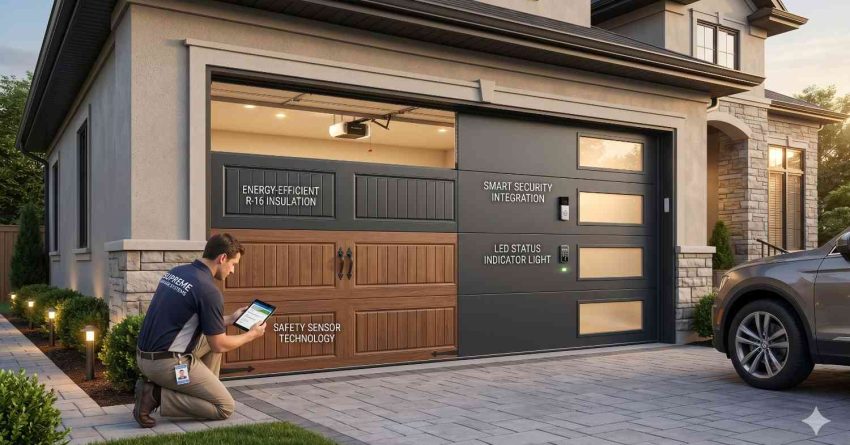
When buying a new garage door, consider material, insulation, safety features, style, budget, warranty, and professional installation. The right door balances durability with curb appeal, improves energy efficiency, and protects your property. Each factor influences long-term performance and cost. Homeowners and property managers should evaluate these elements together to ensure their investment delivers reliable function, lasting value, and the safety standards their home or rental property requires.
Key Factors to Consider When Buying a New Garage Door
The most important factors when buying a new garage door are material, insulation, safety mechanisms, design, budget, and warranty. Steel, wood, aluminum, and fiberglass each offer different durability and maintenance needs. Insulation affects energy bills, while modern safety sensors and smart openers improve daily use and security.
Material and Durability
Material choice shapes both performance and maintenance. Steel doors are the most popular pick for U.S. homes because they resist dents, rust, and weather. Wood doors offer premium curb appeal but require regular sealing. Aluminum is lightweight and rust-resistant, ideal for coastal climates. Fiberglass mimics wood without the upkeep and handles humidity well. Match the material to your local weather, maintenance tolerance, and aesthetic goals. A well-chosen material reduces repair frequency and extends the door’s service life by years.
Insulation and Energy Efficiency
Insulation matters even if your garage is detached. Insulated doors maintain stable temperatures, lower heating and cooling costs, and reduce outside noise. R-value measures insulation performance, with R-13 to R-18 suitable for most attached garages. Higher R-values benefit homes in extreme climates or garages used as workshops, gyms, or living spaces. Polyurethane-injected cores deliver stronger insulation than polystyrene panels. Choosing the right R-value protects adjacent rooms from temperature swings and supports overall home energy efficiency.
A solid understanding of these features prepares you to compare models. The next step is matching design choices and security upgrades to your property, which is where professional garage door installation ensures everything functions correctly from day one.
Style, Safety, and Smart Features That Add Value
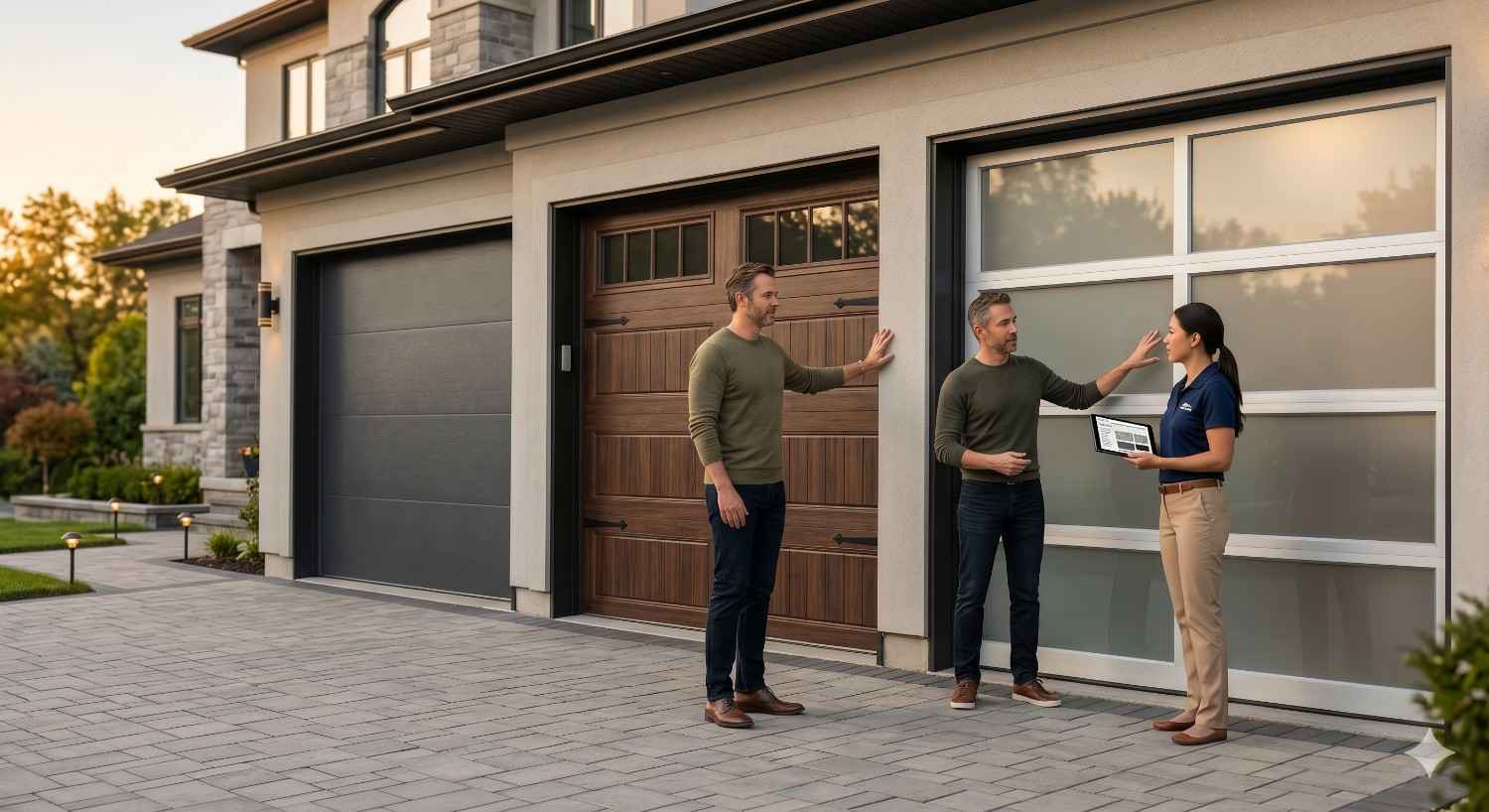
Style influences curb appeal and home value. Traditional raised-panel, carriage-house, and contemporary flush designs each suit different home styles. Window inserts brighten the interior and add character. Color and hardware should complement your siding and front door for a unified exterior.
Safety features are non-negotiable. Look for auto-reverse sensors, photo-eye detection, and pinch-resistant panel designs. These protect children, pets, and vehicles from accidents during operation.
Security and Smart Technology Upgrades
Smart garage door openers add convenience and security. Wi-Fi-enabled models let you open, close, and monitor your door from a smartphone. Rolling-code technology prevents signal theft, and battery backups keep the door working during power outages. Integration with home security systems sends real-time alerts and supports voice control through smart assistants. For landlords and property managers, smart access simplifies tenant entry and service visits while creating a digital log of activity.
Budget, Warranty, and Professional Installation
Garage door costs vary by material, size, and features. Basic single doors start near $800 installed, while premium custom or insulated double doors can exceed $4,000. Always request itemized quotes covering the door, opener, hardware, removal of the old unit, and labor.
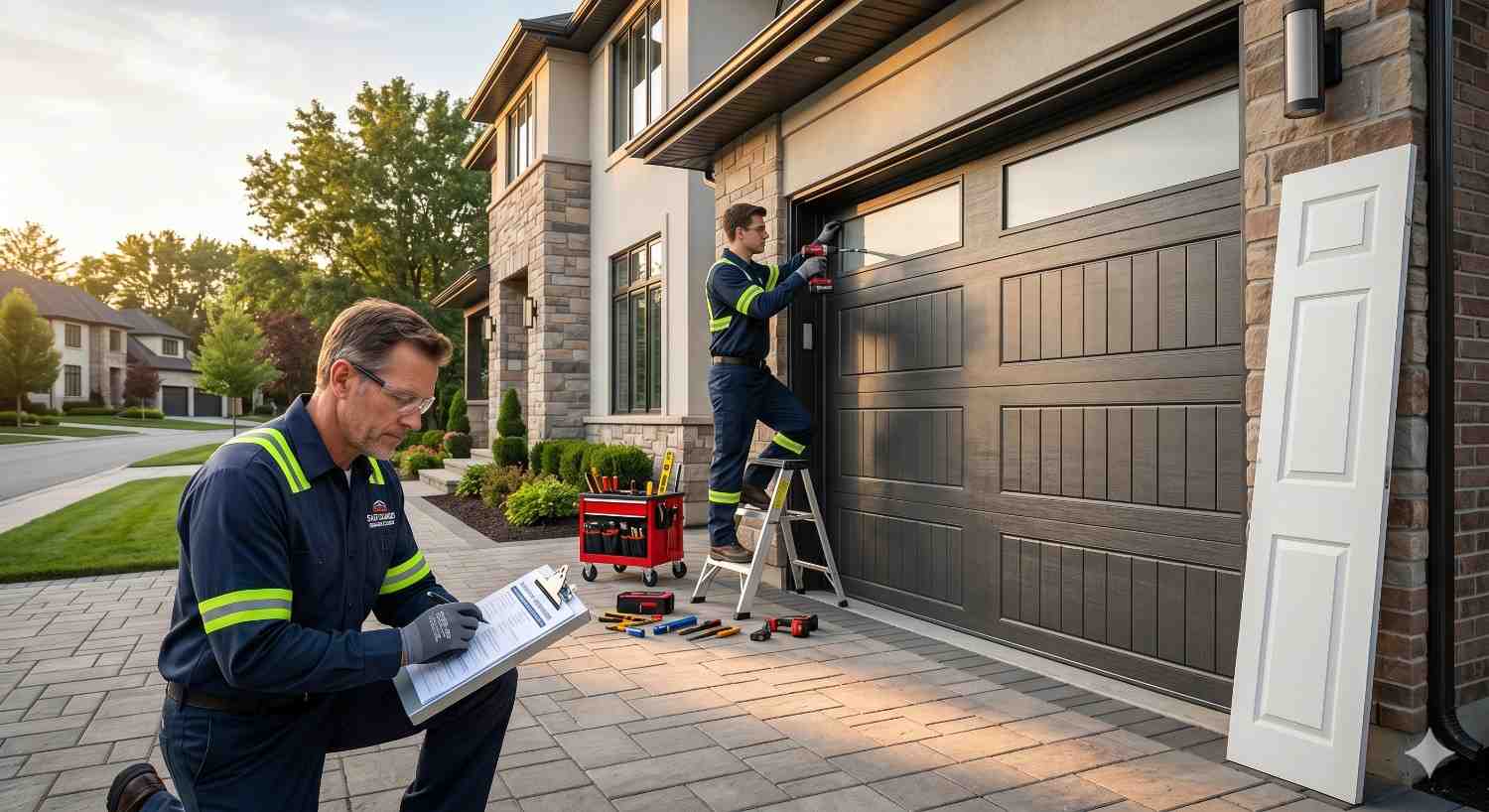
Warranty terms reveal product quality. Look for at least a 10-year warranty on panels and a separate warranty on the opener and springs. Equally important is hiring licensed, insured installers, since improper installation voids most warranties and creates safety risks. Plan for routine garage door maintenance to protect your investment and keep moving parts working smoothly year-round.
Conclusion
Choosing a new garage door means balancing material, insulation, style, safety features, budget, and warranty for long-term performance and value.
For homeowners and property managers, the right door protects the property, lowers energy costs, and improves daily convenience across every season.
We at Mr. Local Services connect you with trusted garage door professionals nationwide. Contact us today to start your project with confidence.
Frequently Asked Questions
What is the best material for a garage door?
Steel is the most popular choice for durability and low maintenance, while wood, aluminum, and fiberglass suit specific styles, climates, and budgets.
How much does a new garage door cost?
A new garage door typically costs between $800 and $4,000 installed, depending on material, size, insulation, smart features, and labor in your region.
Are insulated garage doors worth it?
Yes. Insulated doors lower energy bills, reduce outside noise, and protect adjacent rooms, especially in attached garages or extreme climates.
How long does a garage door last?
A quality garage door lasts 15 to 30 years with proper maintenance. Springs, openers, and weatherstripping may need replacement sooner.
Should I install a garage door myself?
No. Garage doors involve heavy panels and high-tension springs. Professional installation ensures safety, proper function, and warranty protection.