No, Home Depot does not rekey locks for free. Most Home Depot stores offer rekeying as a paid in-store service, with pricing that varies by location and lock type. Some stores rekey locks at the customer service desk for a small fee per cylinder, while others refer customers to outside locksmiths. If you are a homeowner, landlord, or property manager weighing your options, understanding what Home Depot actually offers, what it costs, and when a dedicated locksmith is the smarter choice will save you time and money.
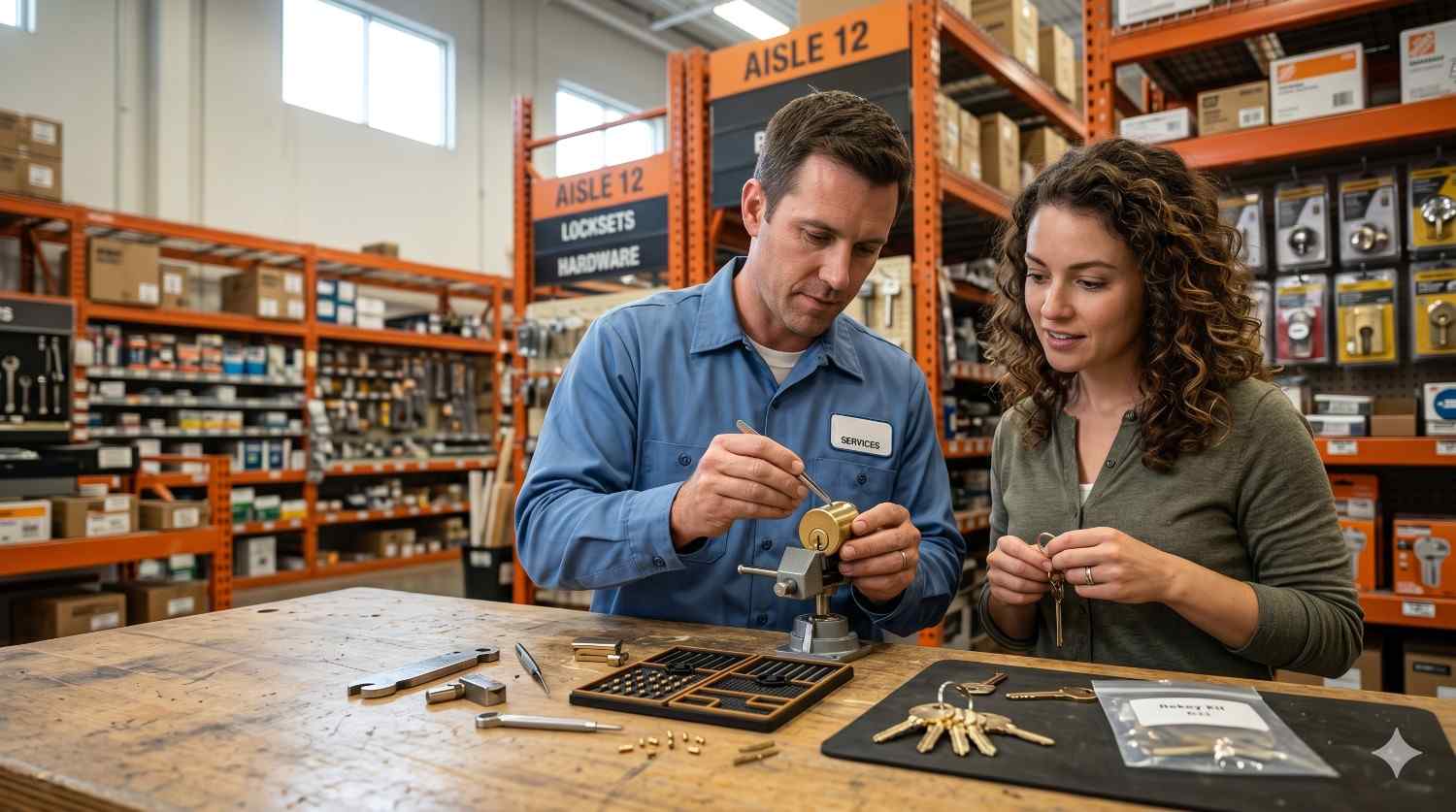
Does Home Depot Rekey Locks for Free?
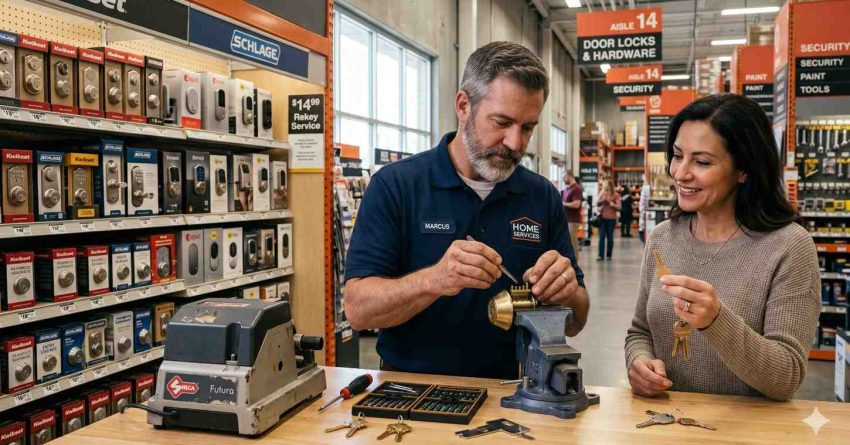
Home Depot does not provide free lock rekeying. Select stores rekey Kwikset and Schlage residential locks at the service desk for roughly $5 to $20 per cylinder, depending on location and lock complexity. Availability is inconsistent, and many stores do not offer the service at all. Call your local store first to confirm.
What Home Depot Actually Offers for Lock Services
Home Depot stocks replacement locks, smart locks, deadbolts, and key-cutting machines in nearly every store. Key duplication is widely available and inexpensive. Lock rekeying, however, is a specialty service that depends on whether your specific location has a trained associate and the right pinning kit. Most stores handle only standard residential pin-tumbler cylinders. Commercial locks, high-security cylinders, and older or damaged hardware are typically declined.
Typical Cost to Rekey Locks at Home Depot
When the service is available, expect to pay around $5 per cylinder for basic rekeying, plus the cost of any new keys. Bringing your locks into the store keeps the price low, but you handle the removal and reinstallation yourself. For homeowners uncomfortable disassembling deadbolts or entry handles, that labor savings disappears quickly once a contractor or handyman is involved.
The in-store option works for simple jobs. Anything beyond that, including same-day service at your property, calls for a professional locksmith rekey service that comes to you.
When Rekeying Your Locks Makes Sense
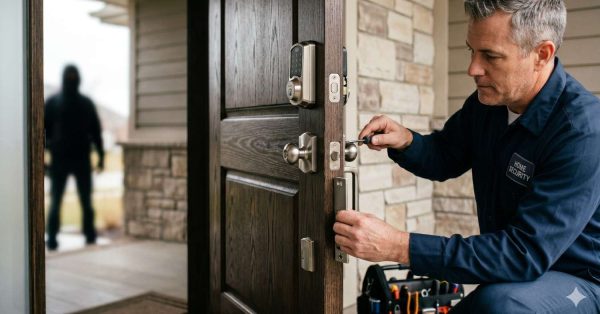
Rekeying changes the internal pins of your existing lock so old keys no longer work, while keeping the hardware intact. It is faster and cheaper than replacing locks, and it is the right choice in several common situations: after buying a new home, when a tenant moves out, after losing a key, following a contractor project, or whenever someone with a copy of your key should no longer have access. New homeowners especially benefit from pairing rekeying with a complete new-home security checklist to address every entry point at once.
Rekey vs. Replace: Which Option Fits Your Situation
Rekey when your locks are in good working condition, match your aesthetic, and meet your security needs. Replace when locks are worn, outdated, damaged, or when you want to upgrade to smart locks, keyless entry, or higher-grade hardware. Replacement also makes sense if you want all exterior doors keyed alike with new matching hardware. Cost is the other factor: rekeying runs a fraction of replacement, but understanding when replacing locks is the smarter choice protects long-term security and property value.
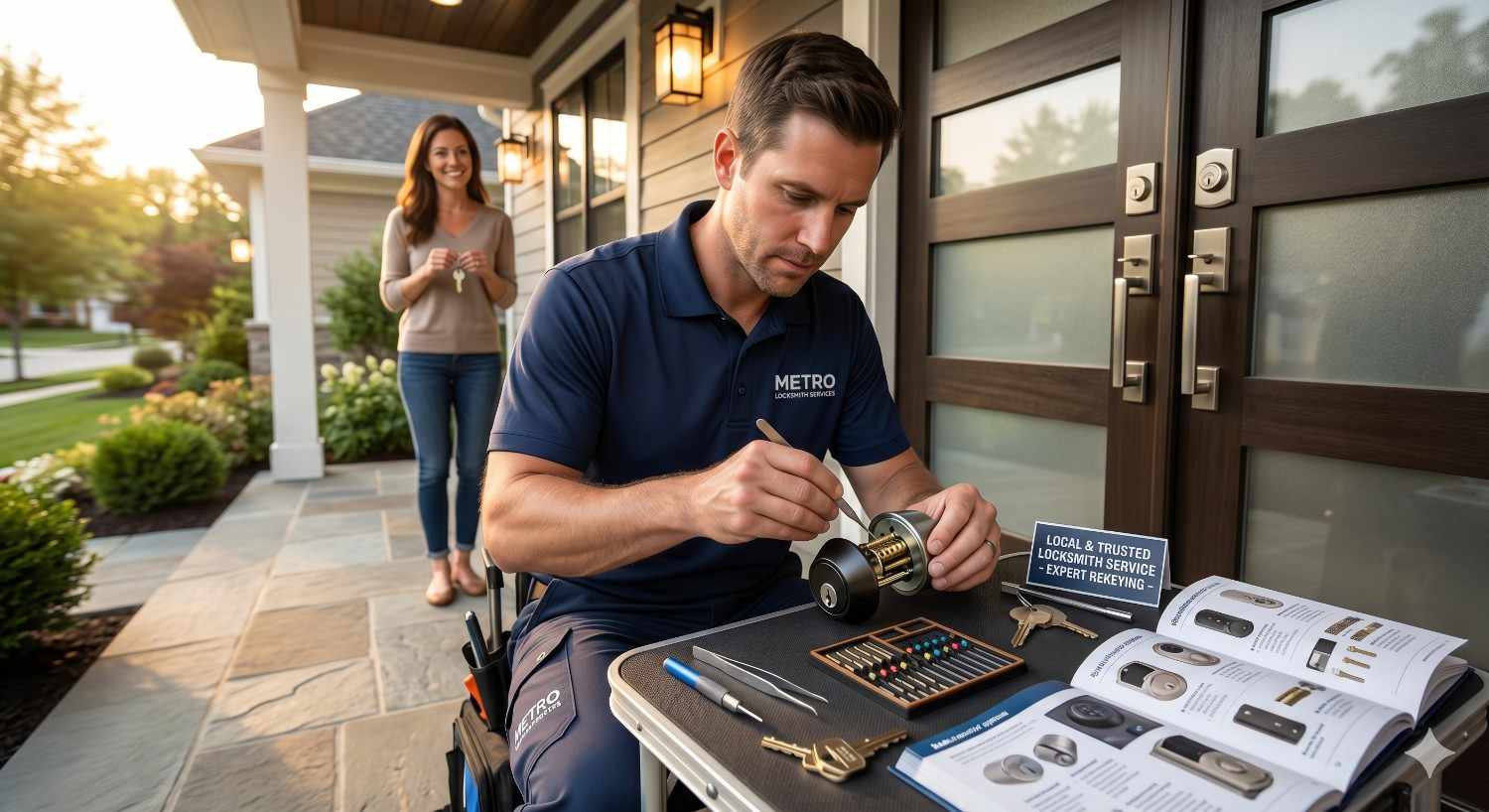
Better Alternatives to Home Depot for Rekeying Locks
A licensed local locksmith is almost always the more practical choice. Mobile locksmiths travel to your property, rekey every lock on-site within an hour, and handle deadbolts, entry handles, smart locks, and commercial hardware that Home Depot will not touch. Pricing typically runs $15 to $40 per cylinder plus a service call fee, with same-day availability. For landlords and property managers handling tenant turnovers, this on-site service eliminates downtime between renters and keeps units secure without lock replacement costs.
Conclusion
Home Depot does not rekey locks for free, and its in-store service is limited, inconsistent, and requires you to remove the hardware yourself. For most homeowners and property managers, a mobile locksmith delivers faster, more reliable results.
When you need dependable lock rekeying, replacement, or property security upgrades, Mr. Local Services connects you with licensed, vetted locksmiths who arrive on time and price transparently. Contact us today to schedule service.
Frequently Asked Questions
Can Home Depot rekey a lock I bring into the store?
Some Home Depot stores rekey Kwikset and Schlage residential cylinders at the service desk. Call your local store first to confirm availability and current pricing.
How much does Home Depot charge to rekey a lock?
When available, rekeying costs approximately $5 to $20 per cylinder, plus any new keys. Pricing varies by store, lock brand, and complexity of the cylinder.
Does Lowe’s rekey locks for free?
No, Lowe’s also does not rekey locks for free. Service availability varies by store, and many locations refer customers to outside locksmiths instead.
Is it cheaper to rekey or replace a lock?
Rekeying is cheaper. Expect to pay a small fee per cylinder versus the cost of new hardware, installation labor, and potential door modifications for replacement.
How long does it take a locksmith to rekey a lock?
A mobile locksmith typically rekeys a standard residential lock in 5 to 10 minutes per cylinder. Most full-home rekeying jobs finish within one hour.