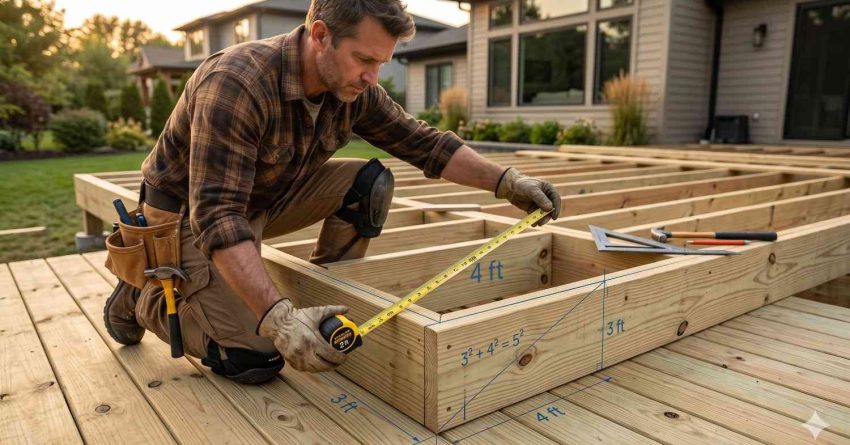
The 3/4/5 rule is the fastest way to confirm your deck frame is perfectly square before you fasten a single board. By measuring 3 feet along one side, 4 feet along the adjacent side, and checking that the diagonal between those points measures exactly 5 feet, you guarantee a true 90-degree corner. This simple geometry trick saves hours of rework, prevents crooked railings, and protects the structural integrity of your finished deck.
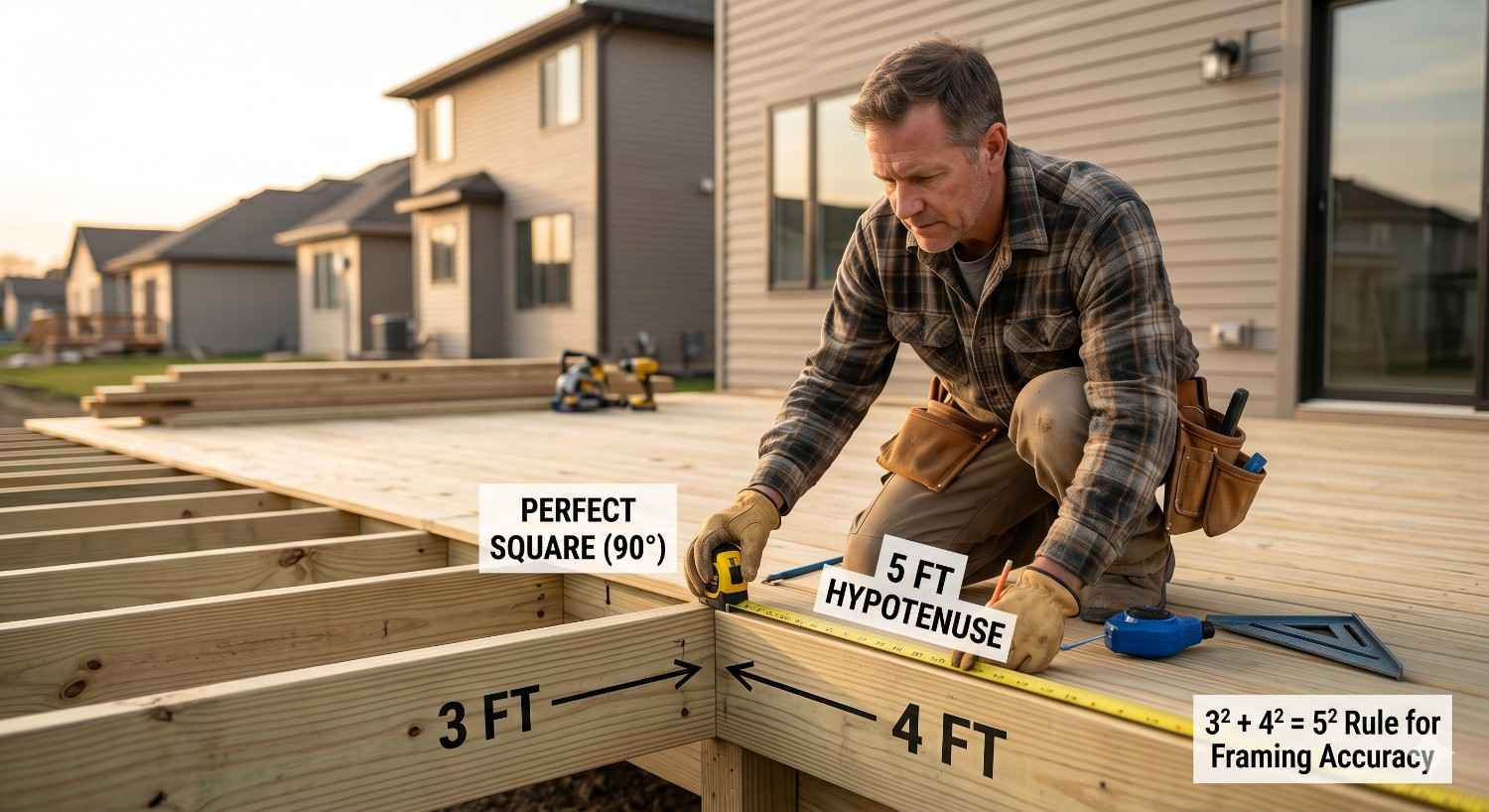
The 3/4/5 Rule Explained
The 3/4/5 rule states that any triangle with sides of 3, 4, and 5 units forms a perfect right angle at the corner where the 3 and 4 sides meet. For deck builders, this means measuring 3 feet down one rim joist, 4 feet down the perpendicular rim joist, and adjusting the frame until the diagonal between those marks equals exactly 5 feet. When the diagonal hits 5 feet, your corner is square.
Why This Method Works (Pythagorean Logic)
The rule comes directly from the Pythagorean theorem: a² + b² = c². When you plug in 3 and 4 as the two short sides, the math produces exactly 5 (9 + 16 = 25, and the square root of 25 is 5). No other combination of small whole numbers produces a clean right triangle this easily, which is why carpenters have relied on it for centuries. The numbers are simple, the tape measure does the work, and the result is mathematically guaranteed.
Scaling the Rule for Larger Decks
For bigger frames, multiply each number by the same factor. A 6/8/10 triangle works identically. So does 9/12/15 or even 12/16/20. Larger triangles produce more accurate squaring because small measurement errors get amplified across longer distances. On decks over 12 feet wide, the 6/8/10 or 9/12/15 method is the professional standard for confirming square corners.
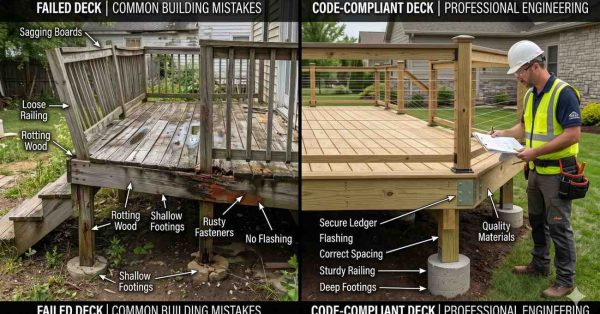
A square frame is the foundation of every safe, level deck, but accurate execution depends on more than geometry. Hiring a professional deck building service ensures the framing, footings, and finish all align with local code.

How to Apply the 3/4/5 Rule to Your Deck Frame
After your rim joists are loosely fastened at the corners, grab a tape measure and a pencil. Mark exactly 3 feet from the corner along one rim joist and 4 feet from the same corner along the adjacent rim joist. Stretch your tape between those two marks. If the diagonal reads 5 feet, the corner is square. If it reads more or less, gently shift one rim joist until the diagonal matches.
Tools You Need and Step-by-Step Measurement
You only need three tools: a 25-foot tape measure, a carpenter’s pencil, and a framing square for verification. Work on one corner at a time, lock it square, then fasten with structural screws. For larger frames, repeat the process at the opposite corner. The principles behind building a square deck frame apply whether you are working with pressure-treated lumber, composite framing, or steel joists.
Common Mistakes That Throw Your Frame Out of Square
The biggest mistake is measuring from the wrong reference point. Always measure from the inside corner of your rim joists, not from the outside edge or the post. Another common error is forcing the diagonal to fit before confirming both rim joists are straight, which transfers the bow into your finished deck. Finally, never skip squaring corners because the lumber “looks” right. Even a half-inch error multiplies across a deck and shows in every railing, board gap, and stair tread.
Conclusion
The 3/4/5 rule turns simple geometry into a builder’s most reliable squaring method, guaranteeing right angles before your deck takes shape. Mastering it protects your project from costly rework and structural problems.
For homeowners and property managers planning a new deck, accuracy at the framing stage determines the quality of every board that follows, and skilled carpentry work brings that precision to life.
We help you build it right the first time. Connect with Mr. Local Services today to find trusted deck professionals near you.
Frequently Asked Questions
Is the 3/4/5 rule accurate enough for large decks?
Yes, but scale the measurements. Use 6/8/10 or 9/12/15 ratios on larger frames to reduce error across longer spans and confirm a true 90-degree corner.
Can I use the 3/4/5 rule in inches instead of feet?
Yes. The ratio works with any unit. However, feet give you more reach and accuracy on full-size deck frames, which is why pros prefer it.
What if my diagonal does not measure exactly 5 feet?
Shift one rim joist slightly until the diagonal hits exactly 5 feet. Then fasten the corner with structural screws to lock the square position permanently.
Do I still need a framing square if I use this method?
A framing square verifies smaller cuts and post connections. The 3/4/5 rule confirms the overall deck frame is square, which a framing square cannot accurately do.
How often should I check for square during deck building?
Check square after setting rim joists, after installing inner joists, and before fastening decking boards. Each stage can introduce small shifts that compound later.