Tiny homes get electricity through one of three methods: connecting to the utility grid, running an off-grid solar power system, or using a generator as a primary or backup source. The right option depends on where the tiny home is located, whether it sits on a permanent foundation, and how much power the occupants need day to day. Each method has distinct setup requirements, costs, and long-term implications for comfort and reliability.
The Main Ways Tiny Homes Get Electricity
Tiny homes access electricity the same way any residential structure does — through a power source connected to an internal electrical system. Grid connection is the most common method for tiny homes on permanent sites. Solar power is the preferred choice for off-grid or mobile tiny homes. Generators serve as backup systems or primary sources in remote locations where neither grid nor solar is practical.
Connecting to the Electrical Grid
A tiny home on a fixed lot can connect directly to the local utility grid, just like a standard house. The process involves running a service line from the utility pole or underground supply to a meter base, then into the home’s electrical panel. Most jurisdictions require a licensed electrician to complete this work and a permit to authorize the connection.
Grid-connected tiny homes typically operate on a 30-amp or 50-amp service, depending on the appliances and systems installed. A 30-amp connection handles basic loads — lighting, a small HVAC unit, and standard kitchen appliances. Larger systems with electric water heaters or full-size appliances may require 50-amp service. Once connected, the home draws power exactly as any residential property would, with monthly utility billing based on consumption.
Off-Grid Solar Power Systems
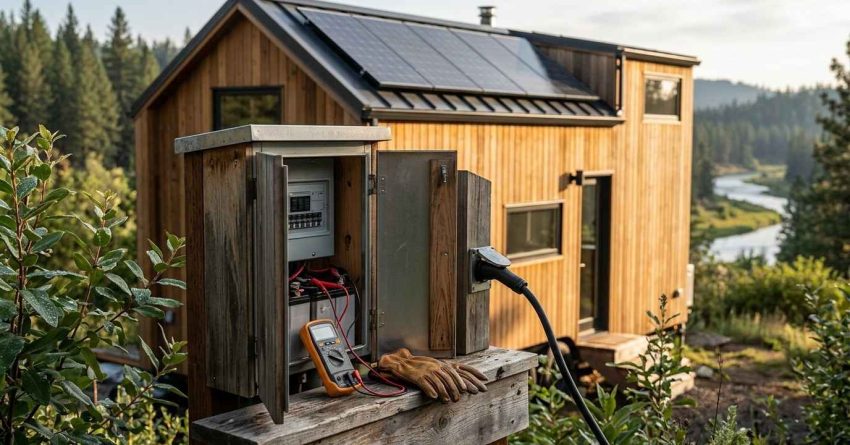
Off-grid tiny homes rely on solar panels, a battery bank, a charge controller, and an inverter to generate and store usable electricity. Solar panels collect energy from sunlight and feed it into batteries through the charge controller, which regulates voltage and prevents overcharging. The inverter converts stored DC power into the AC power that standard appliances and outlets require.
System sizing depends on daily energy consumption. A well-designed off-grid solar setup for a tiny home typically includes 400 to 800 watts of solar panel capacity paired with a battery bank sized to cover one to three days of use without sun. Propane or generator backup is common for extended cloudy periods. Off-grid systems require careful load planning to avoid draining batteries faster than they recharge.
Knowing where power comes from is only part of the picture. Tiny home electrical installation determines how safely and efficiently that power reaches every outlet, switch, and appliance inside the home — and this work carries real consequences if done incorrectly.
How Electricity Is Distributed Inside a Tiny Home
Once power enters a tiny home — whether from the grid, solar, or a generator — it flows into an electrical panel that distributes it through circuits to outlets, switches, and hardwired appliances. The panel acts as the control center, with individual breakers protecting each circuit from overload.
Electrical Panels, Wiring, and Load Management
Tiny homes use compact electrical panels, typically rated between 60 and 100 amps, which is sufficient for the reduced square footage and lighter load profile of most tiny home builds. Each circuit is sized to match the devices it serves — kitchen circuits carry higher amperage than lighting circuits, for example.
Wiring in tiny homes follows the same National Electrical Code (NEC) standards that apply to conventional residential construction. Proper wire gauges, grounded outlets, GFCI protection in wet areas, and arc-fault circuit interrupters (AFCIs) in living spaces are all required. Cutting corners on interior wiring creates fire and shock hazards that are especially dangerous in a small, enclosed space.
Residential electrical work in tiny homes requires the same licensing, permitting, and inspection standards as any home — regardless of the structure’s size.
Choosing the Right Power Option for Your Tiny Home
The best power option for a tiny home comes down to three factors: location, mobility, and budget. Grid connection offers the most reliable and lowest-maintenance power supply but requires a permanent site with utility access. Solar is ideal for remote or mobile tiny homes and eliminates monthly utility bills, though upfront equipment costs are higher. Generators provide flexibility but involve ongoing fuel costs and maintenance.
Many tiny home owners combine methods — using solar as the primary source with a generator for backup, or connecting to the grid while keeping a small solar array to offset consumption. Hybrid setups offer resilience without full dependence on any single source. Whatever the configuration, the electrical system inside the home must be professionally designed and installed to handle the chosen power input safely and efficiently.
Conclusion
Tiny homes access electricity through grid connections, solar systems, generators, or hybrid combinations — each matched to the home’s location, mobility, and energy needs.
Homeowners and property managers planning a tiny home build or upgrade benefit from understanding these options early, since power source decisions shape everything from site selection to appliance choices and long-term operating costs. Explore tiny home planning and setup to see the full scope of what a well-executed build involves.
At Mr. Local Services, we connect you with licensed professionals who handle tiny home electrical work correctly from the start — reach out today to get the right team on your project.
Frequently Asked Questions
Can a tiny home run entirely on solar power?
Yes. A properly sized solar system with adequate battery storage can power a tiny home fully off-grid, though load management and backup planning are essential for reliability during low-sun periods.
How much electricity does a tiny home typically use?
Most tiny homes consume between 100 and 300 kilowatt-hours per month, significantly less than a standard house, depending on appliances, climate control systems, and occupant habits.
Do tiny homes need a licensed electrician?
Yes. Whether connecting to the grid or installing an off-grid system, electrical work in tiny homes must meet NEC standards and local code requirements, which mandate licensed installation and inspection.
What happens to electricity in a tiny home during a power outage?
Grid-connected tiny homes lose power during outages like any utility-dependent home. Off-grid solar systems with battery storage continue operating normally, making them more resilient during grid failures.
Can you add electricity to a tiny home after it is built?
Yes. Electrical systems can be retrofitted into an existing tiny home, though the process is more complex than installing during construction and requires a licensed electrician to ensure safe, code-compliant work.