Asking the right questions before hiring a builder protects your investment, filters out unqualified contractors, and sets clear expectations before a single tool is picked up. The questions you ask upfront determine whether your project finishes on time, on budget, and to the standard you expect.
Homeowners and property managers who skip this step often face cost overruns, scheduling delays, and disputes over scope. A prepared list of questions gives you the information needed to compare builders fairly and choose with confidence.
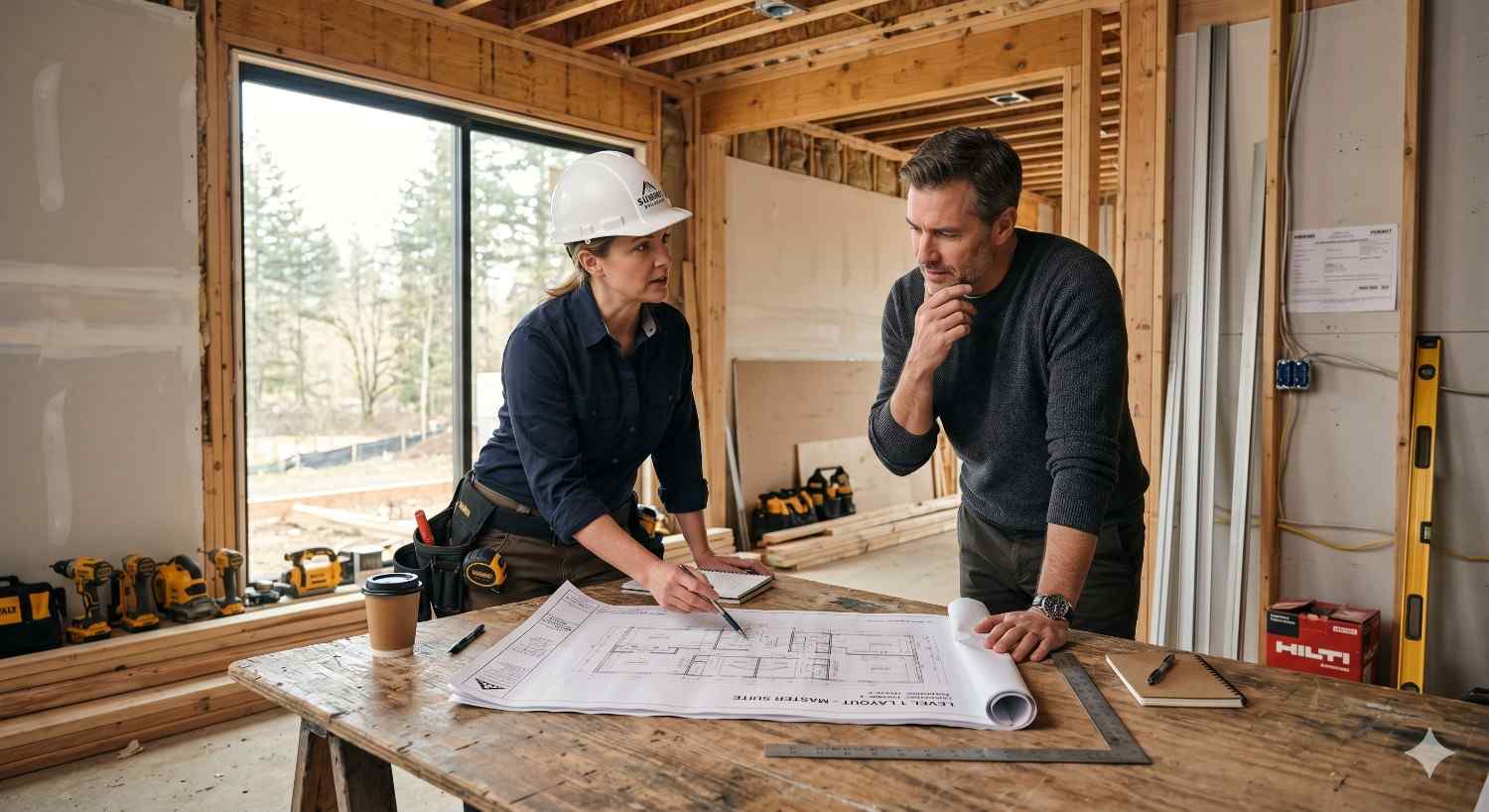
The Most Important Questions to Ask a Builder Before Hiring
Before committing to any builder, you need to verify their qualifications, understand their track record, and confirm they carry the right protections. These questions establish whether a builder is worth considering at all.
Ask every builder these core questions before moving forward:
- Are you licensed to work in this state or jurisdiction?
- Do you carry general liability insurance and workers’ compensation?
- How long have you been in business?
- Can you provide references from projects similar to mine?
- Have you completed projects of this size and type before?
- Who will be my main point of contact throughout the project?
A qualified builder answers these questions directly and provides documentation without hesitation. Vague answers or reluctance to share credentials are immediate warning signs.
Questions About Licensing, Insurance, and Credentials
Licensing requirements vary by state and project type, but every legitimate builder should hold the appropriate license for the work they perform. Ask to see the license number and verify it independently through your state’s contractor licensing board.
Insurance is equally non-negotiable. General liability insurance protects your property if something is damaged during the project. Workers’ compensation covers any worker injured on your property. Without both, you carry the financial risk. Request certificates of insurance directly from the builder’s insurer, not just a copy from the builder.
Questions About Experience, References, and Past Work
Experience with your specific project type matters more than years in business alone. A builder with twenty years of residential framing experience may not be the right fit for a bathroom remodel or an addition. Ask for examples of completed projects that match your scope.
References should come from recent clients, ideally within the last two years. When you contact those references, ask whether the project finished on time, whether the final cost matched the estimate, and whether they would hire the builder again. Those three questions reveal more than any portfolio photo.
Understanding who a builder is and what they have done is only part of the picture. How the project is managed from start to finish shapes the day-to-day experience and the final outcome just as much as credentials do.
Questions to Ask About the Project Itself
Once you have confirmed a builder’s qualifications, shift your questions to the project itself. This is where you establish timelines, clarify costs, and define the working relationship in writing.
Timeline, Scheduling, and Subcontractors
Ask for a projected start date and a realistic completion timeline. Builders who cannot give you a clear schedule may be overcommitted or disorganized. Find out what factors could cause delays and how the builder communicates when timelines shift.
Subcontractors are common on larger projects. Ask which portions of the work will be handled by subcontractors, who those subcontractors are, and whether they are also licensed and insured. You have the right to know everyone working on your property.
Contracts, Costs, and Payment Terms
Never begin a project without a written contract. Ask the builder to walk you through what a complete contract should cover, including a detailed scope of work, material specifications, payment schedule, and change order process.
On payment terms, a reasonable deposit is standard, but be cautious of any builder requesting more than 30–40% upfront. Payments tied to project milestones protect you if work stalls or quality falls short. Get every cost in writing before work begins.
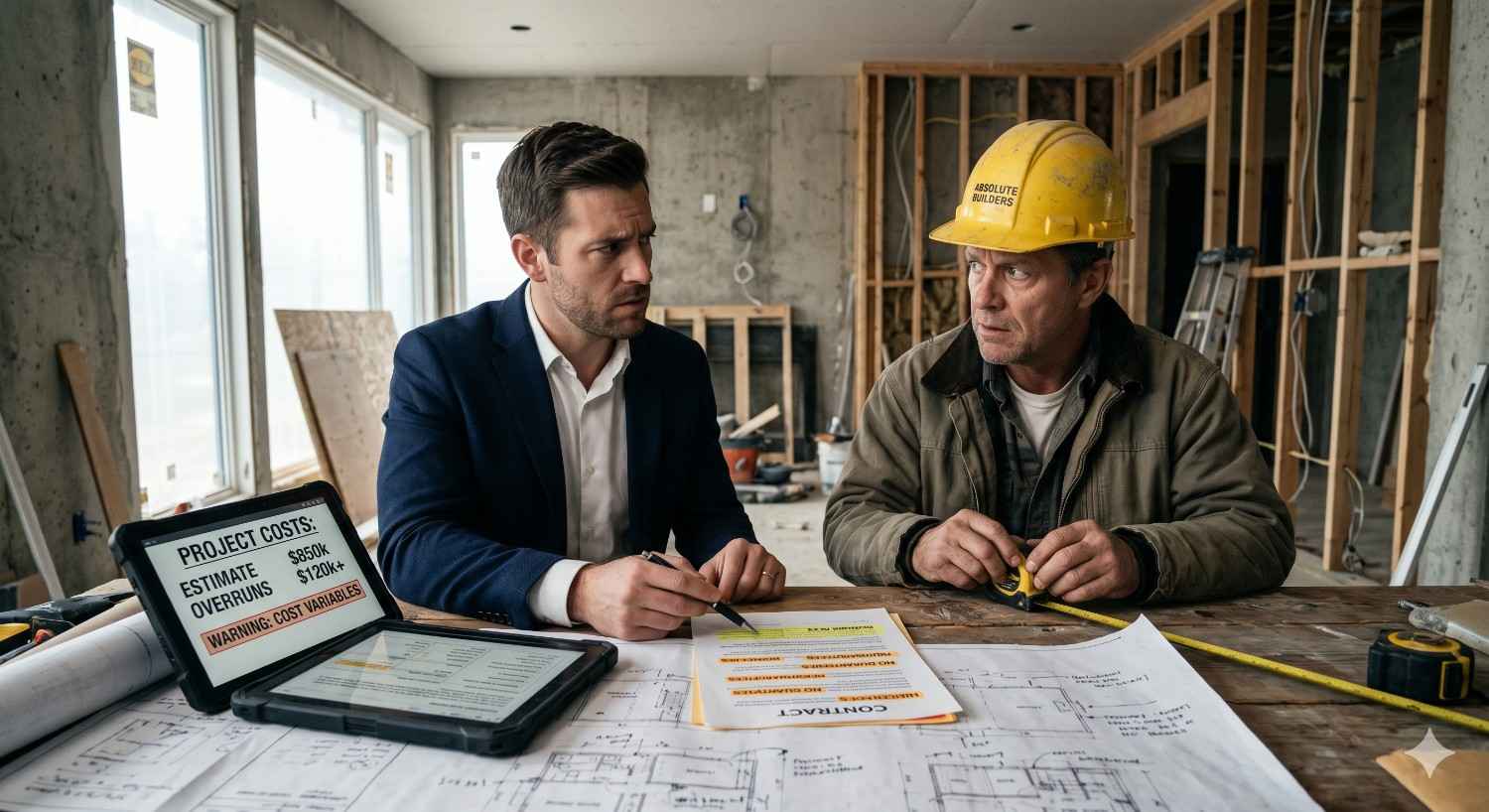
Red Flags to Watch for in a Builder’s Answers
How a builder responds to your questions tells you as much as the answers themselves. Watch for these warning signs during any conversation or estimate meeting.
A builder who pressures you to decide quickly, discourages written contracts, or cannot provide proof of insurance is not a builder worth hiring. Similarly, an estimate that comes in dramatically lower than all others usually signals cut corners, unlicensed subcontractors, or missing scope items that will surface as costly add-ons later.
Builders who speak poorly about past clients, avoid specific answers about timelines, or refuse to provide references have given you all the information you need. Trust those signals.
Conclusion
Asking the right questions before hiring a builder is the single most effective way to protect your project, your property, and your budget. Credentials, references, contracts, and clear timelines are not optional details.
Whether you are planning a small repair or a larger renovation or remodeling project, the same vetting process applies. The builder who welcomes your questions is the builder worth trusting.
At Mr. Local Services, we connect homeowners and property managers with skilled, vetted professionals who are ready to answer every question you have before work begins.
Frequently Asked Questions
How many quotes should I get before choosing a builder?
Get at least three quotes from separate builders. Multiple estimates give you a realistic price range, reveal scope differences, and help you identify outliers that are either overpriced or suspiciously low.
What should a builder’s contract include?
A builder’s contract should include a detailed scope of work, material specifications, start and completion dates, a payment schedule tied to milestones, and a clear process for handling change orders or unexpected costs.
Should I ask a builder for references?
Yes, always. Contact at least two or three recent references and ask specifically whether the project finished on time, whether costs matched the estimate, and whether they would hire the same builder again.
What questions should I ask about subcontractors?
Ask which parts of the project will be subcontracted, who those subcontractors are, and whether they carry their own license and insurance. You have the right to know everyone performing work on your property.
How do I know if a builder is licensed and insured?
Ask the builder for their license number and verify it through your state’s contractor licensing board. Request a certificate of insurance directly from their insurer to confirm both general liability and workers’ compensation coverage are active.