Falls are the single biggest killer in construction, responsible for more worker deaths each year than any other hazard on the job site.
This is not a close margin. According to OSHA’s construction fatality data, falls consistently account for roughly one in three construction worker deaths annually in the United States. Understanding why falls dominate the fatality statistics — and what conditions make them so lethal — matters for anyone involved in building, maintaining, or managing a property.
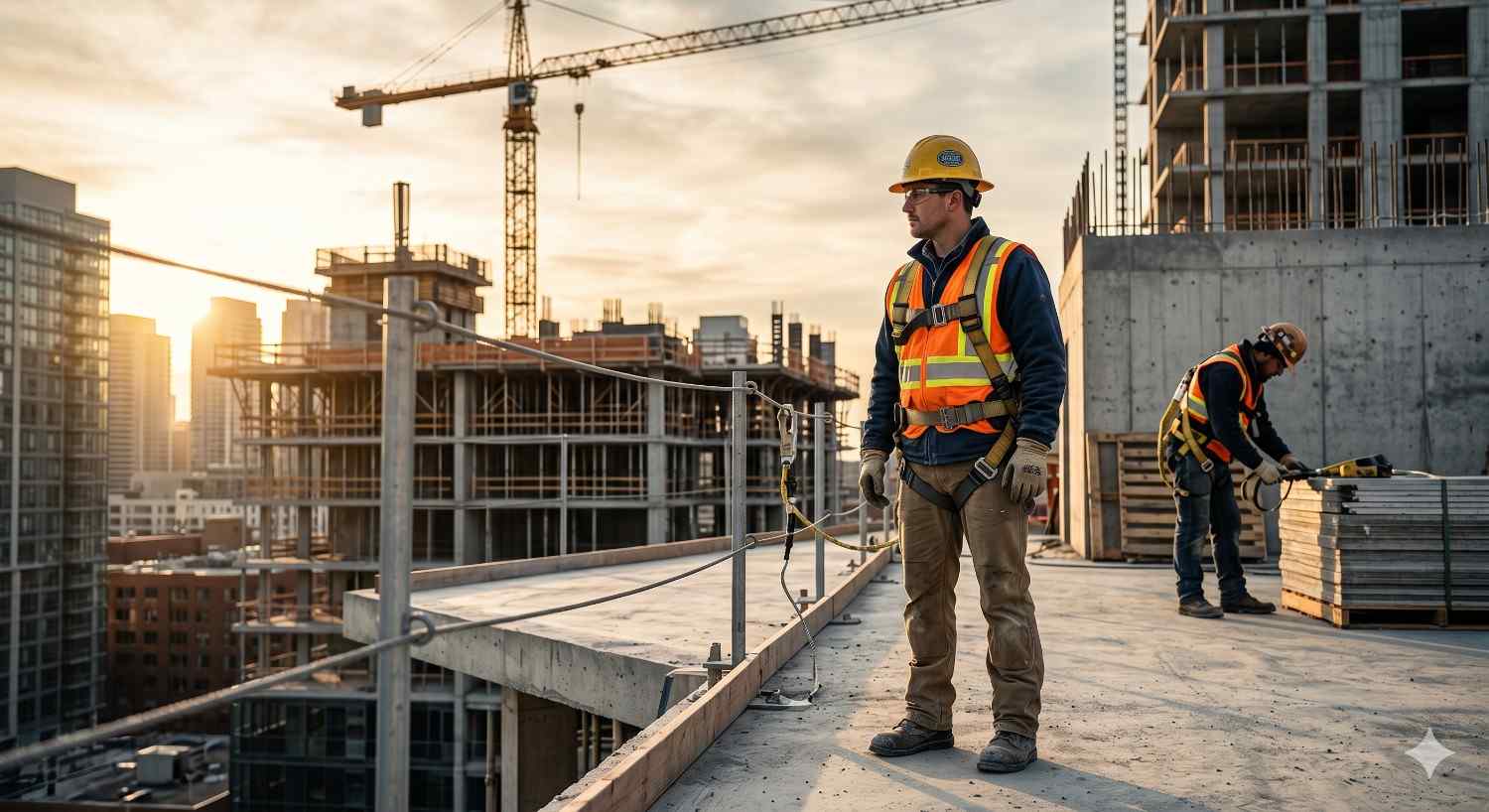
Falls Are the Leading Cause of Death in Construction
Falls top every construction fatality report for a straightforward reason: the work happens at height, the surfaces are unstable, and the margin for error is zero.
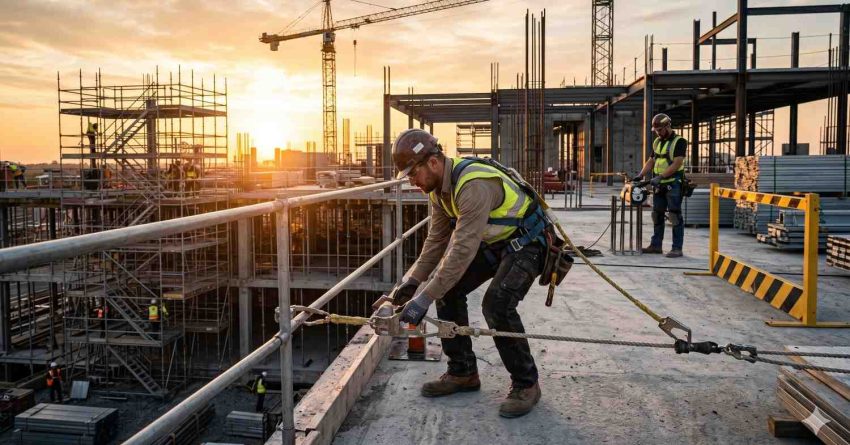
Construction workers regularly operate on rooftops, scaffolding, ladders, and elevated platforms. A single misstep, an unsecured edge, or a failure in fall protection equipment can result in a fatal drop. No other construction hazard combines this level of daily exposure with this level of consequence.
Why Falls Kill More Workers Than Any Other Hazard
Three factors make falls uniquely deadly in construction environments.
First, height exposure is constant. Framing, roofing, electrical work, and exterior finishing all require workers to operate well above ground level throughout a standard workday.
Second, fall protection is frequently inadequate. Guardrails are missing, personal fall arrest systems are not worn correctly, and safety nets are absent on many smaller residential job sites.
Third, the injuries sustained in construction falls are severe. Falls from even moderate heights — as low as six feet — can cause fatal head trauma, spinal injuries, and internal damage. The human body does not absorb that kind of impact.
The Most Dangerous Fall Scenarios on a Job Site
Certain situations produce falls at a disproportionate rate:
- Rooftop work without edge protection or fall arrest systems
- Ladder misuse, including overreaching, improper angle, and unsecured placement
- Unprotected floor openings and leading edges during framing and structural work
- Scaffolding collapses caused by improper assembly or overloading
- Skylights and fragile surfaces that workers step onto without realizing they cannot bear weight
Each of these scenarios is preventable. That is what makes fall fatalities particularly significant — the majority occur under conditions that proper safety protocols would have eliminated.
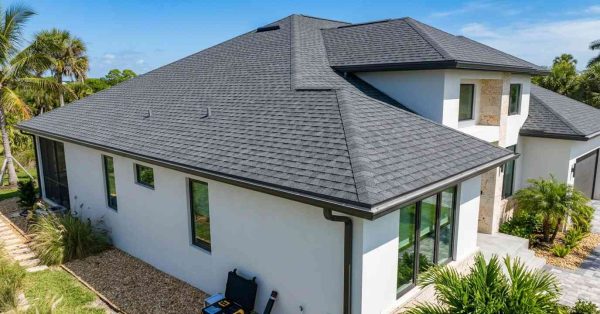
The same fall hazards that dominate large construction sites also appear during roofing work on residential properties, where safety infrastructure is often minimal and the consequences are just as serious.
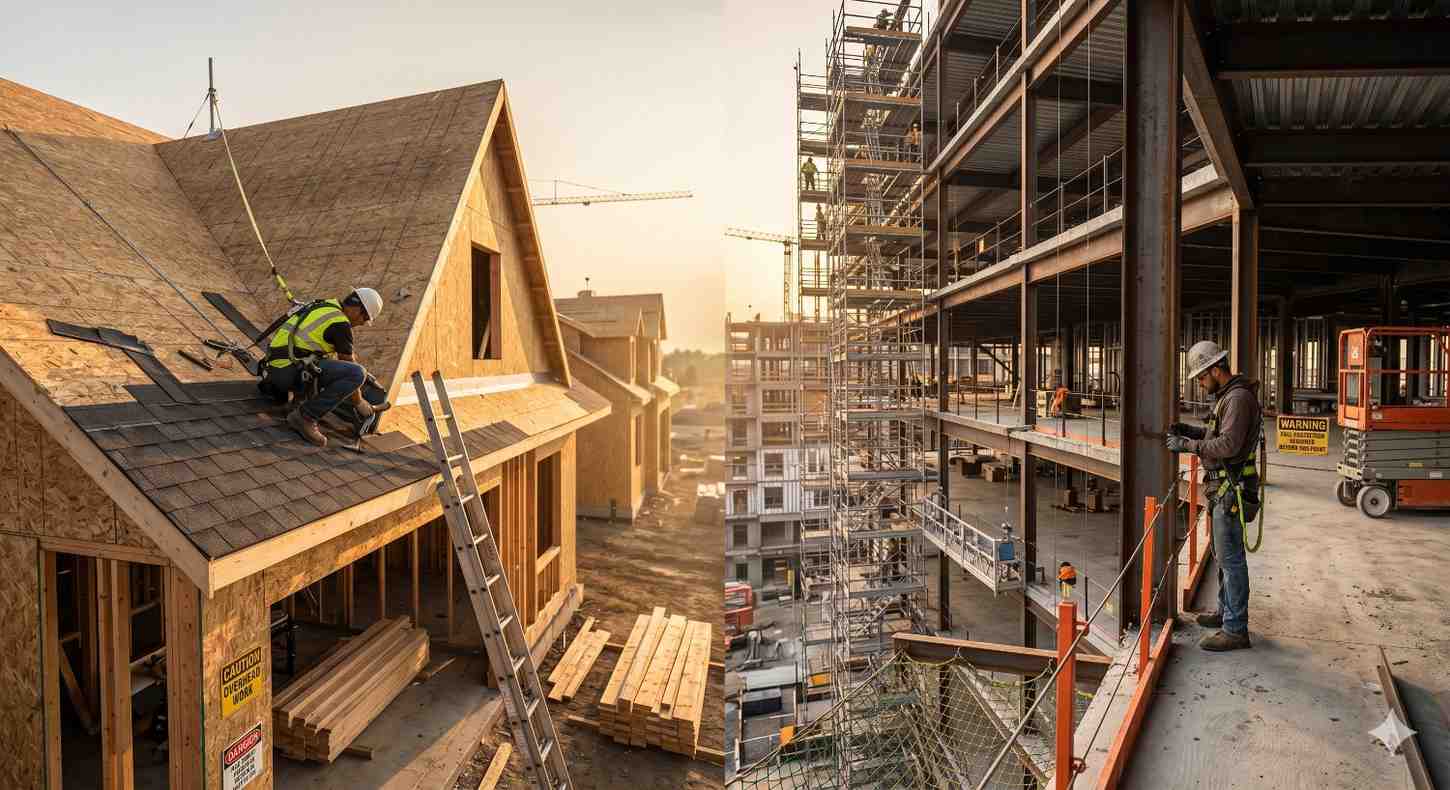
How Fall Hazards Show Up in Residential and Commercial Properties
Construction fatality data focuses on professional job sites, but fall hazards do not disappear once a building is occupied. They shift form.
Maintenance and repair work on homes and commercial properties carries many of the same risks. Contractors working on roofs, gutters, upper-story windows, and elevated decks face the same physics as workers on a new construction site. The difference is that residential work often happens with less oversight, smaller crews, and fewer formal safety systems in place.
What Property Owners and Managers Need to Know
Property owners are not passive bystanders when contractors work on their buildings. Understanding the risks helps owners make better decisions about who they hire and how work gets done.
Hiring licensed, insured professionals is the most direct way to reduce fall risk on your property. Qualified contractors carry workers’ compensation insurance, use proper fall protection equipment, and follow established safety protocols. Unlicensed workers operating without insurance shift liability and risk directly onto the property owner.
Beyond contractor selection, safety improvements that reduce fall risk around the property itself — secure handrails, stable walkways, proper lighting on stairs and elevated areas — reduce hazard exposure for everyone who lives or works in the building.
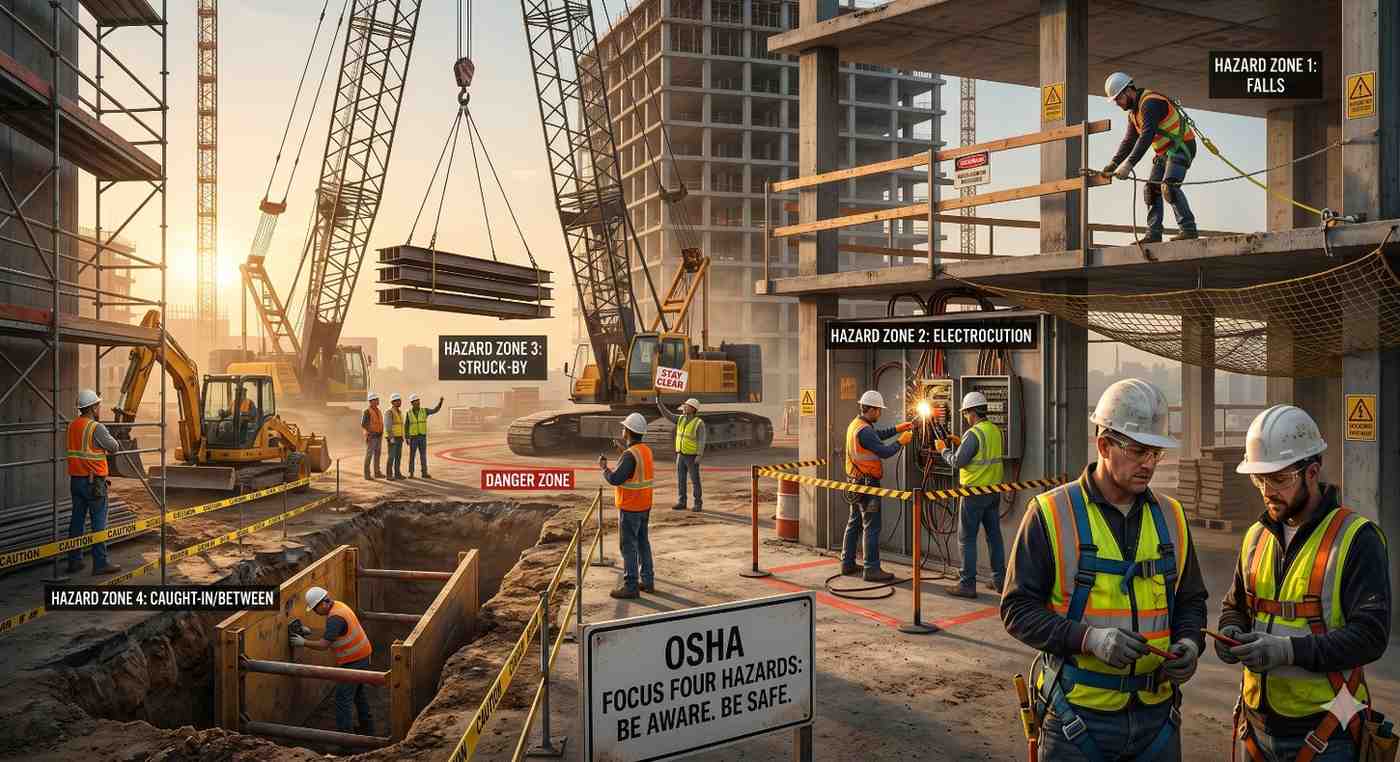
The Fatal Four — Construction’s Deadliest Hazard Categories
OSHA identifies four hazard categories responsible for the majority of construction fatalities. Falls lead the group, but the others are significant.
- Falls — the leading cause, accounting for roughly 36% of construction deaths
- Struck-by incidents — workers hit by vehicles, falling objects, or equipment
- Electrocutions — contact with live electrical sources during construction and maintenance
- Caught-in/between incidents — workers caught in machinery, collapsing structures, or between equipment and fixed objects
Eliminating these four hazard categories would prevent the majority of construction deaths each year. Falls remain the priority because of their frequency, their preventability, and the fact that they occur across virtually every trade and project type.
Conclusion
Falls kill more construction workers than any other hazard because height exposure is constant, fall protection is often insufficient, and the injuries sustained are severe.
For property owners and managers, this knowledge translates directly into how you approach routine property maintenance and repairs — choosing qualified professionals and maintaining safe conditions on your property reduces risk at every level.
At Mr. Local Services, we connect you with skilled, insured professionals who take safety seriously on every job, every time.
Frequently Asked Questions
How many construction workers die from falls each year?
In the United States, falls kill approximately 300 to 400 construction workers annually, making them the leading cause of occupational death in the industry according to OSHA and the Bureau of Labor Statistics.
What is the Fatal Four in construction safety?
The Fatal Four are the four hazard categories responsible for most construction deaths: falls, struck-by incidents, electrocutions, and caught-in/between incidents. OSHA uses this framework to prioritize safety enforcement and training.
What height is considered dangerous on a construction site?
OSHA requires fall protection for construction workers at heights of six feet or more. However, falls from even lower heights can cause serious or fatal injuries depending on the surface and angle of impact.
Are homeowners responsible for worker safety on their property?
Homeowners are generally not held to the same standards as employers, but hiring uninsured contractors can expose them to liability. Always hire licensed, insured professionals to protect both the workers and yourself.
How can property owners reduce fall risks during home repairs?
Hire licensed contractors with proper fall protection equipment, ensure ladders and scaffolding are used correctly, and address structural hazards like unstable railings, uneven walkways, and poor lighting on elevated areas.