Park models are legal for full-time living in many U.S. states, but the rules vary significantly by state, county, and the type of community where the unit is placed. Understanding which jurisdictions permit permanent residency in a park model — and what conditions apply — is the first step before committing to this housing option.
Navigating state laws, zoning codes, and HUD classifications can feel overwhelming without a clear starting point for your decision.
This guide covers which states allow full-time park model living, how federal classifications affect your options, and what steps establish legal residency.
What Is a Park Model Home?
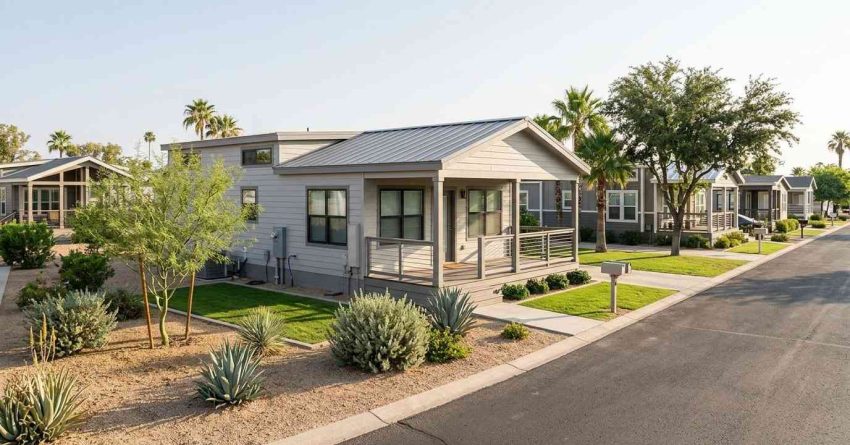
A park model home is a factory-built recreational unit designed for seasonal or permanent use, typically measuring between 320 and 400 square feet. Built on a permanent chassis with a tow hitch, park models are classified by the U.S. Department of Housing and Urban Development under the ANSI A119.5 standard as recreational park trailers — a classification distinct from both manufactured homes and traditional RVs.
This classification matters because it determines which building codes apply, which communities can legally host the unit, and whether full-time occupancy is permitted under local ordinances. Park models are built to a higher standard than most RVs but are not subject to the same HUD Manufactured Home Construction and Safety Standards (HUD Code) that govern manufactured homes.
Park models sit within the broader category of compact living structures — our complete guide to tiny home options covers every type of small dwelling, from park models to container homes, helping you understand which structure fits your lifestyle and local regulations.
How Park Models Differ from Tiny Homes and Mobile Homes
Park models, tiny homes, and mobile homes are often grouped together in conversation, but they carry different legal identities. A tiny home built on a foundation follows residential building codes. A tiny home on wheels may be classified as an RV. A mobile home built before 1976 predates HUD Code entirely. A park model, by contrast, is specifically classified under ANSI A119.5 and is subject to its own set of placement and occupancy rules. This distinction directly affects where you can legally live in one full-time.

Federal Classification and HUD Standards for Park Models
At the federal level, park models are not classified as permanent dwellings. The ANSI A119.5 standard governs their construction, covering structural integrity, electrical systems, plumbing, and fire safety — but the standard does not grant them the same legal status as a manufactured home under the HUD Code.
This federal classification creates a downstream effect: because park models are not federally recognized as permanent housing, states and municipalities retain broad authority to decide whether full-time occupancy is permitted within their borders. Some states have passed legislation explicitly allowing park models as primary residences. Others defer entirely to county zoning boards. A few states prohibit full-time occupancy in units classified as recreational vehicles, which can include park models depending on how local code defines the term.
The practical takeaway is that federal classification sets the floor, but state and local law determines what is actually possible in any given location.
States Where Park Models Are Legal for Full-Time Living
Full-time park model living is most accessible in states with warm climates, large retirement communities, and established RV park infrastructure. However, legality depends on more than state law alone — county ordinances and community rules layer on top of state permissions.
If you are actively researching where to place a park model, our dedicated resource on park model homes walks through placement options, setup requirements, and what to expect from the ownership process in different states.
States with the Most Permissive Park Model Laws
Florida, Arizona, Texas, California, and Nevada consistently rank among the most permissive states for full-time park model living. Florida, in particular, has a well-developed legal framework for park model communities, with state statutes that explicitly recognize park model units as eligible for year-round occupancy in licensed mobile home parks and RV communities. Arizona’s warm climate and large retirement population have driven similar legislative clarity, with many communities in the Phoenix and Tucson metro areas zoned specifically for park model residents.
Texas allows full-time park model living in many counties, particularly in rural areas and along the Gulf Coast, though county-level rules vary considerably. California permits full-time occupancy in certain manufactured home communities and RV parks, but local zoning restrictions in high-cost urban areas often limit practical options. Nevada, particularly in communities near Las Vegas and Reno, has established park model communities with full-time residency explicitly permitted.
States with Restrictions or Conditional Approval
States in the Northeast and upper Midwest tend to impose stricter limitations. Many classify park models as seasonal recreational units, limiting occupancy to a defined number of months per year — commonly six to eight months. States including New York, Massachusetts, and Minnesota often require that park model communities obtain special use permits to allow year-round residency, and individual counties within these states may impose additional restrictions regardless of state-level permissions.
Some states do not address park models directly in statute, leaving the question entirely to local zoning authorities. In these jurisdictions, the answer depends on which county or municipality you are in and how local code defines the unit.
Zoning Laws and Local Ordinances That Affect Full-Time Residency
State law establishes the framework, but zoning law determines what is actually permitted on a specific parcel of land. Even in states where full-time park model living is broadly legal, a county or city can restrict occupancy through zoning classifications that limit which land uses are permitted in a given zone.
Zoning rules for park models often overlap with regulations that govern other compact structures — our guide to tiny home zoning explains how municipalities classify small dwellings and what variances or permits may apply to your situation.
RV Parks, Manufactured Home Communities, and Private Land
Park models placed in licensed RV parks or manufactured home communities operate under the rules of that community, which are themselves governed by state licensing requirements. Many RV parks that allow park models restrict full-time occupancy to comply with their own licensing terms or insurance requirements. Manufactured home communities may or may not accept park models depending on how their community rules define eligible unit types.
Placing a park model on private land introduces a different set of challenges. Most residential zones do not permit park models as primary dwellings unless the land is zoned for manufactured housing or the owner obtains a variance. Agricultural zones in rural areas are sometimes more permissive, but utility access — water, sewer, and electric — must still be arranged and permitted separately.

What You Need to Establish Legal Full-Time Residency in a Park Model
Establishing legal residency in a park model requires more than finding a permissive state. You will need to satisfy several practical and administrative requirements before the unit qualifies as your legal primary residence.
First, the community or land where the park model is placed must permit full-time occupancy under its governing rules and local zoning. Second, the unit must have permanent utility connections — water, sewer or septic, and electric — that meet local code requirements. Third, you will need a legal mailing address recognized by your state’s department of motor vehicles and voter registration systems. Some states require a physical street address rather than a P.O. box for residency purposes, which can complicate matters in communities that use lot numbers rather than street addresses.
You will also need to address vehicle registration, driver’s license address, and state income tax domicile if you are relocating from another state. Establishing residency for these purposes typically requires documentation showing that the park model is your primary and permanent home.
Establishing legal residency involves more than choosing a state — our resource on park model setup outlines the utility connections, address registration steps, and community agreements you will need to complete before moving in full-time.
Common Challenges and How to Navigate Them
The most common challenge park model residents face is the gap between what a state permits and what a specific community or county allows. A state may broadly permit full-time park model living, but the only available communities in a desirable area may restrict occupancy to seasonal residents. Researching at the county and community level — not just the state level — before purchasing or placing a unit is essential.
Financing is a second significant challenge. Because park models are classified as recreational vehicles rather than real property, traditional mortgage financing is generally not available. Most buyers use personal property loans, RV loans, or chattel loans, which carry higher interest rates and shorter terms than conventional mortgages. Park model home financing is a distinct process that requires working with lenders who specialize in manufactured and recreational housing.
Insurance presents a similar complexity. Standard homeowner’s insurance policies do not cover park models. RV insurance policies may cover the unit but often exclude full-time occupancy or impose coverage limits that do not reflect the unit’s full replacement value. Specialized park model home insurance policies are available through a small number of carriers and are worth researching before finalizing a placement decision.
Many of the obstacles park model owners face mirror those encountered across the compact living category — our compact living challenges guide addresses financing, insurance, and community acceptance issues that apply directly to park model residents.
Conclusion
Park model living is a legally viable full-time housing option in many U.S. states, but the path to legal residency runs through state law, county zoning, and community rules simultaneously.
Understanding how federal classification, state permissions, and local ordinances interact gives you the foundation to evaluate specific locations with confidence rather than assumption.
At Mr. Local Services, we connect property owners and residents with the skilled professionals needed to prepare, maintain, and improve any type of residential structure — including park models — so your home stays safe, functional, and well-maintained year-round.
Frequently Asked Questions
Can I use a park model as my permanent address?
Yes, in many states you can use a park model as your permanent address, but the community where it is placed must permit full-time occupancy and the unit must have a recognized street address for state residency purposes.
Do park models require a building permit?
Park models placed in licensed communities typically operate under the community’s existing permits, but placing a park model on private land usually requires a local building or placement permit, along with separate utility connection permits.
Are park models considered real property?
No. Park models are classified as personal property under ANSI A119.5, not real property. This classification affects financing options, tax treatment, and how the unit is titled in most states.
What states have the most park model communities?
Florida, Arizona, Texas, California, and Nevada have the largest concentrations of established park model communities with full-time residency options, driven by climate, retirement demographics, and supportive state legislation.
Can I get a mortgage on a park model?
Traditional mortgage financing is generally not available for park models because they are classified as personal property rather than real estate. Most buyers use RV loans, chattel loans, or personal property loans through specialized lenders.
How long can I stay in a park model in a state with seasonal restrictions?
Seasonal restrictions vary by state and community, but many jurisdictions that limit park model occupancy cap stays at six to eight months per year. Exceeding these limits without proper permits can result in fines or required relocation.
Is a park model the same as a manufactured home for legal purposes?
No. A park model is classified under ANSI A119.5 as a recreational park trailer, while a manufactured home is built to the HUD Manufactured Home Construction and Safety Standards. These are separate legal classifications with different placement rules, financing options, and occupancy permissions.